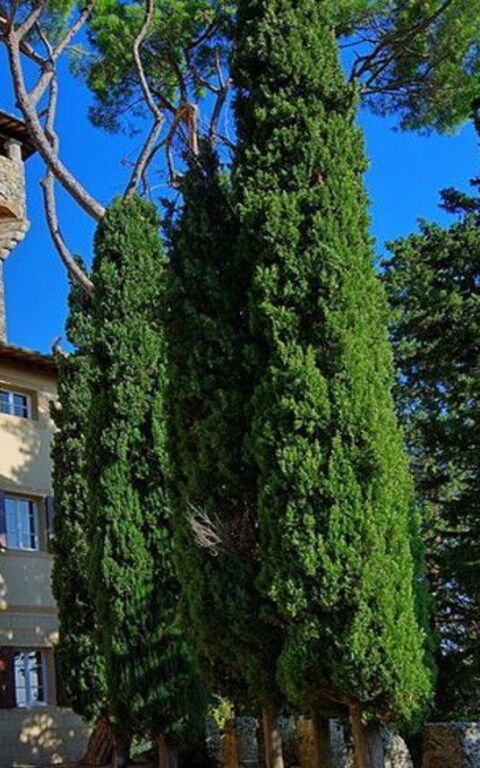
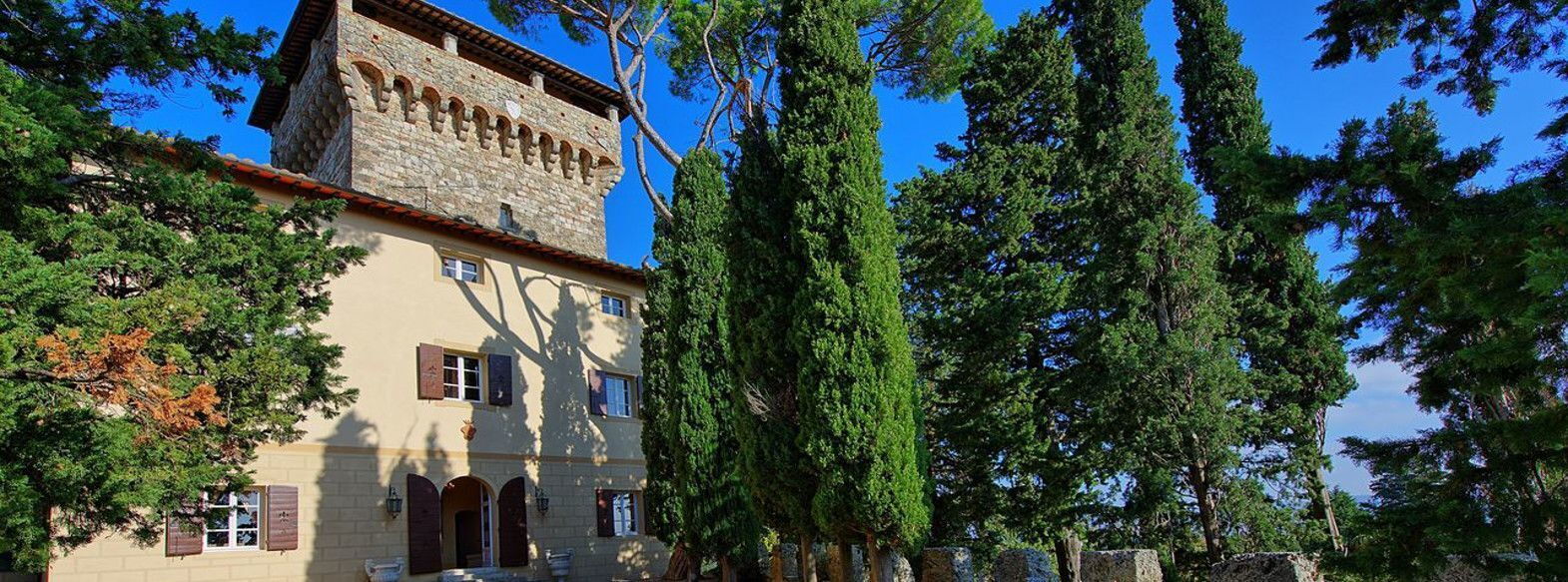
Some months ago, I had the opportunity to visit the small center of Cetona (SI) and its ancient medieval castle, the "Rocca", where it is possible to stay to enjoy unforgettable holidays. It’s unusual to hear someone talk about this village, although it is an authentic jewel of Tuscany’s countryside that deserves to be visited at least once in a lifetime.
This 3000 -inhabitants’ village is found in the southern part of Siena’s province, a few kilometers away from the regional borders with Umbria and Lazio. Here, we’re a long way from Florence: the people I meet don’t speak in the same way and their “Florentine” accent has transformed in something different that I’m not able to define clearly. However, Cetona still conserves the typical traits of a Tuscan medieval village “drawn with stone and earthenware” and its wooden and brick houses are actually so close to each other that they look interwoven. This bijou in immersed in the middle of green woods, right in the front of the Mount Cetona, which is 1148 meters high and crossed by twelve paths that allow to discover its most hidden treasures.

The beauty of this place is indisputable: indeed, it’s been elected one of the most beautiful Italian “borghi” by ANAI association. It also adheres to the “Città dell’Olio” (oil Cities) and “Città del Vino” (wine cities) associations and it hosts the “Sul filo dell’olio” celebration during the first two weekends of November. It’s a festivity that highlights the local food, art and music and its protagonist is the locally produced “olio nuovo”. It is also possible to taste it along the streets and to visit the numerous olive oil mills.
On the other hand, Cetona’s typical dish is “pici con l’aglione”, a first course with big handmade spaghetti seasoned with tomato sauce, a lot of garlic and pepper. Many restaurants here present them in their menus, along with many other delicious traditional recipes.

The name “Cetona” doesn’t remind of any other Italian word: some believe that it derives from the name of an ancient paleochristian abbey called “baptisterium Sancti Johannis de Queneto o de Queteno” or “plebs Sancti Johannis de Scetona, but it may also refer to the Chieteno brook that flows in this area.
The first historical reference about Cetona dates back to VII-VI centuries BC, when Etruscans occupied the territory near Camposervoli: some 20th century excavations have exhumed several bronze age’s artifacts which are now conserved in the “Museo Civico per la Preistoria del Monte Cetona”. During Middle Age, the village firstly belonged to the Republic of Orvieto, then it became part of Siena’s territory and it was finally included to the Granduchy of Tucany in 1556.
There are innumerable ancient buildings that need to be seen in this place, although a simple walk along the stone-paved streets that run along the mount, the so-called “coasts”, is enough to realize that every corner of this place hides a unique beauty. For example, in its historical center you will find the “S. Francesco monastery”, built in 1212, the “San Michele Arcangelo church”, dating back to 1155, and the “Collegiata della Santissima Trinità”, which is a gothic-style church decorated with a Pinturicchio fresco. There is also Piazza Garibaldi, a huge oval square completed in the 16th century by Gian Luigi Vitelli that hosts the new visitors. It actually surprises everybody for its enormous dimensions compared to the smallness of the village.
The position of Cetona is certainly strategic and perfect to get to interesting centers like Chiusi, Sarteano, Pienza and Montepulciano in a few minutes, and to cities like Siena, Perugia, Assis and Arezzo in less than an hour and a half. It’s a simple, characteristic and serene city that is suitable to become a stop of your holiday in Tuscany.
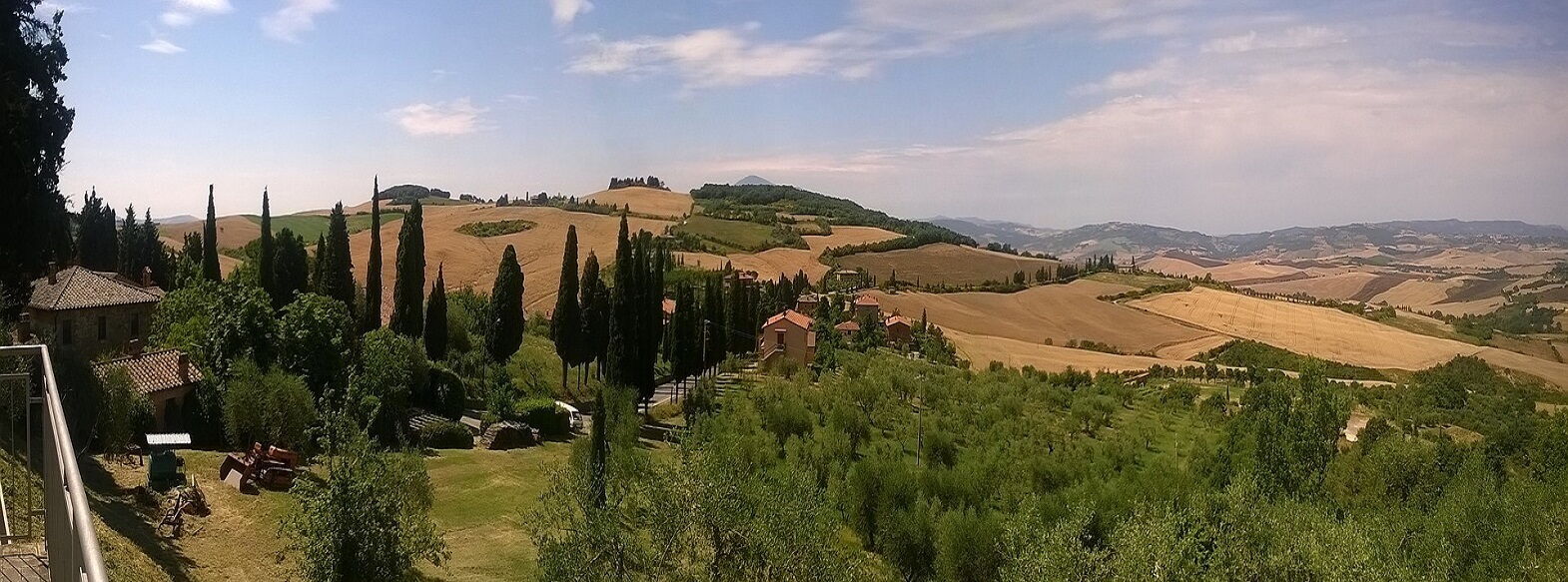
Whoever raises his look from the streets of Cetona cannot ignore the famous Rocca, which dominates the village from its highest point. It’s also its most ancient site (it dates back to X century) and some other buildings have been added to it over the centuries. The principal structure was erected in 16th century by marquis Chiappino Vitelli, who included a door and a preexisting defensive tower to the new palace, which became his luxurious property. The two acres of the park around the villa are decorated by hundreds of flowers, rows of olive trees, centuries-old plants and a big stone-built swimming pool, made using the travertine stone of an ancient roman bridge surrounded. One of castle’s accesses allows to reach the city center in a couple of minutes and to take advantage of a walk through the beautiful boulevards or of a local taste-itinerary.
This small castle in the middle of Siena’s countryside is surrounded by a serenity aura that nobody would pass up. One night here is able to transform every guest into a renaissance prince, owner of its fortress and surrounded by luxury and beauty. Actually, staying in the Rocca for at least one night is the only way possible to visit it, as it’s a private property that Posarelli Villas rents to offer dreamy stays to its guests.