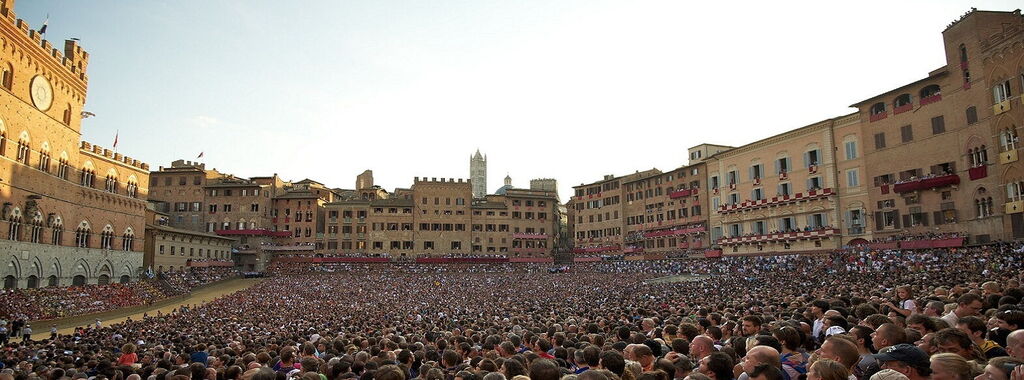
Every July and August, the city of Siena hosts a very popular event. It is broadcasted live by the main TV channels, it draws crowds of spectators and it engages all its inhabitants, even the youngest and the oldest, who share the same huge passion. The inimitable Palio di Siena is not just a 90-seconds horse race, but an important part of Seneses' life, who dedicate soul and body to their own Contrada.

But what is the Palio and what is the history of this event?
The Palio di Siena is an equestrian competition with Medieval origins that takes place on two occasions every year, precisely July 2nd (Palio di Provenzano) and August 16th (Palio dell'Assunta).
It is believed that its origins date back to 1200, when the first entertaining events had been organized in town. The initial meaning of the Palio was political and it celebrated the city's triumph, although it soon lost this allegorical value after the fall of the Republic of Siena in 1559. In the 17th century, the event started to include the figure of the "fantino" (the jockey), the round race, the bareback ride and the "tratta", which is the appointment of the horses to each Contrada. Later, two Palios were organized instead than one, the territorial borders and the colors of Contradas were officially established and the historical parade with musicians, flag wavers and other participants wearing Medieval costumes was introduced once again.

In each race, 10 of the 17 contrade compete against each other, including Chiocciola, Drago, Civetta, Pantera, Valdimontone, Onda, Aquila, Giraffa, Oca, Selva, Tartuca, Torre, Nicchio, Istrice, Leocorno, Lupa, and Bruco. .
Fierce rivalries and strong alliances exist between the contrade. You cannot simply choose a contrada; you must be born and baptized there. Each contrada has its own baptismal fountain, church, and museum. During the Palio, each district is decorated with flags bearing its symbols. When a child is baptized, they receive a square silk cloth called a fazzoletto, tied with a special knot that can only be untied if the contrada wins a race. This cloth is worn throughout all Palio celebrations for the rest of the child's life.
Before the race, a historic procession takes place, during which jockeys prepare for the race and forge alliances. The starting order is determined by the ‘mossiere’. Ten jockeys ride bareback on a track made of tufo—a thick layer of earth—and complete three laps around Piazza del Campo.
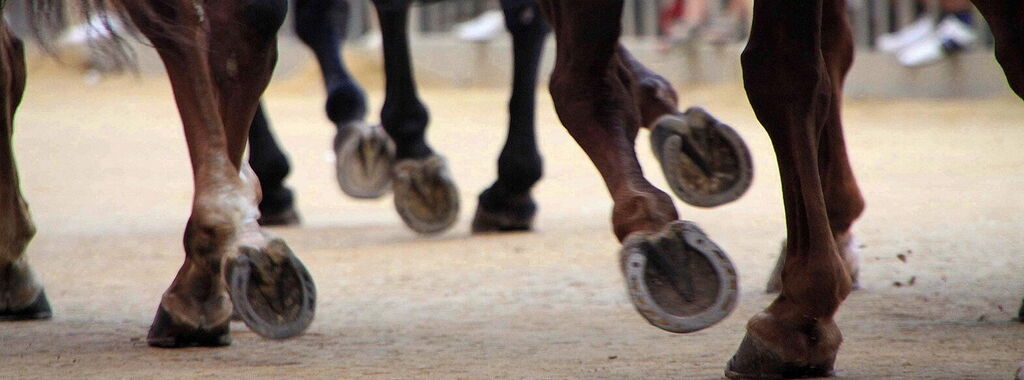
One of the unique rules of the Palio states that it is perfectly acceptable for a jockey to be thrown or pushed off the horse. What matters is that the horse crosses the finish line, known as the mossa. The winner is the horse—with or without a jockey—that crosses the finish line first after completing the three laps of Piazza del Campo. The victorious contrada receives the coveted cencio or drappellone.
The celebrations for the Palio do not really last a single day, but all year long. It is a protracted period of festivities that turns into a hectic week in occasion of the four days before the race, when there are events such as the choice of the horses, veterinarian visits, various rehearsals, religious celebrations and exciting in-Contrada dinners. For the people of Siena, the Palio is a special kind of love, while their Contrada is seen like a big second family.
It is not easy to describe or understand a feeling like this, but why don't you try to let this passion carry you taking part to the next Palio? You can either buy a ticket for the podiums and terraces or you can enter the square for free and watch the race from there, although a good visual is not guaranteed. Here, you will not find any toilets, shadow areas or seats, so we recommend getting ready and equipped properly before the beginning of the race. Once you'll be there, nothing else will really matter thanks to the incredible atmosphere of that day!

Plan your visit to Siena, buy your ticket and book one of our holiday accommodations!
We suggest our San Donnino.
© Alice Pilastri