Archive for "Curiosities"
Planning a trip to Italy? Browse and read our useful and informative articles about the endless range of attractions and experiences in this lovely country.
Travel through the beauties of Italy with us. Visit our blog!
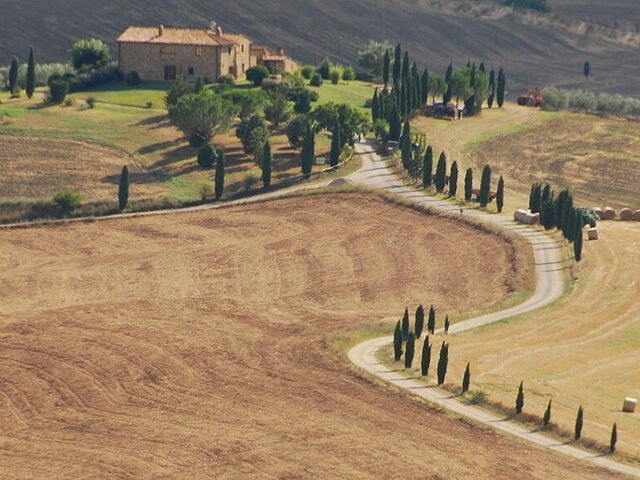
There are many reasons to visit Val d’Orcia: its landscapes, its history and its food specialties make tourists dream during their holiday in Tuscany. Maybe not everyone knows that this is also a perfect destination for cinema addicts! If you want to visit some locations of the most famous Hollywood films, an itinerary of cinema locations in Tuscany is what is right for you.
Many films have been shot in this region and each of them has underlined the beauty of the Tuscan countryside and villages.
Read more to discover which masterpieces have been filmed in Val d'Orcia and start planning your amazing tour!
Surely, one of the most successful films set in Val d'Orcia is Ridley Scott's "The Gladiator". The movie has been released 18 years ago, but it continues to enjoy an incredible success around the world, thanks to its excellent actors and the splendid
landscapes. The first scene shot in Val d'Orcia is the initial one, where two tragic deaths occur in the Gladiator's house. Do you remember the famous image of the hand stroking the wheat? Yes, it s taken from this part of the film! The second scene filmed here is the unforgettable finale, where the protagonist crosses a ripe wheat field to reunite with his family.
These two places can be easily found and visited by those who want to retrace the footsteps of the gladiator! The house is located in San Quirico d’Orcia: along the SP146 road that leads to Pienza, you will find on the left the gate of the Manzuoli farm. That's the entrance for the famous house! Instead, the landscape of the final scene is found in Pienza, at the end of a dirt road that descends from Pieve di Corsignano.
Another Oscar-winning film, "The English Patient" , was shot between Montepulciano and Pienza. The
protagonist, seriously injured, is treated in an abandoned convent near Pienza and stays in
Monastery of Sant’Anna in Camprena, which is currently a farmhouse. Most of the shooting
were carried out between Piazza Pio II in Pienza and the streets of Cosona, a fortified complex from the 1400s.
Many scenes from the film "Under the Tuscan Sun" were also shot between Montepulciano and Pienza, although the main location is the village of Cortona, located 30 km from Arezzo. In this movie, the landscape is both the protagonist and the magnificent scenery of the whole story!
Who hasn't seen a movie of the Twilight saga? Did you know that some scenes of "New Moon" were shot in Val d'Orcia? In the film, Edward Cullen decides to go visit the Volturi family in Volterra to end his life, as he believes that Bella is dead. However, "New Moon" was shot in Montepulciano and its Piazza Grande, because this location was more appreciated by the director.
Finally, we cannot forget to mention the great Tuscan director Franco Zeffirelli, who set his films "Romeo and Juliet" and "Brother sun sister moon" here. Walking along the main road of Pienza, you will plunge into the scenes of these famous films, imagining Juliet dancing in the courtyard of Palazzo Piccolomini and Mercuzio crossing Piazza del Duomo with Romeo. Instead, going to the Abbey of Sant’Antimo you will get immersed in one of the enchanting scenes of the film about Saint Francis
Are you ready to organize your itinerary to discover the locations of the best Hollywood movies? Book one of our properties in Val d'Orcia, like Villa San Michele and Casale Santa Francesca!
© Alice Pilastri
Read More
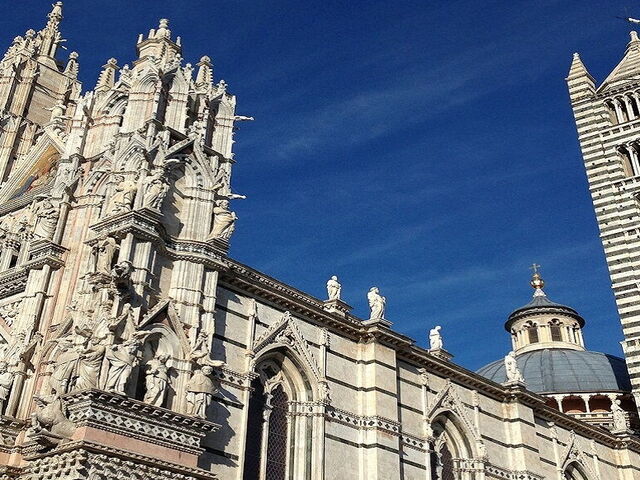
The Cathedral of Siena is definitely a must-see tourist attraction in town! The beauty of its exterio and the grandeur of this architectural work leave visitors speechless. Made entirely of white marble, with some decorations in red and green, the Cathedral dates back to the 13th century and is a perfect example of Italian Gothic style.
However, its beauty does not end outside: upon entering the Cathedral, visitors are surrounded by a series of infinite masterpieces, created by the greatest Italian artists. The part that certainly surprises the most is the magnificent floor in marble, a unique work in Italian art for its richness! From 17 August 2020 to 7 October 2020, the floor is uncovered and open to the public, who can visit it taking part to the unmissable guided tour organized by the Opera del Duomo of Siena.
Want to know more? Read on and find out how to book your visit!
The floor is not always open: this only happens in some months, while in the other periods it is possible to see only a part of it. In total, the floor has 56 squares, created between the fourteenth and nineteenth centuries by the greatest Italian artists. This immense iconographic program has seen the participation of Sienese artists, such as Sassetta or Domenico Beccafumi, but also of the Umbrian painter Pinturicchio.
In the fifteenth century, Giorgio Vasari defined the floor as "the most beautiful ... great and magnificent (pavement) that had ever been made" and, in fact, it is not difficult to understand why. Using the technique of marble intarsio and graffiti , the artists represented a symbolic journey based on the value of wisdom and on the celebration of the city. The mosaics cover the naves, the transept and the choir, plunging the visitor into a timeless story.
if you would like to book a visit to the floor of the Siena Cathedral, you must contact Opera del Duomo on +39 0577 286300 or write an email to opasiena@operalaboratori.com. The visit hours are from 10:30 to 18:00 from Monday to Saturday, while on Sundays the visits start at 9:30. Tickets can cost € 20 (for a visit to the roofs of the Duomo, the Duomo with uncovered floors, the Piccolomini Library, the Opera Museum with a view from the Facciatone, the Crypt and the Baptistery) , € 15 (for a visit to the Duomo with uncovered floor, the Piccolomini Library, the Opera Museum with a view from the Facciatone, the Crypt and the Baptistery) or € 8 (for a visit to the Duomo with an uncovered floor and the Piccolomini Library) .
Are you ready for your visit to the Cathedral of Siena? Organize a stay in Siena now and discover its most beautiful monuments! We sugget booking one of our splendid properties in the city, like Podere Orietta or Villa Capannino, to have an unforgettable holiday in Tuscany!
© Alice Pilastri
Read More
The word Epiphany literally means "revelation" and refers to the appearance of Christ to men through the Three Kings. So why do Italian children wait for the Befana to bring them chocolate and sweets on January 6th? What does an old lady who rides a broom mean?
Discover more about the history of Befana and all the unmissable events taking place around Italy to celebrate Epiphany!
According to a legend, the Three Wise Men on their way to Jesus's birthplace asked for information to an old woman, because they could not find the right path. To thank her for her help, they insisted to make her join their road, but she declined their invitation. However, the old woman soon repented bitterly of her decision and she quickly prepared a basket of sweets to bring to the newborn child. She went out to look for the three Men, but it was too late and she couldn't find them. So, she started knocking on the door of every house she found in search of Jesus, leaving sweets to every child she met hoping that he was Baby Jesus in person. And after more than two thousand years, that's what she's still doing!
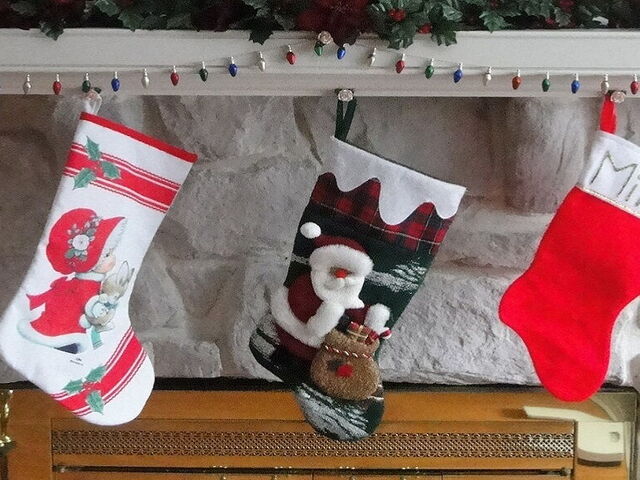
On January 6th of each year, children sing a famous refrain waiting to receive sweets and other delights. The translation is: "The Befana comes at night with her shoes all broken, with the patches on her skirt: viva, viva the Befana!". This is how this old woman is represented by all kids. On the night between 5 and 6 January, she descends from the fireplace to fill the empty hanging socks left by children. The good ones will receive gifts and sweets, while the naughty will find some awful coal!
Each Italian region celebrates the Befana in a special way, organizing markets, traditional festivals and some typical auspicious stakes, as it represents that the past year is "burned" to make room to the new one.
In Tuscany, in the province of Grosseto, there is a group of boys called "befani", who accompany the old woman through the streets of the city singing some songs. In Florence, the so-called "Cavalcade of the Three Kings" is organized every year: this is a procession consisting of about 700 figures leaving from Piazza Pitti, crossing the entire historic center and arriving at the Baptistery, simulating the journey of the Wise Men to Bethlehem. Moving to Lucca and its surroundings, we suggest taking part to the Befana celebration in Barga, where Epiphany is deeply felt: the children disguised as a Befana move from house to house singing songs and finally gather around a bonfire forming a large circle. In the locality of Pegnana, there is also a small Befana house that can be visited at any time of the year.
In Liguria the Befana comes from the sea making every child very joyful, while the most famous Epiphany market in Lazio is located in Rome in Piazza Navona, where a Befana in person comes to greet the children among stalls full of sweets. The streets of Naples, on the other hand, are full of markets where you can buy sweets for stockings, especially in Piazza Mercato.
What do you eat on this special occasion? Tuscan tradition includes Cavallucci of Siena, which are soft biscuits made with water, sugar, honey, candied fruit, anise, nuts and yeast, as well as "Befanini", which are cookies coming from the Lucca area made with rhum and citrus fruits.
In Liguria, people prepare the "anicini" biscuits, usually eaten with a glass of sweet wine, and the donut of the Three Wise Men , a dessert covered with raisins, candied fruit and sugar. In the south of Italy, precisely in Campania, people prepare the first pastiera of the year and some delicious struffoli, which are small balls of sweet fried dough, dipped in honey and decorated with candied fruit and sugared almonds.
© Alice Pilastri
Read More
January 3, 2020
Gubbio, the City with the Largest Christmas Tree in the World
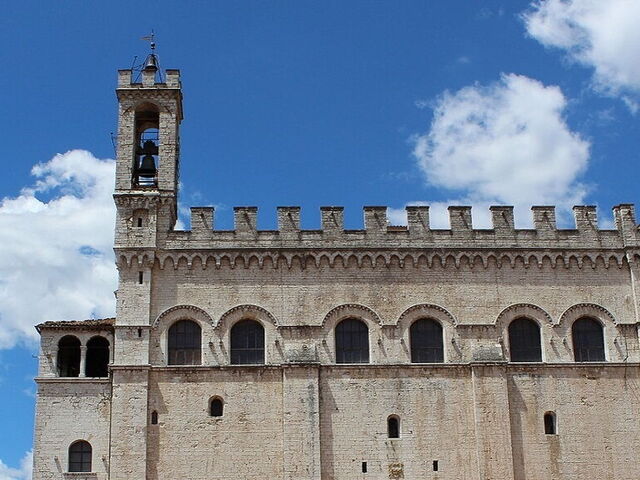
Christmas time trasforms some places into a small paradise on Earth. Thanks to the countless initiatives organized in these centres and to the beautiful decorations, some Italian towns adquire a special aspect that make them even more beautiful. One of the cities that turns into a small Santa Claus village is Gubbio, one of Umbria's best cities to visit.
Would you like to discover why? Keep reading!
What has made Gubbio an excellent winter destination is the incredible Christmas tree decorated on the slopes of Mount Ingino at the beginning of December. On the side of the mountain, the shape of a magnificent tree appears in a fewdays, thanks to the effort and involvement of all Gubbio's inhabitants. The tree is 650 meters long, it has a base of 350 meters, it is illuminated by hundreds of multicolored lights and by a lovely comet star with a surface of 1000 square meters put on its top. Its whole area covers the distance between the city walls and the basilica of the patron Saint of Gubbio, called Sant’Ubaldo, which is located right on top of the mountain.
The making of this tree is a tradition taking place every year since 1991. This unique work of art has entered the Guinness Book of Records, because it is actually the largest Christmas tree in the world! Usually, it lights up from sunset until late at night, during the period from early December to Epiphany. However, the most romantic ones can also adopt one of the lights and dedicate it to someone they love! This will keep the light on 24 hours a day, for the entire Christmas period.
However, there is much more to see in Gubbio! In Piazza 40 Martiri you can find the Tyrolean-style Christmas market , a charming place attracting the young and old with its large variety of handicrafts and typical gastronomic specialties. If you wish to visit the city in an original way, you can also use the majestic Santa's sleigh or the Gubbio Express Christmas train with your family, as they will surely guarantee fun to all your children! Finally, do not miss the large Ferris wheel of the North Pole, a tourist attraction that makes you admire the whole village and its imposing Christmas tree from above. Another way to see it is by climbing the "Colle Eletto" funicular, which connects the city center with the basilica located on the top of the mountain.
The whole city center is decorated with splendid decorations In San Martino district there is a life-size nativity scene with more than one hundred statues, while in San Pietro district people organize a living nativity scene, staging ancient crafts and the everyday activites of Medieval life. Also, Christmas lights give a unique atmosphere to places like San Pietro and San Giovanni squares, which always light up with suggestive colored lights.
What are you waiting for? Start organizing your trip to Gubbio and plan your visit! Take a look at our selection of villas for rent in Umbria, like Villa Gubbio or Villa Contessaand book your favorite one!
© Alice Pilastri
Read More

Discover the beautiful landscapes of Emilia Romagna, swim in the waters of the Adriatic coast and run on the vast golden beaches during IRONMAN Race, one of the most famous sporting events in the world! This year,Cervia and Milano Marittima have been chosen as location of this incredible competition, where athletes from all over the world challenge themselves to reach the final goal.
Discover more about this special sporting event and take part to the next edition!
This is the longest and toughest triathlon competition in the world, as it is much more demanding than the Olympic triathlon that includes 1500m of swimming, 40km of bike and 10km of running. The so-called long distance IRONMAN, in fact, includes a first session of 3.8 km swimming, 180 km of bicycle and a final running session of 42.195 km. As well as being a very demanding race, it is also one of the most scenic, since its route passes through the most beautiful places of the region where it takes place.
There are various editions of the event throughout the year , as they are organized in a different part of the world. The first competition took place in the 1970s in Hawaii and it was called " Hawaiian Iron Man Triathlon ". The idea of the triathlon was born from the intuition of two friends who were discussing about what was the hardest discipline between cycling, running and swimming. Since then, hundreds of thousands of athletes challenge each other to become "the first iron man" to cut the finish line and to show that "everything is possible"!
The 2019 edition will start on Thursday September 19th with the 10 km Night Run taking place on the Romagna coast. On the next day, there is a running race for children and kids called IRONKIDS, while Saturday
September 21th is when the real IRONMAN Long Distance begins. The event does not end here: on Sunday September 22nd there are the "5150 Cervia Triathlon Emilia Romagna" (a triathlon with the Olympic distance) and the first edition of "IRONMAN Italy Emilia Romagna 70.3".
The IRONMAN Long Distance will start with a first swimming lap in the sea of Cervia and will continue with a bike ride through some of Emilia-Romagna wonders. As well as the beautiful countryside, athletes will visit the Natural Park of the Saline and the splendid vineyards where Sangiovese wine is produced. After a tour between pink flamingos, verdant hills and unique landscapes, the race will end in the center of Cervia. here, the running race will begin and it will run along the beautiful sea promenade, ending in the town of Milano Marittima. Here is where the new IRONMAN will be awarded!
IRONMAN is a spectacular event where every athlete challenges himself in an unbelievable competition. Unfortunately, the registrations to take part to this September's edition are closed, but attending the event is a unique experience that you will not easily forget!
Organize your trip to Milano Marittima and discover the beauty of Emilia-Romagna by booking our splendid house with a luxury property with private pool.
© Alice Pilastri
Read More
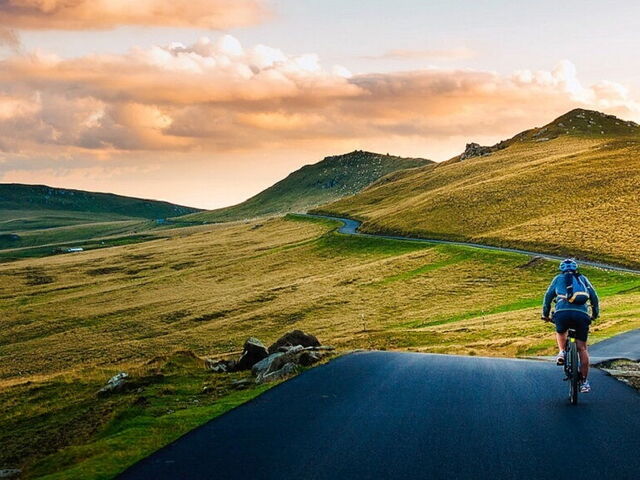
If you are in Tuscany on the first Sunday of October, than you cannot miss one of the most beautiful cycling races in the world: l'Eroica!
Driving along the marvelous roads that cross the Chianti region, you will meet dozens of people riding their vintage bikes and wearing vintage clothes. Actually, this is what makes the Eroica race so unique! This is not an ordinary competition, but a journey back in time that will also accompany you into the beauty of nature.
More than 7000 bikersparticipated to last year's edition and thousands of other people went to watch this show, as they wanted to taste its magical atmosphere. In fact, the competition is also a wonderful opportunity to visit the villages where the route passes. Every year, Gaiole in Chianti, the town hosting the departure, gets literally crowded by tourists who want to see the beginning of this epic race!
L'Eroica is also lived as an opportunity to share some unforgettable moments with those who have the same passion for the beauty of Tuscany. The participants are lead into another dimension, where time flows slower and the soul enters into a symbiosis with nature to enjoy its smells and colors.
The route can be chosen among various itineraries: the easiest one extends for about 46 kilometers, while the "long route" includes 210 kilometers and a very challenging total climb (about 3,890 meters). Those who choose this itinerary arrive to the finish line at night and begin the competition in the so-called "French way", as they can choose any departing moment between within a time slot between 5 and 6 am. Hundreds of kilometers to be traveled with old bicycles and vintage equipment... this is not just a tourist event, but a truly heroic experience!
Actually, the Eroica is a race against yourself to overcome your limits. There is no other competition that can give you the same emotions you can feel traveling through the fabulous wonders of Tuscan countryside. Gaiole in Chianti, Castelnuovo Berardenga, Asciano, Buonconvento, Montalcino, Montaperti and Radda are towns which names evoke ancient families, bloody battles and magnificent wines that you surely won't resist to taste during your splendid journey.
In fact, Eroica is not a race with winners and losers, but an event where a large group of people riding charming bikes can't wait to get to the various stages to stop, sit on a stone bench, eat a tasty sandwich with "Cinta Senese" ham and sip a good glass of Brunello wine. In this competition, there is no hurry to reach the finish line, nor the need to exaggerate with the physical effort. Enjoying the route is what really matters and nobody really wants to get to the end of this dream trip!
You don't necessarily need to visit Tuscany in October, as you have the opportunity to travel the Eroica all year to discover the beauty of Chianti! It's a fantastic tour to do at least once in a lifetime, which will make you experience unique emotions and enjoy the magic of one of the most beautiful places in the entire world.
Are you ready to go? Book one of our villas for rent in Chianti, like Villa Barbischio, Villa Ulivacci or Villa Aria!
© Alice Pilastri
Read More
June 11, 2019
6 Cities to See for an Etruscan Tour of Tuscany
The historical, artistic and cultural heritage of Tuscany is simply unique. Towns of art, archaeological sites, Italian paintings and other masterpieces are some of the beauties enriching the charm of this wonderland.
The Etruscan period is one of the most important historical eras. This powerful civilization settled in southern Tuscany, Umbria and Latium between the 9th and the 1st century BC, and then expanded its territory towards Campania, Emilia-Romagna and Lombardy. Thanks to the numerous architectural traces left in our territory, it has been possible to reconstruct the main aspects of their culture, especially as regards the singular funerary traditions. Many Italian cities still conserve some beautiful necropolis, which were the ancient Etruscan tombs that could have different forms depending on the social status of the deceased. These centers were part of the "Dodecapoli", which was the federation of the twelve most important Etruscan city-states.
Are you curious to follow the traces of the Etruscans in Tuscany? These beautiful summer days are just perfect to plan a visit to the main archaeological sites in the region or to look for the remains of the heritage that thiscivilization left in some splendid localities!
In Tuscany, in fact, you can visit six of the twelve cities that were part of the ancient federation: discover where they are and organize your itinerary to see them all!
1- Populonia (LI)
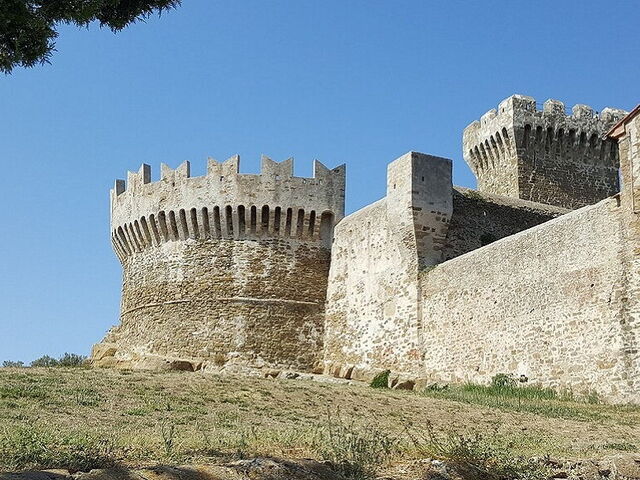
Populonia was the only city-state facing the sea and it guaranteed a strategic position for maritime trade. This ancient Acropolis is located at the top of a promontory overlooking the magnificent Gulf of Baratti, right in front of the coasts of Elba Island. It is famous for its beautiful Archaeological Park, an open-air museum containing thousands of artifacts found in the region, many of which are related to the iron work that was carried out in this area. The fascinating necropolis, on the other hand, is a stone's throw from the beach of Baratti and it presents tombs of various types (newsstand, pit, mound, sarcophagus, caisson and chamber).
Looking for a holiday rental in Populonia? Choose Castello Leopoldo
2- Chiusi (SI)
The small town of Chiusi is situated in the midst of greenery, in the heart of a quiet countryside with fertile soil which was largely exploited by the Etruscans. One of its most important monuments is the beautiful Labyrinth of Porsenna, an ingenious hydraulic work dating back to the first century BC that can be explored in its tunnels by entering the Cathedral Museum. The necropolis is a few kilometers from the center and contains more than a thousand ancient tombs.
Looking for a holiday rental in Chiusi? Choose Casale Giulio
3- Arezzo
It was here that one of the symbols of the Etruscan civilization was found, specifically the marvelous Chimera of the 4th century BC which is now preserved in the Archaeological Museum of Florence. Arezzo offers the possibility of visiting some interesting museums containing rich Etruscan collections, such as the Gaio Clinio Mecenate Museum, which preserves earthen vessels found in the Necropolis of Poggio del Sole, or the Etruscan Academy Museum, with bronzes and other objects coming from the Tumulus of the Sodo. Other traces of the Etruscan civilization can be found in Piazzetta San Niccolò, where the remains of the city walls are still visible, or walking towards the ancient "city of the dead" located in the surrounding valley, where you will find several burials.
Looking for a holiday rental in Arezzo? Choose Villa Lo Scoiattolo!
4- Cortona (AR)
This splendid city presents the famous MAEC museum, a unique and original exhibition space collecting all the objects found in the territory of Cortona, such as the Tabula Cortonensis, the third Etruscan text by length. Its historic center still contains the remains of the walls dating back to the 4th century BC and offers the possibility of visiting other wonderful museums which will make your culture tour extremely interesting.
Looking for a holiday rental in Cortona? Choose Villa Calcinaio!
5- Fiesole (FI)
Fiesole was the ancient locumonia of Vipsul, where the Etruscans left numerous testimonies. One of these is the magnificent city walls, which can be seen along Via delle Mura Etrusche. In this important archaeological area many of the finds preserved in the Archaeological Museum of Fiesole were found, as well as the remains of dozens of tombs and of the acropolis, which stood near the Convent of San Francesco.
Looking for a holiday rental in Fiesole? Choose Villa Ancora!
6- Volterra (PI)
The city that in the 4th century BC was called Velathri presents numerous necropolises, such as those of Portone, Badia, delle Ripaie and Ulimeto. The Etruscan acropolis of Pian di Castello also presents some wonderful cisterns like the
Augustan Pool and the ruins of temples dating back to the III-II century BC. Many of the findings discovered in this area are now preserved in the Guarnacci Museum, one of the most beautiful Italians collections of Etruscan art.
Looking for a holiday rental in Volterra? Choose Villa Picchio!
© Alice Pilastri
Read More
Sicily is a region that should be explored in every corner. Palermo, Agrigento, Cefalù and San Vito Lo Capo are just some of the countless places to visit at least once in your life. Unfortunately, the island is too big and its beauty cannot be appreciated all during a single trip.
One of the favorite tours for tourists to discover the so-called "Sicilia Bedda" crosses Eastern Sicily starting from Messina and ending the southernmost point of the whole island, including fascinating beaches and some famous arts towns.
Would you like to find out which are the localities you shouldn't miss to see in this area? Here are the 6 places to visit at all costs during your vacation, along with some essential travel tips to guarantee a fabulous experience in Sicily!
Starting from the north, the first stop of your journey will inevitably be Taormina, one of the best known tourist destinations in Sicily. Taormina is a wonderful village located on the east coast that preserves a priceless historical and artistic heritage, but also attracts many young people with its lively nightlife.
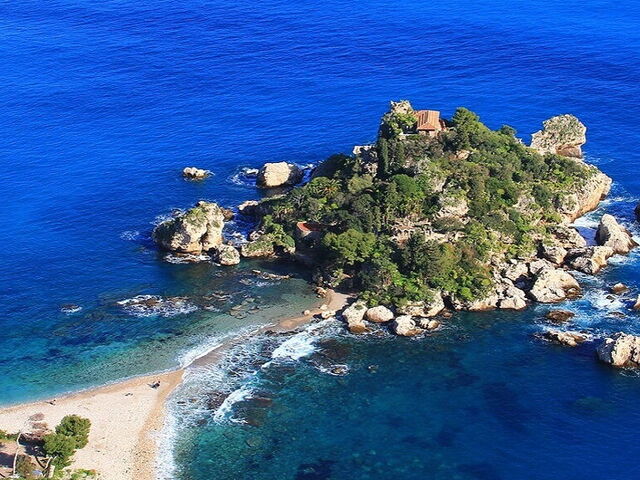
In addition to the wonderful Greek Theater, this city is known for the breathtaking views that overlook the sea or the imposing Mount Etna. Right in front of the historic center is Isola Bella, a small corner of paradise bathed by crystal clear sea. It is inevitable to fall in love with Taormina, which satisfies the expectations of every kind of visitor, including the beach lovers who can dive into its beautifully shaded waters.
Once in Taormina, you can't miss the opportunity to do an excursion on Mount Etna,which is located a few kilometers away! You can climb the summit of Europe's highest volcano riding a mountain bike, driving a Jeep, or walking along one of the many hiking trails to fully enjoy this memorable experience. In every season, Etna offers different and unique views. If you are lucky, you will also have the opportunity to watch one of his eruptions and admire the incredible tongues of fire touching the sky.
Another place to see at all costs is the beautiful Syracuse and its historic center located on the island of Ortigia. This islet is connected to the mainland with three bridges and preserves countless beauties, including the catacombs, the 7th century Duomo and the so-called "Ear of Dionysius". Buildings of different eras are placed side by side with typical restaurants in the narrow streets of the center. The unparalleled charm of Syracuse is just waiting for you to leave you speechless!
Otherwise, if you'd prefer enjoying some sea, sun and beautiful beaches during your holiday, then you need to visit the lovely Vendicari Natural Reserve! This oasis located in the south of Syracuse is a pristine place, where wild nature grows near the turquoise sea. It is the ideal place for excursion lovers, but also for those who would like to rediscover the charm of an ancient environment like the Tonnara, a building located inside it. Here, you will also find some of the most beautiful beaches of the Ionian coast: these small paradises immersed in the green are wonderful places where you can enjoy some relax!
Near the Reserve, you will come across the splendid Noto Valley, the area including towns such as Noto, Ragusa Ibla, Modica and Scicli. These famous places are the capitals of the Mediterranean baroque and present some beautiful historical centers, where you can also stop to taste some delicious local specialties. The Cathedral of Noto, the Cathedral of Modica and other charming churches are small architectural jewels that you will not resist to photograph once you arrive.
We end our list with the delightful village of Merzamemi , a small fishing village located on the southernmost tip of Sicily. Its colorful houses by the sea embellish the beauty of the old town center, from which it is possible to observe part of the African coast on the horizon. The old "Tonnara", the pretty little port, the bright wall colors and the crystal clear sea make it an absolute "must-see" of eastern Sicily!
Ready for your road trip in Eastern Sicily? Start planning your tour booking one of our holiday rentals in the region, like Villa La Plage, located near Siracusa, Villa Vendicari or Villa Rosmarino, both situated next to Noto.
Read More
A meeting with Pope Francis in person is the dream of all those who visit the splendid city of Rome. Pilgrims, tourists and worshippers from all the world crowd Vatican City to take part to
the celebrations held by Jorge Mario Bergoglio, one of the most charismatic figures of our time.
Are you staying in Rome for a short weekend or a special holiday? Follow our tips to catch the opportunity to participate to one of these events and to make your visit unforgettable!
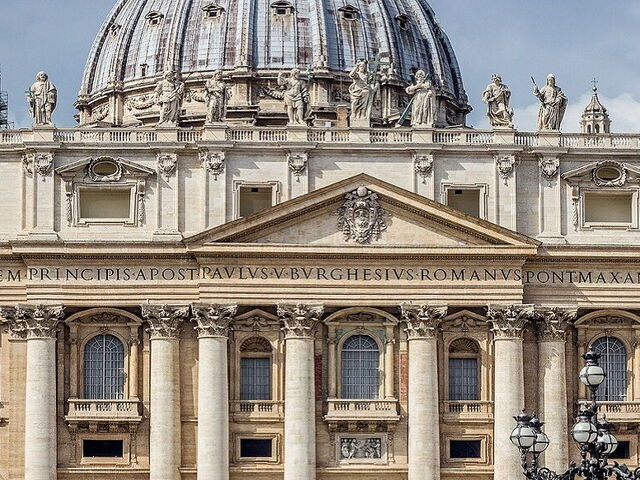
Get charmed by the beauty of this town, of St. Peter's Basilica, of Michelangelo's Sistine Chapel, of the incredible St. Peter's Square and book one of our properties.
The possibilities to meet the Pope are many: you can either participate to Sunday morning's Angelus, to a Mass in Santa Marta Church or to Wednesday morning's Papal Audience in St. Peter's Square or Paul VI Hall.
The Angelus is an apostholic benediction pronounced by the Pope every Sunday morning at the end of 12am celebration. It's an informal event with free participation where you do not need to buy tickets, but it is recommended to arrive early to find a spot near the window the Pope will look out from. The Mass lasts 60/90 minutes and it takes place in various languages.
The Papal Audience is held every Wednesday morning at 10:30am in St. Peter's Square or in Paul VI Audience Hall, if the weather is not good. The Pope meets the worshippers and gets close to them on board of his popemobile, allowing some lucky children to get on it for his blessing. It is a special and touching event where it is necessary to get a ticket in advance following one of the expected procedures.
If you wish to reserve a ticket in advance or you are a group of more than 10 people, you need to contact the "Prefecture of the Papal Household" sending an e-mail or a fax to the number +39 06 698 858 63 (specifying the audience you want to take part to and the number of people on the specific form), calling +39 06 698 848 76, +39 06 698 831 14 or +39 06 698 832 73 from 9am to 1pm, or demanding tickets using the ordinary postal service writing to "Prefettura della Casa Pontificia, 00120 Città del Vaticano".
Small groups can also go to St. Peter's Square the day before the audience to ask for a ticket to the Swiss Guards in front of the Bronze Doors. This service is at your disposal from 3pm to 7pm in summer and from 3pm to 6pm in winter, but the tickets' availability is not guaranteed.
Another procedure is reserved to American citizens, who can contact the "US Bishops’ Office for United States Visitors to the Vatican” via e-mail.
It is recommended to get to audiences early enough: doors open at 8/8:30am, but we suggest getting in line at 6:30/7am to get a chair near the maxi-screens that will allow you to see the Pope. Pay attention to your dress-code: if you are not dressed appropriately with your shoulders and knees covered, your entrance will be denied.
Another occasion to meet Pope Francis is participating to a Mass in Santa Marta Church held every morning from Monday to Saturday. However, there are only 25 available seats for visitors so waiting times are very long. To book a ticket you have to send a written request using the ordinary postal service to "Segreteria di Sua Santità Francesco, Casa Santa Marta, 00120 Città del Vaticano".
Do not forget to check the calendar to discover other forthcoming events in town! This special experience will certainly make your holiday in Rome extraordinary.
Read More
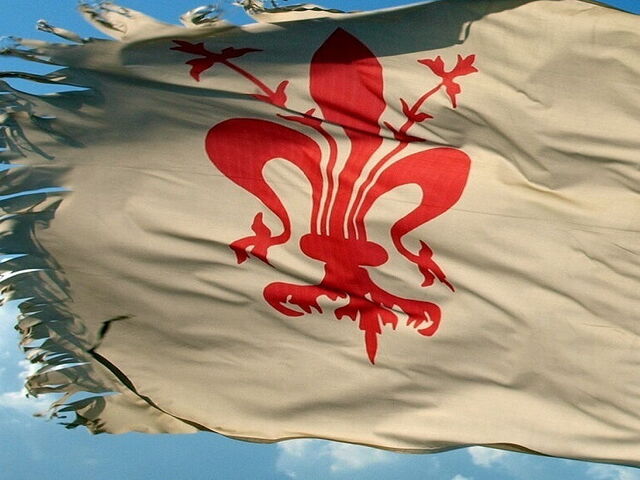
Walking along the streets of Florence, you will certainly notice that a stylized lily with five petals is portrayed on many coat of arms, statues, paintings and buildings. It is the “Giglio”, the famous emblem of Florence whose name means “the city of flowers”.
But what does it represent and what is its origin?
To be precise, the flower is not a lily, but an iris or a so-called “fior di giaggiolo”. There are various hypothesis about its origin and we still don’t know the exact reason why the city chose this right symbol. Some historians affirm that it’s due to the iris fields which grew spontaneously around Florence, while others think it’s related to its meaning of pureness and to the important cult of the Holy Virgin in the city. The first theory is the most probable, as in many Annunciation paintings the Archangel Gabriel hold a lily in his hand, not an iris like the emblem one.
You can try to imagine how the landscape around the city looked like in the past visiting the amazing “Giardino dell’Iris”, a garden inaugurated in 1957 that contains hundreds of diverse kinds of irises. They blossom in the period between the end of April and the end of May, so if you are near Piazzale Michelangelo you cannot skip this visit! Here, you can look for the “Iris Florentina”, the white flower that inspired the coat of arms. In fact, the symbol was originally white on a red background, but Guelfs decided to switch its colors in 1252 to celebrate their victory. In 1412, the famous “Santa Maria del Fiore” cathedral was dedicated to the lily and it later appeared on the golden florin and on city’s standards.
It's important to distinguish the Florentine lily from the French one: the first symbolizes the freedom of the glorious Republic of Florence, it’s red on a white background and it presents two stamens full of buds under three main petals, while the second is golden on a blue background and doesn’t have any stamens.
Nowadays, the “Giglio fiorentino” has a significant importance and it’s often used for honorific medals and awards, like the one given to some heroic Florence citizens after 1966’s flood. Moreover, even the delicious “Schiacciata Fiorentina” has the form of a lily made with sugar on it!
Plan your trip to Florence now and book one of our properties in the old town center to look for the flower in each corner of the city!
Read More