Archive for "Dream Places"
Planning a trip to Italy? Browse and read our useful and informative articles about the endless range of attractions and experiences in this lovely country.
Travel through the beauties of Italy with us. Visit our blog!
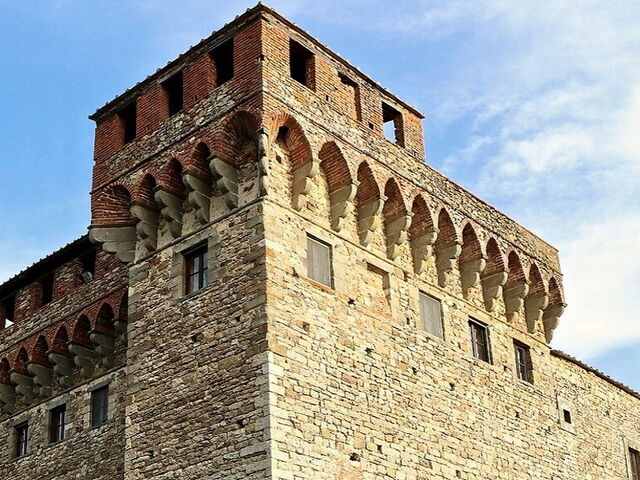
Lari is a stunning Tuscan village with medieval origins located 30 km far from Pisa. Here you can visit the wonderful “Castello dei Vicari”,a castle with majestic walls that emerge from the red roofs of the other town buildings.
The first historical sources about the building date back to 732, although it’s been often rebuilt by the families that have managed it. In the Middle Ages, it belonged to the Republic of Pisa and to the Florentine Vicari family from 1406. As well as being the site of many bloody clashes, the castle became the Inquisition Tribunal headquarters in the 17th century and it contained torture rooms and prisons. It was then used as a jail until the Second World War and it’s now open to the public, who considers it an inestimable Italian artistic and historical heritage.
Since hundreds of people perished here, there are some stories about the ghosts who are believed to inhabit the hallways of the fortress.
One of these is Gostanza da Libbiano, a woman who was put on trial for witchcraft in 1594 because she treated sick people with herbs and other natural ingredients. She was accused of being linked to Satan and of killing a boy with her therapies, so she was put in jail, where she experienced tremendous acts of violence. After being left mentally and physically disabled, she was set free and confined to a three-miles distance from her house until her death in the grip of madness. Since then, people believe that her spirit returns to the prisons and that she goes through the walls with chains and rags on her body. Others claim that her desperate screams echo all along the valley.
The other ghost belongs to Giovanni Princi or “il Rosso della Paola”, a farmer who was put in jail in 1922 because of his anti-fascist political ideas. He was found hanged in his cell and although it looked like a normal suicide, he was actually killed by the guards, who beat him up and hanged him just after his death. When the jail closed down, the keeper declared that he saw the ghost of Rosso in the castle and that he appeared like a mist-shrouded man who vanished in the corridors after a while.
Many visitors, tourists and Lari inhabitants have claimed they have caught sight of mysterious figures in the village and they have witnessed inexplicable events. Are they coincidences? Discover it yourself! Stay in one of our properties in Lari and visit the castle: it’s open all year long, it offers guided tours and the ticket costs 3€.
Read More
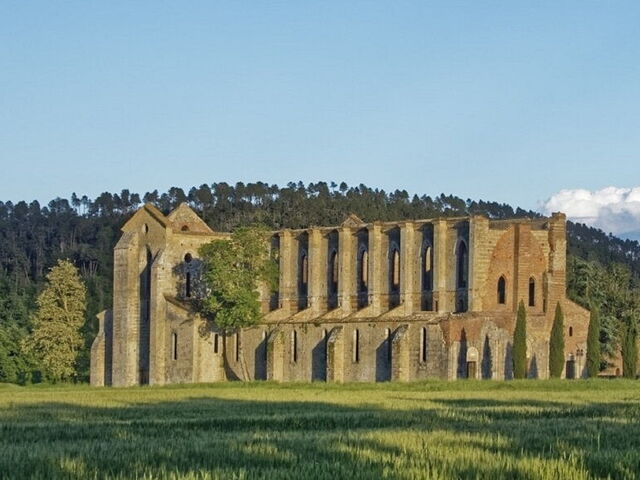
Driving along the road linking Siena to Massa Marittima and approaching to Chiusdino, you will glimpse the ruins of a huge abbey between the leafy branches of trees. The curiosity of discovering more about it will certainly make you deviate from the route. After a few kilometers, a magnificent Cistercian church will stand out and it’s surprising to notice that it’s almost intact even though it’s been built between 1220 and 1268. Just the roof is missing, as it’s been taken off in the 18th century after some collapses. This cathedral is part of the San Galgano abbey complex together with the small chapel on the top of the near hill and it’s dedicated to one of the most symbolic men of Middle Ages.
Galgano was a young and rich man who lived in the 13th century and who was known for having a violent attitude. However, he was encouraged to change his life after the vision hehad about the Archangel Michael. That’s why he became a Knight of God, he became a hermit and he started to be venerated like a saint by the local population. He died in 1182 and a splendid circular church was built after a couple of years on the hill he is thought to have died. An extraordinary medieval object is conserved there, in the “Rotonda di Montesiepi”: the real Sword in the Stone.
Protected by a plexiglass covering under the floor right in the center of the cupola there is an iron sword stuck in the fissure of a stone and some recent studies have confirmed its medieval origin. The legend tells that it was plunged there by San Galgano himself in the moment he quitted using violence to follow the road leading to God.
But why is the Sword in the Stone in Tuscany and what connection does it have with the famous Legend of King Arthur and the Round Table Knights?
It’s maybe thanks to the Via Francigena, which is one of the most important european medieval pilgrinage routes (and which is also the topic of one of our articles of some weeks ago!) that the myth of the Sword in the Stone has been known by pilgrims and travels and it’s been exported to France to be inserted in the Arthurian literary cycle. The echoes of this story also reached England, where it became a cue of the Breton literature. This hypothesis is confirmed by the evidence about the name of one of the Round Table Knights, called Sir Gawaineor Walganus, Balbhuaidh, Gwalchmai, Galvanus..or Galganus! The Cistercian monks who built the abbey were also known for spreading the Arthurian legend over Europe.
In a few years we’re maybe going to discover that even the Castle of Camelot and the places of Avalon are hidden in some spot of the Tuscan region.
Meanwhile, there’s nothing we can do except for admiring this architectural masterpieces: book one of our properties near Chiusdino, like Villa Vittorio and fall in love with the beauty of this area!
Read More
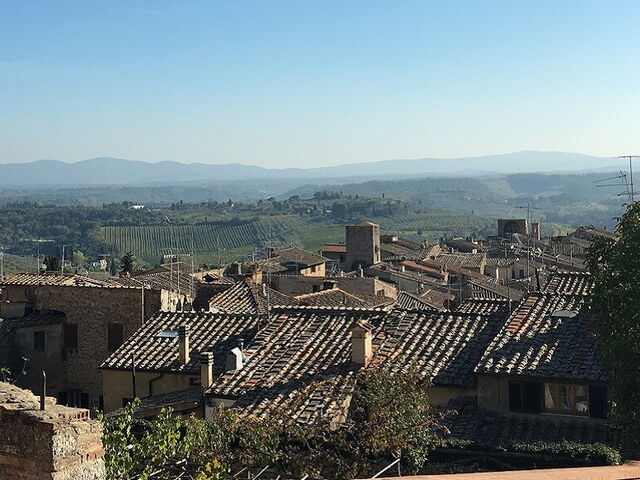
Certaldo is a wonderful village of the Valdelsa region, not far from Siena and Volterra, right on the top of a hill and protected by solid walls. About 16,000 people inhabit this unique center which became famous worldwide as it was the motherland of a well-known Italian writer, Giovanni Boccaccio.
Its Etruscan and Roman origins were discovered in occasion of the finding of ancient archaeological artifacts such as potteries, urns and graves. The Medieval period was anyway the most flourishing for this city, as it saw the construction of many buildings like the Palazzo del Vicario (10th/11th century), the St. Tommaso and Prospero Church (11th/13th century) or the surrounding walls with their access doors. It also became an important step of the “Via Francigena” itinerary, which was the road connecting Northern Europe to Rome that was transited by thousands of pilgrims.
The flag of Certaldo is very strange: it’s white, red and it portrays an onion on the left. One of its symbols and typical products is in fact the “cipolla di Certaldo”, a quite big red onion with a sweet flavor that is even mentioned in Boccaccio’s “Frate Cipolla” novel. Tasting this regional specialty is something you must do in Certaldo, but don’t forget to try the “mercacci” as well, which are special biscuits made with chocolate, almonds and dried fruits invented in honor of the local poet.
The most picturesque spot of this city id undoubtedly Certaldo Alto: the historical city center dominates the valley from the top of the hill and it’s possible to reach it using a funicular railway or an uphill pathway. It has kept its medieval aspect so it really seems that time has stopped since Middle Ages: just like Giovanni Boccaccio seven centuries ago, you’ll walk along the narrow alleys next to the stone “house-towers” and surrounded by earthenware tiles.
The house of Boccaccio is today a museum you will be able to visit during your stay in Certaldo and it’s something you cannot miss. It’s located in the main street, via Boccaccio, and it’s a small building with century-old interior furniture containing the handwritten masterpieces by the poet and their first translations.
Don’t forget to visit Palazzo Pretorio, a symbolic monument of the city which hosted Counts Alberti family in the 13th century. Admire its peculiar, beautiful façade and walk through its corridors, its prisons, its archive, its hearing room, its chapel and its wonderful private rooms.
Another important place is the Museo dell’Arte Sacra: it was inaugurated in 2001 and it presents many beautiful medieval works which were found in the churches near Certaldo.
Although this center is an authentic urbanistic jewel that is beautiful in every moment of the year, it is particularly suggestive in July, when “Mercantia” festival is organized. This international street art festival lasts five days and it sees the participation of dancers, musicians, acrobats, fire-eaters and other street artists who crowd the streets recreating a magic and unique atmosphere.
What are you waiting for? Book one of our villas in Certaldo and visit this wonderful borgo! We suggest you Villa Orchidea, or Certaldo Apartments!
Read More
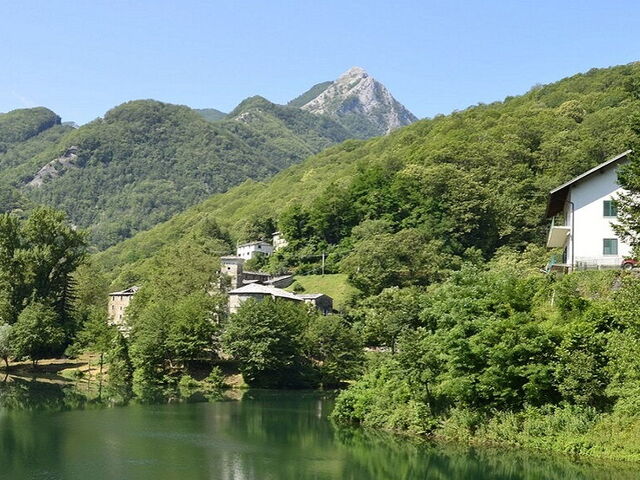
Barga is a locality in Garfagnana which has been rewarded as “città slow”, “bandiera arancione” and one of Italy’s best “borghi”. It’s one of the most important and biggest villages in the province of Lucca and it stands out on the top of its mountains, surrounded by green woods, fields and beautiful natural lakes. As well as being a noteworthy historical, cultural and artistic center, Barga grants you a relaxing stay during which you’ll be able to take part to some organized activities in its nature, such as trekking or horse riding excursions.
WHAT DO YOU NEED TO SEE IN BARGA?
You probably didn’t know that a well-known Italian poet called Giovanni Pascoli lived here: that’s why you can’t skip the visit to “Casa Pascoli” in Castelvecchio Garfagnana, a village in the surroundings, where he stayed for about seventeen years and where he decidied to be buried. The house is now a museum that can be visited, as it conserves some Pascoli’s works and its original home furnishings. Moreover, its garden is the location of special events, shows and exhibitions, like the “Festival dei bambini” in August (Museum opening hours: from October 1st to March 31st: Tuesday 2 pm-5:15 pm, from Wednesday to Sunday 9:30 am-1 pm and 2:30 pm-5:15 pm; from April 1st to September 30th: Tuesday 3:30pm-6:45pm and from Wednesday to Sunday 10:30am-1pm and 3pm-6:45pm).
Another place linked to this poet is the “Teatro dei Differenti”, where he pronounced his speech in 1911 in favor of the war in Libya. Th theater was built in 1795 over a pre-existing 1689 structure and it still preserves the original architectural elements.
In Barga, you also need to see the magnificent Dome or “Collegiata di San Cristoforo”, built between the XI and the XVI century in Romanic style. Inside there are some ancient frescos, sculptures, stoups and a wooden statue dedicated to the city patron.
Furthermore, don’t forget to discover Palazzo Balduini, Palazzo Angeli, Palazzo Pancrazi, Caffè Capretz, Loggia Mercanti, Palazzo Podestà, Chiesa del Santissimo Crocifisso, Chiesa della Santissima Annunziata and the “Museo Civico del territorio di Barga” in Palazzo Pretorio (Museum opening hours: from June 1st to September 30th 10am-12:30pm, 2:30pm-5pm. Booking is needed)!
LOCAL FOOD AND EVENTS
During your holiday, also remember to taste some local delights, like lake trouts, mushrooms, chestnuts and vegetable soups: all the ingredients are found in this area and they’re totally natural.
What are you waiting for? A vacation in Garfagnana is a must-do in Tuscany, so check our villas in Castelnuovo di Garfagnana (LU) and choose your favorite between Villa il Nido and Villa Saida!
Read More
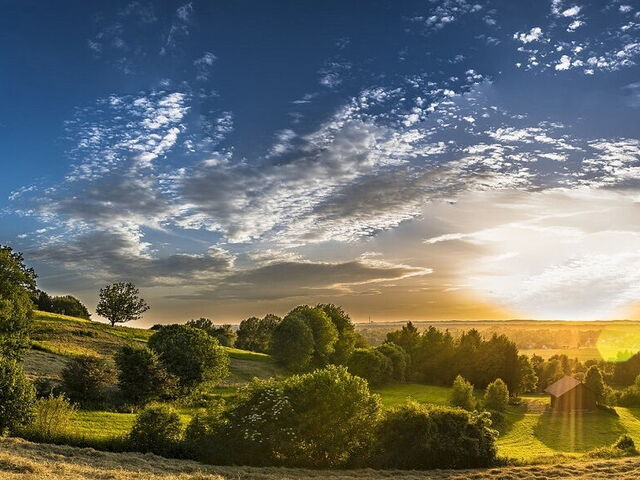
The small village of Monterchi is located on top of a hill called “Hercules Mountain”,in the middle of Tevere Valley. From its highest spot, the center offers a wonderful panorama with green gardens, sunflower fields and some abbeys, churches and ancient city walls that pop out here and there.
Here, you can admire the famous Piero della Francesca fresco “La Madonna del Parto” dating back to 1450/1465 when the artist stayed in this center for a while. The painting portrays the Virgin in a central position with a swollen belly, next to two angels who hold the edges of the curtain over them. The masterpiece is conserved in the “Museo Madonna del Parto” in Via della Reglia and its tickets cost €6,50 (full price) or 5€ (reduced price). With the same ticket, you can also visit the curious “Museo dei Pesi e delle Bilance”, a unique and original place where more than 150 ancient scales are conserved. This museum has been recognized as one of the most important in the world in its genre for its singularity.
Monterchi still looks like a medieval village: although some earthquakes rattled this area n the past, the city walls and the age-old stone buildings in its center haven’t shown structural failures. Visitors can then take advantage of its beauty walking along its narrow street, smelling the lavender fragrance and tasting the local delights.
There are also some villas near Monterchi which are just perfect for your stay in Arezzo: “Casale Tiziano” or “Torre del Cielo” or “Gellino”.
Choose your favorite and book it now!
Read More
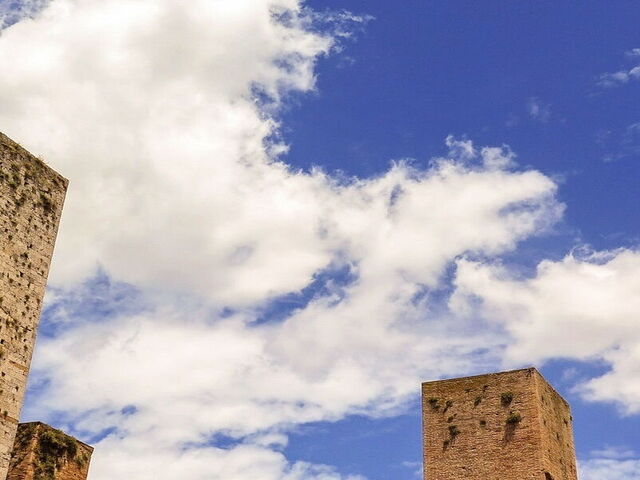
In February I went to San Gimignano (SI) to get to the top of "Torre Salvucci Maggiore", one of the famous towers that stand out from the “Medieval Manhattan” skyline. When I started catching sight of buildings’ outline from my car along the road to get there, I understood why it obtained this name: just like the Chrysler Building next to the Empire State, these towers really look like skyscrapers. The difference is that these were built eight centuries ago. It’s absurd that nobody ever associates the word “skyscraper” to the picture of San Gimignano, because it’s actually in this city that we can find the original foundations of today’s modern metropolises.
San Gimignano enjoys a global fame: at least once in life we’ve heard someone talking about its high towers, we’ve come across a photograph that captures it or we’ve studied its architecture, as it’s almost intact since the Middle Ages. This small center in the province of Siena is found on a Val d’Elsa hill and it dominates hundreds of olive trees’ crowns, shadows of cypresses and rows of vineyards. Even UNESCO rewarded san Gimignano as a “World Heritage” some years ago because of its peculiar medieval aspect.
THE TOWERS
Undoubtedly, its “mascottes” are the towers: in 1300 they were 72, in 1580 they were 25 while today no more than 14 are still standing. In the past, they were the symbol of families’ power: the higher the tower, the more important were considered the lords that lived in it. Therefore, height-competitions between stone-giants began and nobles used unscrupulous tricks to win, like cutting the upper part of each other’s tower. This is why the city established a guideline to prevent to exceed a 51 meters’ height: this limit has been respected by all the towers towers except for the Torre Grossa, which is 54m high.
The oldest building, the Torre Rognosa, was erected in 1200 and is 51m high while the other towers are: Torre del Diavolo, Torre Antica, Torre Chigi, Torre dei Becci, Torre Campatelli, Torre degli Ardinghelli, Campanile della Collegiata, Torre Pettini, Torre Ficherelli, Torre di Palazzo Pellari, Casa-Torre Pesciolini and Torri dei Salvucci.
These two “torri” are actually two twin towers built by the Salvucci family in the XIII century in order to show their unrivalled power in the city to their neighbours. Unfortunately, the vertiginous height didn’t fall within rules’ limits so they were cut at different levels: one was called “Torre Salvucci Minore” and the other "Torre Salvucci Maggiore"
TORRE SALVUCCI MAGGIORE
The higher one, the “maggiore”, was recently renewed to give you the possibility to experience out-of-the-common and unique stays. In fact its single apartment is composed by 10 floors connected to each other by 160 stairs and it’s got a panoramic terrace, where it is possible to admire a 360° panorama of the surrounding landscape. From the last floor the sweet hills covered by rows of vineyards, the towers, the stone houses, the paths skirted by cypresses and the olive trees orchards spread as far as the eye can see. In the neighbouring building there is another apartment, whose windows overlook on the “Piazza del Duomo” and therefore have a magnificent view. There aren’t other towers with these features: the ancient residence inside the other palaces are not habitable anymore and it isn’t even possible to visit them all. Here’s why Posarelli Villas offers to city visitors a special experience renting the two “Torre Salvucci” apartments and opening their doors to history and beauty lovers.
This tower grants a comfortable and relaxing sojourn as it’s found in the middle of city’s historical center, in a pedestrian area close to many restaurants, museums and historical monuments. A few kilometers away from San Gimignano there are also some art cities like Volterra (21km), Siena (47 km) and villages like Certaldo (8km) and Monteriggioni (21 km) that I really suggest to visit during your stay.
THINGS TO DO IN SAN GIMIGNANO
There are innumerable “must do” and “must see” in this Tuscan New Yok City and a single day is not enough to appreciate them to the fullest. For example, the Dome square strikes for the beauty of its buildings and for its XII century “Duomo”, one of the best examples of the Tuscan Romanic style, with various frescos inside it. Do not forget to stop by and visit the Palazzo Comunale, Piazza Pecori, Palazzo Vecchio del Podestà. Porta S.Giovanni, Rocca di Montestaffoli, Piazza di Sant’Agostino, Casa di Santa Fina, Porta delle Fonti and the Ex-Conservatorio di Santa Chiara.
Further to the several things to do, visit and see, it’s important to remind that each new city has a culinary tradition ready to be discovered: San Gimignano is well-known for the Vernaccia, a white wine which was drunk and loved by Dante and Lorenzo the Magnificent in the past and for its saffron, the “yellow gold” used as a currency to pay debts. It was partly thanks to this noble spice that the importance and the richness of this city were recognized in the whole peninsula. Another aspect in its favor was the position along the famous Via Francigena, the age-old road that connected Canterbury to Rome and that was traveled by thousands of pilgrims every year.
Read More
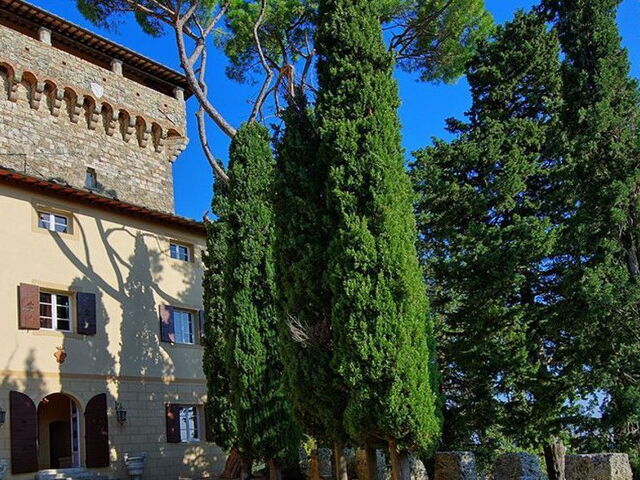
Some months ago, I had the opportunity to visit the small center of Cetona (SI) and its ancient medieval castle, the "Rocca", where it is possible to stay to enjoy unforgettable holidays. It’s unusual to hear someone talk about this village, although it is an authentic jewel of Tuscany’s countryside that deserves to be visited at least once in a lifetime.
This 3000 -inhabitants’ village is found in the southern part of Siena’s province, a few kilometers away from the regional borders with Umbria and Lazio. Here, we’re a long way from Florence: the people I meet don’t speak in the same way and their “Florentine” accent has transformed in something different that I’m not able to define clearly. However, Cetona still conserves the typical traits of a Tuscan medieval village “drawn with stone and earthenware” and its wooden and brick houses are actually so close to each other that they look interwoven. This bijou in immersed in the middle of green woods, right in the front of the Mount Cetona, which is 1148 meters high and crossed by twelve paths that allow to discover its most hidden treasures.
The beauty of this place is indisputable: indeed, it’s been elected one of the most beautiful Italian “borghi” by ANAI association. It also adheres to the “Città dell’Olio” (oil Cities) and “Città del Vino” (wine cities) associations and it hosts the “Sul filo dell’olio” celebration during the first two weekends of November. It’s a festivity that highlights the local food, art and music and its protagonist is the locally produced “olio nuovo”. It is also possible to taste it along the streets and to visit the numerous olive oil mills.
On the other hand, Cetona’s typical dish is “pici con l’aglione”, a first course with big handmade spaghetti seasoned with tomato sauce, a lot of garlic and pepper. Many restaurants here present them in their menus, along with many other delicious traditional recipes.
The name “Cetona” doesn’t remind of any other Italian word: some believe that it derives from the name of an ancient paleochristian abbey called “baptisterium Sancti Johannis de Queneto o de Queteno” or “plebs Sancti Johannis de Scetona, but it may also refer to the Chieteno brook that flows in this area.
The first historical reference about Cetona dates back to VII-VI centuries BC, when Etruscans occupied the territory near Camposervoli: some 20th century excavations have exhumed several bronze age’s artifacts which are now conserved in the “Museo Civico per la Preistoria del Monte Cetona”. During Middle Age, the village firstly belonged to the Republic of Orvieto, then it became part of Siena’s territory and it was finally included to the Granduchy of Tucany in 1556.
There are innumerable ancient buildings that need to be seen in this place, although a simple walk along the stone-paved streets that run along the mount, the so-called “coasts”, is enough to realize that every corner of this place hides a unique beauty. For example, in its historical center you will find the “S. Francesco monastery”, built in 1212, the “San Michele Arcangelo church”, dating back to 1155, and the “Collegiata della Santissima Trinità”, which is a gothic-style church decorated with a Pinturicchio fresco. There is also Piazza Garibaldi, a huge oval square completed in the 16th century by Gian Luigi Vitelli that hosts the new visitors. It actually surprises everybody for its enormous dimensions compared to the smallness of the village.
The position of Cetona is certainly strategic and perfect to get to interesting centers like Chiusi, Sarteano, Pienza and Montepulciano in a few minutes, and to cities like Siena, Perugia, Assis and Arezzo in less than an hour and a half. It’s a simple, characteristic and serene city that is suitable to become a stop of your holiday in Tuscany.
Whoever raises his look from the streets of Cetona cannot ignore the famous Rocca, which dominates the village from its highest point. It’s also its most ancient site (it dates back to X century) and some other buildings have been added to it over the centuries. The principal structure was erected in 16th century by marquis Chiappino Vitelli, who included a door and a preexisting defensive tower to the new palace, which became his luxurious property. The two acres of the park around the villa are decorated by hundreds of flowers, rows of olive trees, centuries-old plants and a big stone-built swimming pool, made using the travertine stone of an ancient roman bridge surrounded. One of castle’s accesses allows to reach the city center in a couple of minutes and to take advantage of a walk through the beautiful boulevards or of a local taste-itinerary.
This small castle in the middle of Siena’s countryside is surrounded by a serenity aura that nobody would pass up. One night here is able to transform every guest into a renaissance prince, owner of its fortress and surrounded by luxury and beauty. Actually, staying in the Rocca for at least one night is the only way possible to visit it, as it’s a private property that Posarelli Villas rents to offer dreamy stays to its guests.
Read More