Archive for "Travel Advice"
Planning a trip to Italy? Browse and read our useful and informative articles about the endless range of attractions and experiences in this lovely country.
Travel through the beauties of Italy with us. Visit our blog!
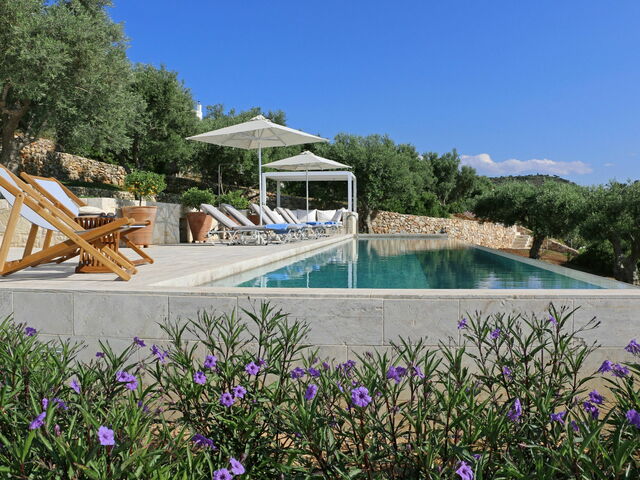
Are you hearing more and more about sustainability? Is the issue of environmental pollution close to your heart? Would you like to be able to go on holiday without harming the planet? At the same time, are you afraid of having to leave all your comforts behind, having to move only on foot or having to cook using a bonfire in the garden? If you have ever asked yourself any of these questions, you are reading the right article.
Posarellivillas cares a lot about environmental issues, so it has included eco-friendly solutions in its program: villas that can have almost complete energy independence, electric recharging stations, organic products at zero distance and much more.
Don't worry if some of the terms sound strange to you, if for you green was just a colour and not a lifestyle. Keep reading, you won't regret it, and who knows, maybe at the end of this article you might want to book your first eco-sustainable holiday.
Before picturing you by the pool drinking a freshly squeezed juice from the garden, made with energy from the solar panels installed in the huge garden of the villa, let us make a small introduction on what sustainability is for us.
Posarellivillas by sustainability refers to that model of development capable of meeting the needs of the present without compromising the ability of future generations to meet their own needs. In simple terms, the eco-sustainable approach means that we can hand down to our children and grandchildren a healthy planet and who knows, maybe they can even experience one of our properties.
But enough theory, let's get practical!
VILLA BLUEWHITE IN CRETE
Expertly designed by its owner, Villa Bluewhite combines design with environmental sustainability. As well as an 18-metre saltwater swimming pool, a tennis court and a bowling alley, guests can enjoy organic olive oil from the surrounding olive grove, spices, vegetables and fruit all grown on the property.
Does that sound eco-friendly enough? Add to that the solar panels that produce much of the villa's energy and a charging station for electric cars.
In the mood for a holiday?
Run and book, or send us a message
CONTACT US
© Rebecca Taizzani
Read More
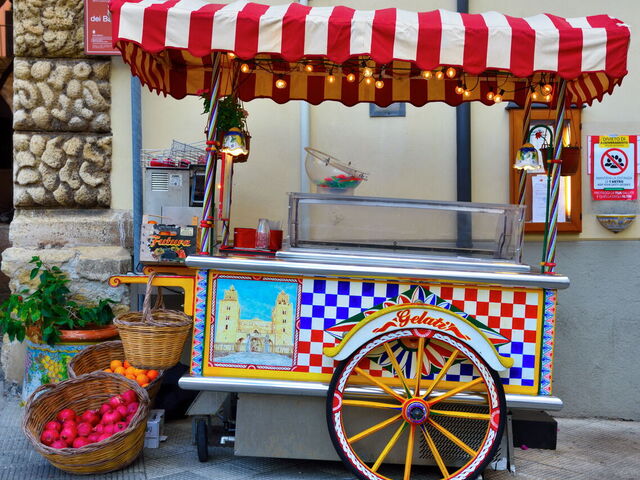
Palermo: an ancient city rich in history, culture and … culinary delights! Mediterranean cuisine is very diverse and each city has its own distinctive foods and wine. What they have in common is the use of authentic local ingredients and dishes with centuries-long traditions. If you’ve decided to visit Palermo but you don’t know what to eat, we’re here to help. Here is our list of Palermo’s local specialties and where to taste them. Get ready to jump into a delicious paradise!
Read More
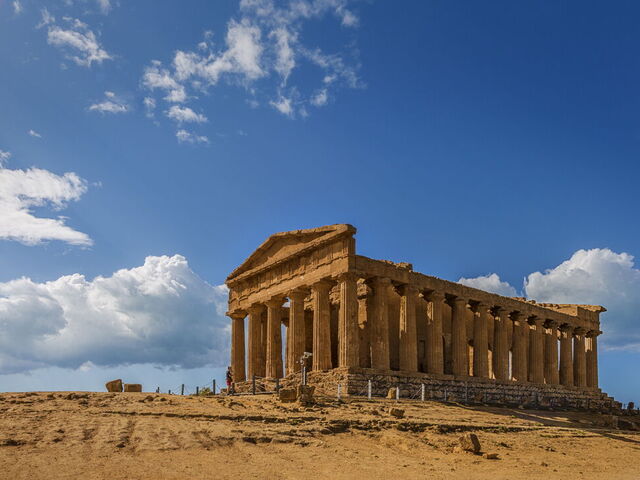
Here amid the stark nature and crystal-clear waters of Sicily, the Italian island famous for its rich cultural and historical heritage, there is a place that takes visitors’ breath away. It is the magnificent Valley of the Temples in Agrigento, an open-air archeology museum that was designated a UNESCO World Heritage Site in 1998. The 1300-hectare archeological area is a souvenir of the ancient hilltop city of Akragas, the center of the future Agrigento. The city flourished in the 5th century BC and was a Greek colony, as can be seen by the style of its art and architecture.
The Valley of the Temples includes some of the most important examples of classical Greek art and culture and the ruins tell us history from thousands of years ago. The city of Akragas went through many vicissitudes and was constantly in foreigners’ sights because of its important strategic location on the Mediterranean sea. It was conquered by the Carthaginians in 410 BC, who razed it to the ground; then by the Romans a few centuries later, who gave new splendor to the city, naming it Agrigentum.
Together let’s discover the most important sights to visit at the Valley of the Temples.
The archeological area of the Valley of the Temples has a total of 8 temples, some of which are very well preserved.
1. Temple of the Dioscuri
Also called the Temple of Castor and Pollux. The temple actually lies in the Sanctuary of the Chthonic Deities and was therefore probably erected in honor of the gods of the Earth (Demeter, Persephone, Dionysus) and not Castor and Pollux.
2. Temple of Zeus
Once one of the largest temples in the world, comparable to the famous Parthenon in Athens. It was as big as a soccer field and could hold up to about 42,000 people. Now only the base of this magnificent temple remains, but there is a reconstruction model in the Agrigento Museum of Archeology that gives an idea of how its architecture would have been.
3. Temple of Heracles
Or Temple of Hercules, the the main cult in ancient Akragas. This is one of the oldest temples of the valley, and was destroyed by an earthquake. Today we can see only eight of the original columns.
4. Temple of Concordia
It is the best-preserved temple and the symbol of the Valley of the Temples, built in 480 BC to honor Zeus. One of a kind, it remained intact because it was converted to a Christian church in the 6th century AD. Special to the temple were the telamons: stone giants representing Atlas, almost eight meters tall that held up to the temple roof, figuratively the sky. At the valley there is a copy of a telamon, while the only original, the Telamon of Olympian Zeus, along with the remains of three others, are housed at the Agrigento Museum of Archeology.
5. Temple of Juno
Or of Hera Lacinia, where weddings were celebrated. Architecturally similar to the Temple of Concordia, the base and columns have remained intact. The temple was about 20 meters tall and surrounded by 34 columns. It was constructed in about 450 BC and was destroyed by the Carthaginians when they took control of the city.
The other three, less famous temples not to be overlooked are:
6. The Temple of Vulcan
7. The Temple of Demeter
8. The Temple of Asclepius (God of Medicine) which accommodated sick people.
There are various other areas in the Valley of the Temples to look out for as you move among the temples:
- Necropolis: stretches along the road to Temple of the Concordia, and its characteristic catacombs are still well-preserved.
- The Agora areas, which span many terraces and were the center of public life, where you can glimpse the Bouleuterion (the “Town Hall”) and the Oratory of Phalaris.
- The Kolymbetra Garden, lush with plants and citrus trees, managed by the FAI, the National Trust of Italy.
True history and archeology lovers won’t want to miss out on the Museum of Archeology, which houses excellently-preserved amphoras, mosaics and statues found in the Valley of the Temples and surrounding areas. You can also visit the Valley of the Temples at night, an unforgettable experience! Especially in the summer, it can also be a more comfortable time to visit. The best time to arrive is about 6:30 pm, so you can enjoy the splendid sunset over the temples.
Now is the time to book your trip to Agrigento’s Valley of the Temples! This important archeological site can be reached from our splendid holiday villas in Sicily, such as Villa Agorà, Villa Camemi and Villa Dimora Pura
Read More
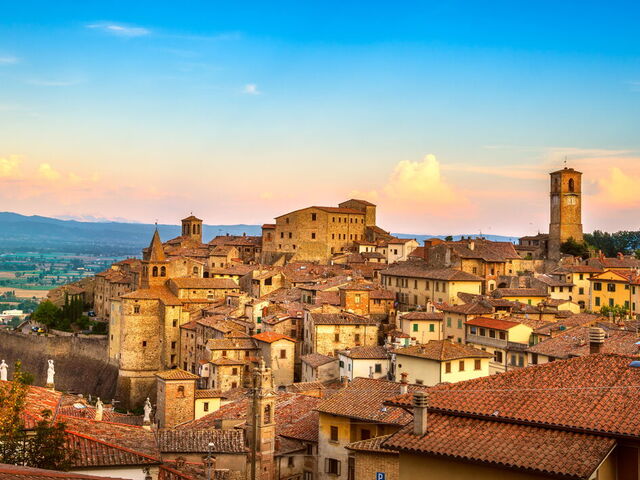
Arezzo is one of the most beautiful cities in Tuscany, but it's often unfairly undervalued compared to its sisters Florence, Pisa and Siena. We are talking aboutArezzo, a a real gem located on the hills in Tuscany. The city contains all the cultural, artistic and gastronomic characteristics of the entire Region and can offer its visitors peace and tranquility, as it is much less crowded and more intimate. The artistic heritage of Arezzo is vast, but confined within the walls of its city. Among its ups and downs, among its lanes and squares, you will be entranced by the beauty of Arezzo.
View on Arezzo
Let's find out the 10 must-see attractions in Arezzo!
THE SAINT FRANCIS BASILICA The Saint Francis Basilica, built in the XIV century, is famous particularly for the Storia della Vera Croce, a cycle of frescoes byPiero della Francesca which tells the story of the wooden branch which later became the material for the Cross of Christ. The basilica is known for being the second Franciscan basilica in the city: the first, in fact, was built outside the walls of Arezzo and destroyed for defensive reasons. Recently restored, this beautiful church will leave you breathless!
SAINT FRANCIS' SQUARE In front of the namesake Basilica, there is one beautiful square that is a renowed meeting place for the citizens of the city. The square hosts a historical caffe, opened in the 1809, called Caffè dei Costanti. Since it resisted for more than two centuries in the Sain Francis' Square, this catering activity became a real monument in Arezzo.
THE FORTEZZA MEDICEA (Medieval Fortress)
The Fortezza Medicea
Built in the 16th century by order of Cosimo II de Medici, the Medici Fortress represents an ancient example of military defense architecture. It was built on the hill of San Donato, taking its shape: the perimeter, in fact, is irregular and is delimited by five bastions from which the military could observe the arrival of any attacks. From here, however, you can also admire a splendid landscape, which includes the city of Arezzo, its surrounding rolling hills, the Arno valley and Pratomagno. Since the nineteenth century the Fortress has housed a beautiful garden, site of the numerous cultural events of the city, first of all the Antiques Fair when its square Grande is occupied by the Giostra del Saracino (see point 6).
THE SAINT PETER AND SAINT DONATO CATHEDRAL
The Duomo of Arezzo
Built between 1278 and 1511, the Cathedral of Santi Pietro e Donati is a wonderful example of Gothic art. Its construction, which took two centuries, was troubled by the historical and war events of the city and was therefore completed several times over the course of history. Its bell tower also has a special history: it was rebuilt three times! The first risked ruining the windows due to its extreme proximity to the church and was replaced with the second, then demolished for an aquifer that undermined its stability, replacing it with the one we see today. The Duomo features various materials inserted in different eras, making it even more special and authentic. In addition, the sixteenth-century front staircase enhances it by raising it in all its beauty.
THE AMPHITHEATER
Near the station you can find the ancient Roman Amphitheater, probably built between the 1st and 2nd century AD to carry out the activities of the games, but also to celebrate the various festivities at inside, being able to contain more than 10000 people inside. Visiting the Archaeological Museum of Arezzo you will better understand the events that go from the construction to the demolition of the Amphitheater and you can also admire a splendid collection of Etruscan and Roman ceramics and glass objects there found.
The Amphitheater has suffered many looting and damage, so what remains now are the two entrances, the arches and the elliptical shape. It is now used during the summer for the representation of plays and concerts.
THE PIAZZA GRANDE
The Piazza Grande in Arezzo
Place of historical, cultural and folkloristic interest, you cannot fail to stumble upon Piazza Grande during your visit to Arezzo. This square is the real heart of the city and is surrounded on one side by splendid arcades , designed by the renowned artist Vasari, and on the other by historical palaces such as the Pieve di Santa Maria (see point 8) and the Palazzo della Fraternità dei Laici . Under the arcades, bars, clubs and restaurants enjoy its magnificent view. The square was built downhill, with a drop of at least 10 meters to collect rainwater and is home to the famous Antiques Fair (held every first weekend of the month) and the Giostra del Saracino, a typical city game of Arezzo which is held twice every year: the penultimate Saturday of June (Giostra di San Donato) at night and the first Sunday of September (September carousel) by day.
Curiosity: this square is also the location of La vita è bella by Roberto Beningni (1997), in which it is seen going down several times to its descent! The film was awarded the Oscar for the best foreign film, also managing to give visibility to the city.
THE CLOCK TOWER
Piazza Grande is not only Palaces and Games: here, in fact, there is also the very famous Clock Tower, which rises from the Palazzo della Fraternità dei Laici. It is the only astronomical clock in Italy and one of the very rare in Europe. Its uniqueness and beauty are therefore internationally recognized. The Tower can be visited and you can thus discover all secrets about its functioning and the procedures used in the past to rearrange it. In addition, the Tower houses a terrace from which you can enjoy a splendid panoramic view over the whole city.
SANTA MARIA DELLA PIEVE
Santa Maria della Pieve
Piazza Grande is a true triumph of magnificent and scenographic architectures, among which it is worth mentioning the church dedicated to Santa Maria della Pieve. Built around the year 1000, it is one of the most important examples of Romanic architecture in the entire Tuscany region. Its external walls are characterized by a series of columns that cover them almost entirely and each column has a capital different from the other: this makes Santa Maria della Pieve a work admirable for hours, if he lingered carefully on every detail. The interior, on the other hand, is particularly sober. The apse of the church overlooks the Piazza Grande and contributes to making this site even more attractive and fascinating.
THE VASARI MUSEUM
Since Vasari gave a great contribution to the city and to the whole of Tuscany, his house, which he bought in 1511, has now become a museum. This place houses works, sketches and writings by the renowned artist from Arezzo. In addition to his works, it is interesting to dwell on the walls of the house: the frescoes that dominate them are not only work of Vasari, but also of his numerous pupils who attended the house to learn the techniques and secrets of a formidable artist.
AREZZO'S CUISINE
A “Tagliere (Platter)”
Arezzo is surrounded by hills and mountains, by fertile lands and skilled workers, who have been able to exploit all the products of the land to build their own culinary identity. To end the city tour in the best possible way, you just have to try its cuisine! The gastronomy of the city of Arezzo is homemade, but we know that the most authentic flavors are also the tastiest. We advise you to order platters of Casentino cold cuts and cheeses, to be enjoyed together with excellent local honey. Do not miss the Arezzo's acquacotta, the pappardelle with meat sauce, the gnocchi with ricotta and spinach, the pici with various toppings. Its main courses are mastered by Chianina, the Tuscan cut of meat par excellence. The typical dessert of Arezzo, on the other hand, is Gattò Aretino, a log of sponge cake dipped in chocolate and alchermes.
What are you waiting for? Arezzo is definitely a city to visit in every season! This beautiful city can be easily reached from our
holiday villas, like Villa Casentino, Villa Capolona and Santa Flora.
Read More
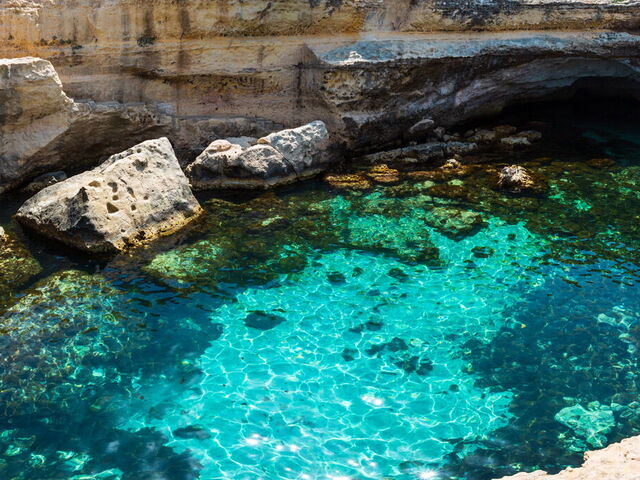
Salento: place of historical and cultural heritages, of centenary culinary traditions and above all of natural beauties, among which marvellous beaches and crystal clear water bays. In this area of the Heel of Italy, you get lost in breathtaking and scenic landscapes and in Roca Vecchia, between the coastal locations of San Foca and Torre dell'Orso, there is one of the most suggestive and visited attractions all over Apulia. The so-called "Salento Pearl" is the renowned Poetry Cave: a natural pool at 30 metres from the seaside.
Its popularity is due to popular legends and historical testimonials which animate it. As its name suggests, this natural pool was previously a cave: it was therefore covered by rock that has been eroded over time and collapsed by rain, sea and karst phenomena. The term posìa, deriving from Greek, names a place where you can find fresh water to drink, a source now extinct. However, the beauty of the Cave, with its emerald water and its white rocks, is also linked to a special legend: it is told that a charming princess used to swim in its water and that poets and singers, enchanted by the girl, would write poems and songs in her honor. It is obviously an invented history to justify the name of the cave, but the human presence in this historical site is proved by testimonials left here, such as Messapian inscriptions (but also Greeks and Latins) discovered on the walls in God Taotor honor. A few metres from here you could also admire remains of city walls, ruins of a sixteenth-century watchtower and of a manor overlooking the sea and the sanctuary of the Madonna di Roca, dating back to the seventeenth century.
It should be remembered and underlined that since last year there is a bathing ban in force, as the cliffs surrounding the Poetry Cave are increasingly fragile, but access to the archaeological area of Roca Vecchia is in any case possible from 9 to 19 by paying a ticket that allows you to visit the area and participate in events and workshops.
There is certainly no shortage of beautiful beaches in the surroundings where you can bathe and swim in equally beautiful waters, like Torre dell'Orso.
The Potery Cave can be easily reached from our villas in Puglia , like Trullo Pascarosa and Lamia Santo Arcangelo
Read More
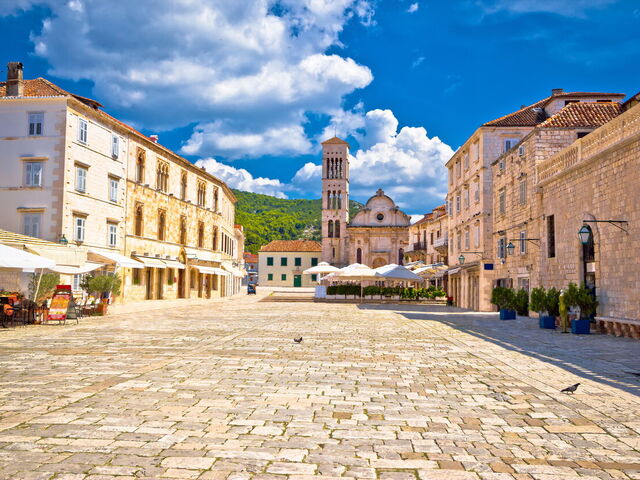
The Island of Hvar, with its 270 km of coastline, is the longest island of Dalmatia and is located among the islands of Vis, Brac and Korcula. Its paradise beaches, unspoiled nature and millenial history played in favor of Hvar, turning it into one of the most visited and loved places in Croatia by tourists from all over the world.
If you are going to stay in Hvar and you don't know what to do, read our top 10 list of unforgettable activities and unmissable places to visit on the island of Hvar!
1. ST. STEPHEN'S CATHEDRAL
Located in the historical centre of Hvar City, St. Stephen's Cathedral is one of the main attractions for tourists. The original building was built in the XII century, but it has been demolished and rebuilt many times, until 1755 as we can see it now. The Cathedral is dedicated to St. Stephen Pope and martyr and houses three poorly decorated naves. The real beauty of this Cathedral is its frontal square: ruled by the color white, it has many bars and restaurants on its stone pavement..
Wherever you are, every road will lead you to this beautiful square!
2. THE FORTRESS
The main panoramic point is Fort Fortica, also called Spanjola. It has a huge historical value for the city, in facts it was built in the XVI century on a 100 m high tall hill under the Venetian rule and then it was used as a shelter in 1571 by the island's inhabitants when they were invaded by the Turkies. Inside the Fortress, you can find an interesting museum, but the real beauty of this place stays in its breathtaking panoramic view extending on the city of Hvar to the nearby Pakleni Islands.
3. FRANCISCAN MONASTERY
The Franciscan Monastery is a place of peace, silence and serenity. It was built during the XV century as a shelter for sailors and then turned into a Monastery. Inside, there is a rich museum which collects coins, amphoraes and books, besides several paintings, among which the most important is "The last dinner".
4. THE THEATRE AND THE ARSENAL
The theatre of Hvar has got a huge historical value: it was opened in 1612 and is one of the oldest theatres in Europe. The Teatre was built on top of the Arsenal, one of the most beautiful buildings in Hvar City., which was used as a storage of boats and other nautical materials. The Theatre hosts the Contemporary Art Gallery and is still active, especially in the tourist season.
5. BEACHES
Don't foget to visit the magnificent island's beaches! There are several beaches because, as mentioned, the coastline extends for 270 kilometres! Three marvellous beaches selected for you nearby Hvar City are Dubovica, Zarace and Milna, three charming bays where you can relax, sunbath and enjoy wonderful sunsets.
6. PAKLENI ISLANDS
Pakleni Islands are a small archipelago consisting of little islands and sea rocks. The meaning of their name is controversial: it literally means "Hellish Islands", but pakelna also means pine. In facts, these islands houses meny pines, used mainly for the construction of boats and buildings. Over a long period of time, the term paklina has been linked to the term pakao (hell) and that's how a linguistic mistake changed the whole meaning of the Islands' name. The main island is Saint Clement, that has a small village built by Egen Meneghello, a pharmacists, in 1848. In the village there is a Greco-Roman amphoraes' museum, which represents the biggest collection of amphoraes in the whole country!
Other beautiful Islands of the Pakleni Archipelago which are worth a visit are Jerolim, Marinkovac and Šćedro, where you can enjoy crystal clear water, cuisine traditions and many activities as water sports.
7. STARI GRAD (OLD TOWN)
Stari Grad is a very ancient town (its name literally means ""Old Town"") founded in 384 b.C.. It's located on the North-West side of the Island in a gulf safe from attacks, so Stari Grad was known as a strategic spot where Adriatic Sea's sailors could stop during their long trips. This town hosts every year music and sport events and is a real jewel of the Island. With its vineyards and its fertile fields it offers to its visitors excellent typical products, among which a delicious wine. Stari Grad is for sure an unmissable place during your stay in Hvar!
8. BRUSJE
If you want to see the authentic side of Hvar, Brusje is made for you. Among gardens, paths and stone walls, the silece reings. This beautiful village has been abandoned since the end of II WW, but the true Island life took place here. Populated since the 15th century by farmers and shepherds, Brusje now has only 150 inhabitants, who are involved in tourism and the production of essential oils, especially of lavender derivatives. The town is famous for its characteristic roofs dating back to the Roman era and for the Mediterranean atmosphere that you can breathe: visiting Brusje is like diving into the authenticity of the past of the Island of Hvar. Here you can visit the Church of St. George, the fish market and the retirement home of Macirovo
9. JELSA
Located in the central area of the island, the town of Jelsa is a gem not to be missed. It has indented coasts and offers its visitors an incredible panorama. It is surrounded by mountains and nature, so much so that it is home to one of the most beautiful parks in Dalmatia, Perivoj. The city has always been inhabited and visited by tourists, presenting monuments and buildings of historical, artistic and cultural interest, as well as its characteristics villae rusticae , houses built across the fields and used for rest and relaxation. Later, the same houses were used by ethnologists and herbalists as a support to carry out their research.
10. VRBOSKA
The beautiful town of Vrboska is the smallest on the whole island of Hvar. It is known as little Venice for its canals and bridges. Its architecture is made up of buildings in Gothic, Renaissance and Baroque styles and the attractions that are worth a visit are the fishermen's museum (which houses a collection of nets, fishing tools and fish processing machinery), the church and fortress of Saint Mary Grace.
What are you waiting for? Book now you stay in Hvar!
Browse our selection of villas in Hvar, like Villa Liza, Villa Mare and Villa Cvita.
Read More
July 26, 2021
Alcantara Gorges: Everything You Need to Know!
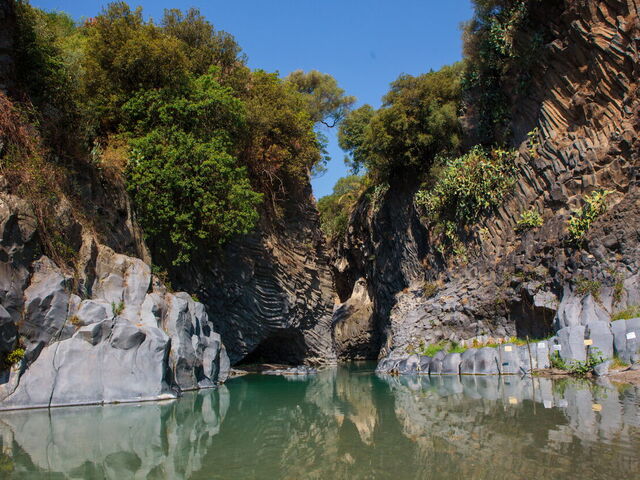
The Alcantara Gorges, also called Larderia Gorges, represent one of the most suggestive and less known place in Eastern Sicily. This paradise is located between the provinces of Messina and Catania, more precisely between the municipalities of Castiglione della Sicilia and Motta Camastra. The canyon was formed by the lava stone erosion, which took place over thousands of years by the Alcantara river, one of the most important rivers in Sicily. The most impressive and famous gorge of Alcantara is located in Fondaco Motta and is more than 6 km long, but only the first 3km can be reachable.
The lava stone walls, eroded by Alcantara, date back to more than 8000 years ago! In fact they are the result of lava flows open at that time and in more recent times as a result of volcanic eruptions, which have created overlapping different prismatic forms of the lava stone itself.
The territory of the Alcantara Gorges obtained in 2010 the European recognition of European Destination of Excellence
(EDEN).
The access routes to the gorges are different and varied: you can choose between a visit to the small gorges, the path of the Gole di Larderia and the of Montagna Grande, the path of Castiglione di Sicilia, the path of the Castello di Calatabiano or the one that runs along the banks of Alcantara. The difficulty levels are different, to give the possibility to beginners and advanced to enjoy this wonderful place.
Even if you are not an expert in walking, the Alcantara Gorges are worth a visit for its crazy panoramic views and its naturalistic landscape.
For sports lovers, the activities proposed are many. There is, in fact, the possibility of practicing canoying, body rafting, kayaking, trekking in the gorges and quad excursions. In addition, you can organize bike tours, hiking between Etna and the gorges, wine tastings and much more!
This little hidden paradise can be easily reached from our villas in Eastern Sicily, such as Villa La Boeme, Torre Isola Bella, Villa Angelina and Villa Torre Etnea.
Read More

Ibiza: the paradise in the heart of the Mediterranean sea where you can spend unforgettable nights dancing to the beats of world famous DJs, and enjoy long sunsets on golden beaches with your friends.
But are nightclubs, beaches and fun all that this marvelous island has to offer?
There’s even more than the crystal clear waters and nightlife! Discover inland Ibiza, with its small towns and villages suspended in time in the midst of the stark, wild landscape. Inland Ibiza’s authentic charm lies in the people who live there, away from the crowds. Over the centuries, they have protected their traditions and customs, as well as the art and architecture that can be found only in their villages.
Let’s discover inland Ibiza towns that are well worth a visit!
Sant Mateu d’Albarca
World renowned for its exquisite wine and characteristic Ibizan style San Mateu d’Albarca is a small, unspoilt town inland not far from the coast. Immersed in the countryside dotted with fields of fruit, the village offers unimaginable calm and tranquility. If you visit Sant Mateu d’Albarca in the winter, don’t miss the annual Wine Festival held in December. Just 18 kilometers from the city of Eivissa, it is a must for culture lovers.
Sant Carles de Peralta
It’s true that this village is on the coast, but it’s the outskirts that will enchant you! Sant Carles de Peralta is considered a miniature Ibiza, mainly because it has preserved island characteristics like old venues that have remained the same since the ‘60s, Mediterranean vegetation and few inhabitants during the low season.
Don’t miss the Las Dalias hippy market, with hundreds of stalls where you can find precious souvenirs and characteristic white embroidered dresses, as well as handcrafted objects and Gypsy style jewelry. If you love fashion and are always looking for the perfect, one-of-a-kind item to remember your vacation, Las Dalias market in Sant Carles de Peralta is for you. The market is open year round every Saturday from 10 am to 8 pm, and also on Monday and Tuesday nights from June to September. In August it is open on Sundays as well, from 9 am to 1 am. There are also live concerts and Namastè events!
Santa Gertrudis de Fruitera
This is where thousands of artists from all over Europe found refuge during the ‘60s and ‘70s. In fact, here they organized art galleries and workshops, and bartered art for food with the locals. There are still traces of this unusual exchange at the famous Bar Costa, where splendid paintings are hung among hams.
The village itself is very calm, and also known for its Pan amb tomaquet, or bread with tomato, which you can eat at the bars or various terraces in town.
Santa Gertrudis de Fruitera is another spot not to be missed! Its church, built at the end of the 1700s, has a splendid white facade in characteristic Ibizan style, but with colorful touches. It is one of a kind!
If you would like to visit marvelous inland Ibiza and explore splendid, authentic villages that offer utmost relaxation, take a look at our Villas in Ibiza, like Villa Savonne, Can Pegaso Grande and Blakstand San Rafael.
Read More
What could be better than relaxing in a beautiful thermal bath in the midst of nature? And what if I told you that there are magnificent natural hot springs scattered around Tuscany that can be enjoyed free of charge?
Well hidden among the Tuscan hills, these natural hot springs are the stuff of dreams. The surrounding wilderness, the peace and quiet in spring and autumn, the health benefits of the warm waters: don’t miss out on the one-of-a-kind experience that only hot springs can offer!
If you are looking for a relaxing spot to spend the entire day, even during the colder months, here is a selection of the most beautiful and charming free, natural hot springs in Tuscany.
1) Terme di Petriolo
These splendid natural hot springs are immersed in Valle dell’Ombrone between the villages of Monticiano and Civitella Paganico. In the Roman era, their praises were sung by none other than Cicero himself.
Also known as Bagni di Petriolo, the springs were once a rest stop for the Medici and Gonzaga families. The 43°C waters are rich in substances that benefit both the body and spirit.
2) Terme di Saturnia
Perhaps the most famous and renowned in all of Tuscany, the Terme di Saturnia are ideal if you seek a beautiful place. It is accessible to everyone, with photogenic waterfalls that are very Instagrammable.
Legend has it that the god Saturn, irritated at human behavior, launched a lightning bolt that carved out the springs. The mortals were then able to calm their spirits in the spring’s warm waters.
A divine day in the pools is waiting for you!
3) Bagni di San Filippo
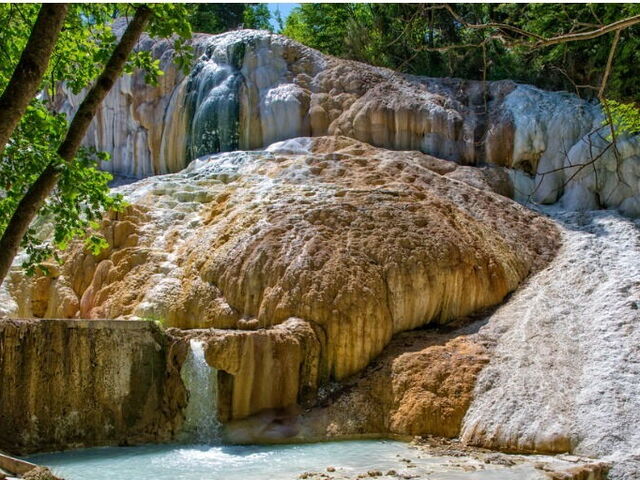
In the heart of the Val d’Orcia at the foot of Monte Amiata, the Bagni di San Filippo is one of the most incredible, relaxing spots in all of Tuscany. Over the years, calcium deposits have formed unforgettable white walls and cascades (called Fosso Bianco and Balena Bianca)! Located in the wilderness, these springs are hard to reach, but the reward for your patience and spirit of adventure is an invigorating bath!
In addition to the splendid natural surroundings and hot waters, the beauty of thermal springs is that they are perfect for relaxing with friends, family, or on a couple’s vacation. If you are looking for a place to stay, take a look at our vacation villas near these marvelous hot springs, like Casale Santa Francesca and get ready for a unique, magical experience in Tuscany!
Read More
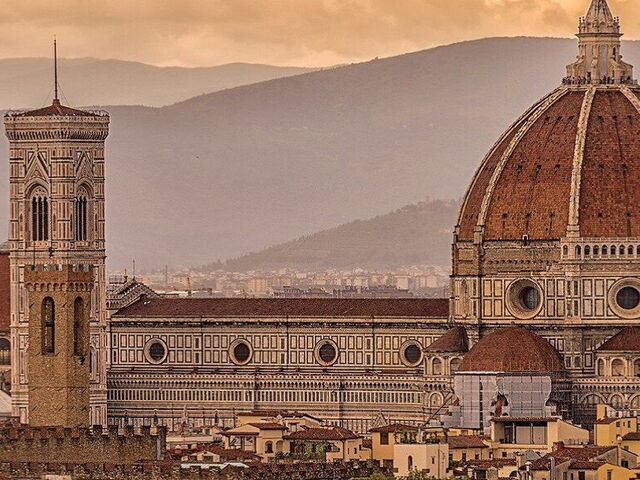
Florence is certainly one of the most beautiful cities in the world, rich in history, art and wonderful places. Before getting lost in the delightful streets of its historic center, why don't you try to see the city from another point of view? Florence offers numerous panoramic points from which you can admire breathtaking landscapes that will make you fall in love.
But what are the best scenic spots to see in Florence? Discover it by continuing to read this article!
Read More