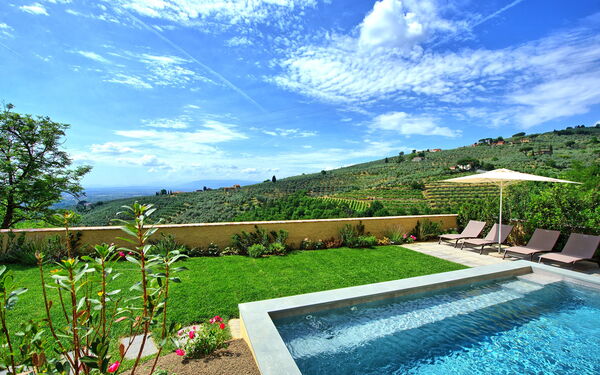
On the slopes of Montalbano stands a small village called Vinci. Into its narrow streets was born a man (whom to call a man is diminutive) who revolutionised the figurative arts, the history of thought and science.
He was the illegitimate son of a notary, and soon took an interest in art: at the age of 17, he was already enrolled in the Florentine Company of Painters. He was a pupil of the great Verrocchio but the influence of the Pollaiolo school was evident in his work.
In the meantime, he juggled as a musician at the court of Lorenzo Il Magnifico, illustrated his ideas for architectural works to Ludovico il Moro and worked as a painter and scenographer for the Sforza family.
The multifaceted genius was called Leonardo and we are proud to introduce you to his hometown.
THE CITY

THE ATTRACTIONS
Biblioteca Leonardiana: The creation of the Biblioteca Leonardiana dates back to the early 20th century and is closely linked to the figure of Gustavo Uzielli, one of the greatest Leonardo da Vinci scholars of the second half of the 19th century. His efforts, and those of the Vinci administration, to establish a Leonardo Library in Leonardo's hometown came to fruition in 1928, partly as a result of the Municipality of Vinci's acquisition of the Leonardo collection from Gustavo Uzielli's private library. In recent decades, the Biblioteca Leonardiana has increasingly become not only a documentary centre, but also a bibliographical information centre for Leonardo studies through the Bibliografia Internazionale Leonardiana (BIL), which systematically updates the bibliographical repertory of works by and on Leonardo da Vinci and includes thematic bibliographies, some of which are dedicated to protagonists of Leonardo studies. Today, the Library holds around 22,000 works by and about Leonardo and it is possible to view numerous facsimile reproductions of all his manuscripts and drawings and all his printed works starting with the first edition of the Treatise on Painting in 1651. The building is open to the public daily for consultation and loan. The Library can also be visited by appointment for schools and groups who can thus discover Leonardo's manuscript works reproduced as if from life.

Museo Leonardiano di Vinci: The idea of dedicating a museum to Leonardo was born in 1919 in honour of the fourth centenary of his death. At that time, the Conti Guidi Castle was donated to the municipality of Vinci and restoration work began. In 1953, the museum was ready to open, but it still shared space with the Biblioteca Leonardiana. From 1986 to 2010, a series of renovations and extensions were carried out: today the museum extends into the Uzielli building, the Conti Guidi Castle and the Villa il Ferrale. Each space houses different works, grouped by theme:
1. In Palazzina Uzielli, the video installation 'Leonardo's Mechanics' introduces the visitor to the main theme to which the collection is dedicated: Leonardo the Technologist and Engineer. The tour continues with sections devoted to construction machinery, textile technology, mechanical watches and anatomical studies.
2. In the Castle, the former home of the Guidi family, are machines and models documenting Leonardo's interests in war, architecture, mechanics and flight
3. The Villa il Ferrale houses the Leonardo and Painting section, bringing together in one place reproductions of all Leonardo's paintings and some of his most significant drawings.
Leonardo's Birthplace: Also called the House of Anchiano, it can be reached either by car or by bus. The Birthplace is also connected to the village by the Strada Verde (Green Road), an ancient footpath of about 3 km that can be travelled on foot. The House houses part of the exhibition route that invites visitors to discover the places and scenarios that first inspired Leonardo's work.
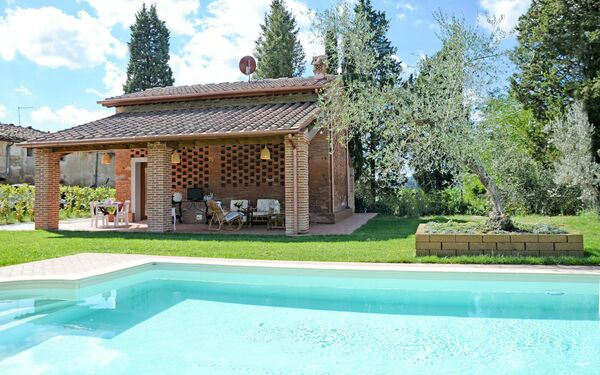
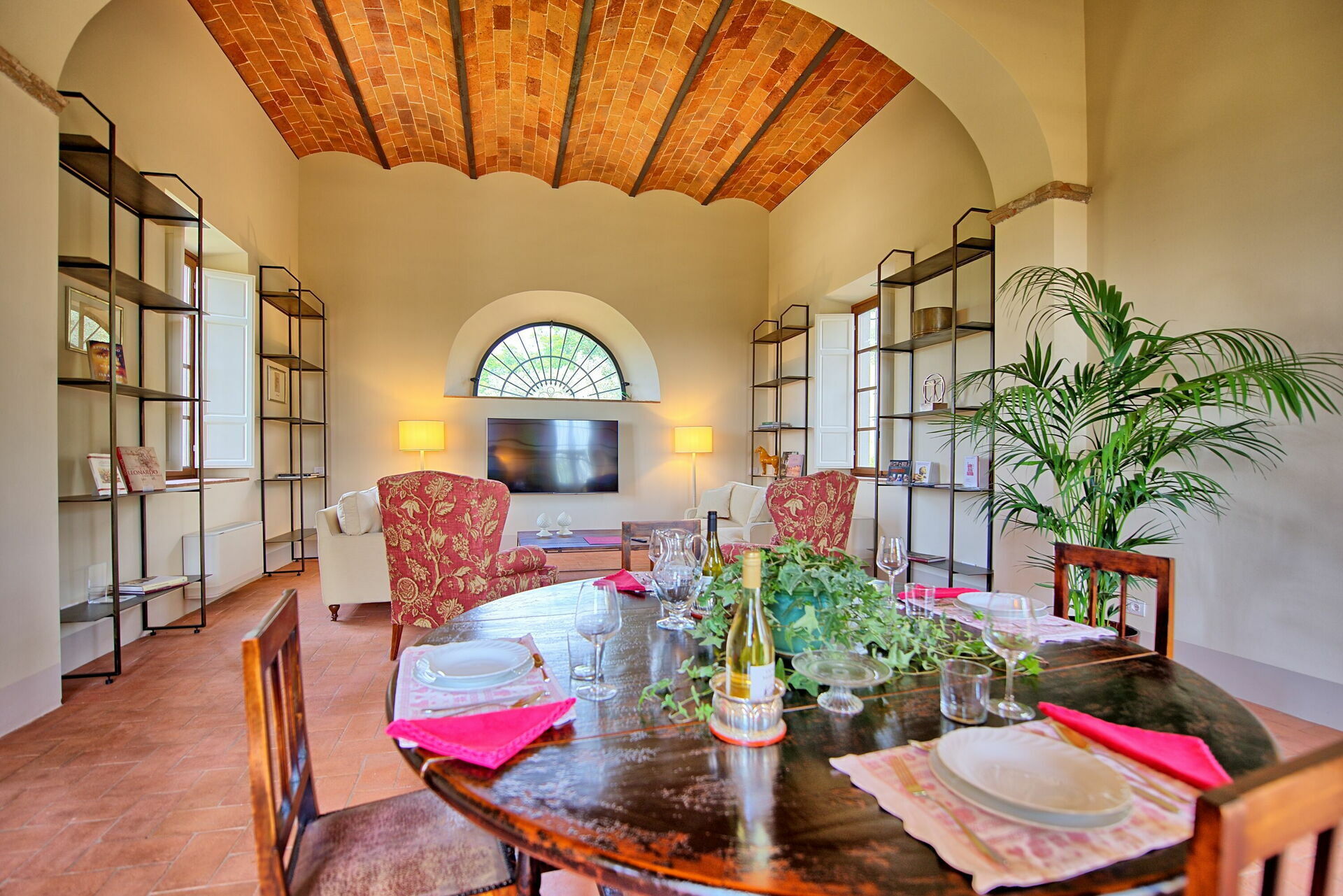
If you don't want to miss any of Vinci's attractions, stay in our Casa Lionardo: just 150 metres from Leonardo's birthplace mentioned above, this villa with private pool is a unique location. Did you know that during the periods when it is not rented it is the venue for cultural events celebrating the Genius Leonardo?