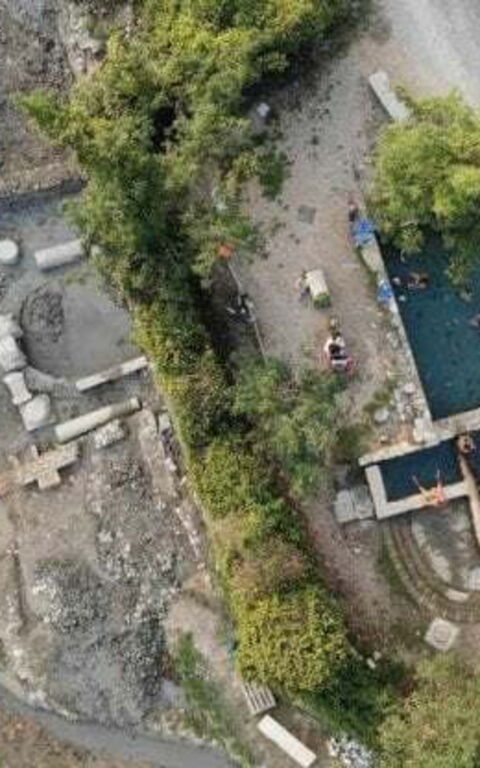
San Casciano dei Bagni is a small jewel of the Senese countryside: castles, villages such as Celle sul Rigo and Palazzone, gastronomic tradition (pici are born right here), gullies, no less than forty-two thermal springs at a temperature of 40 degrees . But all this did not seem to be enough for the beautiful Tuscan village. On 8 November, one of the most important discoveries after the Riace Bronzes was made among the stones of Bagno Grande: the discovery of 24 statuettes and thousands of coins. Gods, matrons, children and emperors are just some of the subjects of the statuettes that have been sleeping peacefully for 2300 years in the boiling water of the sacred baths of San Casciano dei bagni.
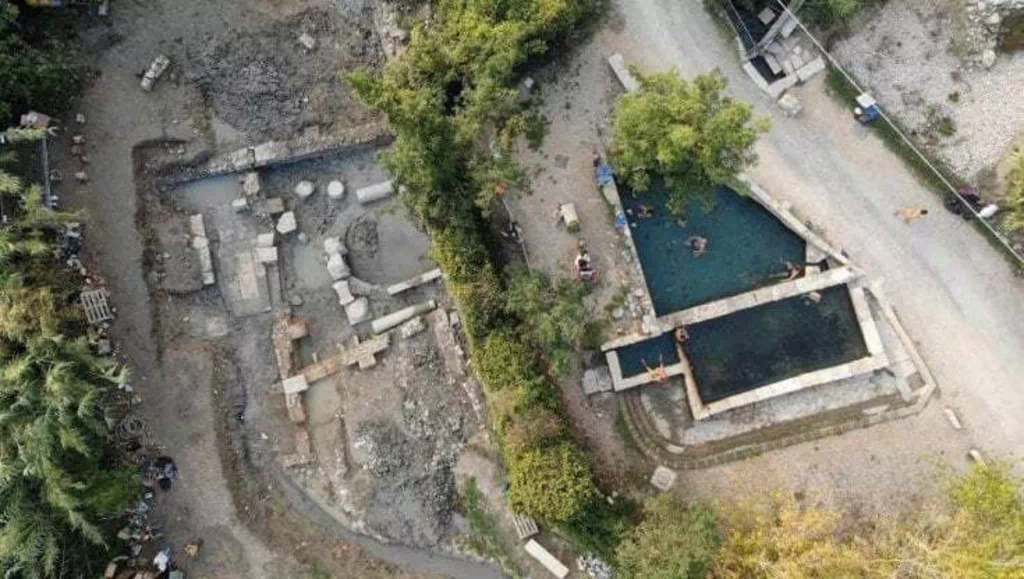 Photo Credit to Ministero della Cultura
 The statues were found in the Vasca Sacra or Santuario Ritrovato of the Bagno Grande at San Casciano dei Bagni. The sanctuary, conceived in the early imperial period, consists of a porch, a basin, a spring on different levels and a central arch. The site has been a point of archaeological interest for several years (it is mentioned in studies dating back to 1800). The archaeological excavations that led to the recent discovery began in the summer of 2020 and have seen several campaigns.
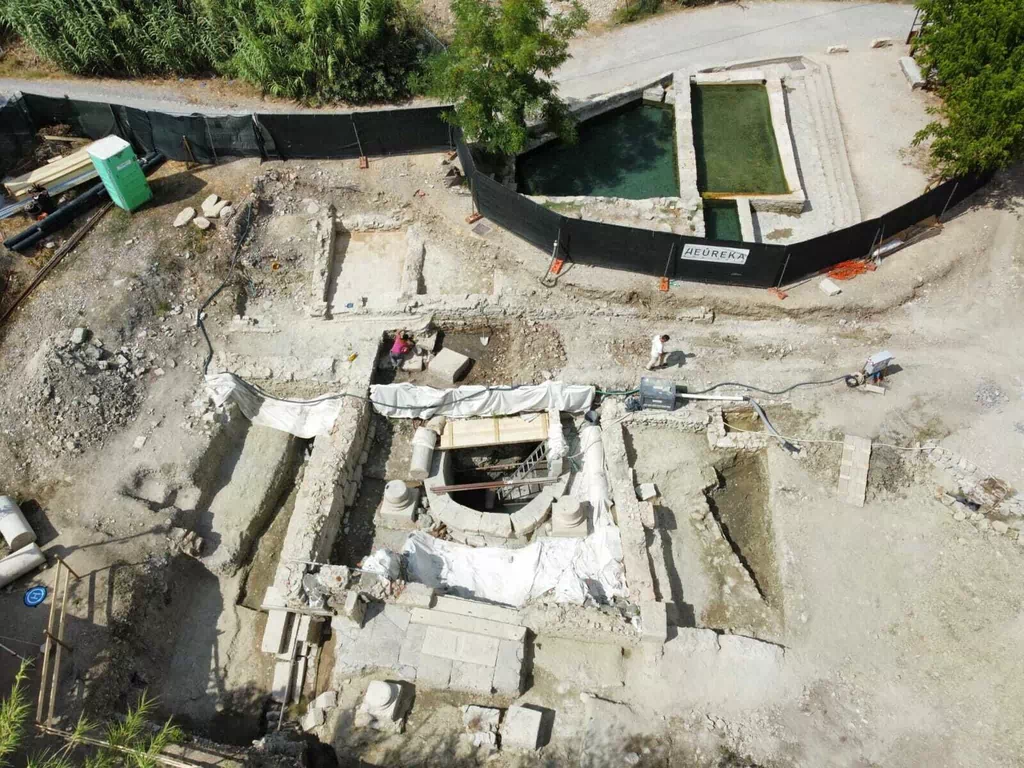 Photo Credit to Ministero della Cultura
WHAT ?
During the 6th excavation campaign, 24 toreutic masterpieces dating between the 2nd and 1st centuries BC and five thousand gold, silver and bronze coins were found from the bottom of the pool. The statues were made from life or according to the canons of the so-called mensura honorata, i.e. three Roman feet high (the equivalent of about one metre), and depict the deities worshipped in the sacred place together with the ancient dedicators. The statues, dedicated to the divinity of the spring and in perfect condition, are not only a treasure of inestimable value, but also a testimony (thanks to the engravings in Latin and Etruscan) to the coexistence of the Etruscan and Roman civilisations at the time: a coexistence that outside the sanctuary was known as conflict. The findings are therefore a testimony to a unique multicultural and multilingual context of peace, surrounded by political instability and war. The statues were presumably placed on the outer rim of the large sacred pool and anchored on the elegant travertine blocks. On several occasions later, the statues were detached from the edge of the pool and deposited at the bottom. It can therefore be deduced that this was not a dumping of sacred material into the hot water, but a ritual deposition, mediated with the deity. The votive acts continued until the 4th century AD with the deposition of almost six thousand coins (in silver, bronze and gold). Only at the beginning of the 5th century AD was the sanctuary dismantled and closed.
 Photo Credit to Ministero della Cultura
WHO?
The excavation was co-ordinated by Prof. Jacopo Tabolli of the University for Foreigners of Siena and directed in the field by Dr. Emanuele Mariotti on behalf of the Municipality of San Casciano dei Bagni; the protection was directed by Dr. Ada Salvi of the Superintendence of Siena Grosseto and Arezzo. The excavation campaign was entirely financed by the Municipality of San Casciano dei Bagni and was supported by contributions from international companies and foundations (Ergon, Heureka Ambiente, Vaseppi Trust, Friends of Florence Foundation, Max Ulfane). Conservation and restoration are conducted by Dr. Wilma Basilissi of the Central Institute for Restoration in collaboration with Dr. Pozzi of the Soprintendenza Archeologia, Belle Arti e Paesaggio for the provinces of Siena, Grosseto and Arezzo. The Nucleo Carabinieri Tutela del Patrimonio Culturale (Carabinieri Department for the Protection of the Cultural Heritage) in Florence also assisted the scientific direction of the excavation in the security operations of the excavation site and the finds.
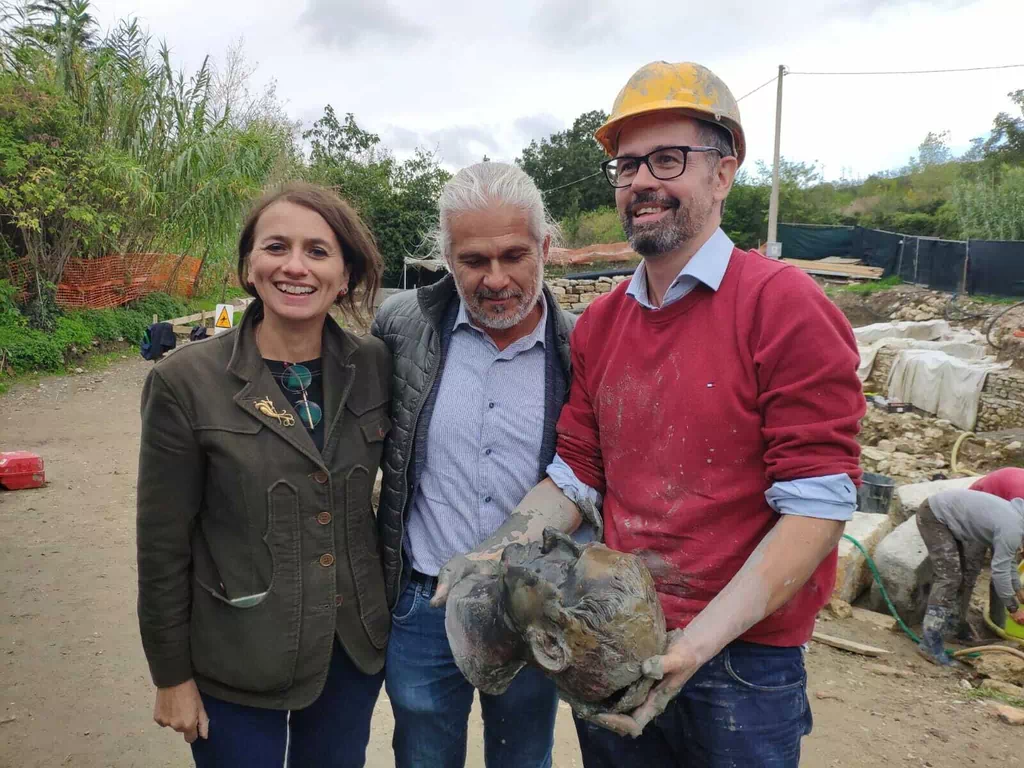 Photo credit to Ministero della Cultura
 WHY ?
We told you about this surprising discovery because a museum will soon be opened where the archaeological finds can be viewed, an unmissable opportunity .
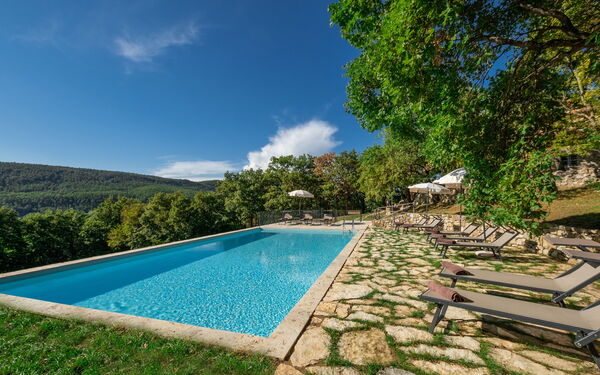
The good news? We have several villas just a few kilometres from San Casciano dei Bagni where you can relax after a day of discovery and culture. If you want to stay almost in the centre of San Casciano, we recommend our Villa Gualchiere and Villa Danilo, which are only two kilometres away. If, on the other hand, a greater distance is not a problem for you (we are talking about 4 km) we recommend Villa Lucarella.