Archive for "Culture"
Planning a trip to Italy? Browse and read our useful and informative articles about the endless range of attractions and experiences in this lovely country.
Travel through the beauties of Italy with us. Visit our blog!
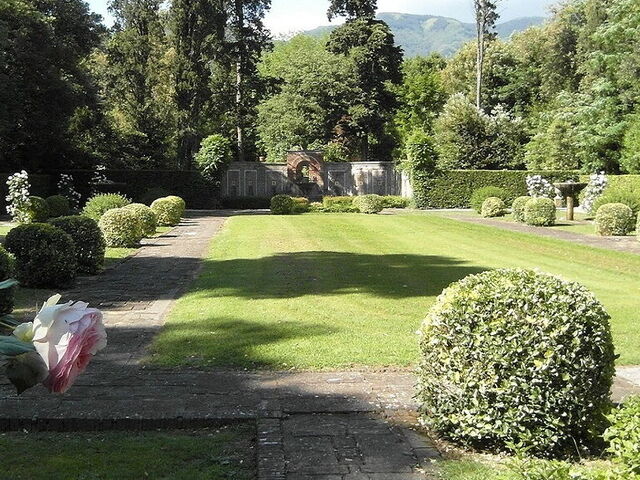
The Historical Villas of Lucca are famous art masterpieces located in the hills surrounding the city of Lucca in Tuscany. They were built between the 15th and 19th centuries and served as summer residences to the city aristocrats, who looked for an alternative to the ordinary city palaces. In fact, the architectural beauty of these villas was a symbol of their social affirmation and they were used to consolidate the family status in the countryside.
Actually, it was not a group of enriched nobles, but a class of politicians who kept contacts with noble European courts and who had commercial, social and cultural relations with important international figures.
The residences of these so-called "ambassadors of culture" are extremely beautiful. The ideal canon of beauty was used to build each building, as well as the marvellous gardens, arcades, inner halls and the spectacular frescoes decorating the rooms.
Would you like visit these splendid villas in Tuscany? Your itinerary must certainly include the six villas located in the countryside that present a unique architectural style, which are Villa Bernardini , Villa Grabau, Villa Mansi, Villa Oliva, Villa Reale and Villa Torrigiani .
Discover more about them now!
The stunning Villa Bernardini is located near Vicopelago and it was built in 1615 by Bernardino Bernardini. He worked as ambassador of the Republic at the court of some princes and at the Holy See and he used the villa to welcome his family and guests. The most beautiful corner of the building is certainly its magnificent garden: among the vast parks and flower beds, a small Secret Garden is hidden to give guests a corner of tranquillity! Even the interior of the villa amazes anyone who enters it for the first time. The large ballroom, the ancient furniture decorating the rooms and the luxury lounges are just splendid.
Villa Grabau is another building where you can admire the same original furniture and paintings that adorned the villa in the 16th century. One of the most beautiful frescoes is undoubtedly that of the ground floor's living room, which presents some beautiful "trompe l'oeil" motifs. Instead, the large 9-hectare park surrounding the building hosts centenary trees, some arboreal rarities and the majestic "Limonaia", an eighteenth-century greenhouse housing dozens of lemon trees. Still outside, you can admire the impressive Verzura Theater, which is a space dedicated to shows immersed in the wonderful greenery.
Villa Mansi in Segromigno in Monte appears against the background of a pretty English garden. If you wish to reach it, you need to enter the park through Piazzale delle Scuderie and cross a small bridge: from there, you can get to the marvellous water architecture and to the small waterfalls adorning the villa's outdoor. The interior has a peculiar structure, as it presents a succession of communicating rooms linked to a mysterious legend. It is said, in fact, that the corridors and rooms are haunted by the ghost of Lucida Mansi, the victim of a pact with the devil. It is a unique place that is definitely worth a visit!
The magnificent Villa Oliva is located in the town of San Pancrazio and dates back to the end of the 16th century. It was created by Matteo Civitali, a master trained in Florence who transferred many of his works here. The beautiful Renaissance paintings show a precise search for harmony, through the study of proportion and perspective. The wonderful external colonnade, the large park and the poetry of the surrounding environment make this villa a truly fabulous place!
Another place you cannot miss is Villa Reale in Marlia, which has been inhabited by Elisa Baciocchi (Napoleon's sister and princess of Lucca) in the 19th century. The property extends over 16 hectares and presents a series of splendid gardens and noble palaces. It's difficult to choose which one is the most beautiful! Moreover, in the park next to Viali delle Camelie, you can find the lovely Water Theater and the Verzura Theater, which is a magical open space where Paganini also performed.
Finally, Villa Torrigiani distinguishes itself for a colorful façade, made with different materials such as gray stone, white marble and yellow plaster. The villa dates back to the sixteenth century, but it was largely restored in the seventeenth century. The Ambassador of the Republic of Lucca at the court of the Sun King, who owned the villa at the time, decided to transform it into a luxurious residence with flower gardens and mirrored pools, getting inspired by the park of Versailles. A tour in his garden will simply leave you breathless!
Looking for a holiday rental near Lucca to visit all these beautiful Villas? Choose the luxury Villa De Ranieri, the comfortable Flavia Apartments or the fantastic Villa Fiamma!
© Alice Pilastri
Read More
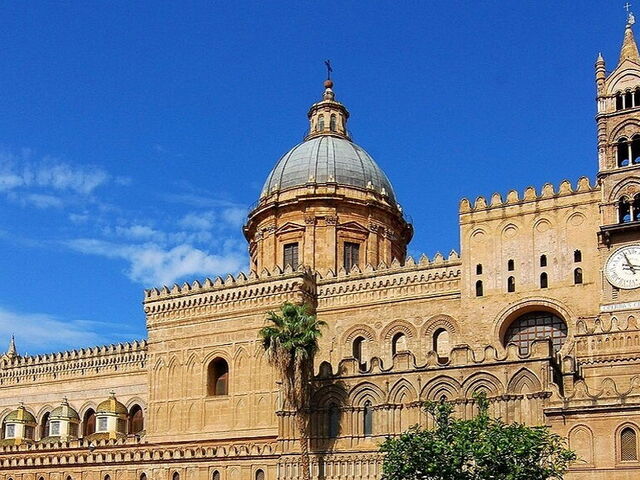
UNESCO is a United Nations organization specialized in enhancement the values of education, science and culture. Every year, new monuments and beautiful places located all over the world are added to the list of World Heritage Sites as they stand out for their historical, artistic and cultural importance.
The magnificent places of Sicily could not miss on this list! Its ancient monuments, splendid landscapes, century-old churches and the traces of a unique history are the elements that make Sicily one of the most fascinating Italian regions.
Here is a list of the seven Sicilian places recognized as "World Heritage Sites" by UNESCO: discover them all and start planning your dream trip to Sicily!
1. Archaeological area of Agrigento
The splendid Valley of the Temples in Agrigento (discover more!) contains the remains of this ancient Greek city-state. This magnificent archaeological area contains ten Doric temples, some of which are still intact and visitable. The timeless scenery that characterizes Agrigento is breathtaking and an indescribable experience for each tourist.
Looking for a villa for rent in Agrigento? Choose Villa Agorà
2. Villa Romana del Casale and Piazza Armerina
The Roman Villa in Piazza Armerina is a masterpiece of late Roman art dating back to the 4th-3rd century BC. This luxury villa is located in the Contrada Casale, a locality in the heart of central Sicily. Its enchanting mosaics are the best preserved in the world and their colors still shine like centuries ago.
3. Aeolian Islands
The islands of Stromboli, Panarea, Vulcano, Alicudi, Filicudi, Lipari and Salina form one of the most beautiful Italian archipelagosy. These heaven-on-earth sites have a volcanic origin and have been awarded for their naturalistic and landscape value, as they are one of the main places for volcanology studies. The beautiful panorama and the turquoise sea adorn this magic place making it extraordinary.
4. Baroque cities of the Val di Noto
"Val di Noto" is an area of south-eastern Sicily, extending between the provinces of Syracuse, Catania and Ragusa. The localities of Modica, Noto, Palazzolo Acreide, CataniaRagusa, Scicli, Caltagirone and Militello in Val di Catania are known for their priceless architectural value, because they are unique examples of European Baroque art. These picturesque villages, especially that of Noto, preserve some wonderful art masterpieces that stand out for their homogeneity.
5. Syracuse and the Rock Necropolis of Pantalica
The Necropolis of Pantalica is located a stone's throw from the center of Syracuse and contains more than 500 prehistoric tombs dating back to the 13th century BC, as well as some splendid natural rock caves and the famous Palazzo del Principe. Even the city of Syracuse (discover more!) is part of the UNESCO heritage, as it conserves a unique artistic and historical treasure. The old town center, situated on the island of Ortigia, contains numerous testimonies of Greek and Roman times, such as the ear of Dionysus, the Archaeological Park of Neapolis, the Temple of Apollo and the Greek Theater.
Are you looking for a villa for rent in Syracuse? Choose Villa del Mito or Villa Angelina!
6. Mount Etna
Mount Etna (discover more!) is a volcano whose cultural and mythological meaning mixes with the scientific value. Europe's highest volcano is a naturalistic beauty that can be visited at any time of the year to appreciate its charm, both during an excursion under the sun and skiing on its snow-covered slopes. Its stupendous panoramas present steaming vents, verdant woods and rocky terrain that get illuminated by incandescent lava in occasion of the extraordinary eruptions.
Looking for a villa for rent near Mount Etna? Choose Villa La Boheme or Villa Torre Etnea!
7. The Arab-Norman itinerary of Palermo, Monreale and Cefalù
This magnificent UNESCO heritage is formed by a group of civil and religious monuments in Palermo, the cathedrals of Monreale and Cefalù. All these buildings stand out for the unique artistic style, based on the coexistence and interchange of different cultures. The result is an original kind of architecture, made with Byzantine, Islamic and Latin art elements. Inside Palermo (discover more!), which is one of the most vibrant cities in Europe, the town of Monreale and the delightful maritime village of Cefalù (discover more!) there are splendid treasures that fascinate tourists taking them along a wonderful time travel.
Looking for a villa for rent near Palermo?Choose Villa Vincenzo!
© Alice Pilastri
Read More
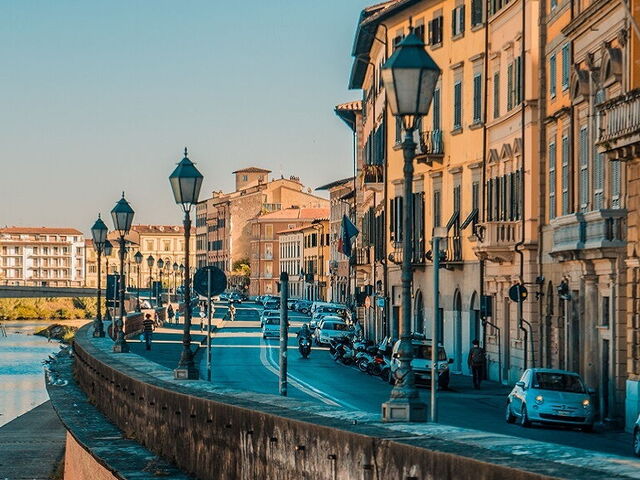
There is much more than just the Leaning Tower and Pizza dei Miracoli in the splendid city of Pisa! Statues, ancient buildings, beautiful churches and centuries of a unique history are the features that distinguish Pisa from any other city in the world.
In fact, Pisa was an important "City State" in the thirteenth century, as well as a rich "Maritime Republic" that has dominated the Tyrrhenian and the Mediterranean Sea for several decades. The pride of belonging to this noble city has never completely disappeared, neither after the territorial conquest by Florence in the 16th century.
One of the strongest symbols of the so-called "pisanity" is the Game of the Bridge, an annual event where two quarters of the city called "Mezzogiorno" and "Tramontana" face each other to conquer "Ponte di Mezzo", the main city bridge that also symbolizes the dominion over the whole city. It is a unique event in the world that was born in the 16th century that is considered part of the Tuscan culture. Ready to discover more about it?
The "Gioco del Ponte" is a tremendous event in which 240 men divided into teams of twenty "fighters" face off
pushing a heavy cart with their back, to take it to the opposite side of the bridge.
The first edition was held on February 22, 1568 and was completely different from the current one. In fact, it was the so-called "War with the Stones", a popular type of combat in Florence that was later banned by Francis I. Later, the event turned into the "Gioco del Mazzascudo", that is to say a battle of fighters equipped with armor, bats and shields taking place for a whole day.
As time passed, Pisans started to appreciate this event, which started to undergo some transformations. Initially, the Game became a complex combat with soldiers and small towers that served as a training for the war. There were thousands of participants and the battle tended to be very bloody. In 1785 the Game was suspended by the Grand Duke of Tuscany and it did not take place in the following 150 years, until the period of fascism.
Since 1957, the Game has been organized every year and it has completely changed its characteristics. Now, it's a non-violent event based on the competition between two teams of 20 fighters that must push of a large wooden trolley on rails on the other side of the bridge. Teams are led by a "Captain" who shouts his commands, just like the captains of the great Pisant ships of the 13th century did with their crew.
The Game of the Bridge takes place every year on the last Saturday of June and includes two parts, the "Historic Procession" and the "Battle" . More than 700 participants attend the parade where each one has a specific role and wears typical Renaissance costumes. The main moment of the Game takes place at night, under the light of thousands of torches put on the streets and next to the Arno river. The atmosphere is very lively, as thousands of Pisans and tourists watch the battle with passion, enthusiasm and transport.
This is an event you cannot miss! This year, the Game of the Bridge will take place on June 30 and tens of thousands of people are expected to participate.
Wouldn't you like to take part to it? Book one of our holiday rentals near Pisa, like Flavia or Il Fienile di Giovanna and discover this wonderful Italian tradition!
© Alice Pilastri
Read More
June 11, 2019
6 Cities to See for an Etruscan Tour of Tuscany
The historical, artistic and cultural heritage of Tuscany is simply unique. Towns of art, archaeological sites, Italian paintings and other masterpieces are some of the beauties enriching the charm of this wonderland.
The Etruscan period is one of the most important historical eras. This powerful civilization settled in southern Tuscany, Umbria and Latium between the 9th and the 1st century BC, and then expanded its territory towards Campania, Emilia-Romagna and Lombardy. Thanks to the numerous architectural traces left in our territory, it has been possible to reconstruct the main aspects of their culture, especially as regards the singular funerary traditions. Many Italian cities still conserve some beautiful necropolis, which were the ancient Etruscan tombs that could have different forms depending on the social status of the deceased. These centers were part of the "Dodecapoli", which was the federation of the twelve most important Etruscan city-states.
Are you curious to follow the traces of the Etruscans in Tuscany? These beautiful summer days are just perfect to plan a visit to the main archaeological sites in the region or to look for the remains of the heritage that thiscivilization left in some splendid localities!
In Tuscany, in fact, you can visit six of the twelve cities that were part of the ancient federation: discover where they are and organize your itinerary to see them all!
1- Populonia (LI)
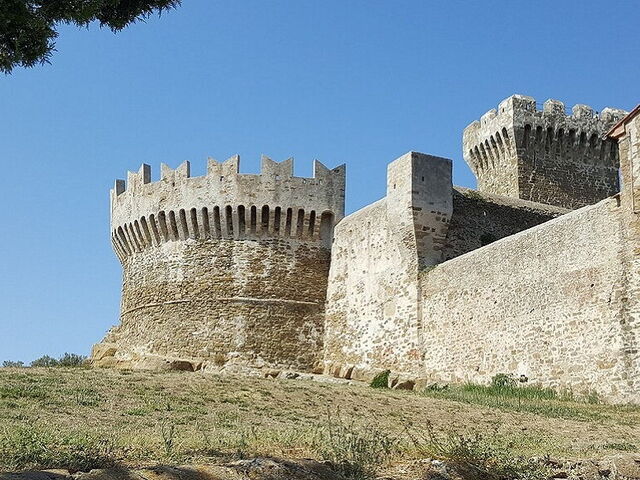
Populonia was the only city-state facing the sea and it guaranteed a strategic position for maritime trade. This ancient Acropolis is located at the top of a promontory overlooking the magnificent Gulf of Baratti, right in front of the coasts of Elba Island. It is famous for its beautiful Archaeological Park, an open-air museum containing thousands of artifacts found in the region, many of which are related to the iron work that was carried out in this area. The fascinating necropolis, on the other hand, is a stone's throw from the beach of Baratti and it presents tombs of various types (newsstand, pit, mound, sarcophagus, caisson and chamber).
Looking for a holiday rental in Populonia? Choose Castello Leopoldo
2- Chiusi (SI)
The small town of Chiusi is situated in the midst of greenery, in the heart of a quiet countryside with fertile soil which was largely exploited by the Etruscans. One of its most important monuments is the beautiful Labyrinth of Porsenna, an ingenious hydraulic work dating back to the first century BC that can be explored in its tunnels by entering the Cathedral Museum. The necropolis is a few kilometers from the center and contains more than a thousand ancient tombs.
Looking for a holiday rental in Chiusi? Choose Casale Giulio
3- Arezzo
It was here that one of the symbols of the Etruscan civilization was found, specifically the marvelous Chimera of the 4th century BC which is now preserved in the Archaeological Museum of Florence. Arezzo offers the possibility of visiting some interesting museums containing rich Etruscan collections, such as the Gaio Clinio Mecenate Museum, which preserves earthen vessels found in the Necropolis of Poggio del Sole, or the Etruscan Academy Museum, with bronzes and other objects coming from the Tumulus of the Sodo. Other traces of the Etruscan civilization can be found in Piazzetta San Niccolò, where the remains of the city walls are still visible, or walking towards the ancient "city of the dead" located in the surrounding valley, where you will find several burials.
Looking for a holiday rental in Arezzo? Choose Villa Lo Scoiattolo!
4- Cortona (AR)
This splendid city presents the famous MAEC museum, a unique and original exhibition space collecting all the objects found in the territory of Cortona, such as the Tabula Cortonensis, the third Etruscan text by length. Its historic center still contains the remains of the walls dating back to the 4th century BC and offers the possibility of visiting other wonderful museums which will make your culture tour extremely interesting.
Looking for a holiday rental in Cortona? Choose Villa Calcinaio!
5- Fiesole (FI)
Fiesole was the ancient locumonia of Vipsul, where the Etruscans left numerous testimonies. One of these is the magnificent city walls, which can be seen along Via delle Mura Etrusche. In this important archaeological area many of the finds preserved in the Archaeological Museum of Fiesole were found, as well as the remains of dozens of tombs and of the acropolis, which stood near the Convent of San Francesco.
Looking for a holiday rental in Fiesole? Choose Villa Ancora!
6- Volterra (PI)
The city that in the 4th century BC was called Velathri presents numerous necropolises, such as those of Portone, Badia, delle Ripaie and Ulimeto. The Etruscan acropolis of Pian di Castello also presents some wonderful cisterns like the
Augustan Pool and the ruins of temples dating back to the III-II century BC. Many of the findings discovered in this area are now preserved in the Guarnacci Museum, one of the most beautiful Italians collections of Etruscan art.
Looking for a holiday rental in Volterra? Choose Villa Picchio!
© Alice Pilastri
Read More
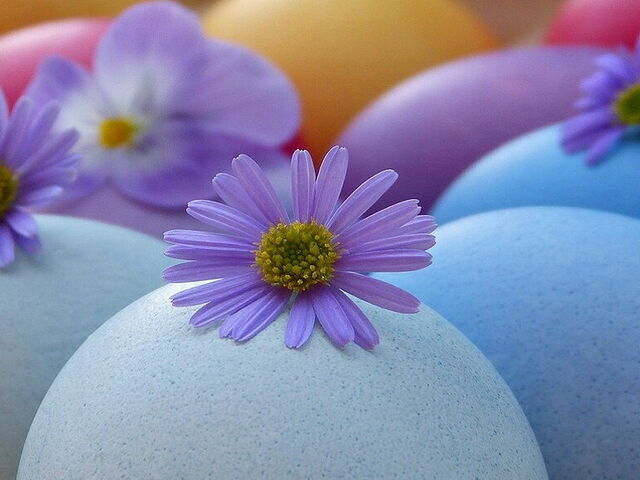
There is no better place to celebrate Easter than Greece!
Corfu is the most famous Greek island for Orthodox Easter festivities. It is a deeply felt event that is much more cherished than Christmas Day, as emigrants return to their home country to celebrate it with the whole family. It almost never coincides to the Catholic Easter and this year it will take place on Sunday 28th April. Corfu will host beautiful celebrations in the Old Town, offering a unique experience to tourists and worshippers who decide to take part to this traditional ambience. The singular charm of the island, which has nothing to envy to other European cities, attracts thousands of guests during the magic Holy Week.
Why don’t you plan your visit to Corfu to celebrate Easter in a different and special manner? Book Villa Jewel, a beautiful property we rent on the island, and discover more about the fantastic Easter celebrations!
The reason why the date of the two Easter days do not correspond is linked to the decision that was taken in occasion of the Council of Nicaea in 325. The Orthodox Church decided to use the Julian calendar to determine its date, while the Catholics chose the Gregorian one.
The Holy week begins the day before Palm Sunday, called Lazarus Saturday (Savvato tou Lazarou), as the Gospel of John tells that Jesus made the raising of his friend Lazarus eight days before his Resurrection. In remembrance of the miracle, some choirs meet in the churche of Agios Nikolaus ton Geronton and walk in procession along the city streets, singing the so-called “Lazarus’ kalandas”.
Palm Sunday begins with “Agios Spyridon Litany”, a procession dedicated to the city’s patron Saint, followed by eighteen philharmonic orchestras. This event occurs every year since 1630, when the Saint freed the island from a terrible plague. Later in the day, citizens expose red curtains on their city windows and some concerts take place after sunset.
The city changes its look with the beginning of the week: purple lanterns are located on monuments and palaces as a sign of grief on Monday, while Tuesday is the day of the “Tropario of Kassiani”, a splendid Byzantine hymn sung in churches. Various concerts, musicals and other events liven up these days until the Holy Thursday, when families cook typical Easter dishes and the Twelve Gospels are read inside the Cathedral of Corfu.
The day after is the most intense, as cities host processions towards the sepulchres on the notes of the songs played by the Philharmonic Orchestras, while Saturday starts with the representation of the earthquake that accompanied the death of Jesus in Kyra Faneromeni Church. Later, they take part to the litany and procession to Agios Spyridon sepulchre.
This is also the day of one of the most singular and funniest Easter events: the “spasimo ton botidon”! According to an old Venetian tradition, people throw red terracotta vases from their terraces in the street as a sign of good luck. Another lucky custom is “Mastela”, the name of a wooden barrel placed in odos Nikiforou Theotoki street where passers-by can leave a coin.
Saturday night is an extraordinary moment: to celebrate the Resurrection of Christ, the sky fills up with beautiful fireworks and a unique atmosphere of joys pervades the streets! The celebrations end on Easter Day, when Lent’s fast ends and families gather to eat the traditional tsilichourda together.
Do not miss the next Easter celebrations in Corfu! Choose your favourite villa among our selection of seaside properties in Corfu and plan your dream holiday!
© Alice Pilastri
Read More
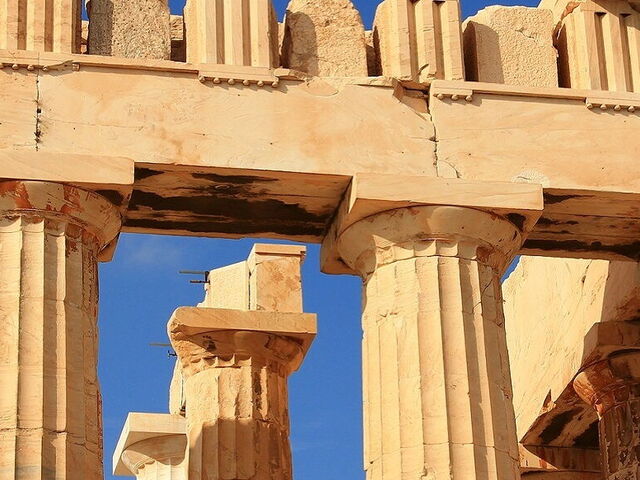
Greece is not just a beautiful holiday destination for a nice summer holiday, but a country with a unique history and artistic heritage to discover in occasion of a cultural tour. Museums, archaeological sites, temples and ancient findings are everywhere and it is not easy to choose which ones deserve to be seen and visited in a few days. Some of them have even been recognized by UNESCO as "World Heritage Sites" because of the historical and artistic importance that they possess.
So why don't you plan to visit some of the best World Heritage Sites in occasion of your next trip? Here is a list of the top 7 places you must see during this amazing Greek tour, as well as some suggestions about the villas you might book during your stay!
1) The Acropolis
In the heart of Athens, there is a large hill overlooking the whole city presenting majestic buildings on its top. The Acropolis of Athens is the best-known and largest sanctuary of the town, which was erected in the fifth century BC. It includes some important monuments such as the Parthenon, the Propylaia, the Erechtheion and the Τemple of Athena Nike, which are some of the most iconic buildings of Ancient Greece. Dedicated to the cult of Athena Polias, it was a religious and political sites that must be seen at least once in a lifetime.
2) The Old Town of Corfu
The old town of Corfu was founded in the 8th century BC and is one of the island's main centres, as well as the capital of the Ionian Islands. It presents an important fortification as well as a beautiful port that was used for ancient trade. The mix of civilizations and cultures that influenced the city's development makes its aspect unique and slightly "Italian", as the Venetian influence was great. Walk along the narrow city streets, admire the charming stone buildings and relax staying at one of our holiday rentals in Corfu, like Villa di Giovanni !
3) Meteora
Meteora is a locality near the Plain of Thessaly hosting a unique site composed of various monasteries build 400 meters above the sea level, As well as being a major religious site for Christians and pilgrims, it is also one of the most photogenic places in Greece because of its special architecture. This "stone forest" is a spiritual place with a timeless beauty immersed in a magical landscape... don't miss it!
4) The Archaeological Site of Delphi
The beautiful Archaelogical Site of Delphi is located next to Mount Parnassos and was the home of the most famous Greek oracles. It includes two charming sanctuaries, dedicated to Apollo and Athena, and it was a religious, cultural and sports centre in ancient times. In fact, Delphi was considered the "centre of the world"! .
5) The Medieval city of Rhodes
Rhodes Old Town is a locality with an unspoiled beauty. Located in the heart of the island, it was largely influenced by the arrival of some knights belonging to the Order of the Knights of Saint John of Jerusalem in the 14th century, who introduced some Byzantine details to its Gothic Renaissance buildings.
6) Sanctuary of Asklepios at Epidaurus
Epidaurus is nestled in a lovely valley in the Peloponnese and it was one of the most important healing centres of the Mediterranean. The site included more than 200 healing centres and people came from remote lands to receive the therapic treatments for spirit, body and soul. Epidaurus includes some wonderful temples and altars, among which there is the famous Sanctuary of Asklepios, a valuable testimony of Greek art considered the birthplace of medicine.
7) Olympia Archaeological Site
This is maybe one of the best-known archaelogical sites of the world. Olympia is the town were the first Olympic Games were held, and the wonderful stadium is still visible. Located in Western Peloponnese, it was an important religious and athletic centre dedicated to the cult of Zeus.
© Alice Pilastri
Read More
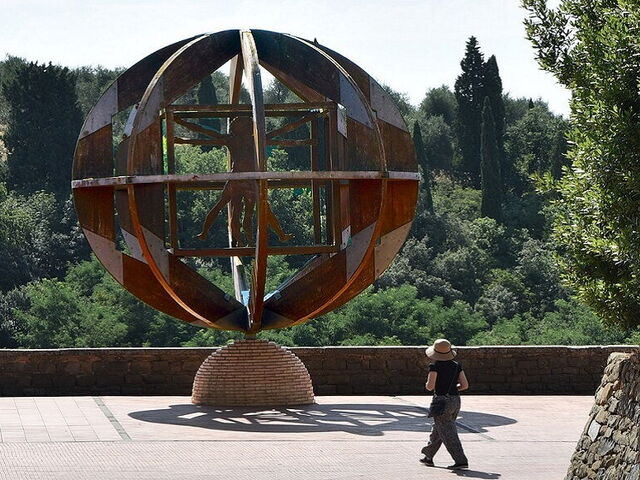
2019 is Leonardo's year!
After five hundred years since his death, innumerable activities and initiatives have been organized throughout Italy to celebrate one of Renaissance's best geniuses. From his birthtown Anchiano to the cities of Florence, Parma, Torino and Venice, each of the events and exhibitions dedicated to the Italian artist is interesting in its own way.
So why don't you seize this fantastic opportunity to discover more about one of the most important personalities of all times? Here are all the appointment you cannot miss in Italy...save the dates!
In Anchiano, a small town immersed in the countryside of Montalbano, Tuscany, Leonardo spent his childhood and teenage years. His Birth House, where he was born in April 15th 1452, is now open to the public and itpresents an interesting interactive exposition dedicated to his life. It is simple to reach Vinci from Anchiano: there is a tiny road called "Strada Verde" that can be traveled by foot admiring a wonderful rolling landscape.
Of course, Vinci is the place that best represents Leonardo's life. He was baptised inside Santa Croce Church and it was here that he invented many of his works. Manuscripts, mechanical clocks, drawings, bicycles and hundreds of other machines invented by the scientist are now conserved in the "Museo Leonardiano di Vinci", a museum structured btween three buildings called Palazzina Uzielli, Conti Guidi Castle and Villa il Ferrale. From April 15th to October 15th 2019, the museum hosts the exhibition called "Leonardo a Vinci. Alle origini del genio", based on the first biographical facts about the artists and organized in collaboration with the Uffizi Gallery. And there's more: check when the other conferences, expositions and events take place during the year in the Museum's official website!
Even Florence celebrates this quincentenary! January 2019 correponded to the inauguration of a wonderful and exclusive exhibition in the Uffizi Gallery dedicated to the "Leicester's Code", which was a very special event that concerned the city where Leonardo received his formation. Although it has already ended, it is still possible to see the splendid masterpieces by the painter conserved inside the museum, like the "Annunciation" or "The Baptism of Christ", as well as discovering the hidden secrets in Palazzo Vecchio's Salone dei Cinquecento, where the well-known fresco called "Battle of Anghiari" was once conserved!
Milan, which is the town where Leonardo moved in 1482, will instead open the doors of a charming decorated hall called "Sala delle Asse" inside the Castello Sforzesco, which is one of the best artistic evidences of the painter. Until October 13th 2019, the "Museo Nazionale Scienza e Tecnologia Leonardo da Vinci" will also host a temporary exposition called "Leonardo da Vinci Parade", which will mix the beauty of Pinacoteca di Brera's paintings with the unique scientific drawings made by Leonardo. Further to these initiatives, in Milan you cannot miss a visit to the beautiful Cenacolo, to Santa Maria delle Grazie's Refettorio or to the Veneranda Biblioteca Ambrosiana, which are symbolic places connected with the artistic production of the Genius.
The journey retracing Leonard's steps also passes from Venice, conserving the original print of the "Vitruvian Man" inside the "Gabinetto dei Disegni e delle Stampe" of Galleria dell'Accademia; from the National Gallery of Parma, where there is a painting called "La Scapigliata" and finally ends in Rome, especially inside the "Museo Leonardo da Vinci" and the exclusive exhibition called "Leonardo da Vinci Experience".
What are you waiting for? Start planning your trip for 2019 and visit the most important places associated with Leonardo da Vinci's life in occasion of his quincentenary!
Book one of our holiday rentals in Vinci, in the heart of Florence, in Venice or in Rome for your next vacation and discover the beauties of Italy!
© Alice Pilastri
Read More

Christmas is considered the major festivity of the year, the most sacred and important. As most of the Greeks are Orthodox, they passionately celebrate the birth of Jesus on December 25 and associate a strong religious meaning to this day.
But how do Greeks celebrate Christmas? Discover the main traditions of this beautiful country and plan your last-minute trip to enjoy the beautiful atmosphere of this magic period!
In Greece, the Christmas period starts on Agios Nikolaos Day (6th December) and ends on Epiphany’s Day. Saint Nicholas is a well-known Saint in Greece and his popularity is greater than that of Santa Claus, who is almost absent in Greek culture. Another strange aspect is that no Christmas tree is decorated in people’s houses: at its place, there are beautiful wooden sailing ships adorned with lovely details that symbolise the strong link between Greek islands and the sea. Surprising!
Even without Christmas firs, Greece presents some charming ambiances. Towns get embellished with colourful light, holiday decorations, music and traditional Christmas markets offering many beautiful gift ideas and handicraft items.
The big celebration begins on Christmas Eve, when children receive a bag and a wooden cane and go from door to door playing the “trigona”, a typical musical instrument. They sing some traditional Christmas songs called “calanda” or narrate popular poems about Jesus Christ to obtain some gifts from the other inhabitants. Usually, they receive dried fruit, special cookies called “kourabiedes” or some coins. On the evening, families gather to have a wonderful supper together and get ready to celebrate the day after, although they will abstain from eating meat as the Eve is the day of the fast.
Again, the family is the centre of Christmas Day's celebrations: after the Mass, people prepare the delicious Christmas lunch cooking some local food specialities and spend the whole day together. Usually, Christmas tables present “gourounopoulo psito”, a roasted pork, the “galopoula”, which is a tasty stuffed turkey, “kourabiedes” and “melomakarono”, some good sweets made with honey, eggs, oil and flour. The lunch starts with a prayer and the cut of the “christopsomo” bread by the host, who wishes “chronia polla” to his relatives.
Are you ready to discover Greece? Have a look to our charming holiday rentals in Crete or in the Ionian Islands to get the best out of your stay!
© Alice Pilastri
Read More
December 14, 2018
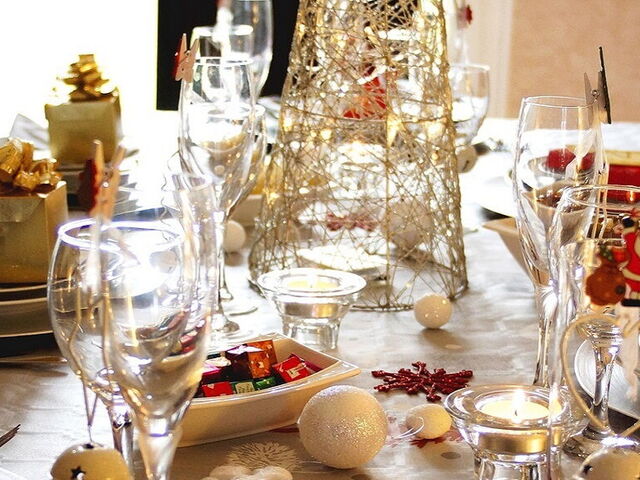
5 Italian Christmas Dishes to Taste on December 25
The coutdown to December 25th is almost over it's time to think about gifts, Christmas celebrations and... what you are going to cook on the lovely Christmas lunch with the whole family!
In Italy, numerous traditional dishes are cooked in the special occasion of Christmas day. Each region presents different recipes, as they refer to their ancient culture and local history. From North to South, from East to West, and even from a city to another, the typical flavors of Italian cuisine mix together to enrich meals with amazing colours and tastes.
However, there are some "classic" recipes that cannot lack on Christmas tables, no matter where you are.
Here's the list of the five best-loved traditional dishes in Italy, along with some travel tips to spend an unforgettable Christmas holiday!
1) Tortellini in broth
Although tortellini are typical of Emilia-Romagna and Bologna in particular, this first course is always a must-have on Christmas day! The lunch cannot miss a delicious capon broth with homemade tortellini filled with meat, mortadella, ham, eggs, parmesan cheese and walnuts. Tasty and rich, this dish pleases everybody. There can also be some variations: as well as using some thin noodles instead of tortellini, people in Umbria, Marche, Tuscany and Latium usually choose the traditional "cappelletti".
2) Lasagna
Whether they are accompanied with a Bolognese, Neapolitan or vegetarian sauce, lasagna still remain one of the best-loved dishes served on December 25th! The history of this recipe is century-old, it begins in Ancient Greece and it later moved to Italy, as the Romans conquered the area adopting the culture and food traditions of its inhabitants. Lasagna are made piling numerous layers of pasta and separating them with a sauce with béchamel, cheese and other ingredients that may vary according to preferences, such as vegetables, meat "ragù", pesto or ricotta.
3) Stuffed Capon
Christmas holidays are the ideal moment to cook a tasty "cappone ripieno" for the entire family! While it was initially stuffed with animal innards, now people prefer to use pork or beef meat with eggs, sausages, ham, cheese and candied fruit. The place of origin of the recipe is Piedmont, but it is also proposed by many other regions and it is now considered a "luxury food". In Lombardy and Tuscany the "cappone" is stuffed, in Umbria and Liguria people boil it, while the animal is cooked roasted in Piedmont and in the Marches.
4) Capitone
The "capitone" is the name of the female eel and it is traditionally prepared in Southern Italy. While in Molise it is stewed with garlic, in Campania and Latium the fish is fried and served very hot, usually in occasion of Christmas Eve's supper. A popular superstition is hidden behind this course: the eel is usually seen as the symbol of evilness because of its resemblance with the snake, so eating this fish on the day of Jesus' birth is associated with the victory of the good over the devil.
5) Panettone/ Pandoro
Panettone or Pandoro? Whichever is your choice, it's certain that there is no Christmas day without a slice of these desserts at the end of the lunch! The Pandoro is typical of Verona and it presents a soft, golden dough covered with sugar. To make it more appetizing, you can also add some chocolate or cream! On the other hand, the Panettone is a cake made in Milan flavored with raisins and candied fruit, which also became the symbol of Christmas celebrations. Do not forget to taste this dessert!
© Alice Pilastri
Read More

The town of Montefiore is a gem in the middle of Conca Valley, which is a fabulous landscape with sweet hills covered with fields extending as far as the eye can see and studded with ancient castles. Recognized as one of “Borghi più belli d’Italia” (Italy's most beautiful towns), this is a splendid tourist destination in Emilia-Romagna madeunique by the union between natural wonders and an incredible artistic heritage.
We are describing a magical place which beauty has been enriched with wonderful buildings as centuries have passed, reaching the apex of splendor in the Middle Ages. The coastline is not far away from here. If you reach a high spot, you can admire a wonderful panorama that unbelievably varies from green mountains to the lovely Adriatic beaches!
The main tourist attraction of Montefiore Conca is its imposing Medieval castle. The building dominates the whole "borgo" and vally, as it's located on top of a mount to ensure a good defense. Also called “Rocca Malatestiana”, its history is strictly linked with that of Malatesta family, who dominated this region between the 14th and 15th century. In this flourishing period, the fortress was stengthened, embellished and enlarged to include an additional residential area where thenoble family could live or host important personnalities. After 1462, the castle passed to the Holy See and, later, it belonged to Borgias, to the Macedonian prince Costantino Comneno and even to the Medici family.
Following some restoration works, the Castle of Montefiore has become a magnificent place to discover during a guided visit. Buy your ticket and visit the wonderful halls such as the "Sala dell’Imperatore" or the "Sala del Trono"!
Further to the fortress, Montefiore Conca offers many special places to see! An example is Bonora Sanctuary, an important site of worship, the Onferno Caves, the Natural Park of San Bartolo or some stunning natural itineraries in Monte Carpegna!
Book your holiday in Montefiore Conca and visit these charming tourist attractions! If you are looking for a vacation rental, the best solution for you is our Villa Ca Viola, a magnificent villa for rent offering all types of comfort, like a private pool.
© Alice Pilastri
Read More