Archive for "Culture"
Planning a trip to Italy? Browse and read our useful and informative articles about the endless range of attractions and experiences in this lovely country.
Travel through the beauties of Italy with us. Visit our blog!
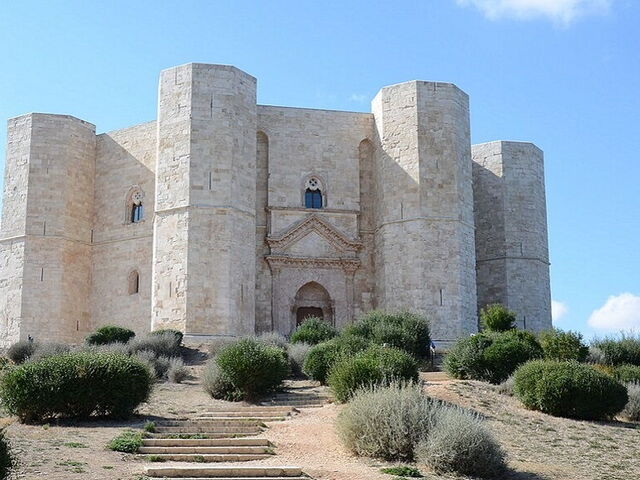
It is one of the most-visited Italian monuments and certainly one of the most unique. Castel del Monte stands out on top of a hill 540 m high and its majestic aspect is visible from a distance. White, enormous and impressive, this building has an incredible beauty that you absolutely need to see during your stay in Apulia.
We are near Alta Murgia National Park, about sixty kilometers far from Bari and thirty minutes far from the sea of Bisceglie and Molfetta. The castle's position is intentionally isolated in order to satisfy the Medieval defensive necessities, but it is easy to reach using the main regional roads.
Castel del Monte was built by Frederick II of Swabia in 1240 using calcareous stone. Actually, the Empire's capital was moved from Palermo to Foggia in 1223, therefore the monarch had started promoting many important architectural projects in Apulia.
Its exemplarity, the perfect harmony of its shape and the union between Northern European, Muslim and classical stylistic features have been officially recognized by UNESCO, that included the Castle in its “World Heritage Sites” in 1996.
In fact, the building presents a peculiar octagonal shape, with eight corners, eight towers and eight one-hole windows on the first floor. The number 8 is repeated in the inner courtyard shape, which is decorated with blind arcades and by some beautiful marble statues. Unfortunately, many of the decorations found inside this castle have been lost throughout the years or have been moved to some museums, such as the "Pinacoteca Provinciale di Bari". However, it is still possible to admire the rests of some wall frescoes, floor mosaics or the two famous anthropomorphic shelves inside Torre del Falconiere.
The original function of the building is still uncertain. Some affirm that it was exclusively defensive, some that it served for political representation, while others highlight how it has also been used as a prison or as location for important ceremonies, such as the wedding of Frederick's daughter.
There are many symbols hidden inside this wonderful castle. The octagonal planimetry forms an intermediate shape between the circle and the square, which represent the sky and the land. Moreover, it has a strong relation with the light, which exalts its corners in every moment of the day, especially in occasion of the Autumn and Spring Solstices, when the sun rises exactly in front of the entrance door.
Organize your visit to Castel del Monte and let it impress you with its beauty! The entrance ticket costs €7 or €3,50, there are discounts for large groups and it is possible to book a guided tour.
Are you looking for a villa for rent in Puglia? Check out our luxury holiday rentals in the region and choose the one that suits you best.
Read More
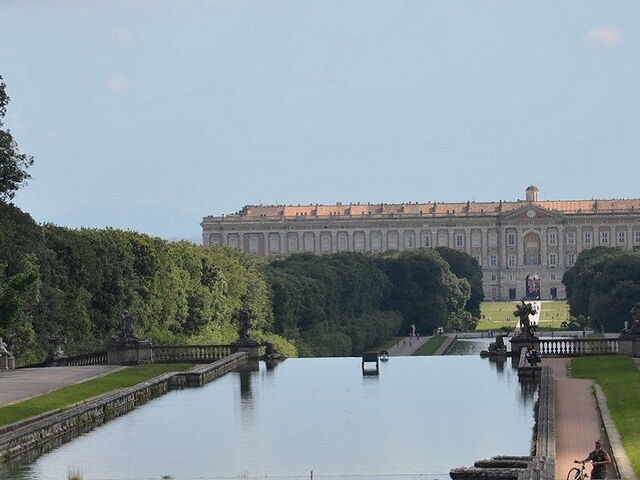
Did you know that the world’s largest royal palace is in Campania, in the beautiful city of Caserta. Declared a “UNESCO World Heritage Site”, this building is the demonstration of how wonderful human artworks can be. Everyone is left with their mouth open in front of this architectural masterpiece of incredible dimensions which seems to extend as far as the eye can see.
The works for the “Reggia di Caserta” started in 1751 with Luigi Vanvitelli and it was concluded by his son Carlo in 1845. In this period, Rococo style was facing its downfall and it was leaving space to Neoclassicism, which will mark the 19th century with a strong artistic opposition to all the previous stylistic features. For this reason, the palace presents the cohabitation of various artistic styles and the result is outstanding.
The Baroque-Rococo style is distinguished by a decorative overabundance and by an exaggeration of complex curved shapes. The best example is the "Grand Staircase of Honour”, which also became the source of inspiration for makers of other following staircases. Alongside this majestic structure, you will admire some big statues and two spectacular staircases ending with two small temples and a "fake" decorative dome.
Instead, the Neoclassical style was inspired by Greek-Roman arts and was distinguished by semplification, geometrization, rationalism and decorative austerity. An example is the outer façade, which presents scarce decorations, plain colours and a rational quadrilateral structure.
The artwork commission was presented by Carlo III Borbone, who wanted to make Caserta the new cornerstone of the Kingdom of Naples.
It is a huge structure with a 47000 sq. m. surface, composed by five floors, four inner courtyards, some historical apartments, one "Palatine Chapel", a theater, the so-called "Quadreria" and a magnificent park. The gardens are divided in two parts and their style mixes the typical Italian Garden elements with the English one. Walk along the splendid boulevards embellished by fountains, sculptures and small woods, until reaching the incredible final waterfall! Inside the park, you will also find some beautiful thematic sculptural groups such as the one dedicated to hunting with "Diana and Atteone Fountain", which all represent humanity's achievements and progress.
The Royal Palace of Caserta is definitely an open-air masterpiece concealing innumerable wonders.
If you are staying in Campania for a few days or for a long summer holiday, do not forget to plan your visit to this stunning place!
Opening hours of the historical apartments, the park and the Quadreria are 8.30am-7.30pm, while the "Decorative Arts Tour" to the Staircase of Honour is by reservation only. Tickets cost €12 (full-price), €6 (half-price) and are free for under-18s.
Looking for a luxury holiday rental? Choose your favorite among all our properties in Campania, which are located in some of the most beautiful parts of the region to guarantee an unforgettable experience!
Read More
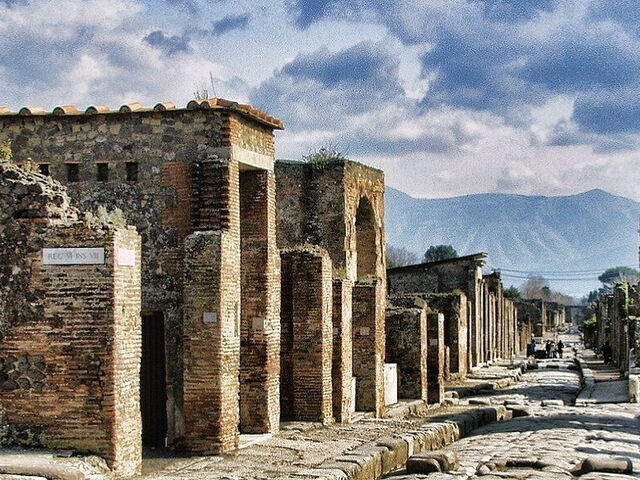
One of the best tourist destinations in Southern Italy is certainly Pompeii, a magical and magnificent place in Campania which has also been recognized as a “UNESCO World Heritage” .
Pompeii was founded around the 8th century BC by Osci, who occupied the territory near Vesuvium, and it was later conquered by Greeks, Etruscans, Samnites and Romans. The Roman period starting at the end of the 3rd century BC was one of the most flourishing ones, as the city became an important commercial, economic and cultural center.
In 62 BC, a strong earthquake destroyed Pompeii, but the reconstruction attempts proved to be useless when an apocalyptical tragedy stroke the city in 79 BC, deleting it completely.
On the morning of August 24th, after a series of violent earth tremors, a terrible Vesuvium eruption took place. The air became unbreathable because of the presence of sulfur, the sky darkened as ash filled the atmosphere and an enormous black cloud started to move in, blocking every glimmer of light. The area around Pompeii got totally covered by ash and lava, while Ercolano was submerged by incandescent mud for 20 meters.
After that day, nothing was left and these towns literally disappeared from the face of Earth. Nobody knew about their existence until the 16th century, when some evidence was found during the works for the creation of a water canal, even though another eruption in 1613 covered everything once again. It was after an accidental discovery by a farmer that a regular excavation project started off in the 18th century, under the promotion of Duke Emanuele Maurizio d’Elboeuf and Carlo III di Borbone, which succeeded in bringing to light a wonderful ancient world.
Nowadays, you have the opportunity to visit Pompeii's excavations to admire its splendid monuments and to see the famous plaster casts reproducing the facial expressions, positions and clothes' folds of Pompeii citizens in the moment of the impact with the violent eruption. You will be walking in the ancient city center near the Forum, Apollo's Temple and the Amphitheater built in 80 BC. Also visit "Casa del Fauno", an ancient Roman villa with a wonderful mosaic, or "Teatro Grande", a majestic bulding dating back to the 2nd century BC.
You can check opening hours on the ticket office site, as they change depending on the period you choose. Tickets for Pompeii site cost €13 or €7,50, while the cumulative ticket including Pompeii, Ercolano, Oplonti, Stabia and Boscoreale sites costs € 22 or €12 (entrance is free for UE citizens under 18 or over 65 years old).
Even "New Pompeii" conceals some wonders in its center: visit "Santuario della Vergine del Rosario" and "Villa dei Misteri", then relax going shopping in the numerous shops and stop eating something in one of the delicious local restaurants!
Read More
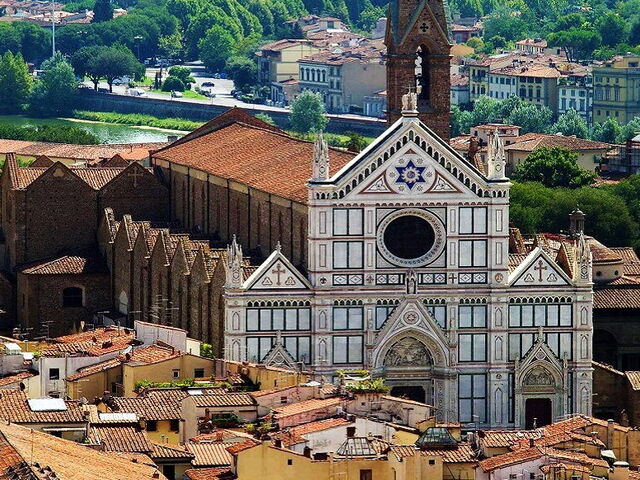
Walking along the narrow street separating the majestic stone wall of Palazzo Vecchio and the Uffizi Museum, you will soon arrive at Piazza Santa Croce and at its stunning Basilica.
The church is one of the major examples of Italian Gothic art, it was built in the 13th century by Arnolfo di Cambio and its façade was finished in the 19th century. It is a Franciscan basilica presenting an Egyptian/ Tau cross floorplan with three naves decorated by chapels and beautiful frescos. Among these, you will be able to look at Agnolo Gaddi's works in Cappella Maggiore, Giotto's frescos in Cappella Peruzzi and Cappella Bardi, Giovanni della Robbia's terracottas or Donatello's "Annunciazione Cavalcanti".
The Basilica di Santa Croce is known also as the "Temple of the Italian Glories" or the “Pantheon of Artists", because it conserves the remains of some of the best-known personalities of Italian history. Its peculiar graves are everywhere: some are located in the wonderful chapels along the naves, while many others fill up its pavement and make it possible to walk above them.
Until the beginning of 1400s, Santa Croce was principally the sepulchral church of district's families like Bardis, Peruzzis or Albertis. Things changed when the town government decided to build some elaborated funerary monuments for its chancellors Leonardo Bruni and Carlo Marsuppini. The two tombs were sculpted by Bernardo Rossellino and Desiderio da Settignano. These authentic masterpieces of Renaissance sculpture launched the new destiny of the Basilica, which became the solemn custody of Florentine public glories.
In 1564, the remains of Michelangelo were moved to Florence to be exposed in Santa Croce Church in a stunning monumental grave designed by Giorgio Vasari. Later, even the sepulchers of Galileo, Machiavelli, Foscolo, Rossini and Alfieri were erected inside the Basilica.
It is believed that Alfieri visited Santa Croce Church in order to find inspiration, as its wonderful sepulchers instilled a profound sense of peace. Another famous author, Stendhal, entered the church and felt a sudden illness because of the excessive quantity of memory conserved there, while Foscolo celebrated it in his work "I Sepolcri”.
What are you waiting for? Visit this Church and discover the indescribable emotions it will be able to give you! Along Via de'Neri, you can also stop at the famous “All’Antico Vinaio” sandwich shop or at “Gelateria de’Neri”, one of the best ice-cream parlors in Florence.
If you are looking for a property for your stay, choose our wonderful vacation rentals near Florence, like Le Fonti or Villa Tenuta Lonciano.
Read More
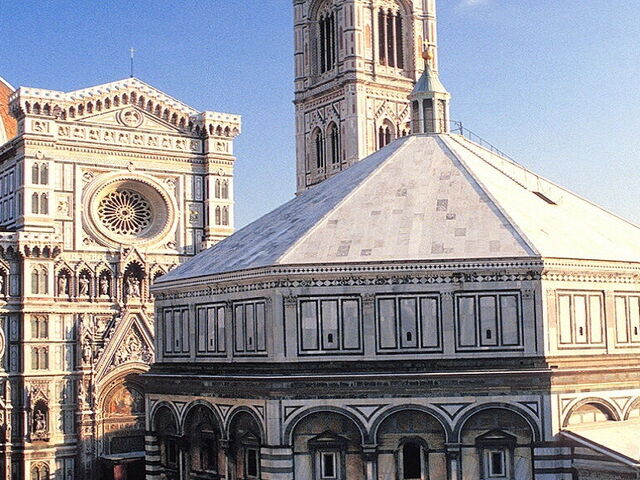
It’s the symbol of the city of Florence in the world, portrayed in photographs of millions of tourists, identifiable in the blink of an eye, as wonderful as it looked five hundred years ago. We are talking about the Cathedral of Santa Maria del Fiore, one of the most beautiful Italian churches located in the old town center and famous for its enormous dome.
But what’s the history behind it?
At the beginning, another small church stood in place of the current basilica and it was called Santa Reparata Church, dating back to VII century. At the end of 1200, it was expanded and then totally remade by architect Arnolfo di Cambio. The new church dedicated to the “flower” Madonna needed to look magnificent and spectacular in order to represent Florence grandeur and to compete with the Cathedrals of Siena and Pisa. It was ended by Arnolfo’s successors in 1421, when just the Dome needed to be built.
The problems linked to it were many: which shape should it get? Which material needed to be used? And, most of all, how could it bear the huge weight without collapsing?
The solution was proposed by Filippo Brunelleschi in occasion of a concourse in 1418. The dome would have had an ogival shape, it would be self-supporting with two cupolas one inside the other separated by a structural space to preserve it from humidity and to allow the passage of workers. The covering is made with red bricks which are heavier in the lower parts and lighter in the upper ones, disposed in “opus spicatum” ("fishbone").
The dome was inaugurated in 1436, it had a 50m height and a 46m diameter. Later, other architectural structures have been added: the “tribune morte” are semi-circular temples next to the tambour, the “loggetta”, a decorative crowning element on one side, and the “lanterna”, a small marble temple on the top of the dome with a bronze ball lifted by Verrocchio.
The stunning “cupola” is the symbol of architectural perfection and Florentine genius. It can be admired from many angles of Florence, but one of the most charming places is certainly Piazzale Michelangelo, which offers a 360° view over the whole city.
It’s even possible to visit its interiors, walking along the space between its two vaults! the opening hours are 08:30am-07:00pm and the 15€ ticket includes the access to all the monuments of the “Grande Museo del Duomo”.
Choose Florence as destination of your next trip to Italy! Book one of our properties in the middle of Tuscan countryside to experience a dream holiday: we suggest our
Read More
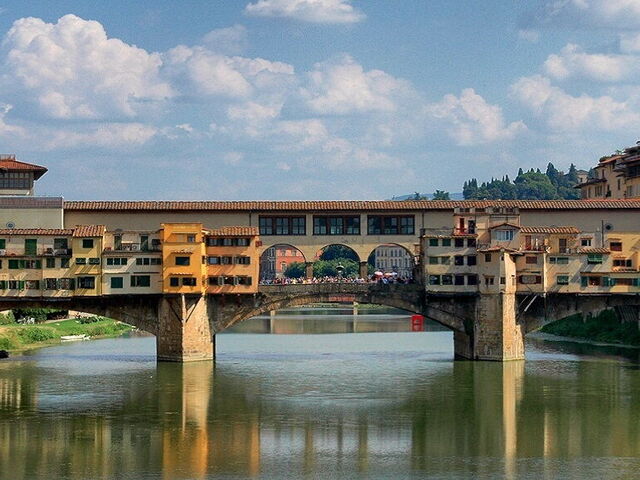
Florence narrates a century-long story to all its visitors through statues, buildings, museums and other incredible beauties. This city founded in ancient times and homeland of world-famous poets and artists was flagellated by a violent civil war for years.
Its own citizens sided with one of the two factions called “Guelfi” and “Ghibellini” and the clash soon radicalized producing effects which echoed until today. Think about the rivalry between the cities of Pisa and Florence: it’s simply due do the fact that one was Guelph, while the other Ghibelline!
The origin of factions’ name is German, as it reminds how the supporters of Welfen and Hohenstaufen dynasties were called. These families competed to win the vacant throne of the Sacred Roman Empire, which was assigned in 1152 to Frederik I of Hohenstaufen, who reduced the social tension as he was also related to the Welfens. However, his anti-ecclesiastic, anti-roman and anti-municipalities politics provoked a strong reaction of Italian cities in defense of their new communal reality. At the same time, Pope Alexander III linked the personal war against Frederik I to the local battles to safeguard cities’ autonomy.
This caused a sharp social division between the new Italian Guelfi and Ghibellini: the first stood for the Pope against the Imperial supremacy and legitimated his temporal power because he had received his authority from God, while the second supported the Emperor and didn’t accept Church’s intromission in politics. In Florence, there was also a further split between Black Guelphs(guided by Donati family and radically siding with the Pope) and White Guelphs (more moderated and gathered around Cerchi family).
A fundamental historical moment was the clash for the succession to Henry VI in 1198, when Ghibellines supported Philip Duke of Swabia and Guelphs wanted Otto of Brunswick. Many famous battles were fought, like the ones of Montaperti in 1260, Camaldino in 1289, Montecatini in 1301 or Altopascio in 1325, to some of which even Dante Alighieri took part. Being a White Guelph, even the poet suffered the sort of many other Whites and Ghibellines when Blacks took the power in Florence and condemned to death or exile their enemies.
The rivalries between Guelfs and Ghibellines continued until the birth of Signorie, when the war between factions was replaced by the wars for territorial expansion. However, we cannot forget a happening in which thousands of people died, which divided an entire society and which determined the future of Florence.
You can still spot some symbolic places of these events in the old town center and we really suggest you look for them during your stay in Florence! You can search the Torre degli Amidei, where the political homicide of Buondelmonte dei Buondelmonti generated the division between factions, Palazzo Donati, where the Florentine family lived, or Palazzo Vecchio, which presents Guelph coat of arms near Ghibelline ones on its façade.
If you’re looking for a property for your holiday in Florence, check our luxury vacation rentals in the old town center or on the beautiful surrounding hills!
Read More
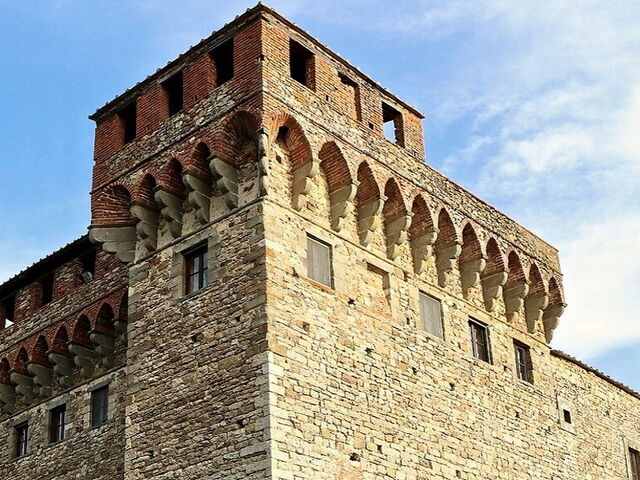
Lari is a stunning Tuscan village with medieval origins located 30 km far from Pisa. Here you can visit the wonderful “Castello dei Vicari”,a castle with majestic walls that emerge from the red roofs of the other town buildings.
The first historical sources about the building date back to 732, although it’s been often rebuilt by the families that have managed it. In the Middle Ages, it belonged to the Republic of Pisa and to the Florentine Vicari family from 1406. As well as being the site of many bloody clashes, the castle became the Inquisition Tribunal headquarters in the 17th century and it contained torture rooms and prisons. It was then used as a jail until the Second World War and it’s now open to the public, who considers it an inestimable Italian artistic and historical heritage.
Since hundreds of people perished here, there are some stories about the ghosts who are believed to inhabit the hallways of the fortress.
One of these is Gostanza da Libbiano, a woman who was put on trial for witchcraft in 1594 because she treated sick people with herbs and other natural ingredients. She was accused of being linked to Satan and of killing a boy with her therapies, so she was put in jail, where she experienced tremendous acts of violence. After being left mentally and physically disabled, she was set free and confined to a three-miles distance from her house until her death in the grip of madness. Since then, people believe that her spirit returns to the prisons and that she goes through the walls with chains and rags on her body. Others claim that her desperate screams echo all along the valley.
The other ghost belongs to Giovanni Princi or “il Rosso della Paola”, a farmer who was put in jail in 1922 because of his anti-fascist political ideas. He was found hanged in his cell and although it looked like a normal suicide, he was actually killed by the guards, who beat him up and hanged him just after his death. When the jail closed down, the keeper declared that he saw the ghost of Rosso in the castle and that he appeared like a mist-shrouded man who vanished in the corridors after a while.
Many visitors, tourists and Lari inhabitants have claimed they have caught sight of mysterious figures in the village and they have witnessed inexplicable events. Are they coincidences? Discover it yourself! Stay in one of our properties in Lari and visit the castle: it’s open all year long, it offers guided tours and the ticket costs 3€.
Read More
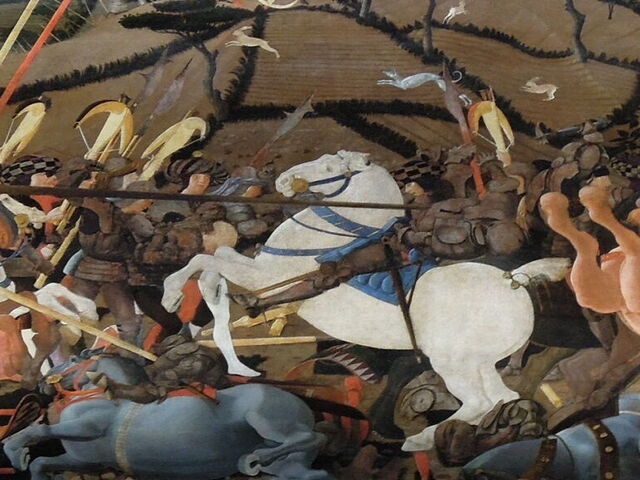
A crucial Renaissance battle took place in San Romano, a small town of the Province of Pisa near San Miniato and Montopoli Val D’Arno . On that single clash day, the 1st June 1432, the Florentine army fought against the Senese, respectively led by Niccolò da Tolentino and Francesco Piccinino. Although Florentines were numerically less, they winning after six/seven hours thanks to the arrival of some reinforcements. The conflict was part of the “Wars of Lombardy” fought between 1431-1433 and it was portrayed in a famous painting by Paolo Uccello.
This 1438 masterpiece was commissioned by Lionardo Bartolini, who personally participated to the battle. His intention was to exhibit it in his private house, but Lorenzo the Magnificent imposed to move it to the palace of his family: as the new room was too small to host the huge work of art, the canvas was cut in three. The two sidepieces are now conserved in the Louvre and London National Gallery museums, while the most beautiful one, “The Unseating of Bernardino della Ciarda”, is owned by the Uffizi Museum of Florence. The background landscape presents a hunting scene, while in the foreground there are horses and armed soldiers involved in the clash. The rhythm is rapid, but the scene doesn’t communicate the sense of a true tragedy: it rather seems an abstract and metaphysical atmosphere where the battle has been transferred.
If you wish to visit the region where the battle took place, I suggest you to check Villa Lorenza, which are a few kilometers far from San Romano.
In case you prefer to stay in Florence, book one of our properties in the town center!
Read More
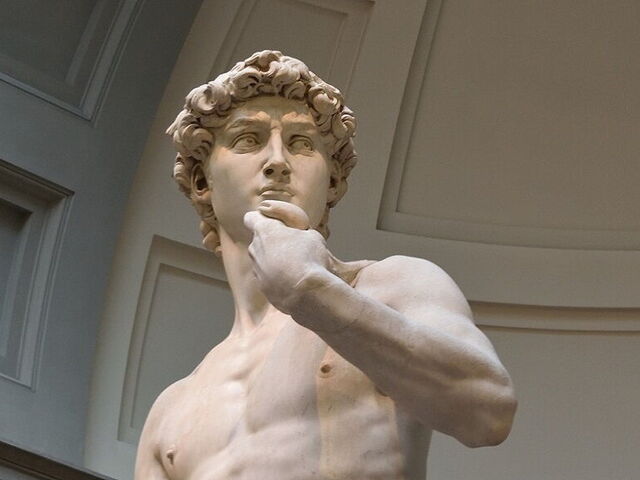
If you’re in Florence you cannot forget to visit the Galleria dell’Accademia before you leave it, as it’s one of its most important museums. The second most visited museum in Italy after the Uffizi conserves seven Michelangelo masterpieces, one of which is the unique David.
Its story began in 1784, when Granduke Pietro Leopoldo di Lorenza decided to reunite the “Accademia delle Belle Arti” with the “Accademia delle Arti del Disegno”, other institutions and a gallery where students would study, observe and copy the artworks inside it. Important masterpieces were placed in it, like the “The Rape of the Sabine Women” by Giambologna, the “Adoration of the Magi” by Gentile da Fabriano and the “The Madonna and Child with St. Anne” by Masolino and Masaccio. The Gallery was expanded between 1865 and 1971, when Florence became the capital of the Italian Reign, and it changed its name in “Galleria Antica e Moderna” becoming the first museum of contemporary arts in the new State. In 1872, the David sculpture was transferred in the museum from Piazza della Signoria as this place was too dangerous for a masterpiece like this. After the moving of numerous works of contemporary art like those of Botticelli or Beato Angelico, the museum had to change its name into “Galleria dell’Accademia” and it still conserves it nowadays. It is formed by several splendid halls which are the Hall of the Colossus, the Hall of the Prisoners, the Tribune, the “Gipsoteca Bartolini”, the Florentine Gothic room, the museum of musical instruments and the collection of Florentine works made between 1370 and 1430.
Book one of our properties in Florence and visit this wonderful museum! See our suggestions in Florence!
Tickets: full price, half price(for UE citizens between 18 and 25 years old and Italian school teachers) or free (for under-18s, disabled persons, ICOM members and journalists; the first Sunday of each month is free for everybody). I suggest you to buy your ticket in advance on internet or through the call center service paying an additional charge for the booking instead of spending 2 or 3 hours in the queue!
Opening hours: from 8:15am to 6:30 pm, from Tuesday to Sunday
Address: Via Ricasoli, 58-60, 50122 Florence
MICHELANGELO’S DAVID (1504)
The initial project intended to create some sculptures for the buttresses of the Dome of Florence and it was commissioned to Agostino di Duccio in 1463-4, who worked on an enormous block of marble. However, he didn’t finish it and the statue was left in the depository of the Museo dell’Opera del Duomo until 1500, when Michelangelo completed it. An art commission then gathered to decide its location: Botticelli suggested to put it next to the Dome, others in the courtyard of Palazzo Vecchio, Leonardo da Vinci proposed to hide it in the Loggia dei Lanzi, while Filippo Lippi and Pier Soderini preferred to put it in front of Palazzo Vecchio. In fact, here it would have acquired a symbolic meaning, as it referred to the civic virtues of the city of Florence. This was its final position, but it soon became the target of some stones thrown by pro-Medici citizens and it also broke its arm during a riot in 1527. The David is in the Tribune of the Galleria dell’Accademia since 1872, while a marble copy has been put in front of Palazzo Vecchio. The sculpture is 434 cm high and its position is similar to the classical “heroic nude” ancient statues. The proportional errors in the head and in the hands disappear when it is observed from a lowered point of view, as its original position had to be high on the buttresses. The work portrays David before he throws the rock against his enemy Goliath, he has wrinkled eyes which focus on his enemy and his pupils have been drilled to confer more intensity. Symbolically he represents the peak of divine creation, he’s physically perfect and he’s also the allegory of the victory of democracy over Medici’s tyranny in Florence.
Read More
Very few people know about the importance that the castle of Montegufoni has had in the rescue operation of hundreds of Medieval and Renaissance masterpieces during the Second World War. Actually, the third episode of National Geographic’s “Nazi World War” program describes and examines this fact in depth and I suggest you to check the TV schedule of your country to watch it!
In 1942 war had already started since two years and Italy was facing the most problematic and arduous period. Allied air raids over the main cities became a real and serious threat so authorities began to consider the necessity of saving the works of art stored in the most important museums, especially those in Florence. They decided to move the most valuable masterpieces to the castles and villas found in the countryside, in order to put them in safe places, away from military or bombing targets. This choice was tough and ambitious, there was no certainty about the achievement of the operation and this worried the directors of the museums and the other authorities.
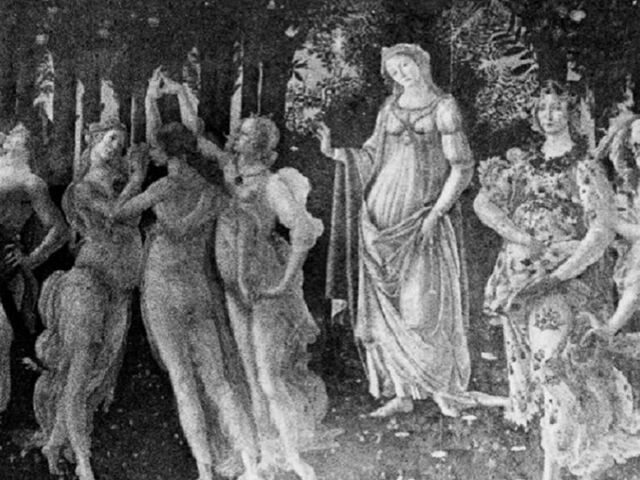
As the Castle of Montegufoni had an isolated position 20 kilometers away from Florence, it was chosen as one of the main destinations. In November 1942, more than 260 masterpieces were moved in the building from the Uffizi, the Accademia, the Bargello, the Palatine Gallery, the San Marco and the Santa Maria Novella museums. Some of these works were the ”Annunciazione” by Filippo Lippi, the ’”Adorazione dei Magi” by Ghirlandaio, the “Maestà di Ognissanti” by Giotto and the “Primavera” by Botticelli.They were stowed in the castle’s rooms and some old black-and-white photographs portray them leaned against the walls, next to the ordinary furniture.
Everything was fine until summer 1944, when the front passed from Montegufoni: the German army in withdrawal was rising the peninsula destroying everything it found, damaging properties, goods and committing crimes against the Italian population. A unit of German paratroopers occupied the castle in order to use it as a defensive fortress. The Commander needed space and he ordered to clear the corridors from all the works of art they had been filled with, demanding to the farmer (who had assumed the responsibility to safekeep the works) to set them on fire in the castle’s inner court. It could turn into a tragedy causing the loss of a humanity heritage, but the farmer didn’t lose his courage: he used the famous Chianti wine to get the German soldiers drunk, so that they forgot to destroy the masterpieces and left the castle some days later.
When the Allied arrived, they realized how important the paintings were and a group of “Monuments Men” came along: these soldiers were designated to protect and safeguard the works of art from Nazi wrath and they’ve been represented in a recent film starring George Clooney. The important discovery even encouraged General Alexander, an important senior British Army officer, to visit the castle.
A few months later all the works were repositioned in the museums they came from and where millions of visitors see them every year. Unfortunately, few of them are aware of the significance of the Castle of Montegufoni, which has allowed to save such a beauty from the past destruction.
Read More