Archive for "Food and Wine"
Planning a trip to Italy? Browse and read our useful and informative articles about the endless range of attractions and experiences in this lovely country.
Travel through the beauties of Italy with us. Visit our blog!
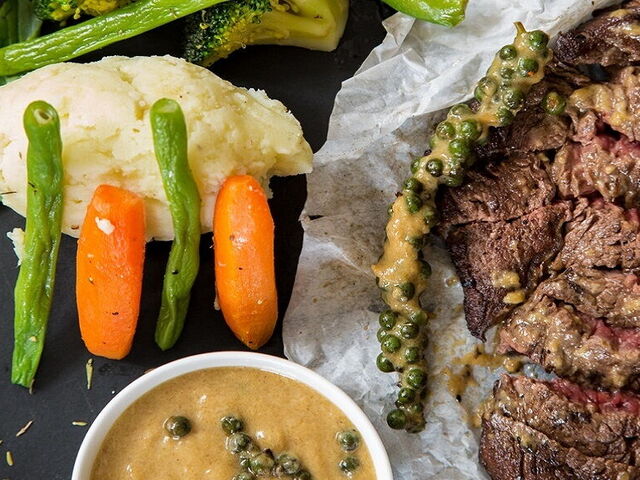
What's better than getting to know Florence traditions through its delicious local dishes?
The street food is the new trend: buying a typical sandwich in a small food shop and eating it while visiting the city makes the tour it much more sensational.
There are many restaurants, fast-foods and cafés in the streets of Florence and we assure you that choosing where to stop to have lunch is always a tough challenge.
So here's a list of the top street food to try in Florence along with the best recommended places to go, which arealso usually frequented by Florentines. They will surely meet your expectations and will make you discover the wonderful city under a different point of view!
-A Covaccino at “Amici di Ponte Vecchio”
The "covaccino" is a unique variety of thin"schiacciata" seasoned with salt, rosemary and olive oil. It can be eaten alone or accompanied by cheese, salami or ham, as you will see in the exquisite sandwiches prepared by "Amici di Ponte Vecchio”. This small café has been often awarded for its amazing street food as its specialities are made with fresh local ingredients and are also loved by all Florentines. Taste their "covaccino con stracchino e salsiccia” and enjoy your fantastic meal!
-A Ciabatta Fiorentina at “Mangia Pizza Firenze”
The "Florentine Ciabatta" is a type of pizza consisting of flattened bread filled with cheese, "pomarola" sauce and other "zero kilometer" ingredients. The "Mangia Pizza" restaurant is a charming place to eat right next to Ponte Vecchio, where you can either take a pizza away or sit at a table to enjoy the dish to the fullest.
-A Lampredotto at “I’Trippaio Fiorentino”
A famous Florentine speciality is the "lampredotto", which you will see prepared in many food stands along the center streets. It is a very poor preparation used to fill sandwiches based on abomasum, one of the four bovine stomachs. The best place to try it is certainly "I’Trippaio Fiorentino” in via Gioberti, offering some personal variations such as the unique “cacciucco di lampredotto”.
-Some Coccoli at “Friggitoria e Pizzeria dell’Albero”
No contest: the best fried dishes are in “Friggitoria e Pizzeria dell’Albero”, a great fast-food near Santa Maria Novella station cooking the best-loved ficattole, frittelle, calzoni and bomboloni by Florentines. Taste the "coccoli", a kind of salty fried snack usually accompanied by salami, pecorino cheese, ham or stracchino. This street-food is the latest trend in Tuscany!
-A Schiacciata at "All’Antico Vinaio"
Their schiacciata is special and almost inimitable. It is homemade by the funny owners of the shop, who are open all day long to take hundreds of wonderful paninis out of their oven for tourists coming from all the world. Tuscan salami, prosciutto crudo, sbriciolona, finocchiona and porchetta come along with local cheeses and tasty sauces like truffle or artichokes dressings. Order the fantastic "Favolosa” schiacciata or create your personalized sandwich accompanying it with a glass of good Tuscan wine. This is one of the most famous, reviewed and photographed bars in the world: do not forget to stop here when you are in Florence!- The Gluten-Free Schiacciata at "Sgrano"
Also in Via dei Neri a few steps after All'Antico Vinaio, in the heart of Florence behind Palazzo Vecchio, we find Sgrano, a small and pretty place where they serve special schiacciata all strictly gluten-free for those with and without allergies. They are big sandwiches, hearty and do not reserve on quantities. For those who are intolerant to gluten and want to taste the real typical Tuscan schiacciata, this is the right place. Selected doughs and local ingredients including classic Tuscan ham, sbriciolona, mortadella, porcini mushrooms and truffles. A must try!
Book now one of our villas in Florence town to taste some of these delights!
Read More
Everyone knows that the culinary tradition is part of Italian culture, a real religion that the inhabitants of each region interpret in a unique way through their local specialities.
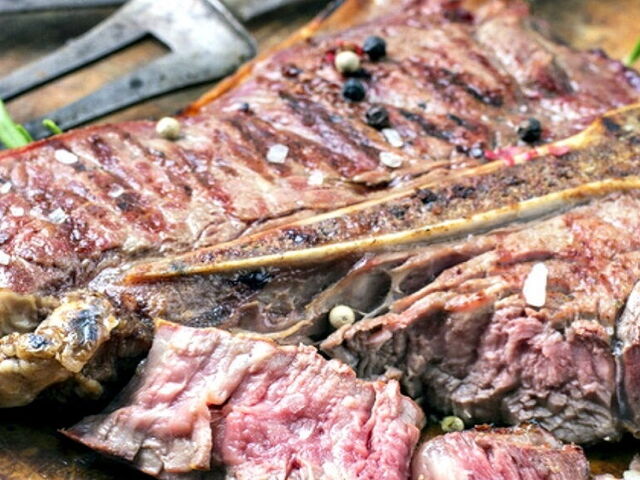
The soul of Tuscany and especially Florence is represented by a famous dish cooked with passion ad enthusiasm which you will absolutely need to taste in occasion of your visit: we are talking about the inimitable "Bistecca alla Fiorentina".
The roots of this food delight are found in the Renaissance, specifically during Saint Lawrence celebrations in the 16th century. This Saint is still commemorated every August 10th, as he was a famous martyr who died in Rome in 258 getting grilled on a gridiron, particularly venerated in Central Italy.
At that time, the occasions allowing to poor people to access precious beef meats were rare, as they were reserved to the rich. Common people could only eat cheaper meats such as poultry, along with vegetables and offal, which led to found the great Florentine tradition of Trippa or Lampredotto. Since 1500, however, Saint Lawrence celebration started to be marked out by the preparation of enormous quantities of beef meat grilled on charcoal fire, which was then distributed to the people for free, thanks to the patronage of Medici family.
Dozens of whole beef loins called “Gran Pezzo” were grilled on embers and were later cut in slices after the cooking. Among the enthusiastic people devouring these culinary wonders, an anecdote tells that there was a group of English merchants who started to shout “beef steak, beef steak!" out loud, to express all their joy end pleasure. Apparently, this fact impressed Florentines as the word the merchants kept screaming entered Italian getting adapted into “bistecca”.
In the following centuries, the preparation of this meat changed until transforming into the current Bistecca, as we prepare it today. The tradition expects the cooking of a Chianina, Maremmana or Romagnola beef loin, aged between 12 and 24 months and hung for one week. Its cut must contain bone, tenderloin and sirloin, it must be at least three inches high (as in Florence they say that "a steak less than three inches high is carpaccio”) and weighing more than 1Kg. It has to be exclusively cooked on burning embers deriving from oak, olive or holm wood and, once it is ready, the meat needs to be flavoured with salt, pepper and Tuscan Extra Virgin Olive Oil.
At that point, all you need to do is enjoying this pure piece of food poetry.
Try this local delight in one of Florence's best restaurants! Florentines suggest booking a table at “Il Latini” (in Via dei Palchetti), at “Buca Lapi” (in Via Tornabuoni) or at “Trattoria Da Burde” (in Via Pistoiese) to get the most out of your experience in this Tuscan town.
If you are looking for a holiday rental, we recommend booking our Villa Tenuta Lonciano on top of the wonderful hills surrounding Florence.
Read More
November 2, 2017
The Best Activities and Events to Discover San Miniato Truffle
San Miniato is a charming center between Pisa and Florence, not far from Lucca. It has medieval origins and a matchless beauty.
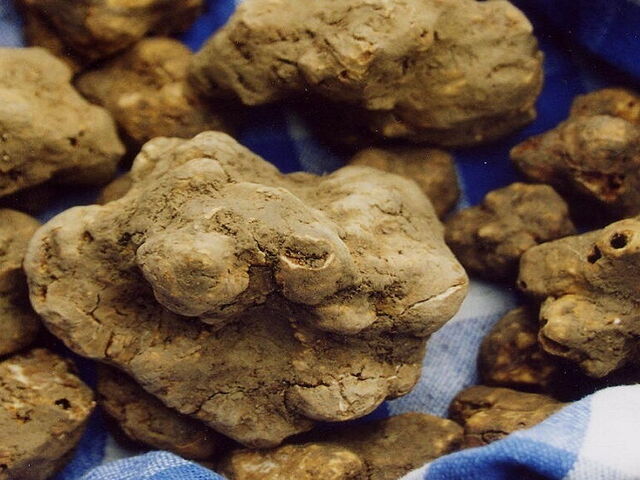
As well as being a renowned tourist destination, San Miniato is the city of Truffle, a precious food loved by gourmets from all the world. It's a peculiar kind of mushroom that grows underground near the roots of trees such as oaks, tilias and poplars.
Finding them is not easy at all: “truffle seekers” have gained a long-standing experience in this field, they are able to individuate the exact spot where truffles are thanks to their dogs' sniff and to dig them up with their hands.
Due to the difficulty of its hunting, transport and conservation, this product is sold at exorbitant prices and it is rarely whole. A small quantity is sufficient to flavour delicious dishes and its amazing taste was already celebrated by Greeks and Romans, who defined it as “the food of gods”.
Right in the woods covering the hills near San Miniato, some professional truffle seekers found the world's biggest truffle in 1954! Today, some of these experts are even available to share their knowledge with tourists in occasion of some sensational "Truffle Hunting Experiences”, which are hunting and tasting activities taking place in English or Italian.
Visit the website www.truffleintuscany.it and choose among the numerous initiatives such as the “Luxury Truffle Experience”, the “Truffle & Winery Experience” or the “Truffle Cooking Classes”, which will teach you to highlight the product in your dishes. It's a unique and unmissable opportunity!
San Miniato White Truffle is not just a typical product, but it belongs to the regional cultural heritage being a real local tradition. Every November, an important celebration has taken place since 47 years: the “Mostra Mercato del Tartufo Bianco di San Miniato”, is an international "sagra" composed by more than 120 stands set up by restaurants and local producers, offering specialities like oil, cheese, wine and, obviously, the fantastic truffles. This year, the festival will take place on November 11-12, 18-19 and 25-26, so book one of our last-minute properties to visit this center and participate! We suggest our Il Fienile di Giovanna or Villa Lorenza.
Truffle is also the protagonist of another important event called “La Notte Nera” (The Black Night), which enhances the Black Truffle found in summer and which recreates a strange, obscure and magic atmosphere in the whole city.
Read More
Sicily is a stunning tourist destination, full of natural and artistic wonders in every corner. During a stay in one of our luxury properties in Sicily like Villa Afrodite, Villa Marisol or Villa Agorà, you cannot forget to taste some of its delicious culinary specialities!
Silician cuisine is a journey through two millennia of diverse influences—a melting pot of cultures that has shaped a distinctive gastronomic heritage. Its foundations trace back to Phoenician, Greek, and Roman rule: olive oil, wine, cereals, fish, and seafood. Jewish communities enriched the culinary landscape with aromatic fillings, offal-based dishes, and preserves. Arabic influence introduced new preservation methods, fragrant spices, and ingredients such as fish, legumes, couscous, and spices like ginger, cinnamon, and cloves. Each dominant culture left enduring traces, creating a culinary heritage celebrated today in Sicily’s coastal and inland specialties.
Here's a list of the top 10 Sicilian dishes:
Cassata Siciliana
This Easter cake is typical of Palermo and it is prepared with ricotta cheese, chocolate, candid fruit, marzipan and many other ingredients settled on a delicious Victoria cake. Its style is kind of "baroque" because of the numerous surface decorations and a peculiar flavour wich amazed everyone who tries it for the first time.
Granita with Brioche
Sicilian breakfast does not include the typical cappuccino, but a tasty "granita" with whipped cream along with an exquisite sweet roll called "brioscia col tuppo”. If you are staying in Catania, cool yourself down with a classic lemon granita or try one of the numerous tasty variations!
Arancino
Arancino is a must in Sicily! It is a rice breaded ball seasoned with green peas, tomato or the typical "ragù" sauce. This finger-food has Arab origins and its lovers are found in every part of the world.
Busiati con l’Agghia Pistata
This is a first course dish you absolutely need to taste in a restaurant in Sicily! The "busiati" are thin maccaroni that look like bucatini, accompanied by a delicious "pesto alla trapanese" with garlic, basil, almonds and tomatoes. Sicilians got inspired by Genoa's pesto and they revisited it using some fresh local ingredients, with an exquisite result!
Cous Cous di Pesce
Many believe that cous cous is a typical North-African dish, but it's not exact: Sicilians use it as the base of many excellent dishes, especially in the province of Trapani. This specific variation expects the use of a particular saucepan called "cousscoussiera” and a mouth-watering fish broth seasoning.
Caponata/ Parmigiana di Melanzane
The paradisiac Parmigiana is cooked in every region of Italy but its origins are Sicilian, where the dish is flavored with a lot of parmesan, salami, hard-boiled eggs and provola. Aubergines are the base of another appetizing dish called "Caponata", which you should try savoring at all costs!
Pane e Panelle
The typical sandwich of Palermo contains "panelle", which are chickpea flour fritters accompanied by some succulent pepper and parsley croquettes called "cazzilli". Eat this speciality while walking along the narrow streets of this wonderful Sicilian town!
Almond Pastries
Sicilian almonds are used in the recipes of many fantastic sweets and biscuits, which are usually made with the so-called "pasta reale" or "frutta martorana". Taste one of these and let their flavor flood out!
Pasta con le Sarde und "Sarde Beccafico”
Sardines are the most popular fish dish in Sicily as well as one of the tastiest. We suggest trying a dish of pasta with "sarde" in Palermo or the amazing "Sarde Beccafico"., which is made with sardines, raisins, parsley and pine nuts.
Cannolo with Ricotta
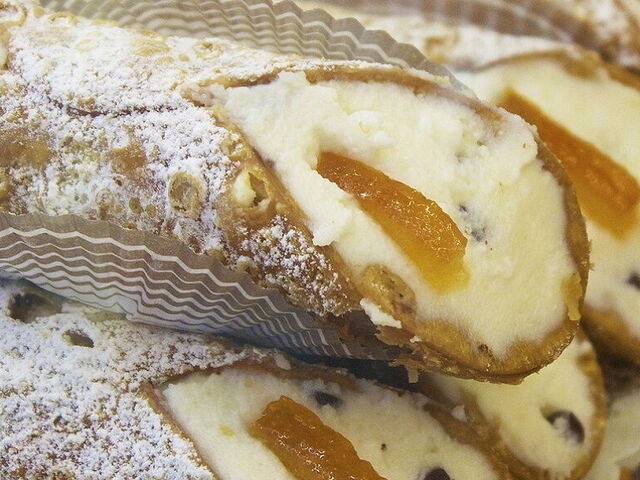
Cannolis are crunchy and exquisite fried sweets filled with sheep ricotta cheese, chocolate chips and candied fruit zest. They boast ancient origins and hundreds of imitations in the world, which are never as good as the originals. They are typical Carnival desserts, but pastry shops cook them all year long to sweeten the stay of each tourist in the region!
Choose to stay at one of our ExclusiveVACATION VILLAS IN SICILY
Read More
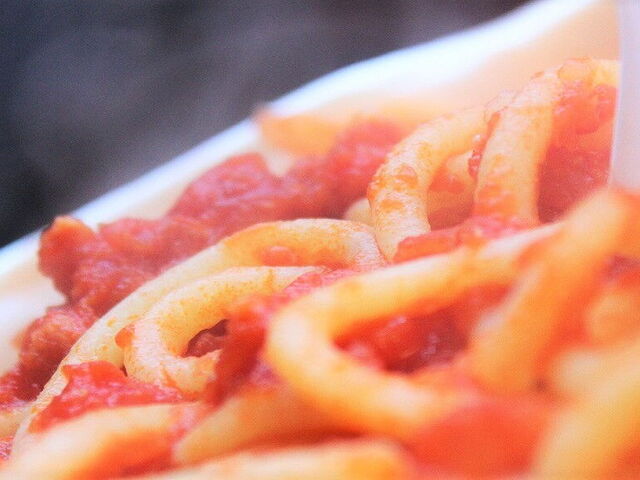
“Pici all’Aglione” is the name of a typical Tuscan first course: it’s impossible to find an osteria or a restaurant in Siena’s province that do not proposes it in its menu.
The “pici” are large rustic spaghettis which are usually homemade through a processing technique called “appiciare”. Anyway, it’s possible to buy them in an ordinary Tuscan delicatessen or in “special and typical pasta” departments in supermarkets.
The seasoning is composed by tomato and a specific variety of garlic called “aglione”, which is typical of Valdichiana area. The difference is visible: one head of “aglione” can weigh more than half a kilo and its flavor is more delicate than ordinary garlic’s.
This ancient recipe is quite easy: the only difficulty is avoiding to exceed in garlic’s browning, as its unpleasant aftertaste would ruin the whole dish.
Even one of my colleagues chose to taste this dish in the “Antico Posto di Ristoro”, a restaurant where we stopped eating some days ago, while we were coming back from a tour to Arezzo. We’re on a secondary road connecting Arezzo to Val Tiberina where the mouthwatering smell of the barbecue steaks spreads in the air. In fact, the restaurant’s specialty is meat: the menu proposes numerous dishes based on wind game, lamb, duck and rabbit, as well as the popular “bistecca alla fiorentina”. The Piomboni family owns this restaurant as well as some wonderful villas in Anghiari which are managed by Posarelli Villas: "Villa Lorenzo"”.
Here’s the recipe of this delicious dish:
INGREDIENTS FOR 4 PERSONS:
◾8 Aglione slices
◾4 tablespoons extra virgin olive oil
◾4 tablespoons of white wine
◾700g tomato pulp cubes
◾Salt
◾Sugar
◾330 g pici pasta
1. First, peel garlic slices, cut them in halves and remove the internal green sprout. You’re free to choose how much garlic you want to use, but don’t exaggerate: if the flavor is too strong, the dish would taste unpleasantly. Slice them thinly or crush them with a garlic press.
2. Heat olive oil in a large 12 to 14-inch pan that will contain the pasta and its seasoning after. Once it’s warm, add chopped garlic and let it soften. If necessary, crush it again with a wooden spoon during cooking. Let it get a golden color (but don’t make it become dark) and, once it’s soft, add white wine and cook for some minutes. After 4-5 minutes, the wine should be completely vanished and the garlic should be almost melted.
3. Add tomato puree, salt and a pinch of sugar (to reduce tomato sourness and give a bittersweet taste to the dish). Cook the seasoning for 10-15 minutes over a low fire, stir it now and then with a wooden spoon to avoid it reduces too much.
4. Meanwhile, boil pici in salted water: their cooking time varies between 15 and 20 minutes. A little before draining them, light the fire under the seasoning pan.
5. Once they’re cooked, drain the pici and put them directly into the seasoning pan. Stir frequently to combine their flavors for a few minutes over a high fire.
6. Serve immediately. Buon appetito!
Read More
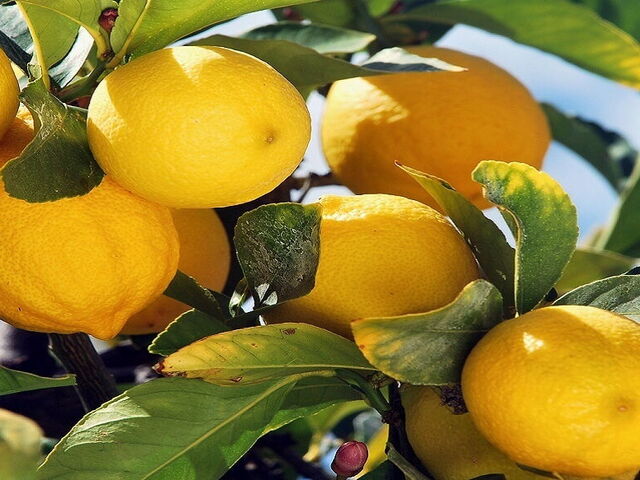
Sorrento Coastline is not just a marvelous touristic destination of Southern Italy, but also a renowned area of citrus trees plantations. This typical fruit is the "Limone di Sorrento", it has quite big dimensions, an elliptical shape, a thick yellow skin and a pleasant smell. While the lemons grown in the Amalfitan Coastline beong to the "sfusato" category, this is a "femminello" lemon, as it presents different organoleptic properties and growing procedures. The product has recently obtained the “I. G. P.” label (Indicazione Geografica Protetta) and it's very appreciated in Italy and abroad.
This type of lemon plants are grown in the Sorrento Peninsula (in the towns of Meta, Piano di Sorrento, Massa Lubrense, Sorrento, Sant’Agnello and Vico Equense) and in Capri. In the first case, the plants grow along slopes near the sea, while in the second they are protected by "pergolati sorrentini", which are structures made of reeds called "pagliarelle" and chestunut poles.
The Sorrento lemon is used to produce alcoholic beverages such as Limoncello or the Liquore di Limone di Sorrento IGP, which have given fame to Campania and to some delicious italian desserts, like the Babà.
All you need to do is to taste these exquisite dishes during a stay in this region! Take a look at our properties we manage along Amalfi and Sorrento Coastline!
© Alice Pilastri
Read More
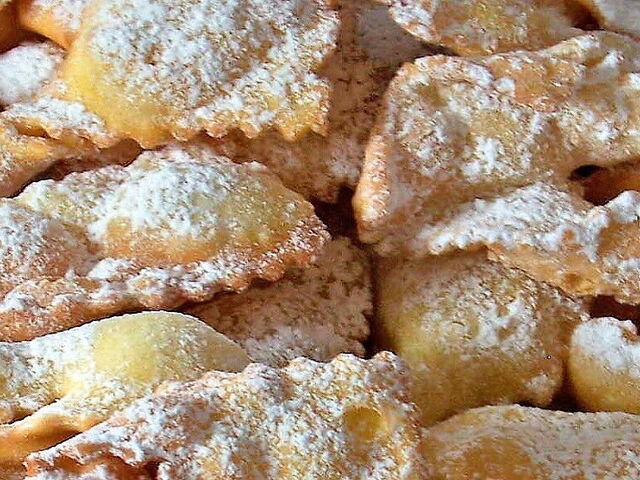
The “chiacchiere”, “galani”, “lattughe” or, as we call them in Tuscany, the “cenci” are a sweet fritters usually prepared on Carnival period. They have the same name as the clothes used to clean the floor and they probably have an ancient origin, dating back to the Roman age. If you’re in Florence, you absolutely must try the creations of the “Santo Forno” (Via Santa Monaca, 3r) or the “ Pasticceria Stefania “(Via Guglielmo Marconi, 26), perhaps during a fantastic stay in the city in one of our properties!
Here’s the recipe of this dessert:
INGREDIENTS:
◾ 500 g of white flour
◾ 150 g of powdered sugar
◾ 5 eggs
◾ Olive or Sunflower Oil
◾ Lard
◾ ½ glass of dry white wine
◾ 1 vanilla powder bag
◾ 1 lemon
◾ 1 small glass of rum
1. Pour the flour on the pastry board with 130 g of sugar, the lemon zest, the vanilla powder and a pinch of salt. Blend all the ingredients, make a hole in the center of the dough and add 5 egg yolks (leaving two whites aside), five oil tablespoons, wine, liqueur and the egg whites (beaten until stiff) in it. Knead the dough working it powerfully for some minutes, to make it hard and compact.
2. When you’re finished, work the dough with a rolling pin to obtain a pasta of a 0,5 cm height. Using a cog pasta cutter, cut it creating rectangles of 7x12 cm and then make four parallel cuts inside them, paying attention to not cut until the sides of the shape.
3. When all the dough is cut, put a frying pan on the fire adding a lot of oil or, if possible, lard, submerging it completely. Once the pot is hot, put two or three rectangles in it, let them brown until they get golden and then turn them to the other side. I suggest you to cross the rectangles’ stripes in the pan, so the cenci will get more voluminous!
4. When the cooking is over, drain them and place them on parchment paper to remove the grease in excess. Fry them all, then dust them with the remaining powdered sugar using a sift, settling them in a big plate covered with a napkin, then serve. Buon appetito!
Read More
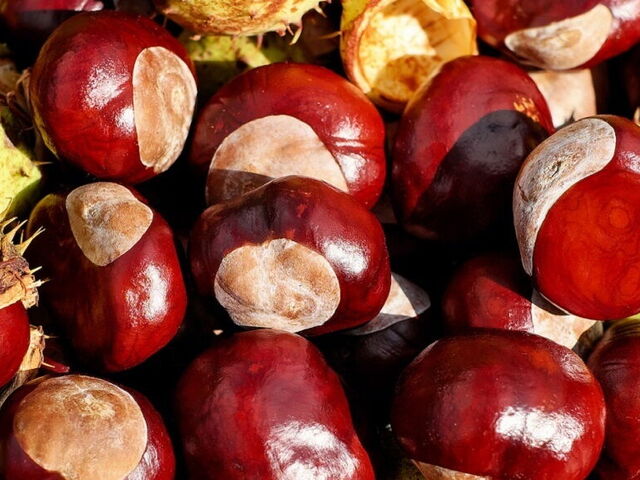
One of Autumn’s most typical dishes in Tuscany is the “castagnaccio”, a cake made with chestnut flour, raisins, pine nuts, nuts and rosemary. Its story is linked to the city of Lucca, as Ortensio Lando wrote in his book “Commentario delle più notabili et mostruose cose d’Italia ed altri luoghi”(1553) that a certain Pilade da Lucca invented this recipe.
As well as being easy, this recipe is also very fast and it has a peculiar flavor, thanks to the sweetness of its flour. In Autumn, many popular celebrations and “sagre” are dedicated to chestnuts and castagnaccio: I suggest you to make a visit to “Castagne e Vino Novo” in San Gimignano (SI) on November 13th, 20th, 27th and December 8th, 9th, 10th (discover our vacation rentals in San Gimignano) or to “Festa della Castagna” in Lupinaia (LU) on November 13th (discover our vacation rentals in Lupinaia)!
INGREDIENTS:
◾ 300 g sweet chestnut flour
◾ 40 g shelled pine nuts
◾ 40 g shelled nuts
◾ 70 g raisins
◾ Rosemary
◾ Salt
◾ Olive Oil
1. Wash raisins over cold running water and leave them soaking for 10 minutes in a bowl with cold water to rehydrate them.
2. Sift the chestnut flour and put it in a large soup bowl, then gradually add cold water and blend with a whisk. In this way, you will obtain a semiliquid batter without lumps (you will need about half a liter of water).
3. Add two tablespoons of oil, a pinch of salt and softened raisins, then blend again. Slightly toast the pine nuts in a pan and add them to the dough alongside the nuts, setting aside a small quantity of them to be put over the cake’s surface.
4. Pour the dough in a baking pan (use a rectangular one) greased with oil. Its dimensions must consent to the castagnaccio to reach a one-finger height.
5. Sprinkle the surface with pine nuts, crushed nuts and some rosemary leaves: before baking it in a pre-heated 200° oven, cover it with a bit of oil (about 2 tablespoons).
6. The cooking will need 30 minutes. However, you can consider the castagnaccio ready when its surface becomes golden, crunchy and cracked.
Read More

You often hear talking about the Tuscan red wine as one of the best in the whole world, without really knowing why. Same story when we think about “Chianti” wine or all those bottles with “DOCG” initials, which you never remember what they refer to. And which is the difference between a Merlot, a Sangiovese and a Colorino? And why are some wines called “Annata” and others are “Riserva”?
Unfortunately, we’re not all enology experts and we may not know the answer to these questions. But you can maybe find some of them in this article!
First of all, what is Chianti?
Chianti is an area of more or less 70.000 hectares between the cities of Florence and Siena. No less than 7.000 hectares are covered with vineyards used to produce excellent quality red wines. Cosimo III De’Medici established this area’s borders in 1716, when he made an announcement to the four regions that produced “good wine”, which were Chianti, Pomino, Carmignano and Valdarno di Sopra. In this way, he introduced the concept of “territorial labelling” and wine production’s checkings for the first time.
What does DOCG mean?
DOCG is the acronym of “denominazione di origine controllata e garantita” (label guaranteeing the quality and origin). In fact, DOCG wines are severely controlled, subjected to organoleptic tests and recognized as DOC since more than ten years. The 96% of DOCG wines in the market are produced by the Consorzio Chianti Classico.
What’s Consorzio Chianti Classico?
The Consorzio is the association of some Chianti companies that controls their production and that highlights “Chianti Classico” label in the world. Born in 1924, its brand is a Black Rooster and it’s the only one able to produce “Chianti” wine since 2010. Its companies’ wines must be produced from sangiovese grapes for more than the 80% and by other red-berry kinds like canaiolo nero, colorino, merlot and cabernet sauvignon for the remaining percentage. Three types of wine can be distinguished (Gran Selezione, Riserva, Annata) depending on their ageing or their chemical/organoleptic properties.
One of the Consorzio’s properties since 1948 is Fattoria di Bibbiano, a splendid agriturismo in Castellina in Chianti. Plunged in the green Tuscan countryside and on the top of a hill surrounded by cypresses and vineyards, the estate is formed by some luxury farmhouses which are managed by Posarelli Villas: Villa Sodi Exclusive e Villa Bibbiano Exclusive.
Read More
October 7, 2021
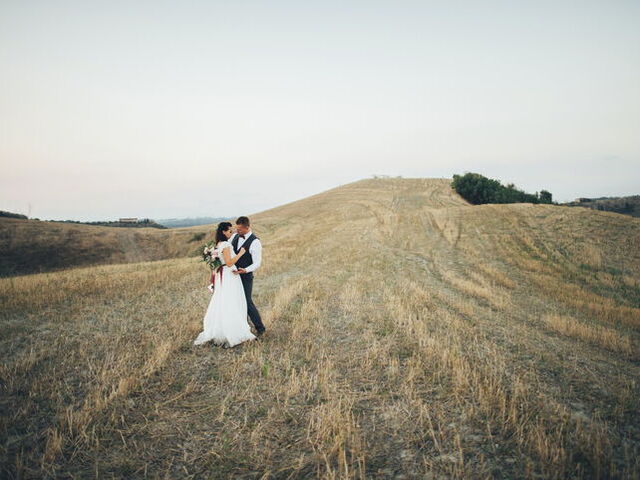
5 Great Ideas to Make Your Dream Wedding Come True in Tuscany
Every year hundreds of people choose Italy as a location for their wedding and Tuscany is one of the most popular destinations in the Country to get married! If you too dream of celebrating your wedding in the beautiful and rolling hills of the region, but you don't know how to organize the event or what to do, this article is for you. Below you will find some tips to turn your dream wedding in Tuscany into reality!
Read More