Archive for "Food and Wine"
Planning a trip to Italy? Browse and read our useful and informative articles about the endless range of attractions and experiences in this lovely country.
Travel through the beauties of Italy with us. Visit our blog!
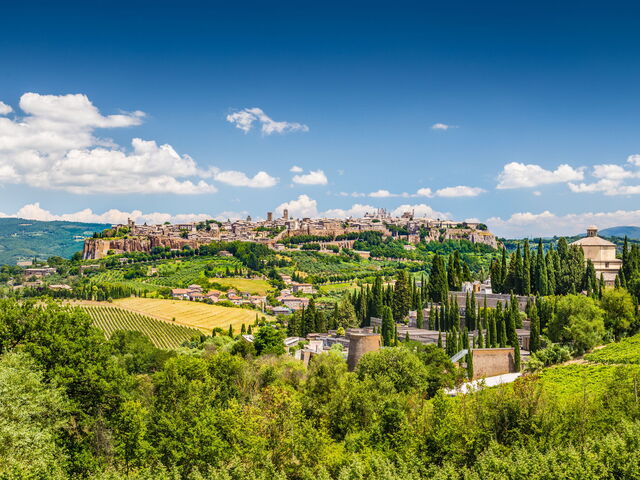
Umbria is a small but precious green heart of Italy. This region has protected its traditions with all its strength, preventing the contaminations of the modern world. When visiting Umbria, you will find an authentic atmosphere: Etruscans, ceramics, monasteries, national parks. Its historical, religious and natural importance is second to none other region, and the same goes for its rich and substantial menu of typical dishes.
WHAT TO EXPECT FROM UMBRIAN CUISINE? Protein first and foremost, from diametrically opposed sources. On the one hand, the absolute preponderance of meat in main courses and as a dressing for pasta; on the other, a rich biodiversity of pulses including lentils, black chickpeas, roveja, fagiolina, cicerchia and many others. Then fresh pasta without eggs, spelt and other ancient cereals, cheeses and sheep's milk ricotta, and home-made desserts to dunk in wine.
WHICH DISHES SHOULD YOU ABSOLUTELY TRY? 1. Arvortolo: a golden fried pizza that is arvortolata ( flipped) several times during cooking to make it homogenous. They can be eaten on their own or filled with capocollo, porchetta or pecorino cheese.
2. Mazzafegato: a sausage made from pork liver, rind and other secondary butchery parts. All seasoned with fennel seeds, lemon and/or orange peel.
3. Cicotto: a special pork roast prepared with all the parts of the pig (ears, tripe, nose, feet, shin, tongue) washed and cooked in the oven for at least 12 hours.
4. Umbricelli: these are the typical pasta format of Umbria. Prepared only with water and flour, they are only meant to be served with a tomato sauce.
5. Strangozzi: these are very thick fettuccine, which do not have eggs inside their dough. They are usually seasoned with tomato and parsley.
6. Crescionda: a luxurious cocoa and amaretti cake consisting of three layers. The first is made of macaroons and flour, the second creamy made of eggs and milk, and the third with bitter cocoa. Mistrà (aniseed liqueur), rum, lemon peel, vanilla and cinnamon complete the ingredients.
7. Brustengo: this is a kind of sweet corn bread enriched with thin slices of apple and dried fruit at will. The good thing about brustengo is not only the taste, but also the nutritional table. It is traditionally gluten-free and sugar-free.
WITH WHAT TO ACCOMPANY THE DISHES LISTED ABOVE? In Umbria, one not only eats well but also drinks deliciously and variously. There are several grape varieties typical of the area, which are increasingly appreciated internationally. Among the most famous are the Torgiano Rosso Riserva DOCG and the Montefalco Sagrantino DOCG, but wines such as Grechetto or Ciliegiolo are becoming increasingly popular.
There are also special productions of wines with very interesting characteristics such as Orvieto abboccato, which is perfect for dessert, rather than Solleone, which is more fortified and has a strong personality.
Umbria, therefore, also in this wine and food itinerary, has turned out to be a region with many hidden sides that have yet to be fully revealed.
Why not choose Umbria as your next destination? Take a look here, don't let this opportunity pass you by.© Rebecca Taizzani
Read More

Imagine sitting by the pool and admiring the view. The light blue sky mingles with the blue of the infinity pool over the sea, creating an exciting symphony of colours. The gentle breeze caresses your skin. Your eyes are almost half-closed, you are about to surrender to the arms of Morpheus, also helped by the delicate fragrance emanating from your freshly washed beach towel.
You feel as if you have found peace of mind.
"But what are we having for lunch?"The bone of contention. Seven miserable words hanging in the air, there lurking to damage your nothingness plans for the day.
Panic is now unleashed, a silent panic, fuelled by lightning-fast glances, which are not followed by any move. No one wants to abandon their fort, nothing new from the pool front, let alone the hammock front: everyone knows that the first one to take a step will be the one chosen to prepare lunch.
"We became tough, distrustful, ruthless, vindictive, crude; and that was good: those were the very qualities we lacked" (Enrich Maria Remarque - All Quiet on the Western Front )So how do we avoid another world conflict?
Simple: read on.
MR BOBOS FOOD TRUCK: A GUARANTEE
Today we would like to introduce you to the MrBobos Food Truck: a truck located just a few steps away from our Seasun and Seawave villas (but also easily reachable from Arete, Nafsika and Athena or Ebellina) that serves typical Greek dishes at lightning speed.
Opened and inaugurated not even a year ago, it has already won the hearts (and palates) of all those who have tried it at least once. We who are now regular customers can say that we are married to Bobos' cuisine.
The success of MrBobos, apart from the quality, is also due to its strategic location: the van is in fact just a few metres from the beach of St.Spyridon, it takes only 5 minutes on foot to get there from the beach (if you are hungry even less, it is amazing how fast we walk when our bellies growl).
So to recap, great location, sublime quality, honest prices, but what do you eat at Bobos?
In the paragraph below you can find his menu.
FROM SALAD TO KEBAB: ALL THIS IN A FOOD TRUCKGreek salad for the health-conscious, a delicious Caesar salad for the nostalgic and chef's salad for the curious.
If dieting is the least of your worries, let the Greek pita stuffed with pork and chicken win you over.
Our dispassionate advice? Try the Halloumi!
Check out the menu here. New dishes are offered daily, so stay tuned by following their Facebook page.
We conclude this article by telling you that the owners of Mrbobos also run an excellent typical restaurant Jelatis Corfu: the same authenticity as the food truck dishes but with more choice and seating.
Now that we have revealed our favourite places in Corfu: arm yourself with a fork and go!© Rebecca Taizzani
Read More

July 18, 2022
What to Do in Mid-July: a Trip to Tuscan Provence
Bright colours, overwhelming smell, swaying movements. What are we talking about? The flowering of lavender.Lavender is a rustic plant belonging to the Lamiaceae family and owes its name to the Latin gerund 'lavare' : in the Middle Ages it was used to cleanse the body. Lavender flowers are used in phytotherapy and herbal medicine for their numerous properties due to the presence of essential oil, tannins, ursolic acid, flavonoids and bitter substances. These active ingredients give the plant a sedative and calming action on the nervous system, to be used in cases of anxiety, nervousness, headaches and stress and insomnia, and to combat gastrointestinal manifestations related to agitation. Lavender's benefits also include its balsamic action on the respiratory tract, making it an excellent remedy for colds such as flu, coughs, colds and excessive phlegm.
People mistakenly associate lavender with the south of France, particularly Provence, but this wonderful plant also grows in the arid and stony soils of Italy, and it is here that we want to take you today.Just a few kilometres from our villas in the municipality of Montespertoli you can admire a breathtaking lavender field, but there is more: the farm that hosts this field offers very interesting activities and organises aperitifs and dinners with lavender preparations.Read on to find out more!Podere Lemniscata is located a few kilometres from Florence, in the municipality of Montespertoli, an area famous for the production of Chianti wine. The owner Manuela Andreetta knows very well the countless properties of this plant and every day she tries to make her guests discover them.Let's take a look at some of the activities that Manuela proposes:
1. LAVENDER ESSENTIAL OILOne of the activities offered by the farm is the harvesting of lavender to obtain essential oils. You will be guided through this process: you will be explained how to cut the leaves so as not to kill the plant and obtain a very good essential oil.At the end of the harvest you will deposit the lavender in containers and watch the extraction live. The magical moment will be accompanied by the unmistakable smell of this plant that evokes an unparalleled feeling of freshness and cleanliness.Lavender essential oil helps to restore calm and serenity, eliminating stress and nervousness. Just a few drops in the diffuser are enough to purify the air and bring balance and harmony to the environment. Mixed with a carrier oil (e.g. sweet almond oil) it can be used for massages and to loosen muscle contractures or soothe burns.
2. LAVENDER TO DRINK AND EATAfter toiling in the lavender fields, what could be better than a refreshing aperitif and a sublime dinner?The signature cocktail of the Lemniscata farm is their lavender spritz: we cannot describe the goodness and freshness of this drink, you must try it!Our advice is to also stop for dinner: the completely cruelty-free menu will satisfy all your senses. Don't miss dessert!
3. ALL-ROUND WELL-BEINGIf you have read this far your interest in lavender is strong! You are curious to try essential oil extraction and cocktails! But what about attending a live concert while sitting comfortably among the rows of lavender? Or how about doing a meditation cycle with crystals to discover the 4 elements?Podere Lemniscata offers this kind of activity every month, check their website or their Facebook page to stay up to date. © Rebecca Taizzani
Read More

“ma per le vie del borgodal ribollir de’ tiniva l’aspro odor de i vinil’anime a rallegrar “
Today, with the help of the illustrious poet Giosuè Carducci, we would like to introduce you to a village located in the Tuscan hinterland, which can be considered one of the most charming in Tuscany.
Wine, narrow streets, cheerful souls, festive atmosphere: the whole soul of Bolgheri is encapsulated in a quatrain.
Geographically located between Piombino, Volterra and Livorno, it is less than 300 km from Rome and is a hamlet of the municipality of Castagneto Carducci. Its Viale dei Cipressi has become a true Tuscan icon, part of the common imagination of travellers from all over the world, but there is more than this to visit in the village.
Many of you will have already had the good fortune to visit it, while others may not have even known the existence of this little treasure.
In any case, read on for our tips on what to do in Bolgheri.
If you are staying in our Guardistallo accommodation or have booked a flat with a swimming pool at Sculture, you can plan a wonderful day out in Bolgheri.
Read More
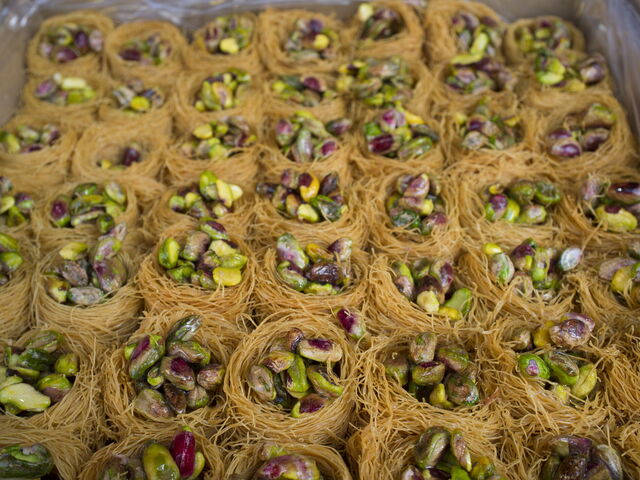
Greece is a country full of discovery: sea, sun, breathtaking landscapes, history, culture and what else? The good food!In this article we want to put aside for a moment the mouth-watering Greek salads, endless souvlaki and delicious pita gyros. Today we will focus on an underrated niche: pastry.
Greek pastry represents what is most characteristic of Mediterranean culture. In ancient Greece, Zeus, Artemis and Apollo were the greedy recipients of irresistible sweet creations, rich in spicy aromas, dried fruits, cottage cheese and mosto. Greek sweets, besides being tasty, often keep for a long time and are a wonderful accompaniment to Greek coffee.
Let us now see what they are:
(Before proposing them to you, we tested one by one while enjoying the sunset by the pool at Villa Nafsika)
1. Galaktoboureko: This is simply a phyllo pastry cake filled with butter, semolina, sugar, cornflour, eggs, milk, vanilla and nutmeg, baked in the oven and then, once cold and cut into squares, drizzled with a delicious syrup made from honey, lemon or orange peel.
2. Kourabiedes: these are classic winter biscuits, made mainly of almonds and butter, covered with icing sugar, resembling winter snow. A delicate biscuit with a unique aroma, scented with brandy or ouzo that decorates the tables of the Greek people at Christmas time.
3. Trigona panoramatos: a regional speciality, originating in Thessaloniki (said to be the gastronomic capital of Greece) specifically in the Panoramatos district, whose name in Greek recalls its curious shape (trigona = triangle). These are triangles of phyllo dough soaked in sugar syrup and filled with a rich cream-based custard.
4. Loukoumades: these are delicious round doughnuts cooked in boiling oil, covered with honey, cinnamon and chopped walnuts (or almonds). On St Andrew's Day it is the custom for Greek women to prepare them and offer them in church: legend has it that the saint's wife offered them to Jesus and his disciples on the day they arrived in the village hungry.
5. Portokalopita: an irresistible orange-scented phyllo dough cake. The intense and strong aroma of the fruit lends itself perfectly to the taste of Greek yoghurt, which gives the dessert a soft and firm texture. After baking, a glaze of sugar, orange juice and cinnamon completes this rich and unique dessert.
6. Greek Baklava: a syrupy dessert of Turkish origin, also found in Hellenic pastries. A cake made with layers of phyllo dough alternating with chopped almonds and honey, whose original recipe calls for the phyllo dough to be baked with dried fruit and then syrupy with honey. The ingredients? Butter, sugar and dried fruit, all flavoured with cinnamon, cloves and orange, honey: one bite leads to another. 7. Kataifi: a neat composition of strands of phyllo dough with bits of dried fruit inside, including nuts, pistachios and almonds.
Did you see any dessert that caught your eye? Why not try it in one of our magnificent villas; we guarantee that the taste seems to get even better!© Rebecca Taizzani
Read More
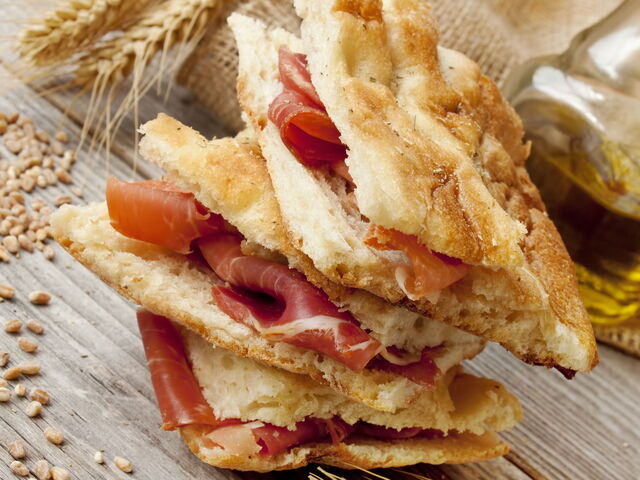
You have arrived in Italy after a long journey. The Tuscan hills are holding you in their arms, the chirping of the sparrows cheers your last few kilometres and the light tramontana wind moves the olive branches pointing the road, everything is enlightened by an orange sunset reflecting on the windscreen of your car.
You are happy, you can't wait to get to the villa you have rented and take off your shoes, walk on the soft lawn to stretch your legs. The bravest will even dive into the pool.
It's all beautiful, but you realise you haven't thought about dinner.
This is where we come in, or rather, the libidinous Schiacciata Toscana.
Ciaccia, schiacciata, stiacciata, schiaccia, in short, the typical Tuscan focaccia is a product of peasant cuisine and is known and appreciated throughout Italy.
The characteristics that must not be missing are
1. extreme crunchiness
2. large air bubbles
3. signs of hand pinching
4. an abundant brush with extra virgin olive oil after cooking.
Schiacciata (because that's what you'll have to call it when you order it) is one of the oldest Italian street food recipes and one of the most popular dishes among Tuscans.
Now you may be wondering how to stuff this food of the gods?
Schiacciata can be eaten in both savoury and sweet versions (no, we're not crazy, you'll see why).
The traditional stuffing of schiaccia is cold cuts and cheeses, and if you're feeling healthy or preparing for the swimming season, you can also add some vegetables. We recommend the combination of prosciutto crudo, Tuscan pecorino cheese and truffle cream, or Tuscan porchetta, parmesan cheese and roast potatoes, or if you're feeling more classic: schiacciata with mortadella.
But now let's move on to the sweet version: schiacciata with Nutella. This is the snack that every Italian child wants to find on his or her return home and that every adult secretly eats in the evening after dinner.
The savouriness of the salt crystals on the surface contrasting with the sweetness of the nutella helps to create what can be described as 'food porn'. In addition, it is as if the oil in the schiacciata and the fats in the creamy spread annihilate each other, creating a black hole in the stomach of those who eat it: one schiacciata alone will not satisfy your craving, you will need at least three! (we would like to point out that we are not responsible for the addiction that this food may create).
But where can you eat all this?
If you want to feel like a true Italian, our advice is to go and buy the schiacciata in any bakery and fill it to your liking. If, on the other hand, you prefer to leave it to an expert hand, our recommendations are: All'antico vinaio, La prosciutteria, I fratellini, Da Giotto, Cioccolateria Ballerini, Forno Becagli.
Would you like to try your hand at preparing this work of art? Book a cooking class in one of our villas.
Ps. Don't forget to accompany your meal with a good glass of wine, hydration is important.
© Rebecca Taizzani
Read More
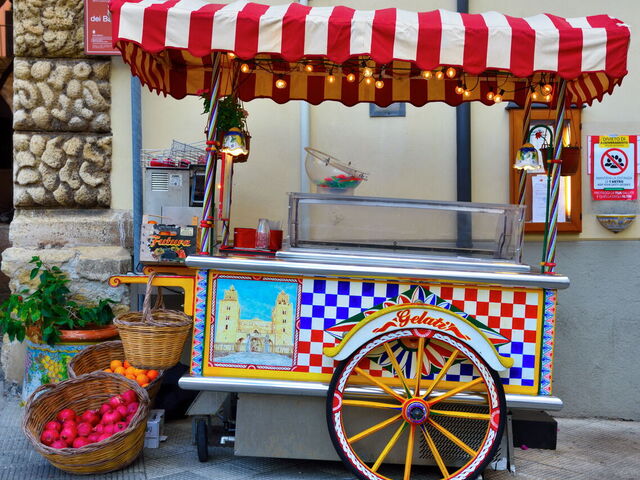
Palermo: an ancient city rich in history, culture and … culinary delights! Mediterranean cuisine is very diverse and each city has its own distinctive foods and wine. What they have in common is the use of authentic local ingredients and dishes with centuries-long traditions. If you’ve decided to visit Palermo but you don’t know what to eat, we’re here to help. Here is our list of Palermo’s local specialties and where to taste them. Get ready to jump into a delicious paradise!
Read More
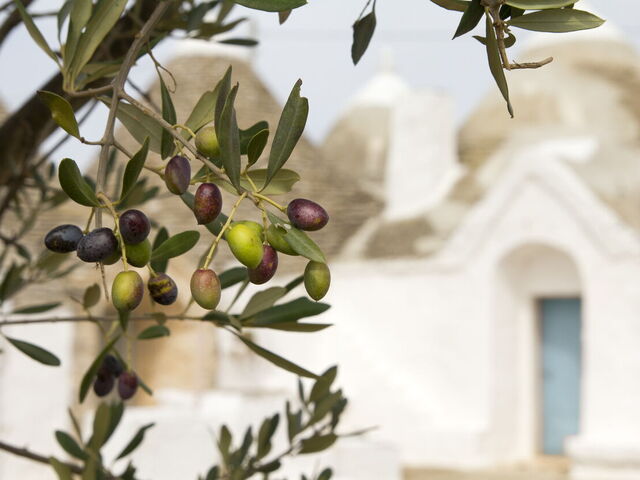
Puglia: the heel of the Italian peninsula, where histories, cultures, and civilizations have come together since antiquity to create one-of-a-kind traditions. Puglia’s territory and location have cultivated a rich diversity of farming, animal husbandry and fishing. The resulting dishes are simple—and simply delicious—examples of the renowned Mediterranean diet. Grains, legumes, fresh vegetables and fish take center stage, as well as delicious desserts that are adored by visitors to this splendid region.
Let’s discover the top 10 traditional dishes from Puglia, and get ready for our next food and wine tour!
1. Orecchiette e cime di rapa: Orecchiette pasta with broccoli rabe
Handmade by skilled pasta artisans, this one-of-a-kind pasta is called “little ears” for its ear-like shape. There are many different sauces and gravies used with orecchiette, but the most delicious and famous is broccoli rabe sautéed with anchovy filets to lend incredible flavor to the whole dish! It’s impossible to resist a second helping, which you will surely be offered.
2. Polpette di pane: Bread fritters
Bread fritters are a homemade specialty of southern Italian mothers and grandmothers, in the tradition of frugal housekeeping. Nothing goes to waste! Egg, parsley and other herbs are added to stale bread soaked in milk, then the batter is fried until crispy and delicious. Fresh out of the oil, enjoyed while waiting for lunch, they are the perfect finger food!
3. Pasticciotto
An authentic breakfast in Lecce isn’t complete without pasticciotto: a flaky pastry shell filled with custard. Nothing more, nothing less, but the pasticciotto’s simplicity is what makes it irresistable. Legend has it that pasticiotto was the result of a pastry chef’s mistake in the 1700s. When he didn’t have enough ingredients for an entire cake, the chef decided to make a small dessert instead, and pasticiotto was born. It’s available in all bars and pastry shops, and not just at breakfast, so you can indulge at any time of day!
4. Cozze arraganate: Baked mussels
These mussels from the province of Taranto are the most delicious in Puglia! They are stuffed with egg, parsley and cheese, then broiled in the oven: a succulent and original way to eat Italy’s most delicious mussels. You can find them in any restaurant along the coast of Taranto, as well as in the area of Salento.
5. Focaccia barese: Bari-style focaccia
Soft, thick dough with crunchy edges and just the right amount of oil. Sweet cherry tomatoes and oregano top this focaccia, which has become the symbol of Puglia street food. It’s as famous as the pizza of Naples, but seldom made in other regions because frankly it’s one of a kind! Bari-style focaccia can be found hot out of the oven at bakeries and takeaway shops, not just in Bari, but all over Puglia!
6. Melanzane ripiene: Stuffed eggplant
The pride of homecooks, each with their own recipe: the recipe for stuffed eggplant is simple, but the flavor evokes Sundays with family. Whole eggplant skins, cut in half, are stuffed with eggplant flesh cooked in plenty of oil and tomato, mixed with cheese, sometimes meat, breadcrumbs and plenty of love. Baked in the oven until golden and voilà: it’s a simply exquisite dish.
7. Panzerotti
Fried in boiling oil, panzerotti are Puglia’s specialty! These half-moons filled with tomato, mozzarella and anchovies are a must for foodies and the perfect alternative to a simple sandwich. There is a wide variety of creative and refined fillings to please all palates. So bring on the fillings with cured meats, cheeses, vegetables and delicious sauces. Don’t miss out!
8. Cartellate
The one and only holiday treats: cartellate! Their traditional rose shape resembles baby Jesus’s crown. Cartellate are made from a simple dough of flour and white wine, and then they are, of course, fried. After cooking, honey or vincotto are added according to individual taste and the cook’s recipe. Don’t turn your back or they’ll be gobbled up before you know it!
9. Friselle
During the hot summer, friselle are the key to a light and fresh lunch between a dip in the sea and your afternoon nap. Also called frise, friselle are made from an O-shaped roll that’s divided in half and toasted. Friselle are soaked in water according to taste, topped with oil and rubbed with cherry tomatoes just like normal bruschetta. And don’t forget oregano, the omnipresent herb of Puglia cuisine. Recently, gourmet friselle have also become popular, with burrata, anchovies and pesto, as well as salmon and avocado!
10. Fave e cicorie: Fava beans and chicory
Last but not least: the real tradition from inland Puglia, made from simple, wholesome ingredients by humble farmers. Fava beans and chicory is not just a dish, it’s an aroma, an emotion, the feeling of home and wholesomeness. Dried white fava beans are cooked for hours until they soften into a puree, and chicory from the fields is lightly sauteed. They come together on the plate and are topped with a simple drizzle of oil. It’s a dish that will stir your emotions by taking you back in time.
There are many more traditional dishes in the small but incredibly diverse region of Puglia. To discover them all your only choice is to go try them in person! For a fantastic vacation in Puglia tasting the region’s specialties, we recommend staying in one of our vacation villas in Puglia like Trullo Santo Stefano, Meadow Luxury Villa!
Read More
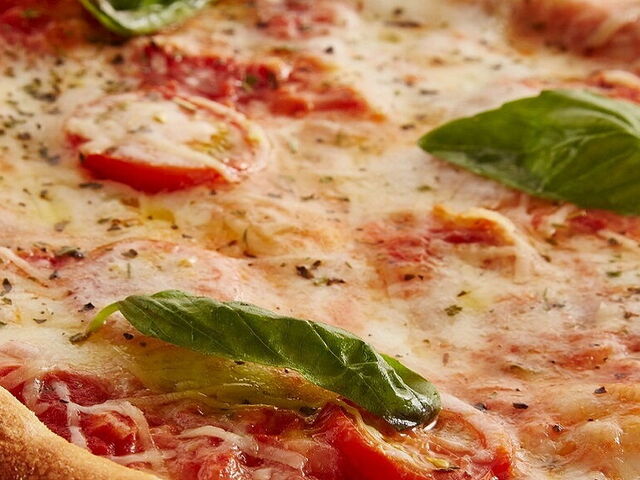
Those who visit Campania for the first time are always stunned by its architectural and natural beauties. However, it's also thanks to the flavors of its excellent cuisine that this region makes everybody fall in love with it! In fact, Neapolitan cuisine is an explosion of genuine flavors that has its roots in ancient traditions, which arw still handed down from generation to generation. It is a collection of simple dishes made with few natural ingredients, which are still incredibily tasty. As well as its good first courses, main courses and appetizers, there are some excellent drinks you should try, such as Limoncello liquor or Falanghina and Aglianico red wines.
Unfortunately, Napolitan dishes are so many that it's impossible to try them all during a short holiday in Southern Italy. Here's why we made a list of the best Neapolitan specialties to try at all costs during your trip: let these fantastic flavours surprise you and enjoy your authenitc Italian experience!
1. The pizza
Neapolitan pizza needs no introduction! This world-famous recipe is based on a few simple ingredients, which are tomato, mozzarella -often with buffalo milk- and basil. The pizza boasts innumerable imitations in the world, but none can reach the perfection of the Neapolitan recipe! Cooked in a wood oven, it has a prominent soft crust and a thin center. Don't forget to try it at one of the best pizzerias in Naples, like those of Gino Sorbillo or Da Michele!
Another type of pizza is that with "scarole", which is stuffed with endive, olives from Gaeta, capers, pine nuts, raisins and anchovies. You can taste it both hot and cold and it is typically prepared between Christmas and New Year.
2. The Neapolitan "ragù"
The Neapolitan meat sauce is very different from the Bolognese one. This type of ragù is the result of a very long preparation and a slow cooking procedure, as the pieces of meat need to combine with the tomato sauce. According to tradition, the ragù is prepared on Sunday mornings and is served at the traditional family lunch.
3. The anchovy sauce
Spaghetti with anchovy sauce is the typical dish of Cetara, a fishing village in the heart of the Amalfi Coast. The dressing of this dish is obtained by pressing salted anchovies, from which an oil with a strong and decisive taste is obtained.
4. The casatiello
The casatiello is a traditional dish prepared in the Easter period. This cake can be both sweet and savory, if it contains ingredients such as cold cuts, boiled eggs and cheese.
5. The "married soup"
The "minestra maritata" is broth made with meat and mixed vegetables, such as cabbage, broccoli, chicory, endive and aromatic herbs. To add some flavor, many people use ingredients such as lard, caciocavallo cheese or ham, to make the dish even more delicious. The name "maritata" derives from the union of different and explosive flavors: it's a perfect marriage between meat and vegetables!
6. The "impepata di cozze"
Mussels are another great classic,which is usually cooked during the Easter period. They are cooked in a large saucepan and once they open they are seasoned with oil, pepper and parsley. The best way to taste them is with some slices of toasted bread or by the typical "friselle"!
7. The friarelli
Very similar to turnip tops, friarielli are a kind of vegetable that only grows in Campania, specifically near Naples and the Vesuvius. They are usually fried in oil, garlic and chilli and they are often accompanied by sausages. The union of these flavors is sensational!
8. The babà
The babà is the Neapolitan dessert par excellence. This baking leavened cake is made with the traditional rum bath. Its soft consistency requires a long processing, but the result is guaranteed! There are several versions of this dessert, some simple, others more complex, which include a pastry cream filling or a limoncello wrap instead of rum. However it is cooked, this sweet always satisfies all tastes!
9. The sfogliatella
The sfogliatella is a small Neapolitan sweet with a delicious taste. It can be curly if prepared with puff pastry, or shortcrust if prepared with shortcrust pastry. Inside, it is made of semolina, ricotta and candied fruit.
10. The pastiera
Pastiera is a delicious Easter cake on a short pastry base made with wheat, ricotta, eggs, lard, sugar, candied fruit. Each family passionately preserves its own secret recipe, as this is one of the best-loved dishes of Campania cuisine.
Are you ready to start your tour between the best flavours of the Neapolitan cuisine? Book one of our properties on the Amalfi Coast!
© Alice Pilastri
Read More
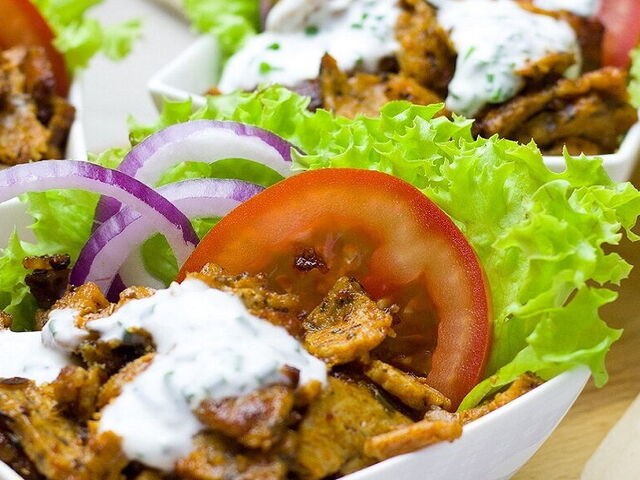
Greece is a land made of millennial history, natural wonders, charming beaches, crystal-clear waters and…excellent food! In fact, this cuisine is one of the most appreciated in the entire world and typical Greek restaurants are found behind every corner. However, there is nothing like eating a warm pita gyros in the country where it was invented! Meat, cheese and vegetables are the main ingredients that transform each dish into the succulent discovery of ancient local traditions. This cuisine is simple, but still surprisingly flavourful.
Are you ready to discover some new fantastic flavours? Here are the best 6 traditional dishes you need to taste at all costs during your holiday in Greece!
1- Baklava
This dessert made using phyllo pasta presents itself as small pastries made of honey and dried fruit. It is perfect for breakfast, as it makes you start the day in a very sugary way!
2- Moussaka
It looks like an Italian "Parmigiana", but it is one of Greece's iconic dishes. This is a flan made of aubergines, potatoes, minced meat, bechamel sauce and cheese. Its incredible flavour is imitated by many, that often fail to reproduce its rich taste. Don't miss it!
3- Kolokythokeftedes
Despite its complicated name, this dish is made of few, simple ingredients. Kolokythokeftedes are meatballs composed by feta cheese, zucchini, parsley, mint and dill, which are fried to get a crunchy consistency. They can be perfectly accompanied by some tzatziki sauce for an entrée or a main course of a light lunch.
4- Greek salad
Another idea for a light summer lunch is a fresh Greek salad, one of the most popular salad varieties. Red tomatoes, green pepperoni, black olives, slices of cucumber and plenty of delicious feta cheese are the ingredients of this appetizing specialty.
5- Souvlaki
Souvlaki is the name of grilled pork skewers that are often served as a street food with pita bread and french fries. The meat is marinated in oil, lemon juice and some spices and its flavour is mouth-watering.
6- Pita Gyros
Pita Gyros is the dish you can't forget to taste before leaving Greece! This famous street food is a round flat bread cooked on a hot-plate stuffed with strips of lamb, chicken or pork. It can be seasoned with vegetables like olives, cucumber or tomatoes, as well as with sauces like the traditional tzatziki dressing. You can find variants of this dish in other areas of the Mediterranean, such as Tukey of Northern Africa, but nothing tastes as good as a typical Pita Gyros!
Have you already booked a seaside property for your stay? Choose your favorite holiday rental among our selected villas in Crete or Corfu!
© Alice Pilastri
Read More