Our Blog: Travel Tips
Planning a trip to Italy? Browse and read our useful and informative articles about the endless range of attractions and experiences in this lovely country.
Travel through the beauties of Italy with us. Visit our blog!

In Italy, Aperitivo is an authentic tradition. It is not like a simple dinner, a snack, an English appetizer or an American Happy Hour, but something unique which became part of Italian culture and transformed into a real “social event”.
Every day, from 6pm to 9pm, cafés and restaurants fill up with people of all ages who just wish to spend some time with their family and friends after a long working day. A relaxing ambient music accompanies what Italians call "ape", a moment when pubs offer a small buffet to whoever buys a drink. With just €5-€15 you are going to enjoy a delicious cocktail and to taste some French fries, sandwiches, slices of pizza, pasta, snacks, cheeses and other finger foods in a special atmosphere. It is an occasion you do not want to miss!
Do not confuse Aperitivo with Happy Hour: while the first is typically Italian and comes it anticipates dinner, the second was born in America and it consists of a series of discounts on food and drinks, which actually replace the main meal.
Aperitivo's tradition is diffused all over Italy, especially in Southern and Central Italy where drinks are accompanied by some tasty local products.
But which are the 100% Italian cocktails you can taste during your stay?
The oldest drink is the Americano, created at the end of 19th century in honor of Primo Carnera, an italian boxer who lived in the USA. It is made with red vermouth, soda and bitter.
A variation of it is the Negroni, a Florentine cocktail made in 1920s by Luigi Scarselli, where gin replaces soda. After the mistake of a bartender who used champagne in the place of gin, another drink called Negroni Sbagliato was born.
However, it is believed that the drink who led to these two inventions was the Mi-To, a less popular aperitivo made with Campari and Vermouth and created to celebrate the highway linking Milan and Turin.
Later, in 1960s, a barman invented the Martini Dry, a successful cocktail with gin and vermouth which revisited the Martinez drink. These famous beverages have a strong, bitter taste and they are important test beds for Italian bartenders!
Italians also appreciate the Spritz, a Venetian alcoholic drink made with white wine /Prosecco, Aperol, sparkling water and ice, and the Bellini, consisting of sparkling white wine, blended fruit pulp and white peach juice. These are perfect drinks for a classy aperitivo!
Book one of our properties in Italy and taste some delicious local specialities sipping a great cocktail!
Take a look to our holiday rentals in Tuscany, Sicily, Sardinia, Latium, Apulia, Umbria and Liguria and choose the best solution for you!
Read More
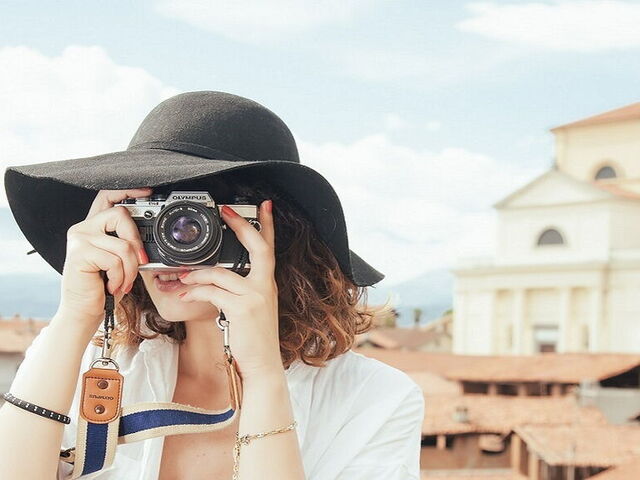
Italy is famous in the entire world for its romantic sceneries and for its monuments among which it is impossibile to choose the most charming. Choosing the perfect subject for a photograph is tough when you are surrounded by the countless wonders hidden in each corner of this "Bel Paese".
Here's why we offer a list of the top "photogenic", "Instagrammed" places in Italy, where we guarantee that each picture will look like a masterpiece!
1) The Cinque Terre
This stripe of land in Liguria separating the mountains from the sea is one of the best tourist destinations in Italy. These five fishermen villages overlooking the water conceal dozens of fantastic panoramic sights, like those that you will find walking along the "Sentiero Azzurro" hiking route connecting all the centers. It is the perfect place to take pictures to some stunning sea views, as the light reflects on the vivid colors of the houses and on the green vegetation surrounding the villages.
Read more about the Cinque Terre in our previous article, organize your trip and book our Casa al Bosco for your stay!
2) Santa Maria del Fiore Cathedral and Giotto Bell Tower
This church is built in the typical Florentine Gothic style distinguished by a polychromy of marbles coloring the external façade, which make it easy to distinguish it immediately. It is the symbol of the city and its Dome is still known as the largest ever built in human history. Every angle is photogenic: you can either climb Giotto Bell Tower to admire the church from the top, walk around it looking for the perfect perspective or make your way up inside the dome to reach its summit and shoot a breathtaking panorama! No matter if you are a professional photograph or a beginner: this place will surely offer you a spectacular photo.
Read more about the Dome of Florence in our previous article, organize your trip.
3) The Amalfitan Coastline
Visit this amazing place in Campania, the perfect destination for lovers of "dolce vita" and Italian beauty! The centers of Amalfi, Ravello, Positano and Sorrento, along with the magnificent island of Capri, are unmissable places to fall in love with. Every picture will look stunning thanks to the brilliant colors, the perfect illumination and the innumerable shades of the Gulf of Naples, which will recreate a wonderful game of lights and shadows. You will get the best shoots in a place called "Baia dell'Ibernato" or on board of a boat that will make you discover some splendid glimpses along the coast!
4) Piazza del Campo
This is one of Europe's largest medieval squares and it is world-famous for the beautiful brick architectures and the Palio organized in Summer. Thousands of families, tourists and photographers get charmed by this spot because of its peculiar shape and colors. Take a photo to the beautiful Palazzo Pubblico, to Torre del Mangia and remember to take a break to enjoy some local specialties in one of the local restaurants!
If you are looking for a property to rent for your stay in Siena, we recommend our Capannino!
5) Orcia Valley
Cypresses, wheat fields, stone countryhouses and flower gardens are what you will find in Orcia Valley, where each panorama will leave you speechless! This incredible area between Siena and Umbria includes some splendid villages like Pienza, Montalcino or Radicofani. Visit them travelling along the roads plunged into the countryside, take a picture to the amazing nature, castles, towers and ancient churches and have one of the best times of your life!
Visit Orcia Valley and book one of our villas for rent, like Villa Brunello or Cerretalta!
6) Venice
The canals of Venice form one of the most magical places to take photographs, especially on board of a typical "gondola"! The palaces were built on water and the various types of ships floating around them make the sights look even more poetic. The "City of Water" is a real architectural jewel, a stunning locality where the crystalline water sparkles on special places such as "Ponte dei Sospiri" or "Acqua Alta Bookshop". It will certainly create the perfect atmosphere for your picture!
Organize your visit to Venice and book our Ca' Marcello for an unforgettable holiday!
7)The Colosseum
It is the symbol of Rome, what represents Italy abroad and also one of the most impressive architectural works ever created. The Colosseum was built in AD 72 by Emperor Vespasian using travertine marble. Its beauty is immortal and it lights up of a magnificent color when the sun goes down. Take some minutes to admire it in silence, then look for the perfect perspective to take a fantastic photograph!
Read More
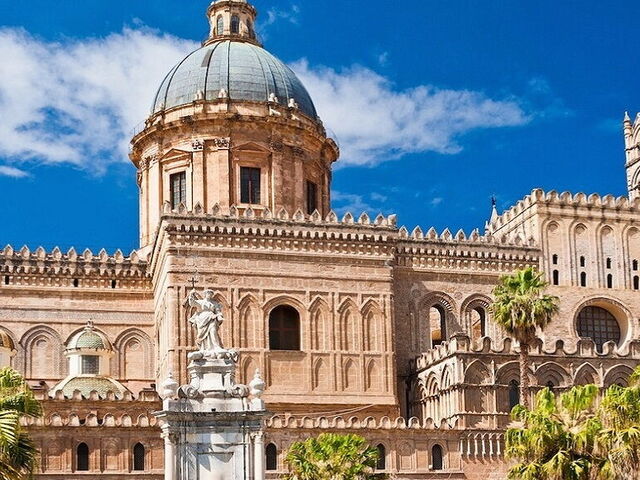
Few places collect in a couple of square kilometers as much beauty as Palermo, a Sicilian town which has been a land of conquests, dominations and joyrides. Four thousand years of history, innumerable different races and dozens of languages have mixed in a unique and magic locality like no other.
This city has often changed its name: the Carthaginian founders called it "Ziz" (“the flower”), then the Greeks who colonized it defined it "Panormos" (“all-harbour”) and transformed it into one of Magna Graecia's main centers. A couple of centuries later, Romans distorted the name into "Panormus", while Arabs renamed it "Balarm" and Normans "Balermus". Finally, the city obtained the name of "Palermo" during the Modern Age and it still persists today.
Its rulers did not destroy this center, but they put effort into building and creating a fantastic container of art and architecture masterpieces giving it the name of "the vastest and most sublime metropolis of the world".
And thisdecision was a real luck, as the number of its invaders has been extremely large! After the Phoenicians, Greeks and Romans, Palermo was occupied by Vandals and Ostrogoths, who were lately replaced by Belisarius' Bizantines. Arabs arrived in the 12th century and the city became the capital of their "Ṣiqilliyya" Sultanate until 1097, when Normans arrived from Scandinavia followed by Swabians, Angevins and Aragoneses. Then, Palermo became part of the Spanish Crown and it passed to Savoia and Borbon families until its annexation to the Kingdom of Italy in the 19th century.
Each of these conquerors, especially Normans and Arabs, wanted to leave a trace of their passage. This is why Palermo is decorated by many important architectural gems which made it become a UNESCO "World Heritage Site".
A visit to this city is really an embarassment of riches! Visitors can start their tour with the magnificent Palazzo della Cuba, a typical Arab building partly restored by Normans, and they can continue with the Norman Palazzo della Zisa. They can even choose to make some time jumps passing from Baroque-Rococò style to Romanesque, returning to Roman Age and suddenly going to see some Renaissance and 19th century palaces.
Get carried by the old town center streets and live a real time-shift! Meanwhile, you will have the opportunity to meet Sicilians, a variegated people shaped by the various dominations. Listen to the sounds of the city, enjoy the typical citrus fruit smell and taste the flavours of one of the richest and delicious cuisines of the world!
Obviously, you cannot forget to visit the majestic Palazzo dei Normanni! This enormous building is a harmony of architectural styles and it is the oldest royal palace in Europe, which hosted the Kings of Sicily, Emperors Frederick II and Corrado IV and the historical Parliament of Sicily. Inside it, you will find a real art jewel, the Palatine Chapel, a place of worship built by Ruggero II and consacred on April 28th 1140 as the royal family's private chapel. It is so beautiful to take your breath away and it is worth a whole trip!
Further to this monument, we suggest seeing the wonderful Duomo di Monreale, the Cathedral of Palermo and the royal graves, the famous Teatro Massimo Vittorio Emanuele, the Renaissance Palazzo Abatellis, the Chiesa della Martorana or some of the splendid Catacombs.
Plan your visit and book one of our luxury properties in Sicily: our suggestion is Villas to rent in Sicily.
Read More
With its green parks, ancient villas, magnificent red stone architecture and dozens of religious buildings, the “city of one hundred churches" is one of the best-loved in Italy. Lucca is a town between Pisa and Florence, a few kilometers far from Versilia coastline and from the splendid Garfagnana woods.
The charming historical center is a no-traffic zone but don't worry: leave your car in one of the pay parkings under the city walls, start exploring the streets by foot or rent a bike and start your special visit! This is what distinguishes Lucca, as everybody uses their bike to move around and the sound of bicycle bells echoes in each road.
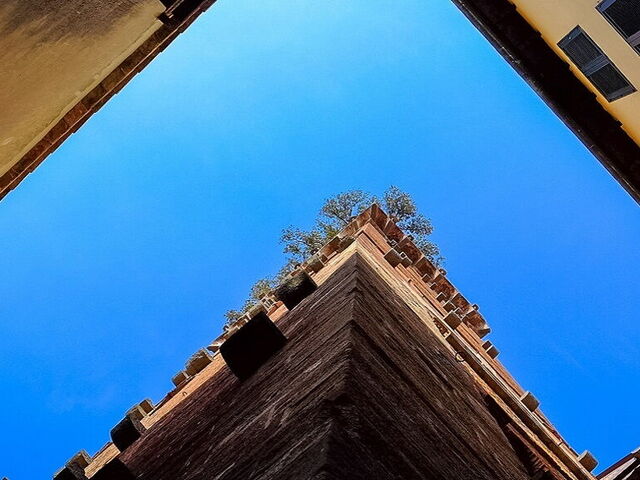
Crossing the city walls through one of the "Porte", you will reach the old town center and monuments like San Martino Cathedral, which contains the important "Holy Face Ligneous Crucifix", the Romanic San Michele Church or Torre Guinigi, with a unique pensile garden. Enter the favorite road of shopping lovers, via Fillungo, and reach the Roman Amphitheater, which is a splendid elliptical square with nice restaurants and local shops where concerts and shows are often organized. Also go to Piazza Napoleone, which is the location of unmissable events such as “Lucca Summer Festival” and it hosts an ice-skating rink in December. Art and music lovers cannot forget to see Giacomo Puccini Museum-Native House or the wonderful masterpieces in the “Pinacoteca Nazionale”.
Undoubtedly, the obligatory stop of a bike tour is the route on the Ancient City Walls, which are a splendid Renaissance structure of artistic, monumental and historical importance enclosing the whole town. The pedestrian tree-lined road is 4 km long and is suitable for every kind of cycler, especially for families with children. Sometimes, you can stop along the itinerary to admire the landscape, to relax in one of the parks with playground, to eat something in a café or in the pic-nic areas with benches and tables. You can travel this road in every period of the year, even in Summer, as the century-old trees will offer a pleasant shadow.
Other charming bike tours twist and turn in the surroundings of Lucca. We suggest travelling the road near Serchio River, which continues in Garfagnana area passing through its woods, hills and wonderful historical monuments, like the "Aqueduct of Nottolini". Otherwise, you can ride your bike on the itinerary next to some famous Lucca villas and their parks, which are all located next to each other. It is the perfect destination for a luxurious and relaxing day close to nature!
Visit Lucca during your next holiday in Tuscany! We recommend booking one of our stunning exclusive properties like Villa De Ranieri or Flavia Apartments, as they will guarantee an unforgettable stay in this region.
Read More
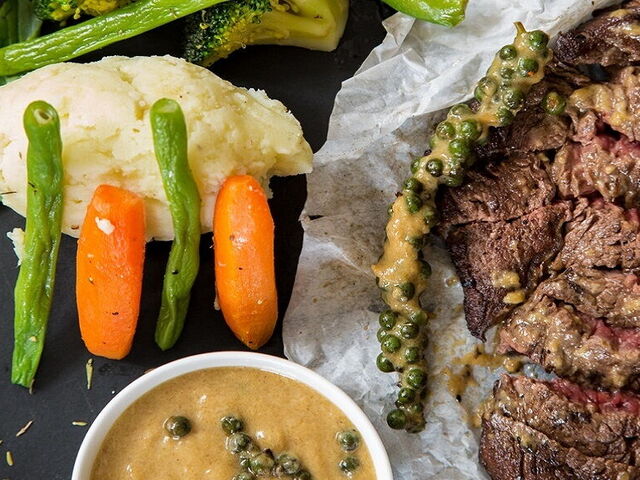
What's better than getting to know Florence traditions through its delicious local dishes?
The street food is the new trend: buying a typical sandwich in a small food shop and eating it while visiting the city makes the tour it much more sensational.
There are many restaurants, fast-foods and cafés in the streets of Florence and we assure you that choosing where to stop to have lunch is always a tough challenge.
So here's a list of the top street food to try in Florence along with the best recommended places to go, which arealso usually frequented by Florentines. They will surely meet your expectations and will make you discover the wonderful city under a different point of view!
-A Covaccino at “Amici di Ponte Vecchio”
The "covaccino" is a unique variety of thin"schiacciata" seasoned with salt, rosemary and olive oil. It can be eaten alone or accompanied by cheese, salami or ham, as you will see in the exquisite sandwiches prepared by "Amici di Ponte Vecchio”. This small café has been often awarded for its amazing street food as its specialities are made with fresh local ingredients and are also loved by all Florentines. Taste their "covaccino con stracchino e salsiccia” and enjoy your fantastic meal!
-A Ciabatta Fiorentina at “Mangia Pizza Firenze”
The "Florentine Ciabatta" is a type of pizza consisting of flattened bread filled with cheese, "pomarola" sauce and other "zero kilometer" ingredients. The "Mangia Pizza" restaurant is a charming place to eat right next to Ponte Vecchio, where you can either take a pizza away or sit at a table to enjoy the dish to the fullest.
-A Lampredotto at “I’Trippaio Fiorentino”
A famous Florentine speciality is the "lampredotto", which you will see prepared in many food stands along the center streets. It is a very poor preparation used to fill sandwiches based on abomasum, one of the four bovine stomachs. The best place to try it is certainly "I’Trippaio Fiorentino” in via Gioberti, offering some personal variations such as the unique “cacciucco di lampredotto”.
-Some Coccoli at “Friggitoria e Pizzeria dell’Albero”
No contest: the best fried dishes are in “Friggitoria e Pizzeria dell’Albero”, a great fast-food near Santa Maria Novella station cooking the best-loved ficattole, frittelle, calzoni and bomboloni by Florentines. Taste the "coccoli", a kind of salty fried snack usually accompanied by salami, pecorino cheese, ham or stracchino. This street-food is the latest trend in Tuscany!
-A Schiacciata at "All’Antico Vinaio"
Their schiacciata is special and almost inimitable. It is homemade by the funny owners of the shop, who are open all day long to take hundreds of wonderful paninis out of their oven for tourists coming from all the world. Tuscan salami, prosciutto crudo, sbriciolona, finocchiona and porchetta come along with local cheeses and tasty sauces like truffle or artichokes dressings. Order the fantastic "Favolosa” schiacciata or create your personalized sandwich accompanying it with a glass of good Tuscan wine. This is one of the most famous, reviewed and photographed bars in the world: do not forget to stop here when you are in Florence!- The Gluten-Free Schiacciata at "Sgrano"
Also in Via dei Neri a few steps after All'Antico Vinaio, in the heart of Florence behind Palazzo Vecchio, we find Sgrano, a small and pretty place where they serve special schiacciata all strictly gluten-free for those with and without allergies. They are big sandwiches, hearty and do not reserve on quantities. For those who are intolerant to gluten and want to taste the real typical Tuscan schiacciata, this is the right place. Selected doughs and local ingredients including classic Tuscan ham, sbriciolona, mortadella, porcini mushrooms and truffles. A must try!
Book now one of our villas in Florence town to taste some of these delights!
Read More
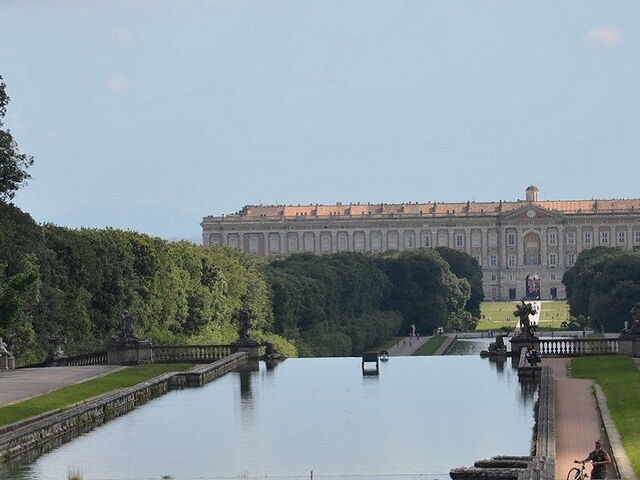
Did you know that the world’s largest royal palace is in Campania, in the beautiful city of Caserta. Declared a “UNESCO World Heritage Site”, this building is the demonstration of how wonderful human artworks can be. Everyone is left with their mouth open in front of this architectural masterpiece of incredible dimensions which seems to extend as far as the eye can see.
The works for the “Reggia di Caserta” started in 1751 with Luigi Vanvitelli and it was concluded by his son Carlo in 1845. In this period, Rococo style was facing its downfall and it was leaving space to Neoclassicism, which will mark the 19th century with a strong artistic opposition to all the previous stylistic features. For this reason, the palace presents the cohabitation of various artistic styles and the result is outstanding.
The Baroque-Rococo style is distinguished by a decorative overabundance and by an exaggeration of complex curved shapes. The best example is the "Grand Staircase of Honour”, which also became the source of inspiration for makers of other following staircases. Alongside this majestic structure, you will admire some big statues and two spectacular staircases ending with two small temples and a "fake" decorative dome.
Instead, the Neoclassical style was inspired by Greek-Roman arts and was distinguished by semplification, geometrization, rationalism and decorative austerity. An example is the outer façade, which presents scarce decorations, plain colours and a rational quadrilateral structure.
The artwork commission was presented by Carlo III Borbone, who wanted to make Caserta the new cornerstone of the Kingdom of Naples.
It is a huge structure with a 47000 sq. m. surface, composed by five floors, four inner courtyards, some historical apartments, one "Palatine Chapel", a theater, the so-called "Quadreria" and a magnificent park. The gardens are divided in two parts and their style mixes the typical Italian Garden elements with the English one. Walk along the splendid boulevards embellished by fountains, sculptures and small woods, until reaching the incredible final waterfall! Inside the park, you will also find some beautiful thematic sculptural groups such as the one dedicated to hunting with "Diana and Atteone Fountain", which all represent humanity's achievements and progress.
The Royal Palace of Caserta is definitely an open-air masterpiece concealing innumerable wonders.
If you are staying in Campania for a few days or for a long summer holiday, do not forget to plan your visit to this stunning place!
Opening hours of the historical apartments, the park and the Quadreria are 8.30am-7.30pm, while the "Decorative Arts Tour" to the Staircase of Honour is by reservation only. Tickets cost €12 (full-price), €6 (half-price) and are free for under-18s.
Looking for a luxury holiday rental? Choose your favorite among all our properties in Campania, which are located in some of the most beautiful parts of the region to guarantee an unforgettable experience!
Read More
Everyone knows that the culinary tradition is part of Italian culture, a real religion that the inhabitants of each region interpret in a unique way through their local specialities.
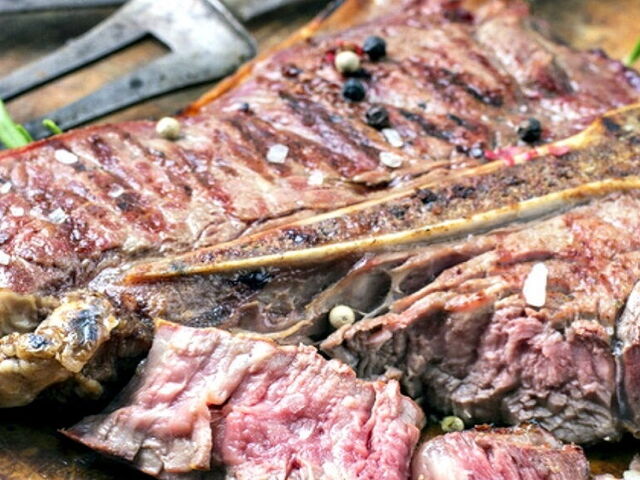
The soul of Tuscany and especially Florence is represented by a famous dish cooked with passion ad enthusiasm which you will absolutely need to taste in occasion of your visit: we are talking about the inimitable "Bistecca alla Fiorentina".
The roots of this food delight are found in the Renaissance, specifically during Saint Lawrence celebrations in the 16th century. This Saint is still commemorated every August 10th, as he was a famous martyr who died in Rome in 258 getting grilled on a gridiron, particularly venerated in Central Italy.
At that time, the occasions allowing to poor people to access precious beef meats were rare, as they were reserved to the rich. Common people could only eat cheaper meats such as poultry, along with vegetables and offal, which led to found the great Florentine tradition of Trippa or Lampredotto. Since 1500, however, Saint Lawrence celebration started to be marked out by the preparation of enormous quantities of beef meat grilled on charcoal fire, which was then distributed to the people for free, thanks to the patronage of Medici family.
Dozens of whole beef loins called “Gran Pezzo” were grilled on embers and were later cut in slices after the cooking. Among the enthusiastic people devouring these culinary wonders, an anecdote tells that there was a group of English merchants who started to shout “beef steak, beef steak!" out loud, to express all their joy end pleasure. Apparently, this fact impressed Florentines as the word the merchants kept screaming entered Italian getting adapted into “bistecca”.
In the following centuries, the preparation of this meat changed until transforming into the current Bistecca, as we prepare it today. The tradition expects the cooking of a Chianina, Maremmana or Romagnola beef loin, aged between 12 and 24 months and hung for one week. Its cut must contain bone, tenderloin and sirloin, it must be at least three inches high (as in Florence they say that "a steak less than three inches high is carpaccio”) and weighing more than 1Kg. It has to be exclusively cooked on burning embers deriving from oak, olive or holm wood and, once it is ready, the meat needs to be flavoured with salt, pepper and Tuscan Extra Virgin Olive Oil.
At that point, all you need to do is enjoying this pure piece of food poetry.
Try this local delight in one of Florence's best restaurants! Florentines suggest booking a table at “Il Latini” (in Via dei Palchetti), at “Buca Lapi” (in Via Tornabuoni) or at “Trattoria Da Burde” (in Via Pistoiese) to get the most out of your experience in this Tuscan town.
If you are looking for a holiday rental, we recommend booking our Villa Tenuta Lonciano on top of the wonderful hills surrounding Florence.
Read More
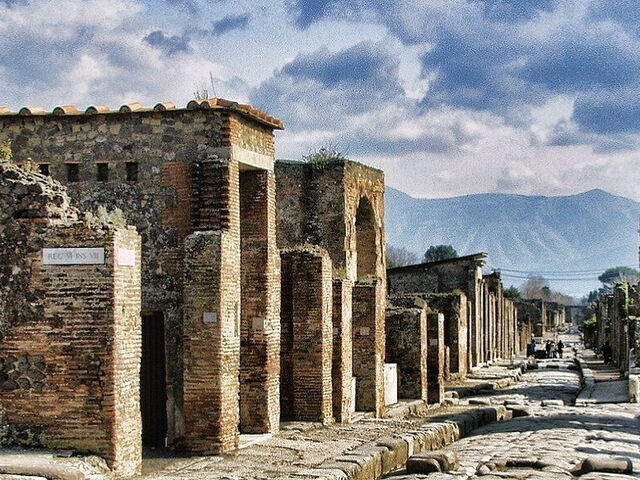
One of the best tourist destinations in Southern Italy is certainly Pompeii, a magical and magnificent place in Campania which has also been recognized as a “UNESCO World Heritage” .
Pompeii was founded around the 8th century BC by Osci, who occupied the territory near Vesuvium, and it was later conquered by Greeks, Etruscans, Samnites and Romans. The Roman period starting at the end of the 3rd century BC was one of the most flourishing ones, as the city became an important commercial, economic and cultural center.
In 62 BC, a strong earthquake destroyed Pompeii, but the reconstruction attempts proved to be useless when an apocalyptical tragedy stroke the city in 79 BC, deleting it completely.
On the morning of August 24th, after a series of violent earth tremors, a terrible Vesuvium eruption took place. The air became unbreathable because of the presence of sulfur, the sky darkened as ash filled the atmosphere and an enormous black cloud started to move in, blocking every glimmer of light. The area around Pompeii got totally covered by ash and lava, while Ercolano was submerged by incandescent mud for 20 meters.
After that day, nothing was left and these towns literally disappeared from the face of Earth. Nobody knew about their existence until the 16th century, when some evidence was found during the works for the creation of a water canal, even though another eruption in 1613 covered everything once again. It was after an accidental discovery by a farmer that a regular excavation project started off in the 18th century, under the promotion of Duke Emanuele Maurizio d’Elboeuf and Carlo III di Borbone, which succeeded in bringing to light a wonderful ancient world.
Nowadays, you have the opportunity to visit Pompeii's excavations to admire its splendid monuments and to see the famous plaster casts reproducing the facial expressions, positions and clothes' folds of Pompeii citizens in the moment of the impact with the violent eruption. You will be walking in the ancient city center near the Forum, Apollo's Temple and the Amphitheater built in 80 BC. Also visit "Casa del Fauno", an ancient Roman villa with a wonderful mosaic, or "Teatro Grande", a majestic bulding dating back to the 2nd century BC.
You can check opening hours on the ticket office site, as they change depending on the period you choose. Tickets for Pompeii site cost €13 or €7,50, while the cumulative ticket including Pompeii, Ercolano, Oplonti, Stabia and Boscoreale sites costs € 22 or €12 (entrance is free for UE citizens under 18 or over 65 years old).
Even "New Pompeii" conceals some wonders in its center: visit "Santuario della Vergine del Rosario" and "Villa dei Misteri", then relax going shopping in the numerous shops and stop eating something in one of the delicious local restaurants!
Read More
An ancient Italian saying goes “it's like Saint Patrick's well” to indicate an interminable challenging endeavor with no apparent logic. But does a well with this name really exist?
Yes, it actually does and it's located in Italy, in a splendid city in Umbria called Orvieto.
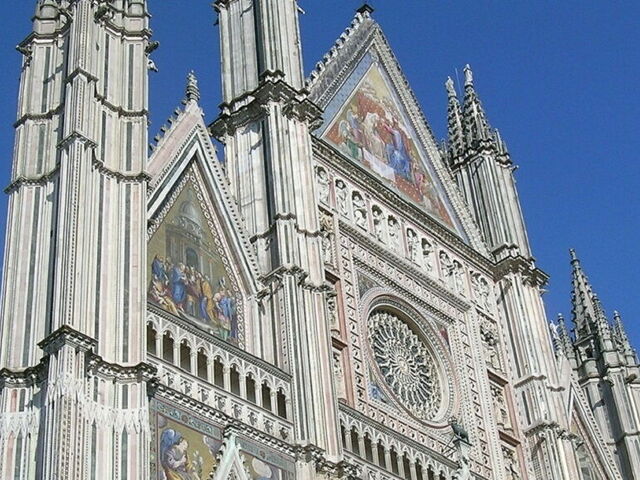
This architectural and urbanistic jewel in Alta Val Tiberina is situated between Latium, Umbria and Tuscany and it plunges its roots in mysterious ancient times. With its magnificent gothic Dome and its old town center castled on top of a hill dominating river Tiber, Orvieto has always represented an irresistible place to live in, especially for Etruscans. It has been an important commercial, artistic and military center and it is still considered a magic place by its inhabitants.
People believed that Orvieto was a sacred town, indissolubly linked to the element of water and to Earth's depths. This mysterious aura also encloses one of the most intriguing and significant monuments in Orvieto, Saint Patrick's Well.
Finished in 1537, the well was projected and built by Antonio da Sangallo il Giovane on order of Pope Clement VII, who had found shelter in Orvieto after the Sack of Rome (1527). The well had to provide water to Albornoz castle in case of siege, it was 62 meters deep and it presented two double-helical staircases which did not cross and could therefore accelerate water's transport.
But why is there a well named after Saint Patrick in Orvieto, as he spent his life in Ireland?
Actually, the legend tells that the Saint prayed near a deep cavern in Northern Ireland where he could get in contact with the afterworld. The cave was also called "Saint Patrick's Purgatory" and it was shut down by Alexander VI Borgia in 1457. However, its memory spread all over Christian Europe through the "Via Francigena", reaching cities like Orvieto. And it's here that a well was built almost one century later and where it also adopted a strong spiritual meaning.
Actually, climbing down its 248 stairway steps will make you reach Earth's depths surrounded by an Infernal unknown darkness after a strange “atonement process”. This mystic experience will end with water, symbol of purity and life and it will make you feel incredible emotions which cannot be described in words, but need to be lived in first person.
The tradition wants that whoever visits this well throws a coin in it, as it is believed that this action will help you to return to Orvieto once again.
Meanwhile, book now one of our properties near the city center to organize a wonderful vacation in thic locality! We recommend our Casale Porano!
Read More
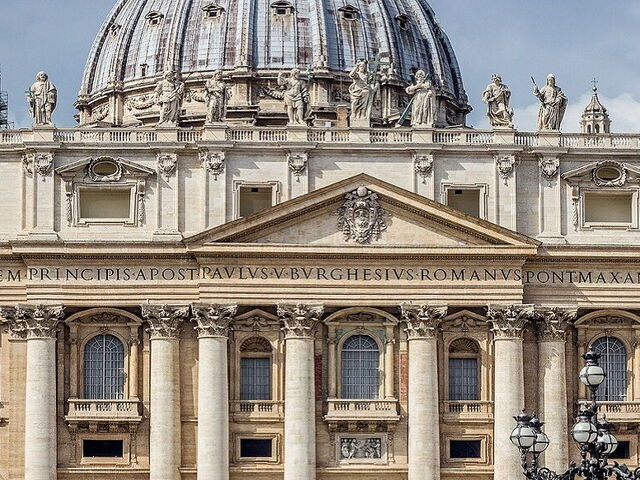
A meeting with Pope Francis in person is the dream of all those who visit the splendid city of Rome. Pilgrims, tourists and worshippers from all the world crowd Vatican City to take part to
the celebrations held by Jorge Mario Bergoglio, one of the most charismatic figures of our time.
Are you staying in Rome for a short weekend or a special holiday? Follow our tips to catch the opportunity to participate to one of these events and to make your visit unforgettable!
Get charmed by the beauty of this town, of St. Peter's Basilica, of Michelangelo's Sistine Chapel, of the incredible St. Peter's Square and book one of our properties.
The possibilities to meet the Pope are many: you can either participate to Sunday morning's Angelus, to a Mass in Santa Marta Church or to Wednesday morning's Papal Audience in St. Peter's Square or Paul VI Hall.
The Angelus is an apostholic benediction pronounced by the Pope every Sunday morning at the end of 12am celebration. It's an informal event with free participation where you do not need to buy tickets, but it is recommended to arrive early to find a spot near the window the Pope will look out from. The Mass lasts 60/90 minutes and it takes place in various languages.
The Papal Audience is held every Wednesday morning at 10:30am in St. Peter's Square or in Paul VI Audience Hall, if the weather is not good. The Pope meets the worshippers and gets close to them on board of his popemobile, allowing some lucky children to get on it for his blessing. It is a special and touching event where it is necessary to get a ticket in advance following one of the expected procedures.
If you wish to reserve a ticket in advance or you are a group of more than 10 people, you need to contact the "Prefecture of the Papal Household" sending an e-mail or a fax to the number +39 06 698 858 63 (specifying the audience you want to take part to and the number of people on the specific form), calling +39 06 698 848 76, +39 06 698 831 14 or +39 06 698 832 73 from 9am to 1pm, or demanding tickets using the ordinary postal service writing to "Prefettura della Casa Pontificia, 00120 Città del Vaticano".
Small groups can also go to St. Peter's Square the day before the audience to ask for a ticket to the Swiss Guards in front of the Bronze Doors. This service is at your disposal from 3pm to 7pm in summer and from 3pm to 6pm in winter, but the tickets' availability is not guaranteed.
Another procedure is reserved to American citizens, who can contact the "US Bishops’ Office for United States Visitors to the Vatican” via e-mail.
It is recommended to get to audiences early enough: doors open at 8/8:30am, but we suggest getting in line at 6:30/7am to get a chair near the maxi-screens that will allow you to see the Pope. Pay attention to your dress-code: if you are not dressed appropriately with your shoulders and knees covered, your entrance will be denied.
Another occasion to meet Pope Francis is participating to a Mass in Santa Marta Church held every morning from Monday to Saturday. However, there are only 25 available seats for visitors so waiting times are very long. To book a ticket you have to send a written request using the ordinary postal service to "Segreteria di Sua Santità Francesco, Casa Santa Marta, 00120 Città del Vaticano".
Do not forget to check the calendar to discover other forthcoming events in town! This special experience will certainly make your holiday in Rome extraordinary.
Read More