Our Blog: Travel Tips
Planning a trip to Italy? Browse and read our useful and informative articles about the endless range of attractions and experiences in this lovely country.
Travel through the beauties of Italy with us. Visit our blog!
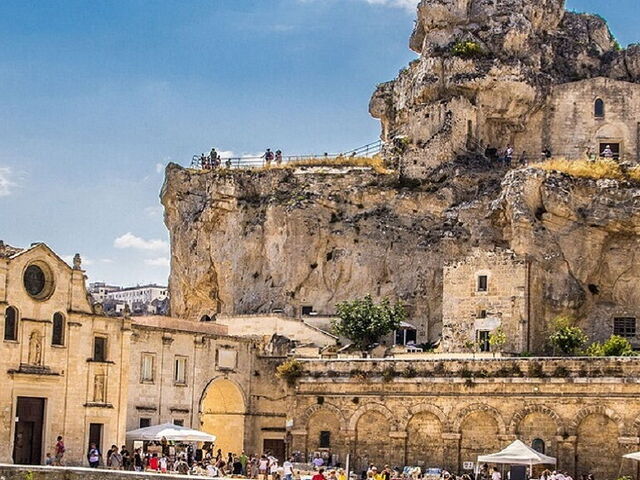
Some weeks ago I’ve been to Matera, a stunning city of Southern Italy in the region of Basilicata. Unesco awarded it as a “World Heritage Site” in 1993 because of the peculiar beauty of its “sassi” and it used the definition of “Cultural Landscape” for the first time. This city will also be the “European Capital of Culture” in 2019 and it will become the destination of thousands of tourists from all over the world!
The history of Matera is century-old and it started during the Paleolithic Age, whent the first inhabitants occupied the natural caves dug in the stone. More of them were added throughout the years, when man realized he could find shelter in the tuff stone excavating it. After overpassing the various pre-historical periods, Matera became a town of boundaries, contrasts and fusions between the different civilizations that dominated this area like the Byzantines, the Normans and the very important Christian populations.
Despite the historical changes, the famous Sassi have been inhabited ceaselessly. These houses have perfectly adapted to the natural context and men have discovered how to exploit the properties of their material and the constant internal temperature. Their structure is based on the superimposition of grottos, tunnels, houses, churches and gardens built in different epochs and they create a magic atmosphere with their dovetailing.
The Sassi are inserted in two huge natural amphitheaters called “Sasso Caveoso”and “Sasso Barisano”, which form the old town center with the “Civita” hill that divides them. The “Caveoso” is in the south, it presents many natural caves and it’s one of the richest Italian petroglyph heritages, while the “Barisano” is in the northern part and it’s mainly formed by excavated buildings.
Matera offers dozens of artistic and cultural events and the possibility to visit countless places of interest. An example is the wonderful Cathedral, built in 1270 in a Romanic style, or the “Parco Archeologico Storico Naturale delle Chiese Rupestri del Materano”, with several Paleolithic findings and churches like Santa Lucia delle Malve.
The uniqueness of its landscape has inspired some important writers like Carlo Levi, who wrote “Christ Stopped at Eboli” (1945) or film-directors like Mel Gibson, who filmed here his “Passion”(2004).
If you’re staying in Southern Italy or you’re looking for the ideal destination for a journey between natural, artistic and historical beauties, choose to visit Matera! Check our properties in Apulia, just a few kilometers away from the city!
Read More
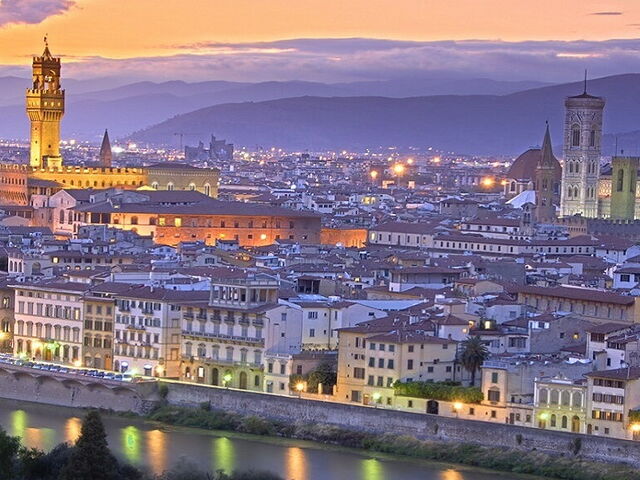
Florence is the city of the Uffizi Museum, certainly one of the most charming art exposition in the whole world. But it's not over: Florence is also dozens of other museums, churches and beautiful ancient monuments.
If you're in Florence, what's a better occasion to organize a cultural tour in this Tuscan city? We propose you a list of the possible steps of your visit: if you're looking for an accommodation in the city, check our properties in Florence!
-Galleria dell’Accademia (Via Ricasoli 58/60, opening times: 8:15-19);
-Galleria degli Uffizi (Piazzale degli Uffizi, opening times: 8:15-19);
-Cattedrale di Santa Maria del Fiore e Cupola (Piazza del Duomo, opening times 10-17);
-Museo dell’Opera del Duomo (Piazza del Duomo, opening times: 9-19:30);
-Museo Archeologico Nazionale di Firenze (Piazza S.ssma Annunziata, opening times: 8:30-19);
-Museo Nazionale del Bargello (Via del Proconsolo, opening times: 08-17);
-Museo di Palazzo Vecchio (Piazza della Signoria, opening times: 9-19);
-Chiesa di Santa Maria Novella (Piazza S. Maria Novella, opening times: 9-17:30);
-Cappella Brancacci (Piazza del Carmine 14, opening times: 11-19);
-Museo del Novecento (Piazza Santa Maria Novella, opening times: 11-19);
-Giardino di Boboli (Piazza Pitti 1, opening times: 8:15-18:30);
-Museo Stibbert (Via Federigo Stibbert 26, opening times: 10-18);
-Museo del Bigallo (Piazza San Giovanni 1, opening times: 10:30-16:30);
-Cappelle Medicee (Piazza di Madonna degli Aldobrandini 6, opening times: 8-16).
Read More
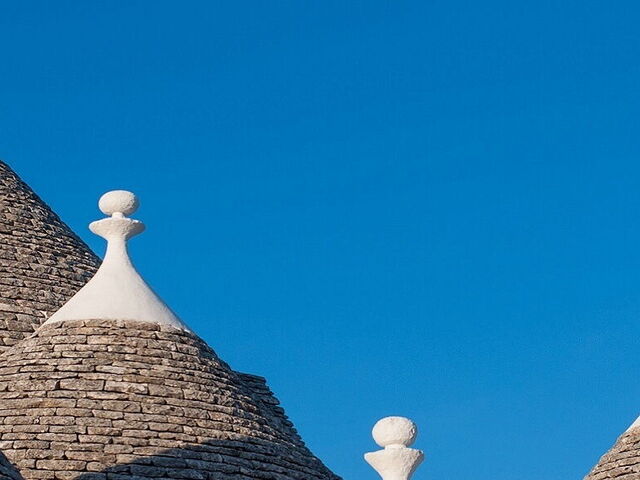
When we think about Apulia, we call to mind its sun, its splendid sea and its peculiar white buildings, the famous “Trulli”. It you visit this region, you cannot miss to visit Alberobello, the “capital of trulli” which has been awarded by Unesco as a “World Heritage Site”. This small center is almost completely made of trulli, which are white-grey cone-shaped stone buildings that follow one another along the streets. The atmosphere is really magic and fairy-tale. Some buildings have been transformed into restaurants, souvenir shops, private houses or even churches, like the Sant’Antonio “trullo-church”. The oldest buildings date back to the XIV century, when Robert of Anjou offered the land to the first Count of Conversano and the area got populated again.
But what are the “trulli” and what’s their story?
These buildings are made of a typical Apulian material and they resume the prehistorical “tholos” model , the typical Mycenean 1500 BC grave. The first “trulli” were built by Apulian farmers with the rocks they found nearby in order to use them as temporary shelters or houses. Their dimension was initially small but it enlarged with the passing of time, until it included more than one room inside. The diffusion of “trulli” was due to the split of the feudal lands, as it was necessary to build new shelters for every farm in the countryside. Nowadays, the places with more “trulli” in them have turned into famous touristic destinations: further to Alberobello, don’t forget to visit Locorotondo, Cisternino, Martina Franca and Ceglie Messapica in the Valle d’Itria and the Altopiano della Murgia!
Some of these trulli have even been converted into wonderful properties where you can sleep for a few nights: it’s an unforgettable experience that you must have at least once in your life! Take a look at Trullo Oak or ”Trullo Santo Stefano”!
Read More
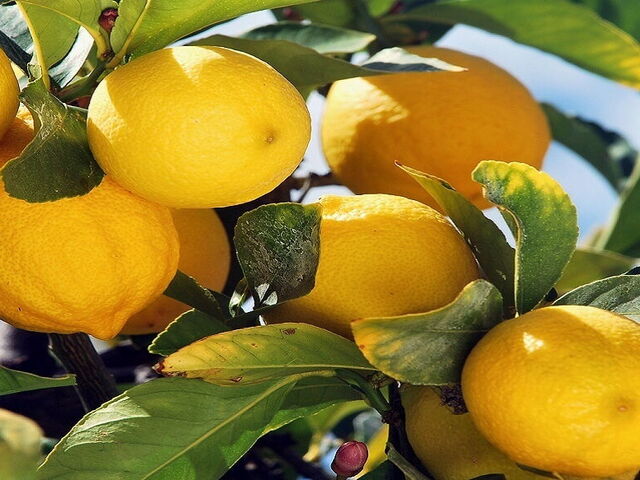
Sorrento Coastline is not just a marvelous touristic destination of Southern Italy, but also a renowned area of citrus trees plantations. This typical fruit is the "Limone di Sorrento", it has quite big dimensions, an elliptical shape, a thick yellow skin and a pleasant smell. While the lemons grown in the Amalfitan Coastline beong to the "sfusato" category, this is a "femminello" lemon, as it presents different organoleptic properties and growing procedures. The product has recently obtained the “I. G. P.” label (Indicazione Geografica Protetta) and it's very appreciated in Italy and abroad.
This type of lemon plants are grown in the Sorrento Peninsula (in the towns of Meta, Piano di Sorrento, Massa Lubrense, Sorrento, Sant’Agnello and Vico Equense) and in Capri. In the first case, the plants grow along slopes near the sea, while in the second they are protected by "pergolati sorrentini", which are structures made of reeds called "pagliarelle" and chestunut poles.
The Sorrento lemon is used to produce alcoholic beverages such as Limoncello or the Liquore di Limone di Sorrento IGP, which have given fame to Campania and to some delicious italian desserts, like the Babà.
All you need to do is to taste these exquisite dishes during a stay in this region! Take a look at our properties we manage along Amalfi and Sorrento Coastline!
© Alice Pilastri
Read More
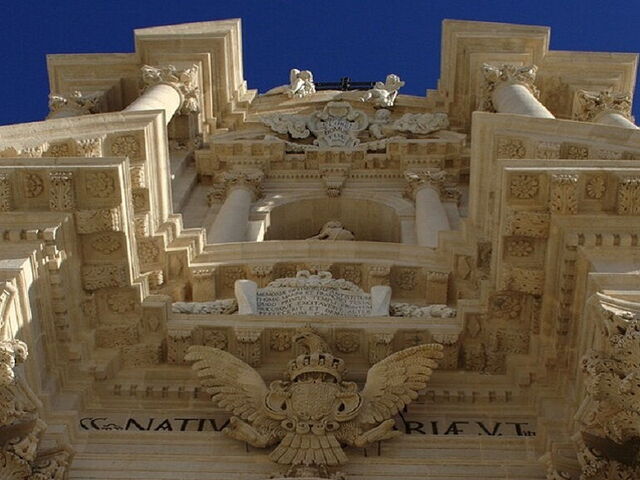
Syracuse is one of the most beautiful Sicilian cities, also famous for having a century-old history, a great artistic and archaeological heritage and for the stunning blue sea that distinguishes this Italian island. It was already a settlement during the Neolithic period, it hosted one of the oldest Christian communities and it has been occupied by Corinthians, Siculians and Arabs over the centuries. Since 2005, it is considered a UNESCO World Heritage Site and the presence of different kinds of ancient architectures in the same place contributed in transforming the city into a real Mediterranean jewel and an acclaimed touristic destination.
Here's a list of the spots you absolutely have to see in this wonderful city: don't forget to check our properties near Syracuse to choose the best accommodation for you stay!
• Madonna delle Lacrime Sanctuary
The building stands out from the other town center houses and it's visible from afar thanks to its 74 m height. It is considered a must-see in Syracuse by all its visitors and it was built in the 1960s after the lacrimation miracle of a chalk Madonna sculpture inside the church. Its dome has a peculiar aspect and if it's observed looking upward from the center of the building it is able to give a special sensation.
• Neapolis Archaelogical Park
This archaelogical park contains one of the biggest and best conserved Greek theaters (where it's possible to spectate to the acting of some classical Greek tragedies), a Roman amphiteater, the Altar of Lerone, the Latomie stone quarries and the "Ear of Dionysus", which is an artificial grotto linked to a famous legend. Visiting this place is like travelling through time: it's someting you really don't want to miss!
• The Catacombs of San Giovanni
Syracuse conceals the largest Italian catacombs after those in Rome, built by one of the first Christian communities of the Mediterranean. Explore the labyrinthine tunnels looking for the spot where it is believed that St. Paul preached to Sicilians!
•Ortigia>
Ortigia is the small old town center on a little island. Its narrow streets are overflown with people, typical local markets, delicious fish restaurants and many small shops. Its charm lies on the myriad of temples, castles and hidden churches, like the majestic Dome built over an ancient Greek temple. Walking along the seaside, you'll get to the Aretusa terrace, where an amazing panorama will take your breath away. Even the Maniace Castle, the "Bagno Ebraico" and the "Ipogeo" are places you really need to see.
• River Ciane
Papyrus plants are not only in Egypt as in this area they grow naturally. I suggest you a boat ride over river Ciane, where you'll be surrounded by hundreds of these plants and you'll have an amazing time. A whole museum is dedicated to this material, which is also used by craftsmen as a support for their watercolour paintings.
• Museo Regionale Paolo Orsi
This archaelogical museum is the biggest one in Sicily. In its halls you'll admire hundreds of findings coming from Sicily's excavations and magnificent prehistoric, Roman and Greek masterpieces.
• Santa Lucia Church
"Santa Lucia" is the town patron saint, as she was born here. Many churches are dedicated to her and the most important one is the "Chiesa di Santa Lucia alla Badia", inside of which there is a Caravaggio's masterpiece: "The Burial of S. Lucia".
• The Necropolis of Pantalica
In Pantalica, a village near Syracuse, there is one of the most valuable prehistoric sites, dating back to the XIII century BC. The necropolis presents over 5000 stone graves and the "Prince Palace", called "Anaktoron", on the top of the hill.
• The Sea and the Beaches
Syracuse is not just art, history and architecture: it's also full of wonderful natural landscapes and marvels! If the weather allows it, go to the beaches of Syracuse, Arenella, Fontane Bianche, Terrauzza or Ognina and dive into the splendid water. Remember to visit the Plemmirio protected marine area: it really deserves a glimpse!
Read More
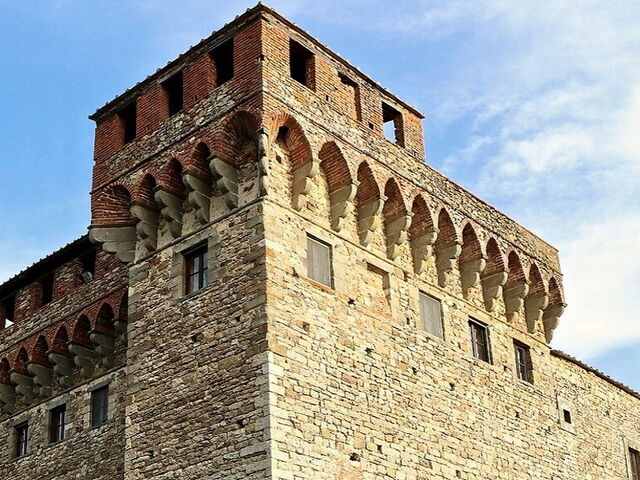
Lari is a stunning Tuscan village with medieval origins located 30 km far from Pisa. Here you can visit the wonderful “Castello dei Vicari”,a castle with majestic walls that emerge from the red roofs of the other town buildings.
The first historical sources about the building date back to 732, although it’s been often rebuilt by the families that have managed it. In the Middle Ages, it belonged to the Republic of Pisa and to the Florentine Vicari family from 1406. As well as being the site of many bloody clashes, the castle became the Inquisition Tribunal headquarters in the 17th century and it contained torture rooms and prisons. It was then used as a jail until the Second World War and it’s now open to the public, who considers it an inestimable Italian artistic and historical heritage.
Since hundreds of people perished here, there are some stories about the ghosts who are believed to inhabit the hallways of the fortress.
One of these is Gostanza da Libbiano, a woman who was put on trial for witchcraft in 1594 because she treated sick people with herbs and other natural ingredients. She was accused of being linked to Satan and of killing a boy with her therapies, so she was put in jail, where she experienced tremendous acts of violence. After being left mentally and physically disabled, she was set free and confined to a three-miles distance from her house until her death in the grip of madness. Since then, people believe that her spirit returns to the prisons and that she goes through the walls with chains and rags on her body. Others claim that her desperate screams echo all along the valley.
The other ghost belongs to Giovanni Princi or “il Rosso della Paola”, a farmer who was put in jail in 1922 because of his anti-fascist political ideas. He was found hanged in his cell and although it looked like a normal suicide, he was actually killed by the guards, who beat him up and hanged him just after his death. When the jail closed down, the keeper declared that he saw the ghost of Rosso in the castle and that he appeared like a mist-shrouded man who vanished in the corridors after a while.
Many visitors, tourists and Lari inhabitants have claimed they have caught sight of mysterious figures in the village and they have witnessed inexplicable events. Are they coincidences? Discover it yourself! Stay in one of our properties in Lari and visit the castle: it’s open all year long, it offers guided tours and the ticket costs 3€.
Read More
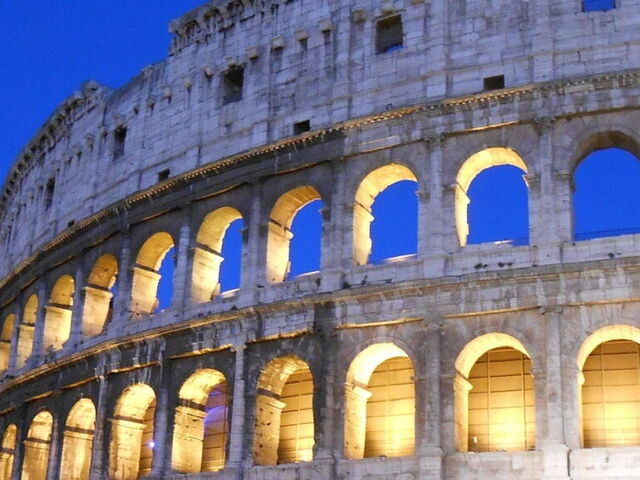
Which city is better than Rome, the Italian “big beauty” , to celebrate Saint Valentine’s Day or a romantic day out? The capital of love offers a fairytale atmosphere to all the couples who decide to spend here the day dedicated to lovers. A visit to its museums, to the Colosseum and to the Pantheon is certainly required, but there are other magic places where you must go to discover the hidden marvels of this city.
Here’s a top ten of the most romantic spots to see during your holiday in Rome: don’t forget to check our vacation rentals in town and choose the best for your stay!
1) IL PINCIO (Viale Gabriele D'Annunzio, 00187 Roma)
The Pincio is a beloved garden by Romans that was built at the beginning of the 19th century by Napoleon. Walk hand by hand along the historical promenade behind Villa Borghese and enjoy the amazing panorama over Piazza del Popolo from its terrace. This park has a neoclassical style, it’s particularly beautiful at sunset and it hides the famous water clock.
2) THE CAMPIDOGLIO (Piazza del Campidoglio, 00186 Roma)
The magic of this place is hidden behind the Palazzo del Campidoglio, along the road used by cars to reach the top of the hill. The view over the Fori Imperiali is especially breathtaking at night or sundown.
3) IL GIANICOLO (Via Garibaldi, 00165 Roma)
This hill was the place of the 1849 clash between the Roman Republic and the French and now it’s a public park dedicated to the Risorgimento period. A walk along via Garibaldi is something you cannot miss: hiking next to the symbolic monuments of the 19th century, you’ll get to the Trastevere, where you’ll be able to enjoy a romantic dinner.
4)AVENTINO AND THE GIARDINO DEGLI ARANCI (Via di Santa Sabina, 00153 Roma)
The garden has a spectacular and romantic atmosphere characterized by numerous bitter orange trees. The movie director Paolo Sorrentino chose it to film his “La Grande Bellezza” and the most magic place is certainly the main door of Piazza dei Cavalieri di Malta. Looking through its lock, you can observe Saint Peter’s Dome with a very unusual perspective. And don’t miss the panorama over the Tiber from its beautiful terrace!
5) THE ZODIACO (Viale del Parco Mellini, 88/92, 00136 Roma)
It’s one of the most famous belvedere of Rome and it’s on Monte Mario, the city’s highest point that offers an amazing panorama. Many lovers crowd the park and it’s perfect for a romantic promenade or an intimate dinner in a restaurant. Another good idea is a visit to the astronomical observatory of to spend a special evening together.
6) PARCO DELL’APPIA ANTICA (Via Appia Antica, 42, 00178 Roma)
The park is the ideal site to walk with your partner along the 16 km route near aqueducts, roman villas and other ancient ruins.
7) TRINITA DEI MONTI (Piazza della Trinità dei Monti, 3, 00187 Roma)
Trinità dei Monti is portrayed by thousands of postcards and it’s the symbol of Rome after the Colosseum. The stairway descending into Via della Condotta is frequented by a lot of couples, especially on late afternoons or evenings, when the light makes it even more wonderful.
8) FONTANA DEGLI INNAMORATI (Piazza di Trevi, 00187 Roma)
The famous Trevi Fountain is a special spot at night, when the square in less crowded and more intimate. You must throw a penny into the water and drink from the Fontana degli Innamorati next to it, as a belief says that the lovers who do this will love each other and will be faithful forever.
9) VILLA BORGHESE PARK
Villa Borghese Park is one of the biggest and best-known in the city. Discover its English and Italian-styled gardens, its columns, its villas, its ancient statues and its amazing lake, where you’ll be able to sail on one of its small wooden boats.
10) THE LUNGOTEVERE
The road running along the river has a unique beauty especially near the Isola Tiberina. The Ponte Milvio is a stop you must remember to do in order to add a love-lock to the hundreds left by other couples.
Read More
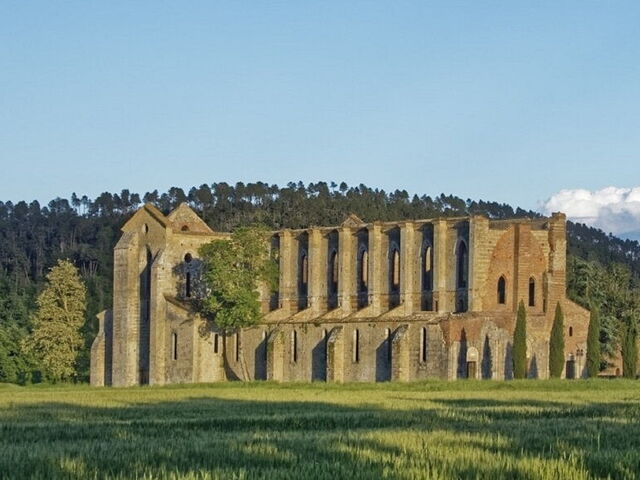
Driving along the road linking Siena to Massa Marittima and approaching to Chiusdino, you will glimpse the ruins of a huge abbey between the leafy branches of trees. The curiosity of discovering more about it will certainly make you deviate from the route. After a few kilometers, a magnificent Cistercian church will stand out and it’s surprising to notice that it’s almost intact even though it’s been built between 1220 and 1268. Just the roof is missing, as it’s been taken off in the 18th century after some collapses. This cathedral is part of the San Galgano abbey complex together with the small chapel on the top of the near hill and it’s dedicated to one of the most symbolic men of Middle Ages.
Galgano was a young and rich man who lived in the 13th century and who was known for having a violent attitude. However, he was encouraged to change his life after the vision hehad about the Archangel Michael. That’s why he became a Knight of God, he became a hermit and he started to be venerated like a saint by the local population. He died in 1182 and a splendid circular church was built after a couple of years on the hill he is thought to have died. An extraordinary medieval object is conserved there, in the “Rotonda di Montesiepi”: the real Sword in the Stone.
Protected by a plexiglass covering under the floor right in the center of the cupola there is an iron sword stuck in the fissure of a stone and some recent studies have confirmed its medieval origin. The legend tells that it was plunged there by San Galgano himself in the moment he quitted using violence to follow the road leading to God.
But why is the Sword in the Stone in Tuscany and what connection does it have with the famous Legend of King Arthur and the Round Table Knights?
It’s maybe thanks to the Via Francigena, which is one of the most important european medieval pilgrinage routes (and which is also the topic of one of our articles of some weeks ago!) that the myth of the Sword in the Stone has been known by pilgrims and travels and it’s been exported to France to be inserted in the Arthurian literary cycle. The echoes of this story also reached England, where it became a cue of the Breton literature. This hypothesis is confirmed by the evidence about the name of one of the Round Table Knights, called Sir Gawaineor Walganus, Balbhuaidh, Gwalchmai, Galvanus..or Galganus! The Cistercian monks who built the abbey were also known for spreading the Arthurian legend over Europe.
In a few years we’re maybe going to discover that even the Castle of Camelot and the places of Avalon are hidden in some spot of the Tuscan region.
Meanwhile, there’s nothing we can do except for admiring this architectural masterpieces: book one of our properties near Chiusdino, like Villa Vittorio and fall in love with the beauty of this area!
Read More
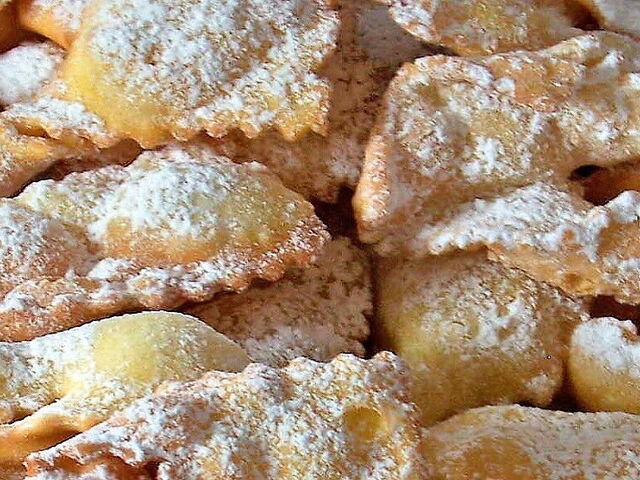
The “chiacchiere”, “galani”, “lattughe” or, as we call them in Tuscany, the “cenci” are a sweet fritters usually prepared on Carnival period. They have the same name as the clothes used to clean the floor and they probably have an ancient origin, dating back to the Roman age. If you’re in Florence, you absolutely must try the creations of the “Santo Forno” (Via Santa Monaca, 3r) or the “ Pasticceria Stefania “(Via Guglielmo Marconi, 26), perhaps during a fantastic stay in the city in one of our properties!
Here’s the recipe of this dessert:
INGREDIENTS:
◾ 500 g of white flour
◾ 150 g of powdered sugar
◾ 5 eggs
◾ Olive or Sunflower Oil
◾ Lard
◾ ½ glass of dry white wine
◾ 1 vanilla powder bag
◾ 1 lemon
◾ 1 small glass of rum
1. Pour the flour on the pastry board with 130 g of sugar, the lemon zest, the vanilla powder and a pinch of salt. Blend all the ingredients, make a hole in the center of the dough and add 5 egg yolks (leaving two whites aside), five oil tablespoons, wine, liqueur and the egg whites (beaten until stiff) in it. Knead the dough working it powerfully for some minutes, to make it hard and compact.
2. When you’re finished, work the dough with a rolling pin to obtain a pasta of a 0,5 cm height. Using a cog pasta cutter, cut it creating rectangles of 7x12 cm and then make four parallel cuts inside them, paying attention to not cut until the sides of the shape.
3. When all the dough is cut, put a frying pan on the fire adding a lot of oil or, if possible, lard, submerging it completely. Once the pot is hot, put two or three rectangles in it, let them brown until they get golden and then turn them to the other side. I suggest you to cross the rectangles’ stripes in the pan, so the cenci will get more voluminous!
4. When the cooking is over, drain them and place them on parchment paper to remove the grease in excess. Fry them all, then dust them with the remaining powdered sugar using a sift, settling them in a big plate covered with a napkin, then serve. Buon appetito!
Read More
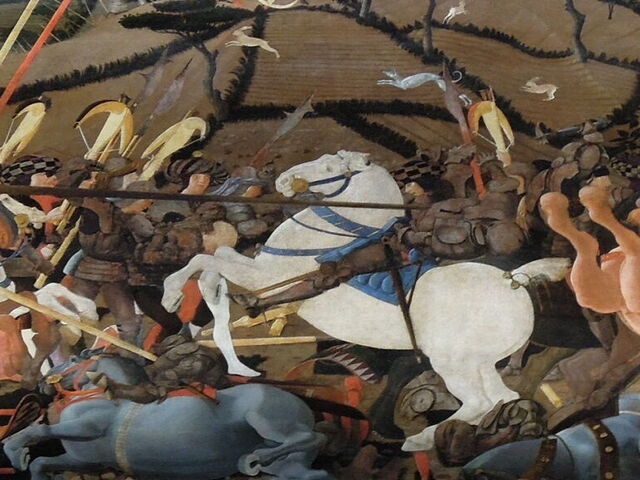
A crucial Renaissance battle took place in San Romano, a small town of the Province of Pisa near San Miniato and Montopoli Val D’Arno . On that single clash day, the 1st June 1432, the Florentine army fought against the Senese, respectively led by Niccolò da Tolentino and Francesco Piccinino. Although Florentines were numerically less, they winning after six/seven hours thanks to the arrival of some reinforcements. The conflict was part of the “Wars of Lombardy” fought between 1431-1433 and it was portrayed in a famous painting by Paolo Uccello.
This 1438 masterpiece was commissioned by Lionardo Bartolini, who personally participated to the battle. His intention was to exhibit it in his private house, but Lorenzo the Magnificent imposed to move it to the palace of his family: as the new room was too small to host the huge work of art, the canvas was cut in three. The two sidepieces are now conserved in the Louvre and London National Gallery museums, while the most beautiful one, “The Unseating of Bernardino della Ciarda”, is owned by the Uffizi Museum of Florence. The background landscape presents a hunting scene, while in the foreground there are horses and armed soldiers involved in the clash. The rhythm is rapid, but the scene doesn’t communicate the sense of a true tragedy: it rather seems an abstract and metaphysical atmosphere where the battle has been transferred.
If you wish to visit the region where the battle took place, I suggest you to check Villa Lorenza, which are a few kilometers far from San Romano.
In case you prefer to stay in Florence, book one of our properties in the town center!
Read More