Our Blog: Travel Tips
Planning a trip to Italy? Browse and read our useful and informative articles about the endless range of attractions and experiences in this lovely country.
Travel through the beauties of Italy with us. Visit our blog!
November 2, 2017
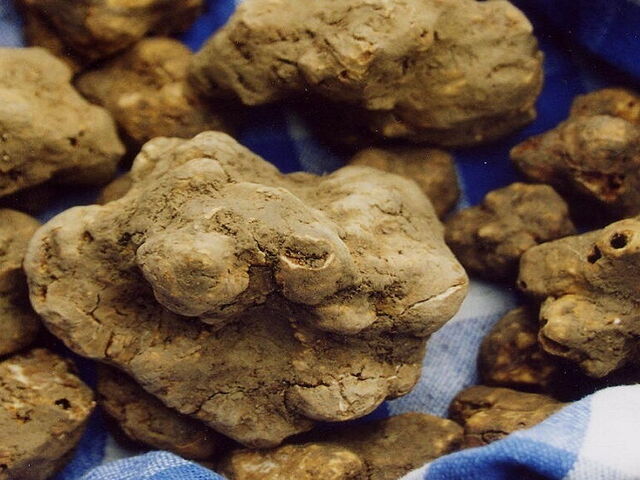
The Best Activities and Events to Discover San Miniato Truffle
San Miniato is a charming center between Pisa and Florence, not far from Lucca. It has medieval origins and a matchless beauty.
As well as being a renowned tourist destination, San Miniato is the city of Truffle, a precious food loved by gourmets from all the world. It's a peculiar kind of mushroom that grows underground near the roots of trees such as oaks, tilias and poplars.
Finding them is not easy at all: “truffle seekers” have gained a long-standing experience in this field, they are able to individuate the exact spot where truffles are thanks to their dogs' sniff and to dig them up with their hands.
Due to the difficulty of its hunting, transport and conservation, this product is sold at exorbitant prices and it is rarely whole. A small quantity is sufficient to flavour delicious dishes and its amazing taste was already celebrated by Greeks and Romans, who defined it as “the food of gods”.
Right in the woods covering the hills near San Miniato, some professional truffle seekers found the world's biggest truffle in 1954! Today, some of these experts are even available to share their knowledge with tourists in occasion of some sensational "Truffle Hunting Experiences”, which are hunting and tasting activities taking place in English or Italian.
Visit the website www.truffleintuscany.it and choose among the numerous initiatives such as the “Luxury Truffle Experience”, the “Truffle & Winery Experience” or the “Truffle Cooking Classes”, which will teach you to highlight the product in your dishes. It's a unique and unmissable opportunity!
San Miniato White Truffle is not just a typical product, but it belongs to the regional cultural heritage being a real local tradition. Every November, an important celebration has taken place since 47 years: the “Mostra Mercato del Tartufo Bianco di San Miniato”, is an international "sagra" composed by more than 120 stands set up by restaurants and local producers, offering specialities like oil, cheese, wine and, obviously, the fantastic truffles. This year, the festival will take place on November 11-12, 18-19 and 25-26, so book one of our last-minute properties to visit this center and participate! We suggest our Il Fienile di Giovanna or Villa Lorenza.
Truffle is also the protagonist of another important event called “La Notte Nera” (The Black Night), which enhances the Black Truffle found in summer and which recreates a strange, obscure and magic atmosphere in the whole city.
Read More
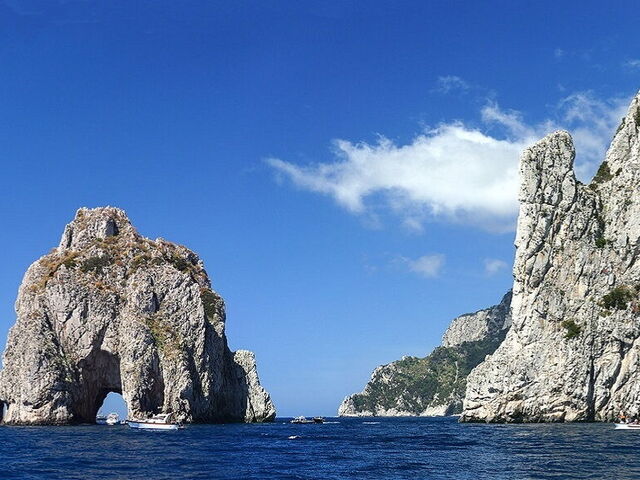
The Gulf of Naples is studded with the so-called Phlegraean Islands of Ischia, Capri and Procida, which form an area full of suggestive landscapes and wonderful places to visit. The shimmering water glares and the luxuriant vegetation make the Neapolitan Archipelago one of the most beautiful regions of the world and a tourist destination for millions of people.
If you are staying in one of our properties in Naples or in Amalfi and Sorrento Coast, you cannot miss the opportunity to visit these splendid islands! Getting there is very easy: you will just need to buy a ticket and board one of the boats leaving from Pozzuoli or Naples to have a memorable day out.
PROCIDA
Procida is the smallest, purest and wildest island of the archipelago, where you will enjoy some time in touch with nature. It is connected through a tiny bridge to Vivara island, another little sea jewel which is safeguarded as a "Natural Archaeological Park".
Arriving at Procida, you will dive into a paradisiac and peculiar ambiance especially near the harbor: here, you will find lovely shops, restaurants and the typical colourful houses of a fishermen village. This tiny pearl with sandy coasts is a perfect summer destination thanks to some beautiful beaches like Pozzo Vecchio, Chiaia or Ciaiolella.
Live this special experience and get enchanted by the warm hospitality of its inhabitants and fishermen, who will be delighted to serve you some delicious fresh fish dishes during a romantic seafront dinner. Instead, if you'd prefer to get astonished in front of a spectacular panoramic view, hike “Terra Murata” promontory and look at the whole Neapolitan Gulf from the top! This fortified medieval center is very charming and its narrow streets conceal beauties such as the ancient Church of San Michele Arcangelo.
ISCHIA
The biggest island in front of Naples is Ischia, which is divided in six main centers and is visited by millions of tourists every year. The ”Green Island” of the Tyrrhenian Sea will surprise you with its stunning beauty and its beaches, which are nestled between high promontories and mountains like Monte Epomeo, an ancient volcano. It's actually the volcanic origin of the island that has made it one of Europe's most important thermal centers, with muds, fumaroles and healthy waters spilling from springs found everywhere.
Walk along one of the numerous tourist itineraries and visit Ischia city center, formed by dozens of streets, small stores and ancient churches like the "Cattedrale dell'Assunta", a 16th century basilica decorated with Giotto school frescos. Also visit the 474 BC "Castello, the "Santuario del Soccorso" in the charming center of Forio, Monte Sentinella astronomic observatory and Borgo Sant’Angelo. Here, in this tiny village in the southern part of the island, far from everything and everyone, is where you will enjoy some peace surrounded by some of the natural wonders offered by this small piece of heaven in the middle of the sea.
CAPRI
It is not easy to describe the beauty of Capri, as the emotion given by this island needs to be experienced in first person and cannot be understood through some simple words. Capri is Capri - few other places in the world succeed in emulating its poetry.
It's because of its calcareous origin that the island presents many steep rock walls, natural stone archs, calcareous cliffs, stone mountains like Pizzolungo and the famous sea stacks which represent Capri in the world. Other natural beauties are hidden between a cliff and the other: don't forget to visit the amazing Grotta Azzurra, an enchanting place with fantastic colors that conserves some Roman ruins, or the Belvedere di Tragara, a panoramic point where you will embrace the whole Gulf with a single glance.
The island is divided between the centers of Capri and Anacapri, where you will need to visit some interesting places like the 14th century "Certosa di San Giacomo", the "Eremo di Santa Maria di Cetrella" or the "Flowery Villas" like “Villa Jorvis”, which was chosen by Emperor Tiberius as his private residence.
It's impossible not to fall in love with the beauty of this locality, which has already charmed hundreds of writers, artists and poets in the past. Many couples choose Capri as their romantic travel destination, as they wish to admire the stunning panoramas at sunset and enjoy a seafront walk after a typical dinner in town.
What are you waiting for? Book one of our properties on the villas on the Amalfi Coast and live the holiday of your dreams in Campania!
© Alice Pilastri
Read More
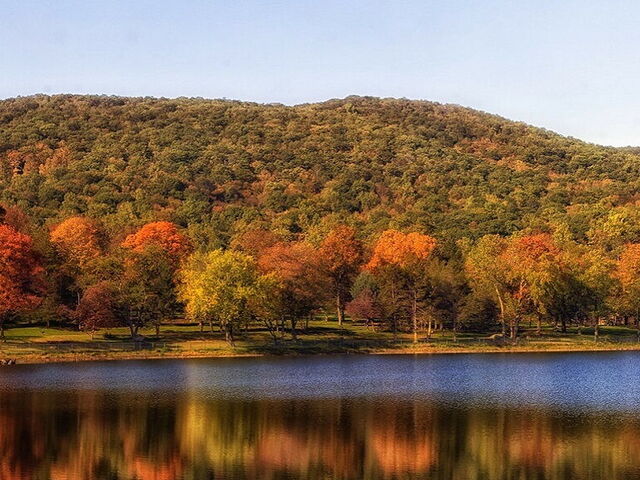
It's almost November, summer finished a long time ago and Christmas holidays still seem far away. However, Autumn is the best period to discover new beautiful Italian towns and to have unforgettable stays in this country!
Here's a list of the eight reasons to organize your trip in Autumn, along with some suggestions about what to do, what to visit and where to sleep in one of the stunning Italian Regions!
1. Food Festivals and "Sagre"<
“When in Rome, do as the Romans do": which is the best way to discover a new city than through its typical traditions? Autumnal months are full of culinary events and town festivals based on delicious seasonal products like mushrooms, truffles, olives or chestnuts. Sitting at one of the long wooden tables set in the town squares, meeting some countrymen with a dialectal accent and singing popular songs with all the other participants are what makes "sagre" an authentic way to experience the local life.
In Tuscany, festival are focused on porcini mushrooms, truffle, polenta and small game, which is used to season delicious pasta dishes, while Perugia hosts the famous "Eurochocolate" festival.
It you are looking for a holiday rental in these areas, we suggest Villa Uccellaia, just 13 kms from Perugia, or one of our properties in Orcia Valley!
2. The stunning colours
Autumn is the season of colors highlighting countrysides, woods and cities, making each photograph more beautiful and poetic. Yellow, red and orange leaves decorate some of the most charming Italian regions like Casentino (where we rent the wonderful Villa Sant'Angelo), Mugello (where we suggest our Casale Giotto) or the typical Chianti countryside (with our Bigiolo a Melazzano). It is the ideal moment to hike along the Via Francigena, to visit Boboli Gardens in Florence or to travel along the Roman "Via Appia", admiring the splendid panoramas!
3. Less people crowding streets and museums
It's true, in this period it is not easy to find the time to spend a few days away from home, but the positive sides of this choice are many. Flights and rentals are cheaper in low season, allowing you to organize a short stay with a limited budget. Also think about the beauty of empty towns or about the indescribable emotion of standing alone in front of important monuments like Trevi Fountain! You will also have the possibility to visit dozens of magnificent museums thanks to shorter queues. It's the perfect moment to finally see the masterpieces of "Galleria dell'Accademia" in Florence, to which we have dedicated an article with some useful travel tips!
4. Football matches
Have you ever attended a football match in Italy? Here, it is a tradition to go to the stadium ever Sunday to support the favourite team with enthusiasm and emotion. Buy a ticket and get carried away by the unique atmosphere of this sport!
5. The splendour of beaches
The beauty of the sea has no season, it is stunning in Summer as well as in Winter. Autumnal months are the perfect moment to spend some relaxing afternoons at the water's edge, benefiting from sunny days to enjoy empty beaches and lovely panoramas. While you might even dive in the transparent sea for a last bath in Sicily or Sardinia, Liguria and Tuscany offer nice walks at sunset and waterfront horse rides.
We rent some stunning properties in each of these regions: in Sicily we suggest our Villa Marisol, in Tuscany our Villa Camaiore and Casa al Bosco in Liguria!
6. The Wine
September is grape harvest month, while October and November offer the delicious "vino novello" which has just been prepared. Taste it in a local "sagra", try the typical "Chianti Classico" Tuscan wine and discover more about it in our article!
7. The cultural season
Theatre and opera season begins in Autumn, when some international festivals are organized in the most important cities. Participate to “Rome Film Festival”, to “Montecatini Opera Festival”, “Bologna’s Jazz Festival” or “The Opera di Firenze”, which involves more than twenty Florentine theaters!
8. The perfect temperature
The last sultry summer made it difficult to visit the historical centers of Italian cities without suffering from the oppressive heat. Hopefully, Autumn days are ideal to spend some en plein air afternoons, to ride a mountain bike or to go jogging, thanks to a pleasant temperature. We also suggest spending a day relaxing in a SPA or a thermal center like those in Monsummano Terme or Saturnia. Dicover these two localities reading our dedicated articles and book our Villa Le Ferrette!
Read More
Sicily is a stunning tourist destination, full of natural and artistic wonders in every corner. During a stay in one of our luxury properties in Sicily like Villa Afrodite, Villa Marisol or Villa Agorà, you cannot forget to taste some of its delicious culinary specialities!
Silician cuisine is a journey through two millennia of diverse influences—a melting pot of cultures that has shaped a distinctive gastronomic heritage. Its foundations trace back to Phoenician, Greek, and Roman rule: olive oil, wine, cereals, fish, and seafood. Jewish communities enriched the culinary landscape with aromatic fillings, offal-based dishes, and preserves. Arabic influence introduced new preservation methods, fragrant spices, and ingredients such as fish, legumes, couscous, and spices like ginger, cinnamon, and cloves. Each dominant culture left enduring traces, creating a culinary heritage celebrated today in Sicily’s coastal and inland specialties.
Here's a list of the top 10 Sicilian dishes:
Cassata Siciliana
This Easter cake is typical of Palermo and it is prepared with ricotta cheese, chocolate, candid fruit, marzipan and many other ingredients settled on a delicious Victoria cake. Its style is kind of "baroque" because of the numerous surface decorations and a peculiar flavour wich amazed everyone who tries it for the first time.
Granita with Brioche
Sicilian breakfast does not include the typical cappuccino, but a tasty "granita" with whipped cream along with an exquisite sweet roll called "brioscia col tuppo”. If you are staying in Catania, cool yourself down with a classic lemon granita or try one of the numerous tasty variations!
Arancino
Arancino is a must in Sicily! It is a rice breaded ball seasoned with green peas, tomato or the typical "ragù" sauce. This finger-food has Arab origins and its lovers are found in every part of the world.
Busiati con l’Agghia Pistata
This is a first course dish you absolutely need to taste in a restaurant in Sicily! The "busiati" are thin maccaroni that look like bucatini, accompanied by a delicious "pesto alla trapanese" with garlic, basil, almonds and tomatoes. Sicilians got inspired by Genoa's pesto and they revisited it using some fresh local ingredients, with an exquisite result!
Cous Cous di Pesce
Many believe that cous cous is a typical North-African dish, but it's not exact: Sicilians use it as the base of many excellent dishes, especially in the province of Trapani. This specific variation expects the use of a particular saucepan called "cousscoussiera” and a mouth-watering fish broth seasoning.
Caponata/ Parmigiana di Melanzane
The paradisiac Parmigiana is cooked in every region of Italy but its origins are Sicilian, where the dish is flavored with a lot of parmesan, salami, hard-boiled eggs and provola. Aubergines are the base of another appetizing dish called "Caponata", which you should try savoring at all costs!
Pane e Panelle
The typical sandwich of Palermo contains "panelle", which are chickpea flour fritters accompanied by some succulent pepper and parsley croquettes called "cazzilli". Eat this speciality while walking along the narrow streets of this wonderful Sicilian town!
Almond Pastries
Sicilian almonds are used in the recipes of many fantastic sweets and biscuits, which are usually made with the so-called "pasta reale" or "frutta martorana". Taste one of these and let their flavor flood out!
Pasta con le Sarde und "Sarde Beccafico”
Sardines are the most popular fish dish in Sicily as well as one of the tastiest. We suggest trying a dish of pasta with "sarde" in Palermo or the amazing "Sarde Beccafico"., which is made with sardines, raisins, parsley and pine nuts.
Cannolo with Ricotta
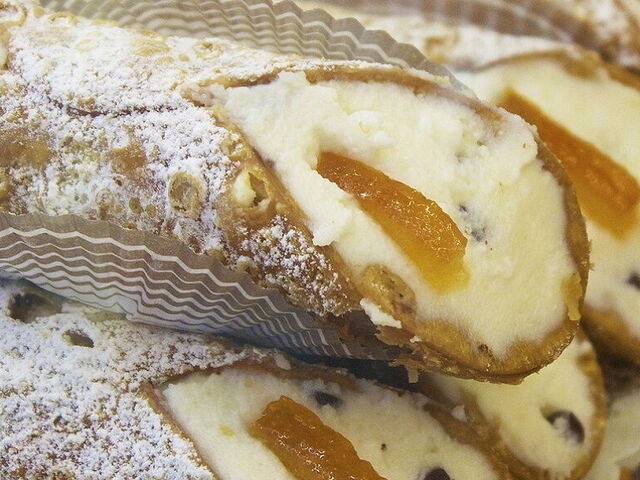
Cannolis are crunchy and exquisite fried sweets filled with sheep ricotta cheese, chocolate chips and candied fruit zest. They boast ancient origins and hundreds of imitations in the world, which are never as good as the originals. They are typical Carnival desserts, but pastry shops cook them all year long to sweeten the stay of each tourist in the region!
Choose to stay at one of our ExclusiveVACATION VILLAS IN SICILY
Read More
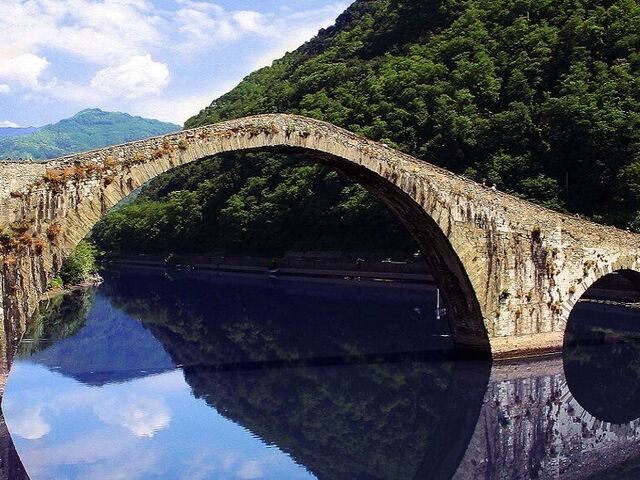
Halloween is approaching and you are probably looking for a blood-curdling celebration, different from any other you have taken part to. We have the solution for you: visit Borgo a Mozzano and participate to the famous “Halloween Celebration” near one of Italy's most terrifying bridges, the Bridge of the Devil!
We are in a small village plunged in the green vegetation of Media Valle del Serchio near the city of Lucca. It has medieval origins and many places of interest to see, like its ancient churches or the remains of the "Gothic Line", which was the defensive fortification used by Germans during the Second World War.
The most-known monument is the "Ponte del Diavolo" or "della Maddalena", a peculiar asymmetrical structure with a cuspidated central arch. This architectural masterpiece was commissioned by the Countess Matilda of Tuscany c. 1080-1100 to allow pilgrims to reach Lucca and Rome through the Via Francigena. It was then restaurated by Castruccio Castracani in the XII century while another arch was added in the right side in the early 1900s.
The bridge is linked to some hair-rising popular legends. The most famous one tells that the chief construction manager was so worried about the building's delays that he decided to make a pact with the Devil. Satan allowed him to finish all the works in one night in exchange of the first soul crossing the bridge. The worker accepted but he desperately asked the village priest's advice to find a solution which could avoid the sacrifice of an innocent man. He suggested to make a dog cross the bridge, so the Devil would take its soul in exchange. His decision enraged him but he sank in the river never returning back. However, some believe that every year he wanders near the bridge at the end of October looking for the construction worker with the appearance of a big white dog...
And it's right in occasion of Halloween Day that Borgo a Mozzano gets wrapped by a scary and lugubrious atmosphere. The celebration begins on October 28th and it continues until the grand final of October 31st. Thousands of people walk along the city streets dressed up like witches, zombies or vampires taking part to "ghost finders" conferences, wizardry shows and terrifying interactive horror itineraries through the "land of vampires". The night is also animated by some theatrical reenactments like "La Notte di Lucida”, demonic animations or shows for children. The celebration is accompanied by street food stands and street bands playing dance, metal, rock and afro music. Halloween night's highlights are surely the wonderful thematical fireworks show and the macabre dance shows planned at late night.
This year, choose to celebrate Halloween in the best way possible! If you are looking for an accommodation near Borgo a Mozzano, we suggest our Villa Fiamma, Villa Lugliano or Villa Marginone!
Read More
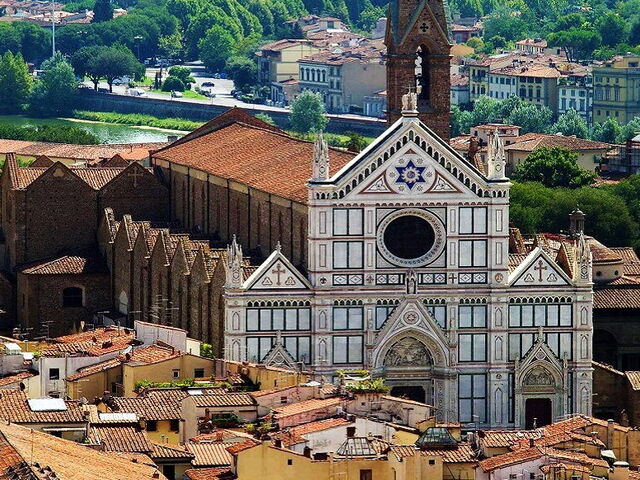
Walking along the narrow street separating the majestic stone wall of Palazzo Vecchio and the Uffizi Museum, you will soon arrive at Piazza Santa Croce and at its stunning Basilica.
The church is one of the major examples of Italian Gothic art, it was built in the 13th century by Arnolfo di Cambio and its façade was finished in the 19th century. It is a Franciscan basilica presenting an Egyptian/ Tau cross floorplan with three naves decorated by chapels and beautiful frescos. Among these, you will be able to look at Agnolo Gaddi's works in Cappella Maggiore, Giotto's frescos in Cappella Peruzzi and Cappella Bardi, Giovanni della Robbia's terracottas or Donatello's "Annunciazione Cavalcanti".
The Basilica di Santa Croce is known also as the "Temple of the Italian Glories" or the “Pantheon of Artists", because it conserves the remains of some of the best-known personalities of Italian history. Its peculiar graves are everywhere: some are located in the wonderful chapels along the naves, while many others fill up its pavement and make it possible to walk above them.
Until the beginning of 1400s, Santa Croce was principally the sepulchral church of district's families like Bardis, Peruzzis or Albertis. Things changed when the town government decided to build some elaborated funerary monuments for its chancellors Leonardo Bruni and Carlo Marsuppini. The two tombs were sculpted by Bernardo Rossellino and Desiderio da Settignano. These authentic masterpieces of Renaissance sculpture launched the new destiny of the Basilica, which became the solemn custody of Florentine public glories.
In 1564, the remains of Michelangelo were moved to Florence to be exposed in Santa Croce Church in a stunning monumental grave designed by Giorgio Vasari. Later, even the sepulchers of Galileo, Machiavelli, Foscolo, Rossini and Alfieri were erected inside the Basilica.
It is believed that Alfieri visited Santa Croce Church in order to find inspiration, as its wonderful sepulchers instilled a profound sense of peace. Another famous author, Stendhal, entered the church and felt a sudden illness because of the excessive quantity of memory conserved there, while Foscolo celebrated it in his work "I Sepolcri”.
What are you waiting for? Visit this Church and discover the indescribable emotions it will be able to give you! Along Via de'Neri, you can also stop at the famous “All’Antico Vinaio” sandwich shop or at “Gelateria de’Neri”, one of the best ice-cream parlors in Florence.
If you are looking for a property for your stay, choose our wonderful vacation rentals near Florence, like Le Fonti or Villa Tenuta Lonciano.
Read More
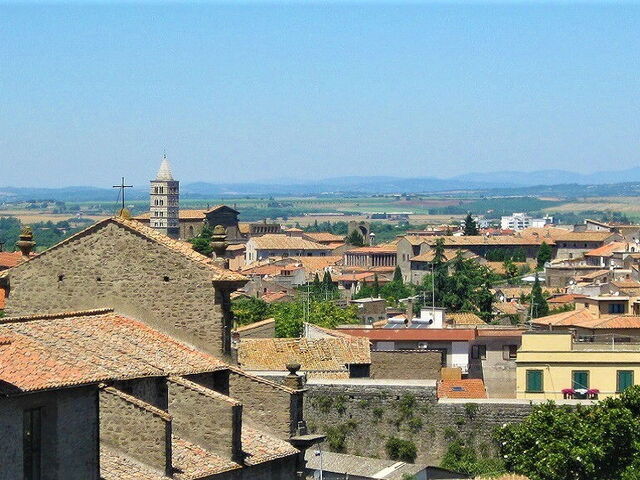
Travelling along the wonderful Via Cassia from Montefiascone, passing near some mountains and vulcanic lakes, you will reach the charming city of Viterbo, the ancient capital of Etruscan Latium. We are in the area between Mount Cimino, Vico Lake and the endless woods of chestnuts and conifers that surround the slight city slope.
Viterbo is a province in Northern Latium with centuries-old origins and buildings in its huge city center. There are many archaelogical itineraries offered to visitors in order to discover the historical heritage of this town, which is also the location of the peculiar “Macchina di Santa Rosa” celebration every September 3rd. In honor of the patron saint, an enormous illuminated structure is carried on the shoulders of one hundred “Facchini di Santa Rosa” along the streets. UNESCO even declared this event an “Intangible World Heritage”.
This city of "beautiful women and fountains” experienced its most flourishing period betweenin the 12th-13th century, when it became the so-called “city of the popes”.Three popes were buried here, six took shelter or inhabited the city durably, while six other were elected in its churches. In occasion of the designation of the last one, the French Martin IV, the people of Viterbo invaded the Dome and kidnapped two cardinals, so they were excommunicated and no Pope returned to the city for the following 86 years.
Viterbo still conserves a charming medieval aspect and there are many monuments or places of interest you cannot forget to visit during a stay here. The most beautiful part of it is the district of San Pellegrino, where small houses alternate with medieval towers in a labyrinth of streets, squares, stairways and stunning arches.
You should also see Palazzo dei Papi, a Romanic-style building with the magnificent "Salone del Conclave" where cardinals gathered from 1268 to 1271 to elect Clement IV successor. As they couldn't agree on his name, the People's Captain ordered to shut them in the building and to remove its roof, in order to encourage them to hurry up in their decision. Other important monuments are San Lorenzo Dome, built in the 12th century on the ruins of a Pagan temple dedicated to Hercules, Santa Maria Nuova Church, one of the oldest of the city with a beautiful pulpit, Santa Rosa Church, San Martino al Cimino Abbey or San Silvestro Church.
The museums that we suggest visiting are the Museo Civico and the Museo Colle del Duomo, conserving some beautiful sacred art masterpieces and acrhaelogical findings dating back to villanovian and medieval periods.
Visit this wonderful town during your next holiday in Latium! If you are looking for the perfect property to book for your stay, we propose our holiday rentals "I Gigli di Bolsena" or "Rielli Apartment", which are located a few kilometrs away from the city.
Read More
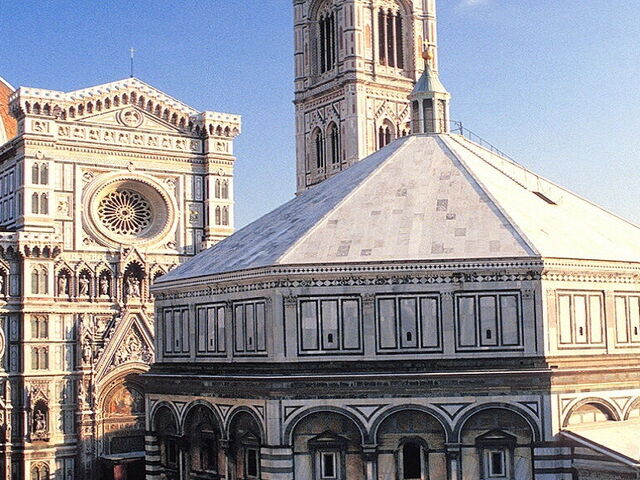
It’s the symbol of the city of Florence in the world, portrayed in photographs of millions of tourists, identifiable in the blink of an eye, as wonderful as it looked five hundred years ago. We are talking about the Cathedral of Santa Maria del Fiore, one of the most beautiful Italian churches located in the old town center and famous for its enormous dome.
But what’s the history behind it?
At the beginning, another small church stood in place of the current basilica and it was called Santa Reparata Church, dating back to VII century. At the end of 1200, it was expanded and then totally remade by architect Arnolfo di Cambio. The new church dedicated to the “flower” Madonna needed to look magnificent and spectacular in order to represent Florence grandeur and to compete with the Cathedrals of Siena and Pisa. It was ended by Arnolfo’s successors in 1421, when just the Dome needed to be built.
The problems linked to it were many: which shape should it get? Which material needed to be used? And, most of all, how could it bear the huge weight without collapsing?
The solution was proposed by Filippo Brunelleschi in occasion of a concourse in 1418. The dome would have had an ogival shape, it would be self-supporting with two cupolas one inside the other separated by a structural space to preserve it from humidity and to allow the passage of workers. The covering is made with red bricks which are heavier in the lower parts and lighter in the upper ones, disposed in “opus spicatum” ("fishbone").
The dome was inaugurated in 1436, it had a 50m height and a 46m diameter. Later, other architectural structures have been added: the “tribune morte” are semi-circular temples next to the tambour, the “loggetta”, a decorative crowning element on one side, and the “lanterna”, a small marble temple on the top of the dome with a bronze ball lifted by Verrocchio.
The stunning “cupola” is the symbol of architectural perfection and Florentine genius. It can be admired from many angles of Florence, but one of the most charming places is certainly Piazzale Michelangelo, which offers a 360° view over the whole city.
It’s even possible to visit its interiors, walking along the space between its two vaults! the opening hours are 08:30am-07:00pm and the 15€ ticket includes the access to all the monuments of the “Grande Museo del Duomo”.
Choose Florence as destination of your next trip to Italy! Book one of our properties in the middle of Tuscan countryside to experience a dream holiday: we suggest our
Read More
September 5, 2017
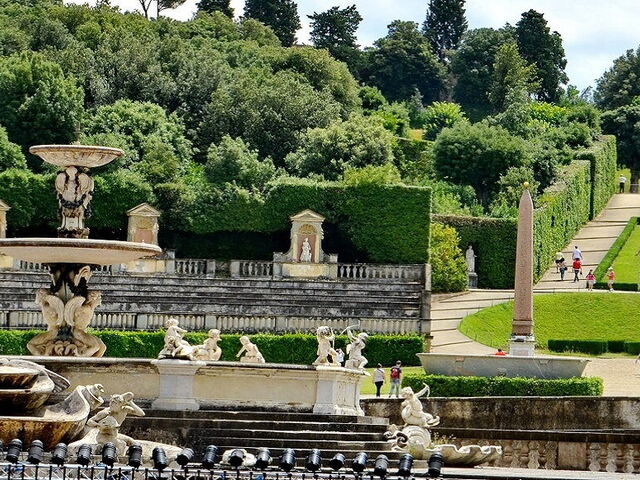
The Boboli Gardens, a Wonderful Open-Air Museum in Florence
Florence is famousin the whole world for the beauty of its architecture, its art, its numerous museums and its ancient buildings. There is also a well-known open-air museum between its streets, behind the stunning Palazzo Pitti: the “Giardino di Boboli”.
The history of the Garden begins in 1418, when Luca Pitti bought the land to build his palace. Some say that the name “Boboli” derives from the name of the family who owned these property before, called “Borgolo”. The transfer of ownership occurred in 1549, when the Medici family bought the Palazzo and commissioned the Garden realization to Niccolò Tibolo and Batolomeo Ammannati, who succeeded him after his death. Works continued under the Lorena and Savoy families, who adapted the late-Renaissance style to their historical period, adding some contemporary stylistic features. The park was then opened to the public by Pietro Leopoldo di Lorena and it was designated as UNESCO World Heritage in 2013.
It is a historical city park covering 45000 square meters. It’s the biggest, most famous and important example of “Italian Garden” and it has four public entrances (Cortile dell’Ammannati, Forte del Belvedere, Porta Romana, Piazza Pitti).
The Garden Is structured on two axes and it contains boulevards, statues, fountains, mannerist masterpieces, century-old trees, labyrinthic streets immersed in the vegetation and beautiful ancient buildings. One of its parts is the Amphitheater, an ancient stone mine that presents an Egyptian obelisk in its center. Here, you will find the “Bacino di Nettuno” and the fountain built in 1637, called “la Forchetta” (“the fork”) by Florentines. The street connecting the terraces until Porta Romana is called “Viottolone” and its tunnel made of weaved holm oaks creates a really magic atmosphere. In the Garden, you will also be able to see the “Prato del Cavaliere” designed by Michelangelo, the “Grotta di Madama” by Tribolo, the Medicean “Limonaia” and the “Kaffeehaus”, an 18th century structure pained in Lorena's symbolic light-green color.
The most charming spot of the park is probably the “Grotta del Buontalenti”, built in 1583-93 by Vasari and Buontalenti. It’s a three-room space richly decorated with stalagmites, frescos, stalactites and statues. Further to fountains’ water games, the grotto used to contain a large basin with many fishes in it. The first room recreates a natural ambience with many animal sculptures and it also hosted Michelangelo’s “Prigioni”, now conserved in Accademia Gallery. The second room contains Vincenzo de Rossi’s statues portraying Paris and Hellen while the third, darker room presents Giambologna’s “Venus”. The general decoration theme is the secret love meetings between Grand Duke Francis I and his lovers. The artistic style is Mannerist, as it’s based on the fusion between artificial and natural features.
What are you waiting for? Plan your visit to Boboli Gardens! The full ticket costs 7€, the reduced-price is 3,50€ and entrance is free for under-18s. The Garden is open every day from 8am, but we suggest checking opening hours on the official website, as they vary from month to month.
If you are looking for a property to rent for your stay in Florence, visit our website and look at our beautiful Villa Ancora!
Read More

Mugello is a wonderful part of Tuscany that extends from the city of Florence to the borders with Emilia Romagna. You will marvel at the beauty of its different landscapes, which vary from the transparent waters of Bilancino Lake to luxuriant hills, from green woods inhabited by hundreds of wild animals to typical countryside roads surrounded by sunflower fields and cypresses.
Its towns, such as Barberino di Mugello, Dicomano and Firenzula, are rich of culture, history, art and ancient traditions.
Scarperia, for example, is a stunning village with visible evidence of its flourishing past, marked out by the Medici family’s dominion and the presence of some of the most important Italian artists. You will have to visit the “Palazzo dei Vicari”, the “Mostra mercato dei ferri taglienti” and to participate to some special events, like the “Giornata Rinascimentale”.
Mugello also offers the possibility to visit many interesting museums (ex. “Casa di Giotto”) and natural itineraries for hiking and mountain bike excursions to explore the beauties hidden in this place.
If you prefer to participate to an out-of-the-ordinary event and you have the passion of cars and sports, then you cannot miss the “Mugello Circuit”, a very famous track hosting F1, MotoGP and World Superbike races!
Located near Scarperia, this modern circuit was built in the 1970s and it is one of the safest, most charming and known trails of the world. Its origins date back to 1914, when the first car competition between Scarperia and Firenzuola took place. Unfortunately, its popularity was limited until the disappearing of “Mille Miglia” race. Then, in 1950-60, the Mugello Circuit started to become famous, it hosted seven successful race editions with some important pilots and a lot of spectators.
You will be able to see international champions such as Marquez and Rossi speeding on this 5-km trail! Buy the tickets online, enjoy the show sitting on one of the comfortable stands and benefit from all the facilities offered.
If you are looking for an accommodation in Mugello, give a look to our properties, like Casale Giotto!
Read More