Our Blog: Travel Tips
Planning a trip to Italy? Browse and read our useful and informative articles about the endless range of attractions and experiences in this lovely country.
Travel through the beauties of Italy with us. Visit our blog!
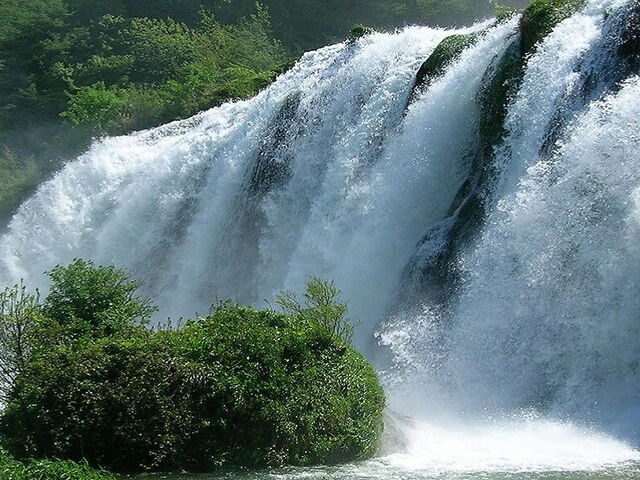
It’s true: Niagara Falls are unique and almost unbeatable by any other natural feature. However it’s here, in Italy, that we have a waterfall that can compete with Canadian beauties and that can maybe surpass them under some viewpoints. Who’s been to Niagara Falls can confirm that, yes, the panorama is wonderful, but the chute has been transformed into a touristic attraction that looks fake and artificial. The skyscrapers, the casinos, the restaurants and the dazzling lights clash with its natural beauty and they actually ruin it.
On the other hand, "Marmore Falls" is plunged in a huge, green natural park that gives it a picturesque charm. It’s near Terni in Umbria and, thanks to its 165-m height (divided into three steps), it’s one of Europe’s highest ones. It was built by Romans to sluice the Velino river and its stagnant waters: Consul Curio Dentato decided to dig a canal until the Marmore cliff, from which the water would have fallen into the underlying Nera river.
There is also a legend telling that the nymphaea Nera fell in love with a shepherd called Velino and that she was punished for this by gods, who transformed her in a river. Velino, believing that she was drowning, threw himself down from the cliff but he was saved by Jupiter, that turned him into water. This allowed Velino to rejoin its beloved for eternity. It’s up to you to choose which story you prefer to believe to!
Since 1600, the waterfall struck sketchers, painters and poets and it became a fundamental step of “Grand Tour” for nobles and intellectuals. It was portrayed by many “vedutisti” and its rainbow was defined as an Italian wonder alongside Pompeii and the Vesuvium.
This fall can be visited and discovered through four paths, which have different lengths and difficulties. I suggest you to reach the “Balcone degli Innamorati” with the path n°1, because it’s found “inside” the spout of water and it’s definitely a very romantic place!
You can visit it all year long, but it’s better to check the timetable because the spout of water is often closed and used to produce hydroelectric power. On November, the waterfall is open from 11 to 17 but the water flows on weekends from 12 to 13 and from 15 to 16. The full ticket costs 10 euros while the half-price costs 7 euros .
Are you looking for a place to sleep? Choose one of our properties for your holiday in Umbria!
Read More
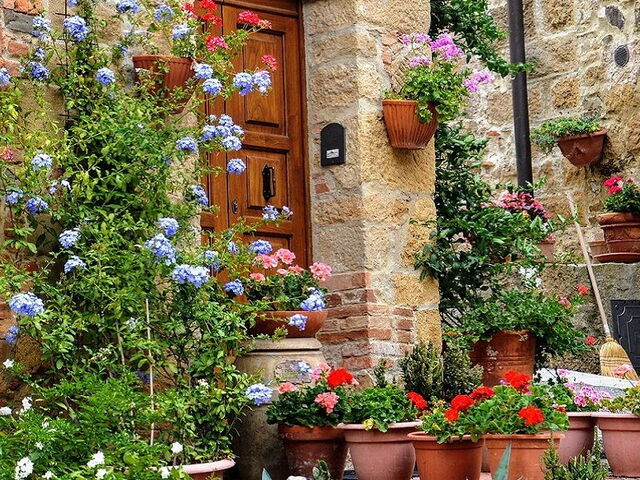
A paved streets’ labyrinth, brick houses and huge defensive walls are the features of one of Italy’s best and most visited “borghi”: Anghiari (AR). In this small center on a hill, tourists fall in love with the colors of landscapes they were just used to see captured in postcards and they discover Tuscany’s real soul and history.
Walking along the narrow streets of this “città del buon vivere”, it seems that time has not been passing since Middle Ages, when some ancient buildings like San Bartolomeo Apostolo Monastery (the Cassero), Badia church and the city walls were built. The main square is Piazza Mameli (in the past it was known as Piazza del Borghetto) and it hosts two of Anghiari’s most important museums: the “Museo statale di arte figurativa” in Palazzo Teglieschi” and “Museo della Battaglia e di Anghiari” in Palazzo del Marzocco. Don’t forget to visit even “Museo della Misericordia” “Teatro Ricomposti”, “Torre dell’Orologio” and “Giardini del Vicario”.
Stop a few seconds to admire the wonderful panoramic view over the Tiber valley, the village of Sansepolcro and the “Piana della Battaglia”, which is the valley where a famous battle took place in 1440. On June 29th, the single clash day, Milaneses and Florentines fought to control Tuscany’s southern region and only one man died falling from his horse. As they won, Florentines decided to celebrate commissioning the “Battaglia di Anghiari” fresco to Leonardo da Vinci, which was painted in Palazzo Vecchio’s Salone dei Cinquecento. Unfortunately, the masterpiece ruined itself because of a wrong drying technique and Vasari covered it with one of his frescos afterwards.
In memory of the battle, a “Palio della Vittoria” is organized every June 29th and it consists of a running competition starting in the Piana della Battaglia and ending in Piazza del Mercatale. There is also another curious tradition in this village: the Scampanata. Every five years, one May 5th, the “Società della Scampanata” members must present themselves in the main square before 6 o’clock in the morning. Those who arrive late are picked away from their houses, thrown on a frilled cart and carried along the crowded streets, where people throw flour, eggs and other kinds of food to them.
Anghiari is in an area full of touristic attractions and “città d’arte”: a couple of minutes are enough to reach cities like Arezzo, Cortona, Siena or Perugia. Less than ten kilometers away from the center you will also find Monterchi, a small medieval locality where there are some beautiful villas rented by Posarelli Villas: Palazzo Rosadi and Torre del Cielo. Each property belongs to Rosado Rosadi and offers an exclusive position on Tuscan hills, a breathtaking panorama, a private swimming pool and a relaxing holiday to its guests.
Read More
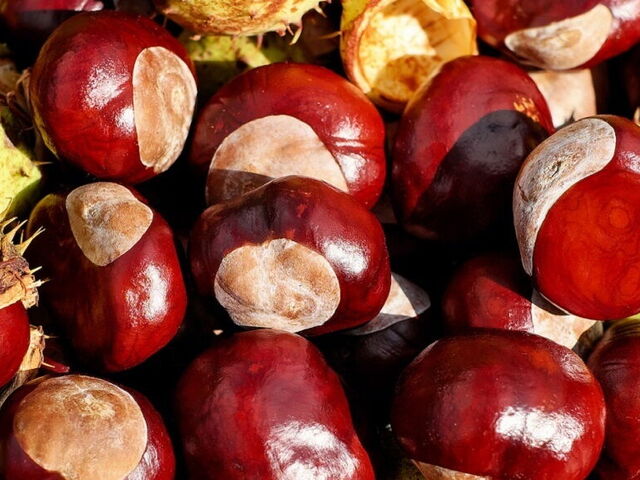
One of Autumn’s most typical dishes in Tuscany is the “castagnaccio”, a cake made with chestnut flour, raisins, pine nuts, nuts and rosemary. Its story is linked to the city of Lucca, as Ortensio Lando wrote in his book “Commentario delle più notabili et mostruose cose d’Italia ed altri luoghi”(1553) that a certain Pilade da Lucca invented this recipe.
As well as being easy, this recipe is also very fast and it has a peculiar flavor, thanks to the sweetness of its flour. In Autumn, many popular celebrations and “sagre” are dedicated to chestnuts and castagnaccio: I suggest you to make a visit to “Castagne e Vino Novo” in San Gimignano (SI) on November 13th, 20th, 27th and December 8th, 9th, 10th (discover our vacation rentals in San Gimignano) or to “Festa della Castagna” in Lupinaia (LU) on November 13th (discover our vacation rentals in Lupinaia)!
INGREDIENTS:
◾ 300 g sweet chestnut flour
◾ 40 g shelled pine nuts
◾ 40 g shelled nuts
◾ 70 g raisins
◾ Rosemary
◾ Salt
◾ Olive Oil
1. Wash raisins over cold running water and leave them soaking for 10 minutes in a bowl with cold water to rehydrate them.
2. Sift the chestnut flour and put it in a large soup bowl, then gradually add cold water and blend with a whisk. In this way, you will obtain a semiliquid batter without lumps (you will need about half a liter of water).
3. Add two tablespoons of oil, a pinch of salt and softened raisins, then blend again. Slightly toast the pine nuts in a pan and add them to the dough alongside the nuts, setting aside a small quantity of them to be put over the cake’s surface.
4. Pour the dough in a baking pan (use a rectangular one) greased with oil. Its dimensions must consent to the castagnaccio to reach a one-finger height.
5. Sprinkle the surface with pine nuts, crushed nuts and some rosemary leaves: before baking it in a pre-heated 200° oven, cover it with a bit of oil (about 2 tablespoons).
6. The cooking will need 30 minutes. However, you can consider the castagnaccio ready when its surface becomes golden, crunchy and cracked.
Read More
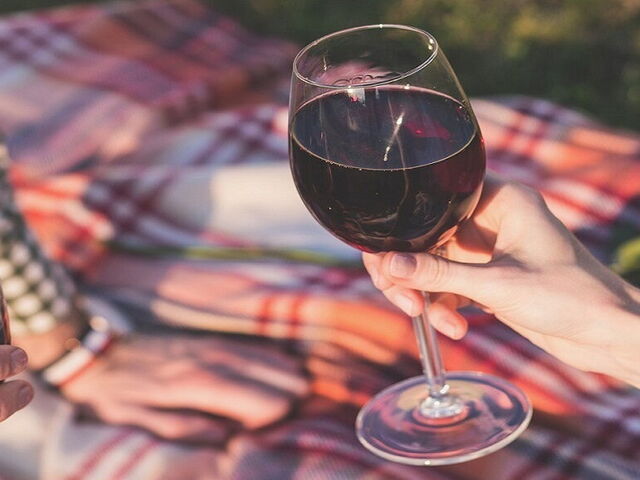
You often hear talking about the Tuscan red wine as one of the best in the whole world, without really knowing why. Same story when we think about “Chianti” wine or all those bottles with “DOCG” initials, which you never remember what they refer to. And which is the difference between a Merlot, a Sangiovese and a Colorino? And why are some wines called “Annata” and others are “Riserva”?
Unfortunately, we’re not all enology experts and we may not know the answer to these questions. But you can maybe find some of them in this article!
First of all, what is Chianti?
Chianti is an area of more or less 70.000 hectares between the cities of Florence and Siena. No less than 7.000 hectares are covered with vineyards used to produce excellent quality red wines. Cosimo III De’Medici established this area’s borders in 1716, when he made an announcement to the four regions that produced “good wine”, which were Chianti, Pomino, Carmignano and Valdarno di Sopra. In this way, he introduced the concept of “territorial labelling” and wine production’s checkings for the first time.
What does DOCG mean?
DOCG is the acronym of “denominazione di origine controllata e garantita” (label guaranteeing the quality and origin). In fact, DOCG wines are severely controlled, subjected to organoleptic tests and recognized as DOC since more than ten years. The 96% of DOCG wines in the market are produced by the Consorzio Chianti Classico.
What’s Consorzio Chianti Classico?
The Consorzio is the association of some Chianti companies that controls their production and that highlights “Chianti Classico” label in the world. Born in 1924, its brand is a Black Rooster and it’s the only one able to produce “Chianti” wine since 2010. Its companies’ wines must be produced from sangiovese grapes for more than the 80% and by other red-berry kinds like canaiolo nero, colorino, merlot and cabernet sauvignon for the remaining percentage. Three types of wine can be distinguished (Gran Selezione, Riserva, Annata) depending on their ageing or their chemical/organoleptic properties.
One of the Consorzio’s properties since 1948 is Fattoria di Bibbiano, a splendid agriturismo in Castellina in Chianti. Plunged in the green Tuscan countryside and on the top of a hill surrounded by cypresses and vineyards, the estate is formed by some luxury farmhouses which are managed by Posarelli Villas: Villa Sodi Exclusive e Villa Bibbiano Exclusive.
Read More
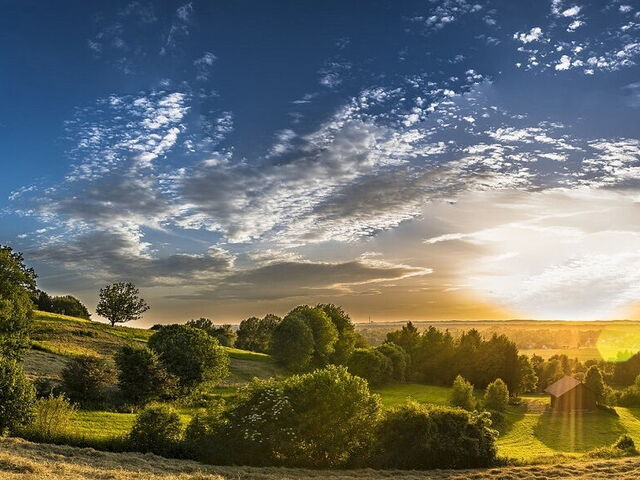
The small village of Monterchi is located on top of a hill called “Hercules Mountain”,in the middle of Tevere Valley. From its highest spot, the center offers a wonderful panorama with green gardens, sunflower fields and some abbeys, churches and ancient city walls that pop out here and there.
Here, you can admire the famous Piero della Francesca fresco “La Madonna del Parto” dating back to 1450/1465 when the artist stayed in this center for a while. The painting portrays the Virgin in a central position with a swollen belly, next to two angels who hold the edges of the curtain over them. The masterpiece is conserved in the “Museo Madonna del Parto” in Via della Reglia and its tickets cost €6,50 (full price) or 5€ (reduced price). With the same ticket, you can also visit the curious “Museo dei Pesi e delle Bilance”, a unique and original place where more than 150 ancient scales are conserved. This museum has been recognized as one of the most important in the world in its genre for its singularity.
Monterchi still looks like a medieval village: although some earthquakes rattled this area n the past, the city walls and the age-old stone buildings in its center haven’t shown structural failures. Visitors can then take advantage of its beauty walking along its narrow street, smelling the lavender fragrance and tasting the local delights.
There are also some villas near Monterchi which are just perfect for your stay in Arezzo: “Casale Tiziano” or “Torre del Cielo” or “Gellino”.
Choose your favorite and book it now!
Read More
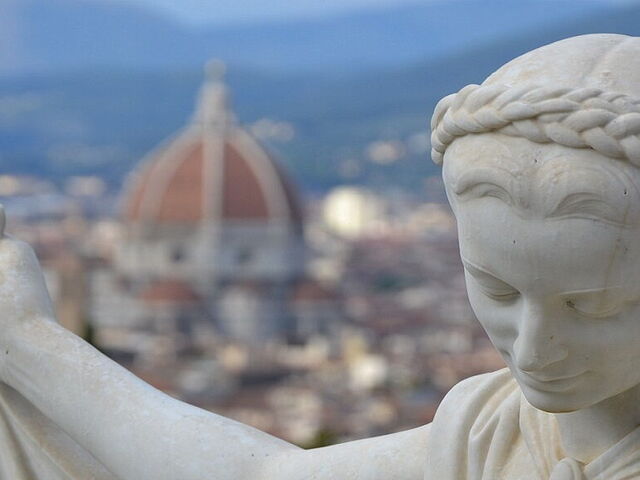
We all know that every country has its own customs: this is why each part of Europe celebrates October 31st, November 1st and November 2nd in different ways.
Read More
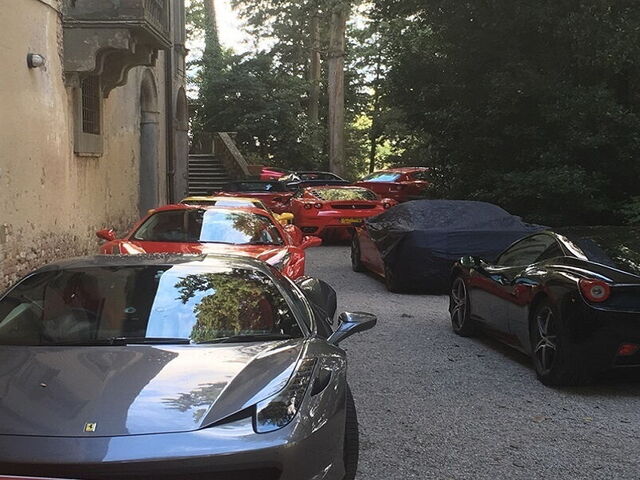
Some weeks ago, Montegufoni castle suddenly transformed into a car meeting location. And those weren’t ordinary vehicles, but cars with capital “C”: dozens of red, gray and black Ferraris were parked along the streets and the unmistakable sound of their engines started to spread in the air.
All their lucky owners came from England and stayed in the Castle for one week: everyday, driving their four-wheelers, they’ve visited a different area in Tuscany and they’ve fallen in love with its beauty more and more each day.
And who can blame them? The unique colors of Tuscany’s countryside and its art cities are the treasures that the whole world is jealous of.
Montegufoni, the ancient castle in Chianti where innumerable events and weddings take place, is situated 20 km far from Florence, 70 km from Pisa and it is surrounded by a breathtaking panorama. No doubt that a vacation in this luxury property is absolutely out-of-the-common and guests experience unique emotions.
Read More
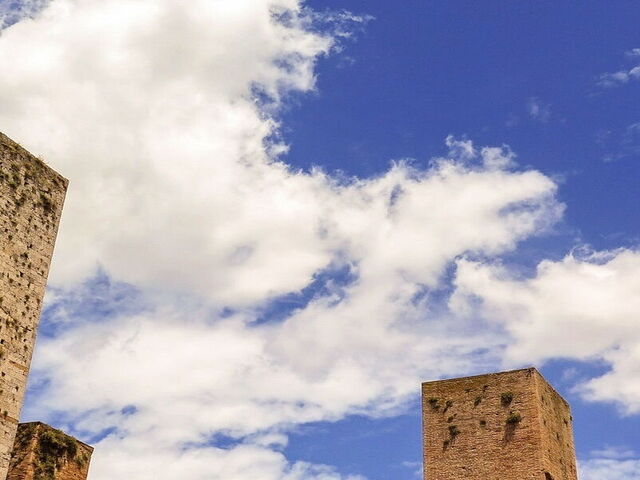
In February I went to San Gimignano (SI) to get to the top of "Torre Salvucci Maggiore", one of the famous towers that stand out from the “Medieval Manhattan” skyline. When I started catching sight of buildings’ outline from my car along the road to get there, I understood why it obtained this name: just like the Chrysler Building next to the Empire State, these towers really look like skyscrapers. The difference is that these were built eight centuries ago. It’s absurd that nobody ever associates the word “skyscraper” to the picture of San Gimignano, because it’s actually in this city that we can find the original foundations of today’s modern metropolises.
San Gimignano enjoys a global fame: at least once in life we’ve heard someone talking about its high towers, we’ve come across a photograph that captures it or we’ve studied its architecture, as it’s almost intact since the Middle Ages. This small center in the province of Siena is found on a Val d’Elsa hill and it dominates hundreds of olive trees’ crowns, shadows of cypresses and rows of vineyards. Even UNESCO rewarded san Gimignano as a “World Heritage” some years ago because of its peculiar medieval aspect.
THE TOWERS
Undoubtedly, its “mascottes” are the towers: in 1300 they were 72, in 1580 they were 25 while today no more than 14 are still standing. In the past, they were the symbol of families’ power: the higher the tower, the more important were considered the lords that lived in it. Therefore, height-competitions between stone-giants began and nobles used unscrupulous tricks to win, like cutting the upper part of each other’s tower. This is why the city established a guideline to prevent to exceed a 51 meters’ height: this limit has been respected by all the towers towers except for the Torre Grossa, which is 54m high.
The oldest building, the Torre Rognosa, was erected in 1200 and is 51m high while the other towers are: Torre del Diavolo, Torre Antica, Torre Chigi, Torre dei Becci, Torre Campatelli, Torre degli Ardinghelli, Campanile della Collegiata, Torre Pettini, Torre Ficherelli, Torre di Palazzo Pellari, Casa-Torre Pesciolini and Torri dei Salvucci.
These two “torri” are actually two twin towers built by the Salvucci family in the XIII century in order to show their unrivalled power in the city to their neighbours. Unfortunately, the vertiginous height didn’t fall within rules’ limits so they were cut at different levels: one was called “Torre Salvucci Minore” and the other "Torre Salvucci Maggiore"
TORRE SALVUCCI MAGGIORE
The higher one, the “maggiore”, was recently renewed to give you the possibility to experience out-of-the-common and unique stays. In fact its single apartment is composed by 10 floors connected to each other by 160 stairs and it’s got a panoramic terrace, where it is possible to admire a 360° panorama of the surrounding landscape. From the last floor the sweet hills covered by rows of vineyards, the towers, the stone houses, the paths skirted by cypresses and the olive trees orchards spread as far as the eye can see. In the neighbouring building there is another apartment, whose windows overlook on the “Piazza del Duomo” and therefore have a magnificent view. There aren’t other towers with these features: the ancient residence inside the other palaces are not habitable anymore and it isn’t even possible to visit them all. Here’s why Posarelli Villas offers to city visitors a special experience renting the two “Torre Salvucci” apartments and opening their doors to history and beauty lovers.
This tower grants a comfortable and relaxing sojourn as it’s found in the middle of city’s historical center, in a pedestrian area close to many restaurants, museums and historical monuments. A few kilometers away from San Gimignano there are also some art cities like Volterra (21km), Siena (47 km) and villages like Certaldo (8km) and Monteriggioni (21 km) that I really suggest to visit during your stay.
THINGS TO DO IN SAN GIMIGNANO
There are innumerable “must do” and “must see” in this Tuscan New Yok City and a single day is not enough to appreciate them to the fullest. For example, the Dome square strikes for the beauty of its buildings and for its XII century “Duomo”, one of the best examples of the Tuscan Romanic style, with various frescos inside it. Do not forget to stop by and visit the Palazzo Comunale, Piazza Pecori, Palazzo Vecchio del Podestà. Porta S.Giovanni, Rocca di Montestaffoli, Piazza di Sant’Agostino, Casa di Santa Fina, Porta delle Fonti and the Ex-Conservatorio di Santa Chiara.
Further to the several things to do, visit and see, it’s important to remind that each new city has a culinary tradition ready to be discovered: San Gimignano is well-known for the Vernaccia, a white wine which was drunk and loved by Dante and Lorenzo the Magnificent in the past and for its saffron, the “yellow gold” used as a currency to pay debts. It was partly thanks to this noble spice that the importance and the richness of this city were recognized in the whole peninsula. Another aspect in its favor was the position along the famous Via Francigena, the age-old road that connected Canterbury to Rome and that was traveled by thousands of pilgrims every year.
Read More
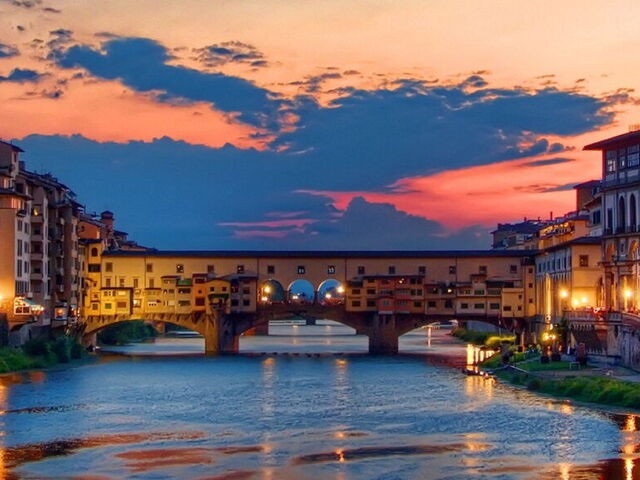
The thriller novel “Inferno” by Dan Brown has achieved a resounding success all over the world and it is now considered a masterpiece of contemporary literature. It has also inspired a movie with Tom Hanks, released in cinemas on October 13th.
So why don’t you make the most out of your holiday in Tuscany to retrace his steps and to accompany Professor Langdon in Florence? Here’s a list of the mentioned places in the novel as well as some extra information that will allow you to transform into the book’s protagonist and to see the city under a totally new point of view.
1) BADIA BELL TOWER/BADIA FIORENTINA
Via del Proconsolo, 50122 Firenze. Ingresso Gratuito.
In the first chapter, the Shadow plunges from the bell tower in order to escape from his chasers. The Badia Fiorentina in one of the oldest churches in Florence but it’s not so well known, because it’s hidden between other buildings where it almost camouflages itself. It was founded in 978 as a Benedictine Abbey, in 1285 the architect Arnolfo di Cambio accomplished a gothic-style restoration and in 1627 it was renewed once again. The bell tower was erected between 1310 and 1330 and it stands out in the Florentine skyline between Palazzo Vecchio and the Bargello.
2)PORTA ROMANA AND THE ART INSTITUTE
Piazzale di Porta Romana, 9
The “Porta Romana” is Florence southern door, it’s the best conserved (it dates back to 1326) and it leads directly to its historic center. On its right, there is the access door to the “Giardino di Boboli” used by Sienna and Langdon in the book, while straight ahead you will find a tree-lined boulevard leading to the “Istituto d’arte di porta Romana”. In the past, this building hosted the royal stables and a collection of thousands of chalk statues.
3)GIARDINO DI BOBOLI
Piazza Pitti, 1. Free entrance under 18 years old and Florence residents. 7€ from palazzo pitti and Forte del Belvedere entrances, 10€ from Porta Romana entrance, 3,50€ for UE citizens between 18 and 25.
The Florentine “cetral park” is a real open-air museum and the most famous example of the “Italian garden”. It was commissioned by the Medici family and, afterwards, it hosted Tuscany’s Grand Dukes and Italy’s king. In his 45000 square meters’ area there are hidden architectural, artistic and natural treasures: not even Langdon, during his escape, can stay indifferent in front of their beauty. Together with Sienna, he reaches the “Grotta del Buontalenti”, a splendid space divided in three smaller rooms that imitates a natural grotto and that hosts some important art masterpieces.
4) CORRIDOIO VASARIANO
Through a small door in Palazzo Pitti, the couple enters into the hallway to reach Palazzo Vecchio quickly and indiscreetly. It’s actually an 800-meters secret passage commissioned by Cosimo I de’Medici in 1565 to Giorgio Vasari, in order to guarantee an escape route for his family in case of necessity. It conserves dozens of beautiful paintings but it’s not so easy to see them: the visits to the Corridoio are exclusively guided, on reservation and for alimited number of visitors.
5) PALAZZO VECCHIO
Piazza della Signoria. Free entrance under 18 years old; Reduced prica: 8€ (for university students, over 65 and 18-25); full price:12€.
The hallway ends inside Palazzo Vecchio, which is a building in “bugnato rustico” erected in 1299 by Arnolfo di Cambio and that today hosts Florence town council. A part of it has been transformed into a museum with masterpieces of artists like Verrocchio, Bronzino and Michelangelo. Through a series of secret passages, Sienna and Robert reach the Sala delle Carte Geografiche, the area above the “Salone dei Cinquecento” (with Vasari’s “Battaglia di Marciano”), the “Studiolo di Francesco I” and the hallway with Dante death mask . I suggest to try the “Passaggi segreti” tour (offered by Palazzo Vecchio) or the new “I luoghi dell’inferno”, to discover all the places mentioned by the book.
6) MUSEO CASA DI DANTE
Via S. Margherita, 1. Full price: 4€; Reduced price: 2€
It’s in this area that the Alighieri family inhabited and where Dante was born in 1265: today, their house hosts a three-floors museum about the poet and his “Divine Comedy”. Sienna and Langdon are unable to get in because, as it’s Monday, they find it closed: even in the real world Monday is its closing day.
7) BATTISTERO DI SAN GIOVANNI
The last step of their adventure is the Battistero di San Giovanni, where they find Dante’s mask hidden in the baptismal fontd. Built in 1128 with white and green marble, the building has three bronze doors made by Andrea Pisano and Lorenzo Ghiberti, among which the famous Porta del Paradiso. In addition to the font, inside the Battistero there is also a huge and precious mosaic that immediately captures the attentions of those who get in.
Read More
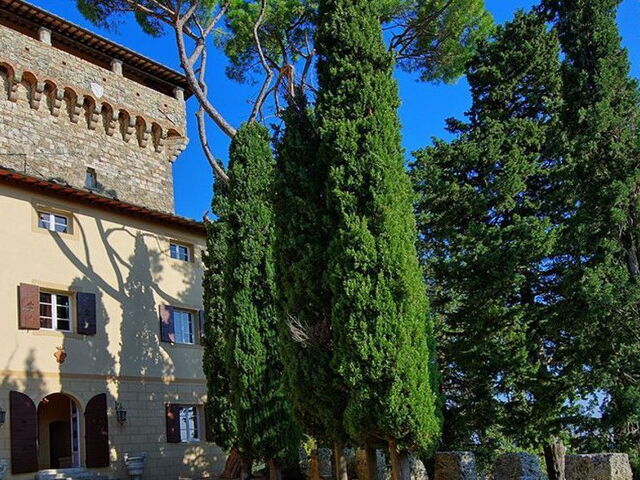
Some months ago, I had the opportunity to visit the small center of Cetona (SI) and its ancient medieval castle, the "Rocca", where it is possible to stay to enjoy unforgettable holidays. It’s unusual to hear someone talk about this village, although it is an authentic jewel of Tuscany’s countryside that deserves to be visited at least once in a lifetime.
This 3000 -inhabitants’ village is found in the southern part of Siena’s province, a few kilometers away from the regional borders with Umbria and Lazio. Here, we’re a long way from Florence: the people I meet don’t speak in the same way and their “Florentine” accent has transformed in something different that I’m not able to define clearly. However, Cetona still conserves the typical traits of a Tuscan medieval village “drawn with stone and earthenware” and its wooden and brick houses are actually so close to each other that they look interwoven. This bijou in immersed in the middle of green woods, right in the front of the Mount Cetona, which is 1148 meters high and crossed by twelve paths that allow to discover its most hidden treasures.
The beauty of this place is indisputable: indeed, it’s been elected one of the most beautiful Italian “borghi” by ANAI association. It also adheres to the “Città dell’Olio” (oil Cities) and “Città del Vino” (wine cities) associations and it hosts the “Sul filo dell’olio” celebration during the first two weekends of November. It’s a festivity that highlights the local food, art and music and its protagonist is the locally produced “olio nuovo”. It is also possible to taste it along the streets and to visit the numerous olive oil mills.
On the other hand, Cetona’s typical dish is “pici con l’aglione”, a first course with big handmade spaghetti seasoned with tomato sauce, a lot of garlic and pepper. Many restaurants here present them in their menus, along with many other delicious traditional recipes.
The name “Cetona” doesn’t remind of any other Italian word: some believe that it derives from the name of an ancient paleochristian abbey called “baptisterium Sancti Johannis de Queneto o de Queteno” or “plebs Sancti Johannis de Scetona, but it may also refer to the Chieteno brook that flows in this area.
The first historical reference about Cetona dates back to VII-VI centuries BC, when Etruscans occupied the territory near Camposervoli: some 20th century excavations have exhumed several bronze age’s artifacts which are now conserved in the “Museo Civico per la Preistoria del Monte Cetona”. During Middle Age, the village firstly belonged to the Republic of Orvieto, then it became part of Siena’s territory and it was finally included to the Granduchy of Tucany in 1556.
There are innumerable ancient buildings that need to be seen in this place, although a simple walk along the stone-paved streets that run along the mount, the so-called “coasts”, is enough to realize that every corner of this place hides a unique beauty. For example, in its historical center you will find the “S. Francesco monastery”, built in 1212, the “San Michele Arcangelo church”, dating back to 1155, and the “Collegiata della Santissima Trinità”, which is a gothic-style church decorated with a Pinturicchio fresco. There is also Piazza Garibaldi, a huge oval square completed in the 16th century by Gian Luigi Vitelli that hosts the new visitors. It actually surprises everybody for its enormous dimensions compared to the smallness of the village.
The position of Cetona is certainly strategic and perfect to get to interesting centers like Chiusi, Sarteano, Pienza and Montepulciano in a few minutes, and to cities like Siena, Perugia, Assis and Arezzo in less than an hour and a half. It’s a simple, characteristic and serene city that is suitable to become a stop of your holiday in Tuscany.
Whoever raises his look from the streets of Cetona cannot ignore the famous Rocca, which dominates the village from its highest point. It’s also its most ancient site (it dates back to X century) and some other buildings have been added to it over the centuries. The principal structure was erected in 16th century by marquis Chiappino Vitelli, who included a door and a preexisting defensive tower to the new palace, which became his luxurious property. The two acres of the park around the villa are decorated by hundreds of flowers, rows of olive trees, centuries-old plants and a big stone-built swimming pool, made using the travertine stone of an ancient roman bridge surrounded. One of castle’s accesses allows to reach the city center in a couple of minutes and to take advantage of a walk through the beautiful boulevards or of a local taste-itinerary.
This small castle in the middle of Siena’s countryside is surrounded by a serenity aura that nobody would pass up. One night here is able to transform every guest into a renaissance prince, owner of its fortress and surrounded by luxury and beauty. Actually, staying in the Rocca for at least one night is the only way possible to visit it, as it’s a private property that Posarelli Villas rents to offer dreamy stays to its guests.
Read More