Our Blog: Travel Tips
Planning a trip to Italy? Browse and read our useful and informative articles about the endless range of attractions and experiences in this lovely country.
Travel through the beauties of Italy with us. Visit our blog!
July 18, 2022
What to Do in Mid-July: a Trip to Tuscan Provence
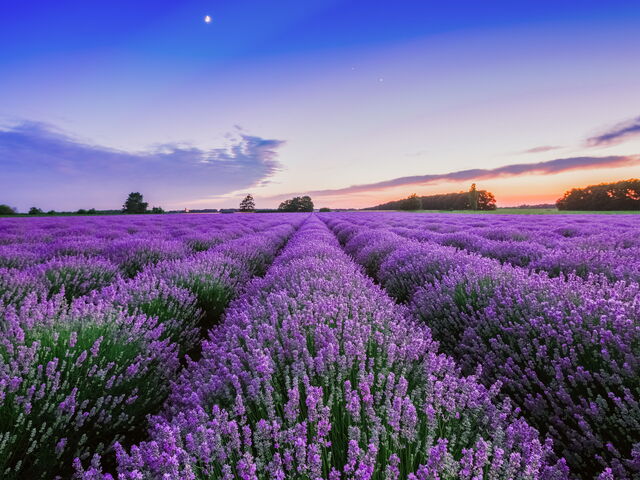
Bright colours, overwhelming smell, swaying movements. What are we talking about? The flowering of lavender.Lavender is a rustic plant belonging to the Lamiaceae family and owes its name to the Latin gerund 'lavare' : in the Middle Ages it was used to cleanse the body. Lavender flowers are used in phytotherapy and herbal medicine for their numerous properties due to the presence of essential oil, tannins, ursolic acid, flavonoids and bitter substances. These active ingredients give the plant a sedative and calming action on the nervous system, to be used in cases of anxiety, nervousness, headaches and stress and insomnia, and to combat gastrointestinal manifestations related to agitation. Lavender's benefits also include its balsamic action on the respiratory tract, making it an excellent remedy for colds such as flu, coughs, colds and excessive phlegm.
People mistakenly associate lavender with the south of France, particularly Provence, but this wonderful plant also grows in the arid and stony soils of Italy, and it is here that we want to take you today.Just a few kilometres from our villas in the municipality of Montespertoli you can admire a breathtaking lavender field, but there is more: the farm that hosts this field offers very interesting activities and organises aperitifs and dinners with lavender preparations.Read on to find out more!Podere Lemniscata is located a few kilometres from Florence, in the municipality of Montespertoli, an area famous for the production of Chianti wine. The owner Manuela Andreetta knows very well the countless properties of this plant and every day she tries to make her guests discover them.Let's take a look at some of the activities that Manuela proposes:
1. LAVENDER ESSENTIAL OILOne of the activities offered by the farm is the harvesting of lavender to obtain essential oils. You will be guided through this process: you will be explained how to cut the leaves so as not to kill the plant and obtain a very good essential oil.At the end of the harvest you will deposit the lavender in containers and watch the extraction live. The magical moment will be accompanied by the unmistakable smell of this plant that evokes an unparalleled feeling of freshness and cleanliness.Lavender essential oil helps to restore calm and serenity, eliminating stress and nervousness. Just a few drops in the diffuser are enough to purify the air and bring balance and harmony to the environment. Mixed with a carrier oil (e.g. sweet almond oil) it can be used for massages and to loosen muscle contractures or soothe burns.
2. LAVENDER TO DRINK AND EATAfter toiling in the lavender fields, what could be better than a refreshing aperitif and a sublime dinner?The signature cocktail of the Lemniscata farm is their lavender spritz: we cannot describe the goodness and freshness of this drink, you must try it!Our advice is to also stop for dinner: the completely cruelty-free menu will satisfy all your senses. Don't miss dessert!
3. ALL-ROUND WELL-BEINGIf you have read this far your interest in lavender is strong! You are curious to try essential oil extraction and cocktails! But what about attending a live concert while sitting comfortably among the rows of lavender? Or how about doing a meditation cycle with crystals to discover the 4 elements?Podere Lemniscata offers this kind of activity every month, check their website or their Facebook page to stay up to date. © Rebecca Taizzani
Read More
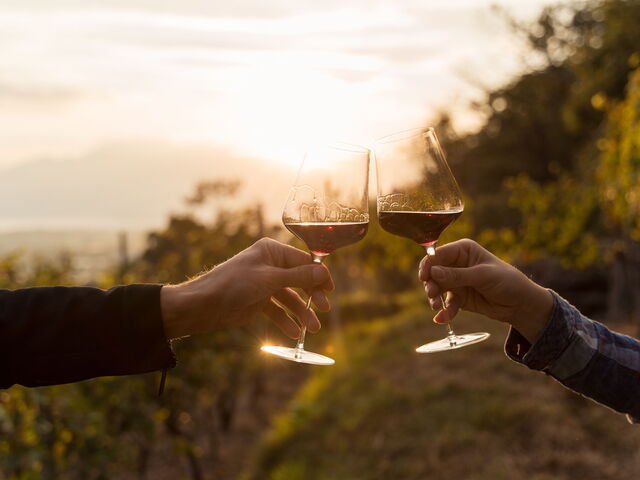
“ma per le vie del borgodal ribollir de’ tiniva l’aspro odor de i vinil’anime a rallegrar “
Today, with the help of the illustrious poet Giosuè Carducci, we would like to introduce you to a village located in the Tuscan hinterland, which can be considered one of the most charming in Tuscany.
Wine, narrow streets, cheerful souls, festive atmosphere: the whole soul of Bolgheri is encapsulated in a quatrain.
Geographically located between Piombino, Volterra and Livorno, it is less than 300 km from Rome and is a hamlet of the municipality of Castagneto Carducci. Its Viale dei Cipressi has become a true Tuscan icon, part of the common imagination of travellers from all over the world, but there is more than this to visit in the village.
Many of you will have already had the good fortune to visit it, while others may not have even known the existence of this little treasure.
In any case, read on for our tips on what to do in Bolgheri.
If you are staying in our Guardistallo accommodation or have booked a flat with a swimming pool at Sculture, you can plan a wonderful day out in Bolgheri.
Read More
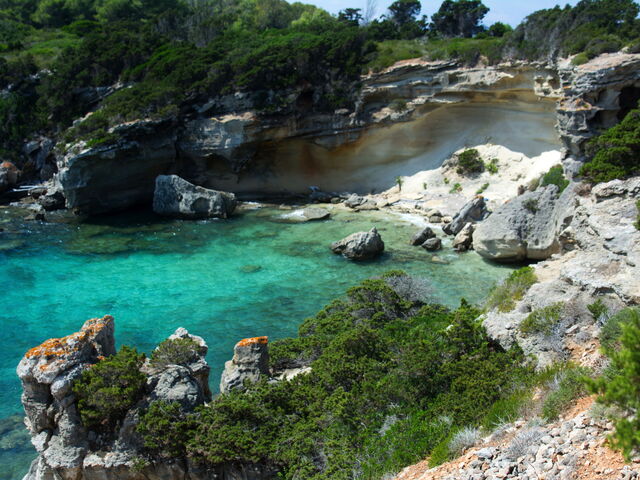
If you are a lover of white sand, crystal clear water, nature and tranquillity, this article is for you.Today we take you to discover one of the most beautiful and least contaminated islands of the Tuscan archipelago: the island of Pianosa.This small strip of land (it has an area of only 10 square kilometres) is about an hour's ferry ride from San Vincenzo and can mostly be visited on day trips.The island is a protected nature park and has only one bathing beach: Cala Giovanna. Don't let this put you off, however, there are plenty of other activities you can do.Read on to find out how to get there and what to do in a day (we are sure you will return more than once).
Before virtually guiding you to the discovery of this hidden paradise, we think it appropriate to leave you with a few historical notes.Pianosa has been inhabited since prehistoric times, and the remains of a number of settlements and artefacts have been found along its shores, which indicate that the island was on the trade routes that crossed the Tyrrhenian Sea in the second millennium BC.The Romans called it Planasia (flat) and between 6 and 7 A.D. Agrippa Postumo, nephew and potential heir of Emperor Augustus, was exiled here. Agrippa remained on the island until 14 AD, when he was executed. The island still preserves several vestiges from that period, including:- the remains of Agrippa's Villa (reachable with mask and snorkel)- the catacombs (Mr Carlo will accompany you on the visit: he is the only resident on the island)
In the 16th century, the island was the target of multiple Turkish raids and lost many of its treasures.In 1814, the island was visited by Napoleon, who was in exile on Elba at the time. It was he who initiated the construction of Fort Teglia on the island's promontory.In 1856, the Pianosa prison was established: first an agricultural colony, then a maximum-security penitentiary intended for the imprisonment of terrorists and mafiosi. On that occasion, all the inhabitants of the island were evacuated and it was made inaccessible from the outside.Over time, the activities of the Pianosa prison were reduced until its final closure in 2011.
How to reach it?There are ferries departing from Piombino and San Vincenzo: a must if you are staying at Casa Riva.You can check timetables and rates here .
But what to do on this island?Paleontological trekkingMountain bikingFrom the village along the south coast towards Cala S. Giovanni and the Grotto of Cala di Biagio where numerous prehistoric lithic tools were recovered in the 19th century and, with a recent excavation, deposits of cervid and bovid bones came to light, testifying to an ancient connection with the continent.Archaeological trekkingMountain bikingOne reaches areas of recent excavation that have uncovered important archaeological evidence. You reach the Belvedere, the highest point on the island, from which you can admire the surrounding landscape.Kayak (Sit on top)Mountain bikingDiscovering the east coast of the island, starting from the beach of Cala Giovanna. An extraordinary opportunity to navigate the waters of the Marine Protected Area, approaching the island's spectacular coastline and cliffs.Mountain BikeOn flat roads and paths to the Marchese branch off at the northern end of the island, for a view of the beautiful Porto Romano bay; then along the cliffs of the west coast and at the penal colony branches.Guided tour by carriageA slow and gentle way to discover the nature, beauty and charm of the island. The excursion allows you to visit the branches of the former prison, the Orti di Pianosa, with a few stops to admire the extraordinary panorama.Snorkelling at Cala dei TurchiFins, mask and snorkel to observe the marine flora and fauna along a stretch of coastline designated by the Park for this activity. The highlight? The secret cave you will enter; you will feel like the protagonists of Pirates of the Caribbean.
© Rebecca Taizzani
Read More
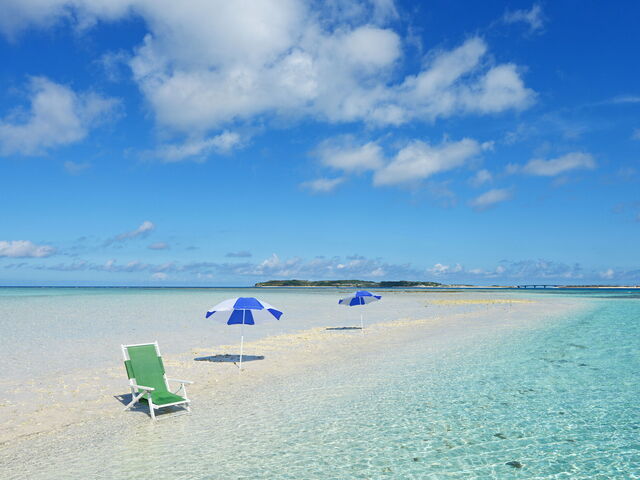
Summer holidays are a much-awaited time: the kids count down the days until the end of school, the older ones jump through hoops to grab a week's holiday.
Sun, sea, saltiness and maybe a good cocktail in hand - for many a dream, for the most hyperactive a nightmare.
If lying on a sunbed for a week is unthinkable for you too and looks more like Chinese torture than a dream, this is the article for you.
Today we offer you some good alternatives to the lounger.
1. SNORKELING
Snorkelling is a discipline in which you swim on the surface of the water, with your face to the bottom. This way, while breathing through a snorkel, you can admire everything underwater: fish, crustaceans, turtles, molluscs and, of course, marine flora.
Unlike diving with oxygen scuba tanks, snorkelling does not require a licence and is practicable for everyone: even the youngest children will love this activity.
To snorkel safely, you will need a mask, snorkel, fins, wetsuit and buoy.
2. KAYAK
The term Kayak comes from the name of an Eskimo boat, used as a means of transport or for hunting and fishing in the Arctic Sea. Today, after various modifications, the Kayak is a boat used for recreational purposes by the various tourists who flock to beaches around the world. You can rent a single or double kayak, and on your departure you will be provided with life jackets and a double paddle.
With a little effort and a touch of coordination you will be able to reach unexplored bays and picturesque caves.
Our advice? Bring a water bottle and a waterproof phone - you won't need anything else for a fantastic adventure.
3. SUP
If you're a good balancing act, the sup is a great alternative to the kayak. Sup, which stands for Stand Up Paddle, is an aquatic discipline that combines surfing and canoeing. You glide through the water paddling while standing on a rigid or inflatable board. It is practised using a board that is wider and more stable than a surfboard, and a paddle with a long shaft to be used while standing. Boards can be inflatable or rigid. Rigid boards are more responsive and perform better.
The SUP paddle has only one blade, has a handle at the top to grip it, and often has a telescopic shaft to be adapted to the height of the surfer. As in surfing, you use a leash, or lanyard, to tie around your ankle so you don't lose your board if you fall off when there is a current in the water.
Haven't we convinced you yet? We still have a few tricks up our sleeve, follow us for the continuation of the article.
© Rebecca Taizzani
Read More
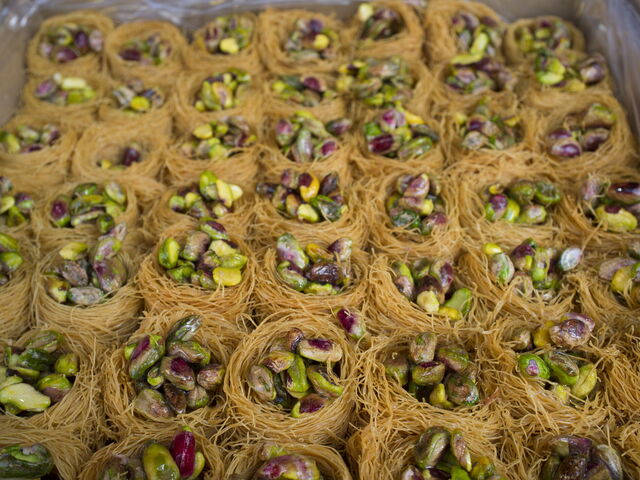
Greece is a country full of discovery: sea, sun, breathtaking landscapes, history, culture and what else? The good food!In this article we want to put aside for a moment the mouth-watering Greek salads, endless souvlaki and delicious pita gyros. Today we will focus on an underrated niche: pastry.
Greek pastry represents what is most characteristic of Mediterranean culture. In ancient Greece, Zeus, Artemis and Apollo were the greedy recipients of irresistible sweet creations, rich in spicy aromas, dried fruits, cottage cheese and mosto. Greek sweets, besides being tasty, often keep for a long time and are a wonderful accompaniment to Greek coffee.
Let us now see what they are:
(Before proposing them to you, we tested one by one while enjoying the sunset by the pool at Villa Nafsika)
1. Galaktoboureko: This is simply a phyllo pastry cake filled with butter, semolina, sugar, cornflour, eggs, milk, vanilla and nutmeg, baked in the oven and then, once cold and cut into squares, drizzled with a delicious syrup made from honey, lemon or orange peel.
2. Kourabiedes: these are classic winter biscuits, made mainly of almonds and butter, covered with icing sugar, resembling winter snow. A delicate biscuit with a unique aroma, scented with brandy or ouzo that decorates the tables of the Greek people at Christmas time.
3. Trigona panoramatos: a regional speciality, originating in Thessaloniki (said to be the gastronomic capital of Greece) specifically in the Panoramatos district, whose name in Greek recalls its curious shape (trigona = triangle). These are triangles of phyllo dough soaked in sugar syrup and filled with a rich cream-based custard.
4. Loukoumades: these are delicious round doughnuts cooked in boiling oil, covered with honey, cinnamon and chopped walnuts (or almonds). On St Andrew's Day it is the custom for Greek women to prepare them and offer them in church: legend has it that the saint's wife offered them to Jesus and his disciples on the day they arrived in the village hungry.
5. Portokalopita: an irresistible orange-scented phyllo dough cake. The intense and strong aroma of the fruit lends itself perfectly to the taste of Greek yoghurt, which gives the dessert a soft and firm texture. After baking, a glaze of sugar, orange juice and cinnamon completes this rich and unique dessert.
6. Greek Baklava: a syrupy dessert of Turkish origin, also found in Hellenic pastries. A cake made with layers of phyllo dough alternating with chopped almonds and honey, whose original recipe calls for the phyllo dough to be baked with dried fruit and then syrupy with honey. The ingredients? Butter, sugar and dried fruit, all flavoured with cinnamon, cloves and orange, honey: one bite leads to another. 7. Kataifi: a neat composition of strands of phyllo dough with bits of dried fruit inside, including nuts, pistachios and almonds.
Did you see any dessert that caught your eye? Why not try it in one of our magnificent villas; we guarantee that the taste seems to get even better!© Rebecca Taizzani
Read More
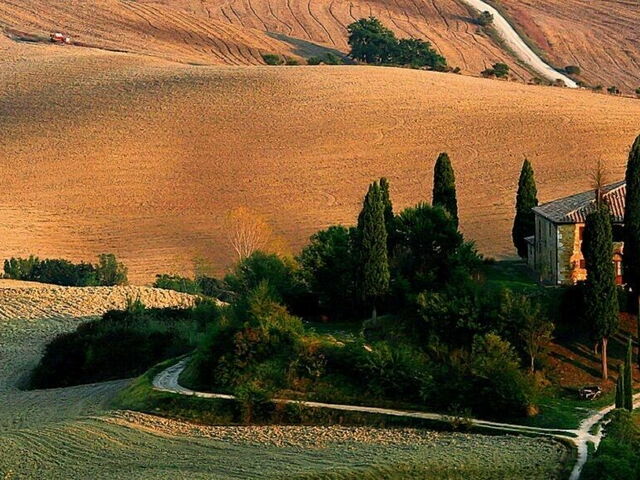
There is a place where for 364 days a year an unconventional show is held. No script, no costumes, no sound system. Everything is spontaneous, natural. The audience can participate without having to buy a ticket and can choose the seat of their choice. The performance has no set duration, it can be 10 minutes or a whole day, it is up to the viewer to decide.But what are we talking about? What is this latest find?We are actually talking about the simplest and oldest thing in existence: nature. That thing that we know but cannot express because 'So impotent Our Wisdom is To her Simplicity' (Emily Dickinson).Nature is nothing but an enigmatic poem, always ready to be consulted.
In the Theatre of Silence, you will have the opportunity to consult it, interpret it and perhaps even understand it.The Theatre is an amphitheatre created by exploiting the natural conformation of a hill near the town of Lajatico, in the province of Pisa.This infrastructure is not made of solid volumes, but is built in two dimensions, as if drawn on the ground. Not only is its layout unique, but also its components: the theatre's stage is an artificial pond that becomes part of the stage during performances, while the backdrop is actually a barely visible wall built of travertine. Strangely, there is no grandstand: spectators sit on the slope of the hill in front of the cavea, on barely noticeable steps.The structure was erected at the behest of the Italian tenor Andrea Bocelli and was inaugurated in 2006: from then on it has been the cradle of world opera. The natural spectacle we were talking about earlier is interrupted once a year by one of the best artistic performances in the world: the performance of Bocelli.
Why have we introduced you to this magnificent setting? Simple, because it is only a few kilometres away from our brand new Villa: "Villa Campana". This splendid property has its own private pool and can accommodate up to 12 people thanks to its 6 rooms. Nothing is left to chance, each piece of furniture is unique and hand-forged: the vine leaf chandelier that runs through the entire living room is noteworthy.
If the interior has made you fall in love, the exterior will be no less: erected on a hill and surrounded by fields of wheat, the villa offers spectacular views.Imagine yourself on a summer's evening, sitting by the masonry bonfire watching the stars. Isn't that what you've always wanted?
Read More
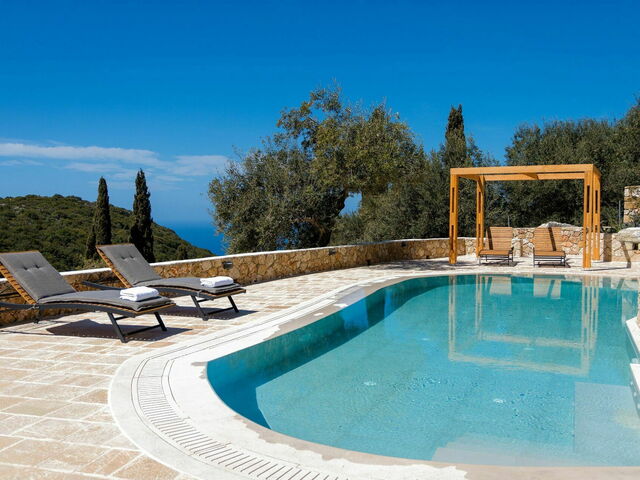
Have you always had fantastic holidays, full of fun and breathtaking scenery but something has always been missing?
Do you remember the hot sand under your feet, the blue sea, cocktails while admiring a sunset, but still feel a void to fill?
Read on, we have just the thing for you.
Holidays are one of the most anticipated and desired moments, they are planned with great care and always seem to last too short.
Today we would like to offer you a different kind of holiday, one that will allow you to return home with a very rich bag of experiences (don't worry, this will pass through airport control, not like your suitcase, which will weigh several kilos more than it did on the way out).
In this article, we will tell you about the Corfu trail: a 180-kilometre route across the island of Corfu, from south to north.
The Corfu trail is a long path across the entire island of Corfu. The trail was gradually created by some friends living on the island. Thanks to the wise planning, the Corfu Trail is today one of the most famous trails in Greece. In fact, it is the only one that combines natural landscapes still unspoilt by mass tourism with urbanisation: friendly Corfiotes, picturesque monasteries, Byzantine and Venetian monuments.
You will recognise this path thanks to yellow signs placed at strategic points and marked with a C and a T together with a two-way arrow. It is advisable to follow the route starting from the south and heading north mainly for two reasons:
1. Hikers will gradually prepare themselves from the gentle south to the more mountainous region in the north.
2. The most spectacular landscapes and the greatest concentration of attractions are to be found in the north of the island.
Why do we propose this route?
Because one of our magnificent villas is very close to a path of this trial: the one called Donkey Path.
We are talking about 'Villa Prokimea'.
"Villa Prokimea" is a brand new and very elegant villa in Makrades, just a few kilometres away from Palaiokastritsa and Agios Georgios, lively seaside resorts.
The villa can accommodate up to six people thanks to its three modernly finished bedrooms.
The highlight? The panoramic terraces, the swimming pool with sunbathing area and the short distance from the Corfu Trail. Just 800 metres from the villa you will find the start of this beautiful trail that will lead you to Agios Georgios, delighting you with sublime views of the turquoise bays. The 6 km can be covered either by bicycle or on foot.
Are you ready for this experience? What are you waiting for, run and book!© Rebecca Taizzani
Read More
You have arrived in Italy after a long journey. The Tuscan hills are holding you in their arms, the chirping of the sparrows cheers your last few kilometres and the light tramontana wind moves the olive branches pointing the road, everything is enlightened by an orange sunset reflecting on the windscreen of your car.
You are happy, you can't wait to get to the villa you have rented and take off your shoes, walk on the soft lawn to stretch your legs. The bravest will even dive into the pool.
It's all beautiful, but you realise you haven't thought about dinner.
This is where we come in, or rather, the libidinous Schiacciata Toscana.
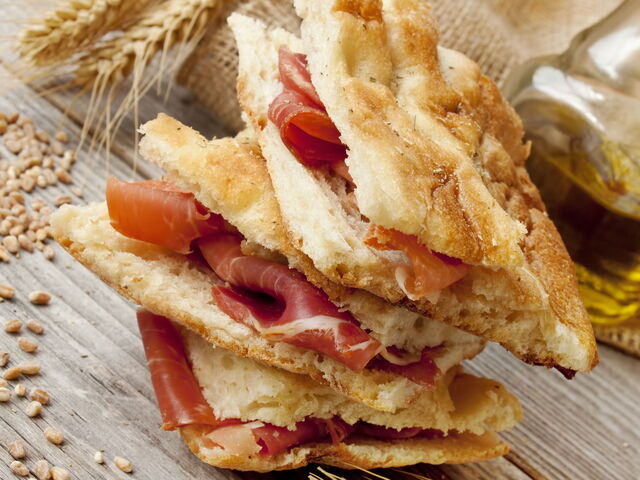
Ciaccia, schiacciata, stiacciata, schiaccia, in short, the typical Tuscan focaccia is a product of peasant cuisine and is known and appreciated throughout Italy.
The characteristics that must not be missing are
1. extreme crunchiness
2. large air bubbles
3. signs of hand pinching
4. an abundant brush with extra virgin olive oil after cooking.
Schiacciata (because that's what you'll have to call it when you order it) is one of the oldest Italian street food recipes and one of the most popular dishes among Tuscans.
Now you may be wondering how to stuff this food of the gods?
Schiacciata can be eaten in both savoury and sweet versions (no, we're not crazy, you'll see why).
The traditional stuffing of schiaccia is cold cuts and cheeses, and if you're feeling healthy or preparing for the swimming season, you can also add some vegetables. We recommend the combination of prosciutto crudo, Tuscan pecorino cheese and truffle cream, or Tuscan porchetta, parmesan cheese and roast potatoes, or if you're feeling more classic: schiacciata with mortadella.
But now let's move on to the sweet version: schiacciata with Nutella. This is the snack that every Italian child wants to find on his or her return home and that every adult secretly eats in the evening after dinner.
The savouriness of the salt crystals on the surface contrasting with the sweetness of the nutella helps to create what can be described as 'food porn'. In addition, it is as if the oil in the schiacciata and the fats in the creamy spread annihilate each other, creating a black hole in the stomach of those who eat it: one schiacciata alone will not satisfy your craving, you will need at least three! (we would like to point out that we are not responsible for the addiction that this food may create).
But where can you eat all this?
If you want to feel like a true Italian, our advice is to go and buy the schiacciata in any bakery and fill it to your liking. If, on the other hand, you prefer to leave it to an expert hand, our recommendations are: All'antico vinaio, La prosciutteria, I fratellini, Da Giotto, Cioccolateria Ballerini, Forno Becagli.
Would you like to try your hand at preparing this work of art? Book a cooking class in one of our villas.
Ps. Don't forget to accompany your meal with a good glass of wine, hydration is important.
© Rebecca Taizzani
Read More
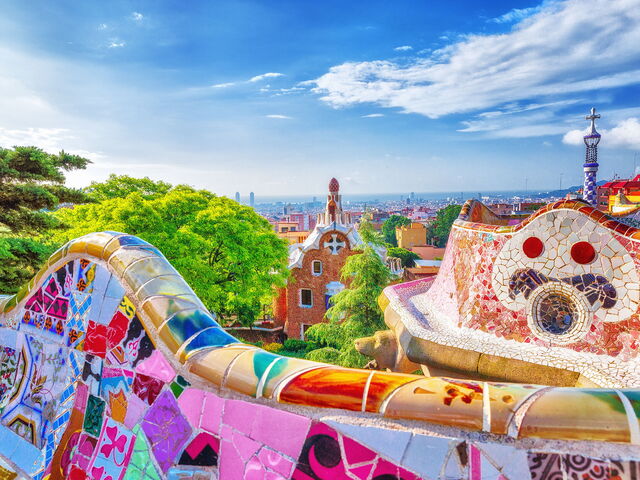
We all desire a day off from our routine, but when we have this opportunity we never know what to do. We spend most of our time looking for a fun, interesting and stimulating activity, but we don't always succeed. Getting a group or even just a couple to agree can be really difficult: some people want to relax in the sun, others go for a walk and others visit a place of interest.So how can you please everyone? Simple, leave it to us!Today we are proposing a mystical experience,which challenges the limits of the human mind, almost mandatory if you are staying at our Villa Il Principe..We are talking about a visit to the Tarot Garden.
Stop, I already know you're thinking "I don't want to spend my 1st of May with a tour guide" or "what a bore guided tours are", "it will surely be something already seen" but the Tarot Garden goes beyond anything you can imagine.This enchanted place is a completely unconventional open-air museum: in fact, the artist who created and financed it completely independently did not plan any guided tours. Niki has left visitors free to interpret the museum's contents: according to her, "we are born without knowing the rules" and it is right to conduct a visit according to this philosophy.Niki de Saint Phalle began construction of the Tarot Garden in 1979 and followed all the work closely, very closely.In fact, the artist lived in a sculpture inside the park, more precisely inside the Empress, throughout the realisation of her work. Today you can visit his residence consisting of a gleaming dining room with walls made entirely of mirrored ceramics, a dream bathroom and a bedroom that is anything but sober.As you will see, all the appliances are in working order and the rooms are habitable.Upon arrival you will find yourself in front of a wall that defends the garden from reality, and once you have crossed the portal you can begin the esoteric walk between culture and nature.Once you cross the threshold, you will be catapulted in front of towering figures that recall the iconography of tarot cards in a style that is a clear reference to the works of the Spanish architect Antoni Gaudi.
Follow your instincts when visiting the 24 main statues, the important thing is not to have any schemes.Each piece of the garden is unique: all the parts have been made by hand, from the inner framework (which has been bent over the knees of the collaborators) to the ceramics made to measure by the ceramist Venera Finocchiaro.
The last piece of information we are giving you concerns the tickets, nothing else, we don't want to spoil the surprise, you will be the poets describing this joyful garden.In order to visit the garden, you will need to buy a ticket (the cost varies, there are discounts).To purchase tickets, click here. We are ready to welcome you, now it's your turn! © Rebecca Taizzani
Read More
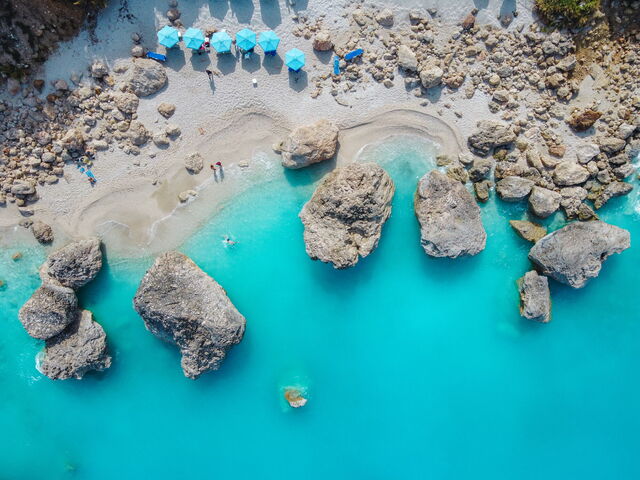
Boring afternoon? Busy week?
Don't worry, we'll cheer you up. Here is the second part of our article on Crete's most beautiful beaches. If you've been gaping at the pink sand of Elafonisi or the crystal-clear water of Voulisma, wait until you see the rest.
As we always say: stop dreaming, book one of our villas and experience it first hand!
Kedrodasos
The beach of Kedrodasos is the perfect alternative to the beach of Elafonisi: their proximity makes them very similar, but unlike the latter, the beach of Kedrodasos is still little known. This allows you to enjoy the spectacle in complete tranquillity.
Kedrodasos is a protected area of Crete and there are no facilities in the vicinity, which makes the place even more intimate and secluded (and often frequented by naturists). The presence of very light sand and smooth rocks contribute to a picture that has nothing to envy from exotic beaches.
The sea is always flat because the area is more protected from the winds than neighbouring Elafonisi. The landscape takes on unreal colours, from light blue to electric blue with dark spots revealing patches of posidonia growing on the seabed. In areas where the water is very shallow, it feels like being in natural pools.
We recommend that you bring everything you need for a day at sea and, above all, that you treat this unspoilt corner of nature with the utmost respect.
Balos Lagoon
The Balos Lagoon is a lagoon separated from the bay of the same name by a tongue of sand that joins the promontory of Corico to Cape Tigani, in the most north-western part of the island of Crete, in Greece.
A few small prerequisites for an unforgettable experience: before venturing along the unpaved road that will lead you to the Balos Lagoon you will have to pay a 1 euro fee for the protection of the Gramvousa Reserve and the preservation of the road.
After that the route starts to get tricky with potholes, uneven ground and goats crossing the road. In about 20 minutes at a very low speed you reach a large car park.
To reach the beach you have to walk for another 20 minutes on a path with a wonderful view over the lagoon and the sea.
Don't be put off by the somewhat challenging path - you will be rewarded by a breathtaking landscape with a Caribbean beach and crystal-clear water.
Seitan Limania Beach
Setain Limania beach, also called Agios Stefanou, is located on the Akrotiri peninsula. It has white sand and turquoise sea, all set in a beautiful cove.
Until recently it was only frequented by locals and friendly goats, but nowadays it is very crowded at weekends. We recommend a midweek visit.
To get to Devil's Beach (another name for the beach in Seitan Limania) you can leave your car in a nearby car park and take the central road at the fork in the road, which you will find in front of you: in 10 minutes you will reach the beach and your walk will be enlivened by a beautiful landscape.
This beauty is only half an hour's drive from our Cabanavillas: two little jewels with a panoramic swimming pool and just a few steps from the sea! The perfect solution for those who want to enjoy the natural beauties of Crete without renouncing to pubs, beach clubs and exquisite restaurants!
Don't you want to leave yet? We already have a selection of villas that will suit you!
Send an email to booking@posarellivillas.com and together we can plan the perfect holiday.© Rebecca Taizzani
Read More