Our Blog: Travel Tips
Planning a trip to Italy? Browse and read our useful and informative articles about the endless range of attractions and experiences in this lovely country.
Travel through the beauties of Italy with us. Visit our blog!
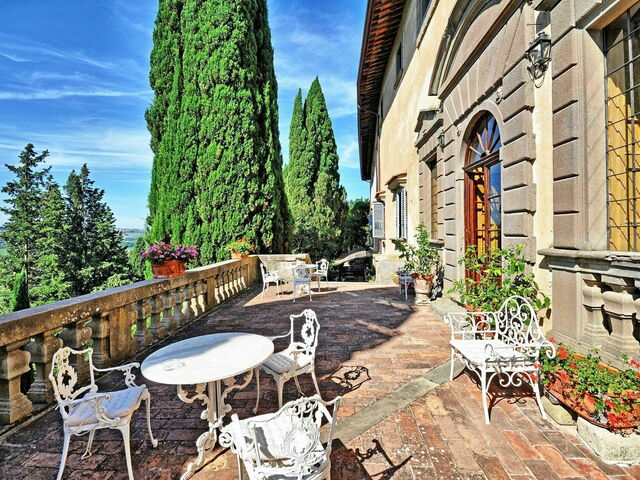
In an undefined time, someone laid the first stone to build what would later become one of the most beautiful castles in Tuscany: the castle of Montegufoni.
From that moment on, he remained there, watching over the Tuscan countryside like a grandfather does with his grandchildren. He defended that place on the hill with all his strength, bowing to the attacks of the Florentines without ever surrendering. Its 'wounds' were tended to by the Acciaioli family, and brick by brick the castle was transformed: halls, external cottages, chapels and so on and so forth. Montegufoni was no longer a pile of stones, it was alive.
This was the beginning of what can be defined as the golden age of the castle: from an unknown place to a meeting point for important people such as the King of Naples, Cosimo de Medici and many members of the Florentine high society.
As the years went by, Montegufoni became more splendid, so much so that it was the eccentric George Sitwell who fell in love with the structure.
The marriage between George and Montegufoni was the epitome of a dream marriage, something to make the happy endings of the best romantic films envious. Sitwell lavished attention on the entire castle, giving special treatment to some of the rooms: the walls of the bedrooms have the honour of housing the masks and harlequins of the illustrious Gino Severini.
Since 1972 the Posarelli family has been taking care of this structure, trying to keep intact the great history of this idyllic place but adapting it to modern needs.
Today's redesign takes us to the second floor of the castle in the flat Montegufoni 27.
The flat can accommodate up to 5 people and offers a double panoramic view: on one side the inner courtyard, on the other the infinite Tuscan panorama. During the spring season everything is framed by colourful flowers, creating an unforgettable palette of colours.
Once you open the door it is impossible not to notice the attention paid to the furnishings: the soft colours that bring out the brightness, the modern furnishings in cold colours contrasting with antiques in warm tones.
Down a few steps you will find yourself in front of a large open space comprising a sitting room, dining room and kitchen. The mirrors behind the sofa give depth to the room, without making it dispersive and impersonal.
The open space is overlooked by three rooms: two double bedrooms and a bathroom with a large shower.
Read More
March 24, 2022
Discover Crete: the Most Beautiful Beaches on the Island
When talking about Crete, the first thing that comes to mind is the cultural wonders that this island has to offer: from the Labyrinth of Knossos to the archaeological site of Phaestos, nicknamed "the bridge to Egypt", not to mention the beautiful capital Heraklion.
Today, however, we want to change the perspective, we want to shift the focus from the immense artistic and cultural heritage to the natural and landscape heritage.
In addition to the “Brocchetta di Guarnià” and the paintings with their bright colours and sharp outlines, Crete offers another type of artwork. Flowing brushstrokes, warm colours dipping into shades of turquoise blue, in stark contrast to the sharpness of burnt brown, and again flowing lines intertwining with each other to create bristling, sharp-edged areas.
Which work of art are we talking about? The island of Crete itself.
Close your eyes and imagine breathtaking panoramas, long stretches of golden sand, colours that mingle to the point of seeming surreal, tongues of white sand connecting beaches with uninhabited islands. If you book one of our houses you will no longer have to dream about it, you can live it.
Now all you have to do is put a pair of shoes in your suitcase and read on!
Voulisma beach
This beautiful beach is located in the south-east of the island in the beautiful region of Lassithi.
Thanks to the deep turquoise sea that washes the sandy beach, Voulisma beach is reminiscent of the tropics. Behind it, a high rocky cliff covered with Mediterranean vegetation gives it the unique touch and the rightful reputation it has so far earned.
The waters of Voulisma beach are clean and transparent with a gently sloping seabed, perfect for children. This paradise is seven hundred meters long and for the most part is well equipped with sunbeds and umbrellas.
The bay is ideal for those who love long swims and for those who adore snorkelling: plunge your head under the crystal clear waters and you will find a real playground of marine flora and fauna.
If you like to keep your feet on the ground, our advice is to venture to the top of the promontory, where you'll find a snack bar and a breathtaking view. Trust us, the long flight of steps will be well worth it.
Elafonisi beach
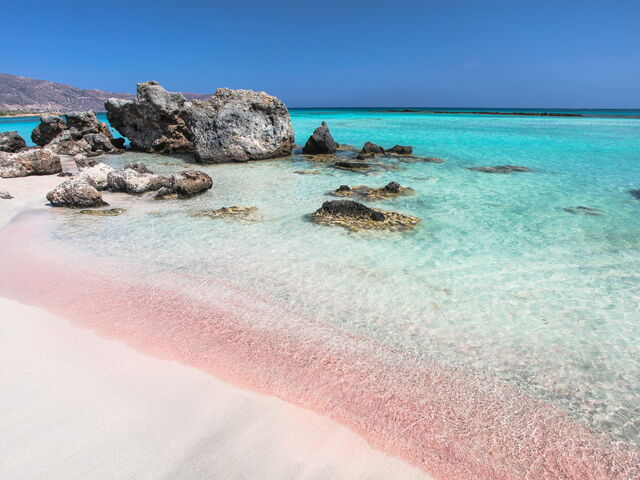
Located on the southwest coast of Crete Island, Elafonissi (or Elafonisi) is also called the 'Caribbean of the Mediterranean' for its white beach with pink hues and warm turquoise waters. The main beach is well-equipped with facilities for renting umbrellas, sunbeds and several bars.
The jewel in the crown?
The small island of Elafonissi in front of the beach of the same name, which, depending on the tides, is connected to the mainland by a narrow strip of sand on some days, while on others it is a real island that can be reached by walking through knee-deep waters.
On the small island, you can relax on the free beach and feel as if you are in the Caribbean, when in fact you are in Europe.
If you want to get away from civilisation, venture to the back of the island: the most rural and characterised by small bays where peace and tranquillity reign. At the far end of the island is a promontory where you can find a lighthouse and the small chapel of Agia Irini .
Be sure to stay on this beach until sunset - here you can admire the best sunsets in Crete.
Preveli beach
Preveli beach takes its name from the monastery located at the top of this part of the south coast of Crete. Together with the monastery, it is one of the most visited places on the island. Since the late 1960s, the beach and its surroundings have been inhabited by hippies from all over the world for a long time. The beauty of the landscape and the atmosphere were perfect for their ideals of peace and freedom.
The curiosity of this beach lies in the river Megas Potamos: the freshwater stream ends in the sea and the beach of sand mixed with tiny light-coloured pebbles acts as a watershed.
It is not every day that one can swim in both the fresh water of the river and the salt water of the sea. In addition, behind the beach is a dense palm grove that lines the river bed creating an exotic atmosphere; hence the name Palm Beach.
To get to Palm Beach you have to leave your car in the car park (for a fee) and then walk up almost 500 steps.
What are you waiting for? Hurry up and book one of our villas .Follow us on Instagram and Facebook to discover the second part of this guide and much more. © Rebecca Taizzani
Read More

Colours, scents, sensations. From the delicate white marble of Carrara Cathedral to the massive walls of Lucca and the narrow streets of Montefioralle: Italy is a wonderful country that offers cultural heritage, food, hospitality and above all, iconic clothes.
Talking about fashion in front of the "Venus of Botticelli" or the "Tondo Doni" might seem frivolous, but it is not, because fashion is art, and like art it expresses the need for a new perspective, a new content of social and cultural reality.
Haute couture is not a fad to be dispensed with: it is just a way to export Italy to the world, to represent our way of being, our essence.
It is true that a dress or an accessory is just a garment, but we should not forget that the garment is nothing more than our unveiling, our personality. To use an oxymoron: to dress is to lay bare one's self.
So why not take advantage of your stay in one of our villas to go home with a piece of Italy?We've seen that you've lightened your suitcase and have already prepared a place in your wardrobe.
Read on to find out where to buy your new favourite item!FLORENCEIf red is your favourite colour and studs fascinate you, just a few steps from one of the most photographed bridges (Ponte Vecchio) there is a shop for you. We are talking about the timeless Valentino Garavani, who had the honour of dressing Lady Diana.
Continue along this street and let yourself be carried away by the store windows: you are in Via Tornabuoni, one of the most exclusive streets in Florence, renowned for its luxury boutiques. Don't resist the colourful patterns of Emilio Pucci and the new textures of Prada.
From Villa Nora it takes only 30 minutes by car. Don't miss this opportunity.
LECCIO
If you like the tidy creativity of the man who dared to make a woman wear a suit, this blurb is for you. Giorgio Armani's boutique is waiting for you with open doors.
If, on the other hand, you are a more extravagant type, a lover of nonchalant vitality, Versace is the brand for you. Medusa head, bright colours, a "Safety Hair Pin Dress" worn at the premiere of the film "4 Weddings and a Funeral". Want to find out more? Run to the shop.
If you have ever flown with Alitalia, you will certainly have come across Alberta Ferretti's uniforms, a reference point for many Italian women. With its refined materials it succeeds in representing a romantic and ethereal woman, who wants to express her personality without becoming part of the masses. Elegant, colourful, fluid and truly inimitable: this is how Ferretti's clothes stand out.
Are you afraid of having to travel several kilometres to get to one of these shops? Don't worry: these staples of Italian fashion are all gathered in The Mall outlet.
A must if you're staying at Villa Stolli.
FORTE DEI MARMI
If you've booked Villa Sophia or you' re relaxing in the garden of Villa Oliveta, treat yourself to a day of shopping on the streets of Forte dei Marmi. Once you arrive, the breeze and the rustle of the sea will guide you expertly through the various streets full of boutiques.
Bottega Veneta and its "Bottega Green", Gucci with its unexpected minimalism and Missoni with its "put-together": a free and only apparently casual mixture and overlapping of stitches and patterns.
What are you waiting for? Run and book.
© Rebecca Taizzani
Read More
Are you hearing more and more about sustainability? Is the issue of environmental pollution close to your heart? Would you like to be able to go on holiday without harming the planet? At the same time, are you afraid of having to leave all your comforts behind, having to move only on foot or having to cook using a bonfire in the garden? If you have ever asked yourself any of these questions, you are reading the right article.
Posarellivillas cares a lot about environmental issues, so it has included eco-friendly solutions in its program: villas that can have almost complete energy independence, electric recharging stations, organic products at zero distance and much more.
Don't worry if some of the terms sound strange to you, if for you green was just a colour and not a lifestyle. Keep reading, you won't regret it, and who knows, maybe at the end of this article you might want to book your first eco-sustainable holiday.
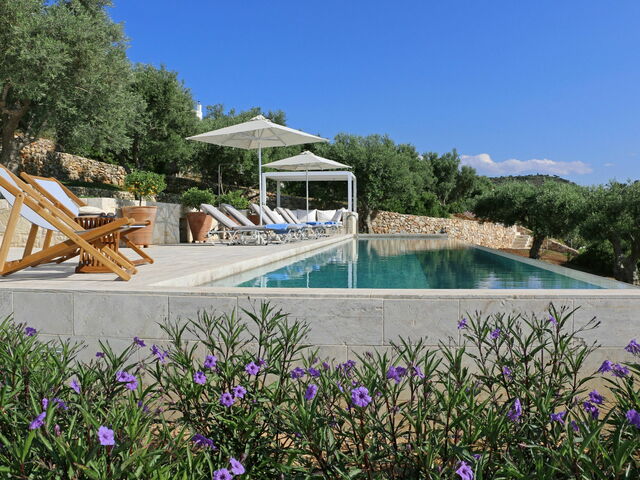
Before picturing you by the pool drinking a freshly squeezed juice from the garden, made with energy from the solar panels installed in the huge garden of the villa, let us make a small introduction on what sustainability is for us.
Posarellivillas by sustainability refers to that model of development capable of meeting the needs of the present without compromising the ability of future generations to meet their own needs. In simple terms, the eco-sustainable approach means that we can hand down to our children and grandchildren a healthy planet and who knows, maybe they can even experience one of our properties.
But enough theory, let's get practical!
VILLA BLUEWHITE IN CRETE
Expertly designed by its owner, Villa Bluewhite combines design with environmental sustainability. As well as an 18-metre saltwater swimming pool, a tennis court and a bowling alley, guests can enjoy organic olive oil from the surrounding olive grove, spices, vegetables and fruit all grown on the property.
Does that sound eco-friendly enough? Add to that the solar panels that produce much of the villa's energy and a charging station for electric cars.
In the mood for a holiday?
Run and book, or send us a message
CONTACT US
© Rebecca Taizzani
Read More
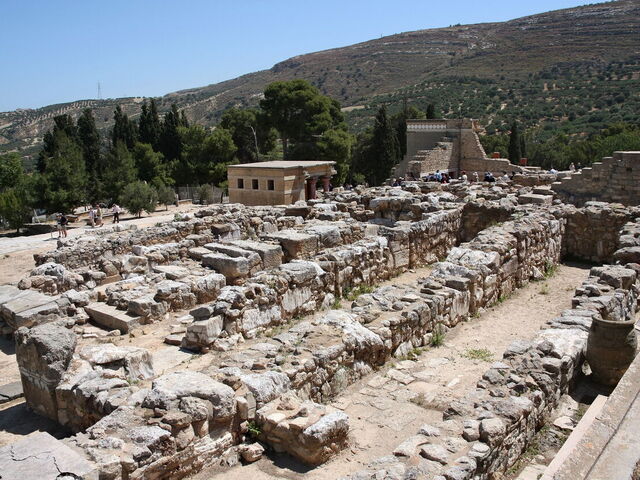
Greek history has always been fused with mythology, creating a unique culture. The existing myths and legends weave together an incredible story. Today we will tell you the legend of the Knossos labyrinth, also known as the Minotaur labyrinth.Are you ready to jump in to this magnificent legend? Get ready to discover all the details of the Minotaur Labyrinth of Knossos!THE PALACE OF KNOSSOS Let’s start with recent history: the Knossos Labyrinth was excavated at the beginning of the 1900s by the English archeologist Sir Arthur Evans. He uncovered an immense palace dating back to 2000 BC totaling 22,000 square meters, with more than 1300 rooms. The palace was used as the center of Minoan life. Unfortunately it was destroyed in about 1628 BC following an earthquake caused by the volcanic eruption of Thera, or Santorini. It was then rebuilt in the following years on the same foundations as the ancient palace. Probably the legend of the Minotaur doesn’t refer to a labyrinth outside of the palace, but rather to the palace itself, because its rooms and corridors were so dense that it seemed like a labyrinth.The Palace of Knossos sits on Kephala hill, a few kilometers from Heraklion. It is one of the main tourist attractions on the island of Crete. It has not just the remains of structures, but also magnificent mosaics and frescoes of Minoan civilization.THE LEGEND The story of the Minotaur begins when Minos, King of Crete, asked Poseidon, god of the sea, to give him a large white bull. Minos was to sacrifice the bull in order to show citizens of Crete his worth as King, and how much the gods esteemed him. But when Minos received the bull, he decided to keep it for himself. This annoyed Poseidon, and so he made Minos’s wife Pasiphae fall in love with the bull. The Minotaur was born from their union: an insatiable beast who soon would eat only human flesh. To contain the Minotaur’s violence, Minos closed him inside the famous Labyrinth. It was built by Daedalus and Icarus, who remained trapped inside and escaped by building wax wings. It happened that Minos’s son Androgeus was killed by Athenian warriors, jealous of his strength and athletic ability which led him to win every competition. In revenge, Minos forced Athens to send seven young men and seven maidens every year to be fed to the Minotaur.Theseus, son of Aegeus, King of Athens, decided to put an end to this punishment and leave along with the children sent to Crete, in order to kill the Minotaur. When Theseus arrived in Crete, Ariadne, daughter of Minos, fell immediately in love with him and asked Daedalus to help her find the Minotaur in the Labyrinth. Daedalus showed Ariadne the way and suggested she give Theseus a red thread to unwind when setting out in the labyrinth in order to find the way back (“Ariadne’s thread”). Theseus found the Minotaur and killed him after a violent battle, and also saved the other children. He prepared to return to Athens, bringing with him Ariadne and her younger sister Phaedra.From this point on, there are many existing versions of the story that tell of Ariadne being abandoned on the island of Naxos, that she fell asleep when they stopped to rest. Some say that Dionysus, god of music and wine, forced Theseus to leave Ariadne there so that he could marry her himself. Others say that Theseus forgot about her, and when Dionysus saw Ariadne so upset, he decided to marry her to end her suffering. In any case, the legend of Theseus, the Minotaur and Ariadne ends in tragedy: Theseus had promised his father Aegeus that if he succeeded in his endeavor he would change the sails on his ship from black to white. But on his way home, Theseus forgot to change the sails. When Aegeus saw the ship with black sails on the horizon, in despair he threw himself in the sea and died. That sea was named after him and became the Aegean Sea.If you would like to visit the Knossos Labyrinth and see this important archaeological site up close, book a trip to Crete! We recommend taking a look at our vacation villas on the island of Crete, such as Villa Eftychia, Villa Sevi Grande and Villa Romantic Sevi, for a dream stay!
Read More
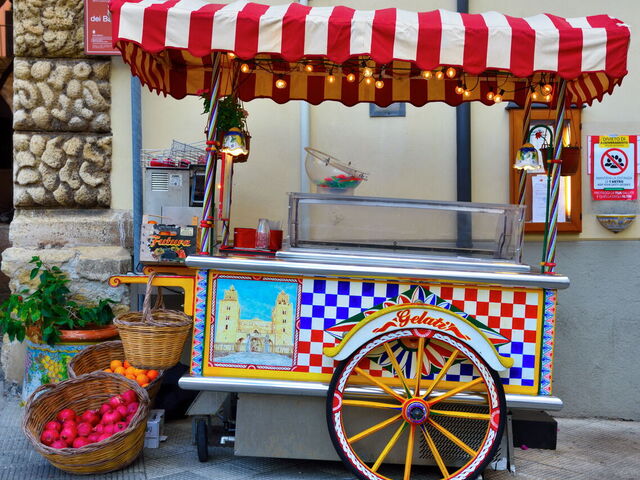
Palermo: an ancient city rich in history, culture and … culinary delights! Mediterranean cuisine is very diverse and each city has its own distinctive foods and wine. What they have in common is the use of authentic local ingredients and dishes with centuries-long traditions. If you’ve decided to visit Palermo but you don’t know what to eat, we’re here to help. Here is our list of Palermo’s local specialties and where to taste them. Get ready to jump into a delicious paradise!
Read More
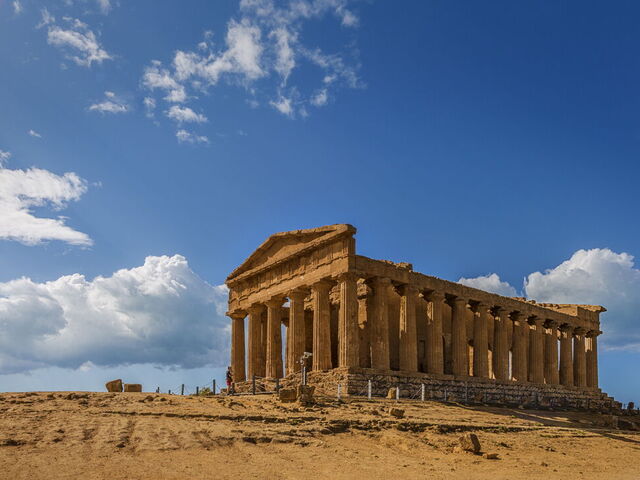
Here amid the stark nature and crystal-clear waters of Sicily, the Italian island famous for its rich cultural and historical heritage, there is a place that takes visitors’ breath away. It is the magnificent Valley of the Temples in Agrigento, an open-air archeology museum that was designated a UNESCO World Heritage Site in 1998. The 1300-hectare archeological area is a souvenir of the ancient hilltop city of Akragas, the center of the future Agrigento. The city flourished in the 5th century BC and was a Greek colony, as can be seen by the style of its art and architecture.
The Valley of the Temples includes some of the most important examples of classical Greek art and culture and the ruins tell us history from thousands of years ago. The city of Akragas went through many vicissitudes and was constantly in foreigners’ sights because of its important strategic location on the Mediterranean sea. It was conquered by the Carthaginians in 410 BC, who razed it to the ground; then by the Romans a few centuries later, who gave new splendor to the city, naming it Agrigentum.
Together let’s discover the most important sights to visit at the Valley of the Temples.
The archeological area of the Valley of the Temples has a total of 8 temples, some of which are very well preserved.
1. Temple of the Dioscuri
Also called the Temple of Castor and Pollux. The temple actually lies in the Sanctuary of the Chthonic Deities and was therefore probably erected in honor of the gods of the Earth (Demeter, Persephone, Dionysus) and not Castor and Pollux.
2. Temple of Zeus
Once one of the largest temples in the world, comparable to the famous Parthenon in Athens. It was as big as a soccer field and could hold up to about 42,000 people. Now only the base of this magnificent temple remains, but there is a reconstruction model in the Agrigento Museum of Archeology that gives an idea of how its architecture would have been.
3. Temple of Heracles
Or Temple of Hercules, the the main cult in ancient Akragas. This is one of the oldest temples of the valley, and was destroyed by an earthquake. Today we can see only eight of the original columns.
4. Temple of Concordia
It is the best-preserved temple and the symbol of the Valley of the Temples, built in 480 BC to honor Zeus. One of a kind, it remained intact because it was converted to a Christian church in the 6th century AD. Special to the temple were the telamons: stone giants representing Atlas, almost eight meters tall that held up to the temple roof, figuratively the sky. At the valley there is a copy of a telamon, while the only original, the Telamon of Olympian Zeus, along with the remains of three others, are housed at the Agrigento Museum of Archeology.
5. Temple of Juno
Or of Hera Lacinia, where weddings were celebrated. Architecturally similar to the Temple of Concordia, the base and columns have remained intact. The temple was about 20 meters tall and surrounded by 34 columns. It was constructed in about 450 BC and was destroyed by the Carthaginians when they took control of the city.
The other three, less famous temples not to be overlooked are:
6. The Temple of Vulcan
7. The Temple of Demeter
8. The Temple of Asclepius (God of Medicine) which accommodated sick people.
There are various other areas in the Valley of the Temples to look out for as you move among the temples:
- Necropolis: stretches along the road to Temple of the Concordia, and its characteristic catacombs are still well-preserved.
- The Agora areas, which span many terraces and were the center of public life, where you can glimpse the Bouleuterion (the “Town Hall”) and the Oratory of Phalaris.
- The Kolymbetra Garden, lush with plants and citrus trees, managed by the FAI, the National Trust of Italy.
True history and archeology lovers won’t want to miss out on the Museum of Archeology, which houses excellently-preserved amphoras, mosaics and statues found in the Valley of the Temples and surrounding areas. You can also visit the Valley of the Temples at night, an unforgettable experience! Especially in the summer, it can also be a more comfortable time to visit. The best time to arrive is about 6:30 pm, so you can enjoy the splendid sunset over the temples.
Now is the time to book your trip to Agrigento’s Valley of the Temples! This important archeological site can be reached from our splendid holiday villas in Sicily, such as Villa Agorà, Villa Camemi and Villa Dimora Pura
Read More
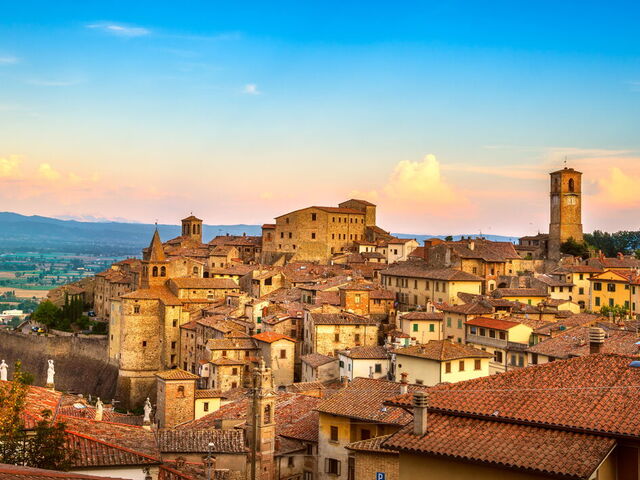
Arezzo is one of the most beautiful cities in Tuscany, but it's often unfairly undervalued compared to its sisters Florence, Pisa and Siena. We are talking aboutArezzo, a a real gem located on the hills in Tuscany. The city contains all the cultural, artistic and gastronomic characteristics of the entire Region and can offer its visitors peace and tranquility, as it is much less crowded and more intimate. The artistic heritage of Arezzo is vast, but confined within the walls of its city. Among its ups and downs, among its lanes and squares, you will be entranced by the beauty of Arezzo.
View on Arezzo
Let's find out the 10 must-see attractions in Arezzo!
THE SAINT FRANCIS BASILICA The Saint Francis Basilica, built in the XIV century, is famous particularly for the Storia della Vera Croce, a cycle of frescoes byPiero della Francesca which tells the story of the wooden branch which later became the material for the Cross of Christ. The basilica is known for being the second Franciscan basilica in the city: the first, in fact, was built outside the walls of Arezzo and destroyed for defensive reasons. Recently restored, this beautiful church will leave you breathless!
SAINT FRANCIS' SQUARE In front of the namesake Basilica, there is one beautiful square that is a renowed meeting place for the citizens of the city. The square hosts a historical caffe, opened in the 1809, called Caffè dei Costanti. Since it resisted for more than two centuries in the Sain Francis' Square, this catering activity became a real monument in Arezzo.
THE FORTEZZA MEDICEA (Medieval Fortress)
The Fortezza Medicea
Built in the 16th century by order of Cosimo II de Medici, the Medici Fortress represents an ancient example of military defense architecture. It was built on the hill of San Donato, taking its shape: the perimeter, in fact, is irregular and is delimited by five bastions from which the military could observe the arrival of any attacks. From here, however, you can also admire a splendid landscape, which includes the city of Arezzo, its surrounding rolling hills, the Arno valley and Pratomagno. Since the nineteenth century the Fortress has housed a beautiful garden, site of the numerous cultural events of the city, first of all the Antiques Fair when its square Grande is occupied by the Giostra del Saracino (see point 6).
THE SAINT PETER AND SAINT DONATO CATHEDRAL
The Duomo of Arezzo
Built between 1278 and 1511, the Cathedral of Santi Pietro e Donati is a wonderful example of Gothic art. Its construction, which took two centuries, was troubled by the historical and war events of the city and was therefore completed several times over the course of history. Its bell tower also has a special history: it was rebuilt three times! The first risked ruining the windows due to its extreme proximity to the church and was replaced with the second, then demolished for an aquifer that undermined its stability, replacing it with the one we see today. The Duomo features various materials inserted in different eras, making it even more special and authentic. In addition, the sixteenth-century front staircase enhances it by raising it in all its beauty.
THE AMPHITHEATER
Near the station you can find the ancient Roman Amphitheater, probably built between the 1st and 2nd century AD to carry out the activities of the games, but also to celebrate the various festivities at inside, being able to contain more than 10000 people inside. Visiting the Archaeological Museum of Arezzo you will better understand the events that go from the construction to the demolition of the Amphitheater and you can also admire a splendid collection of Etruscan and Roman ceramics and glass objects there found.
The Amphitheater has suffered many looting and damage, so what remains now are the two entrances, the arches and the elliptical shape. It is now used during the summer for the representation of plays and concerts.
THE PIAZZA GRANDE
The Piazza Grande in Arezzo
Place of historical, cultural and folkloristic interest, you cannot fail to stumble upon Piazza Grande during your visit to Arezzo. This square is the real heart of the city and is surrounded on one side by splendid arcades , designed by the renowned artist Vasari, and on the other by historical palaces such as the Pieve di Santa Maria (see point 8) and the Palazzo della Fraternità dei Laici . Under the arcades, bars, clubs and restaurants enjoy its magnificent view. The square was built downhill, with a drop of at least 10 meters to collect rainwater and is home to the famous Antiques Fair (held every first weekend of the month) and the Giostra del Saracino, a typical city game of Arezzo which is held twice every year: the penultimate Saturday of June (Giostra di San Donato) at night and the first Sunday of September (September carousel) by day.
Curiosity: this square is also the location of La vita è bella by Roberto Beningni (1997), in which it is seen going down several times to its descent! The film was awarded the Oscar for the best foreign film, also managing to give visibility to the city.
THE CLOCK TOWER
Piazza Grande is not only Palaces and Games: here, in fact, there is also the very famous Clock Tower, which rises from the Palazzo della Fraternità dei Laici. It is the only astronomical clock in Italy and one of the very rare in Europe. Its uniqueness and beauty are therefore internationally recognized. The Tower can be visited and you can thus discover all secrets about its functioning and the procedures used in the past to rearrange it. In addition, the Tower houses a terrace from which you can enjoy a splendid panoramic view over the whole city.
SANTA MARIA DELLA PIEVE
Santa Maria della Pieve
Piazza Grande is a true triumph of magnificent and scenographic architectures, among which it is worth mentioning the church dedicated to Santa Maria della Pieve. Built around the year 1000, it is one of the most important examples of Romanic architecture in the entire Tuscany region. Its external walls are characterized by a series of columns that cover them almost entirely and each column has a capital different from the other: this makes Santa Maria della Pieve a work admirable for hours, if he lingered carefully on every detail. The interior, on the other hand, is particularly sober. The apse of the church overlooks the Piazza Grande and contributes to making this site even more attractive and fascinating.
THE VASARI MUSEUM
Since Vasari gave a great contribution to the city and to the whole of Tuscany, his house, which he bought in 1511, has now become a museum. This place houses works, sketches and writings by the renowned artist from Arezzo. In addition to his works, it is interesting to dwell on the walls of the house: the frescoes that dominate them are not only work of Vasari, but also of his numerous pupils who attended the house to learn the techniques and secrets of a formidable artist.
AREZZO'S CUISINE
A “Tagliere (Platter)”
Arezzo is surrounded by hills and mountains, by fertile lands and skilled workers, who have been able to exploit all the products of the land to build their own culinary identity. To end the city tour in the best possible way, you just have to try its cuisine! The gastronomy of the city of Arezzo is homemade, but we know that the most authentic flavors are also the tastiest. We advise you to order platters of Casentino cold cuts and cheeses, to be enjoyed together with excellent local honey. Do not miss the Arezzo's acquacotta, the pappardelle with meat sauce, the gnocchi with ricotta and spinach, the pici with various toppings. Its main courses are mastered by Chianina, the Tuscan cut of meat par excellence. The typical dessert of Arezzo, on the other hand, is Gattò Aretino, a log of sponge cake dipped in chocolate and alchermes.
What are you waiting for? Arezzo is definitely a city to visit in every season! This beautiful city can be easily reached from our
holiday villas, like Villa Casentino, Villa Capolona and Santa Flora.
Read More
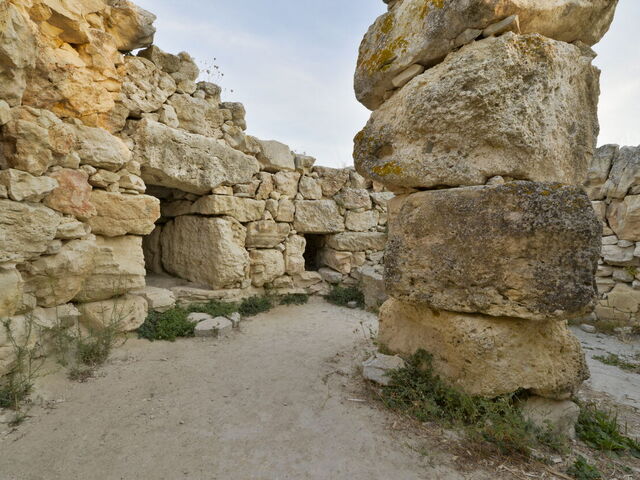
Menorca: an earthly paradise that emerges from the Mediterranean Sea. Often underestimated, this island belonging to the Balearic archipelago has nothing to envy to its sisters Ibiza and Mallorca. Indeed, Menorca has wonderful treasures to offer that you probably don't know about!
In addition to its wonderful coves, splendid beaches and unforgettable sunsets, Menorca embodies all those characteristics that make it a perfect holiday destination, especially in case you dream a stay dedicated to peace and simplicity.
To discover all the curiosities about the island of Menorca, keep reading our article and start planning your holiday on this beautiful island in the Mediterranean Sea.
THE TALAIOTIC CULTURE
Originating between the Bronze Age and the Iron Age, the culture of the Talayot civilization is the distinctive sign of the Balearic Islands, especially Menorca, which with its particular architectural constructions knows how to amaze the most curious visitors and tourists. Typical of the Talayotic culture are the navetas, talayots, taulas and necropolis, with their characteristic circular stone structure. In the Talayotic civilization can be identified various social stratifications, with differentiations of rank that allowed or not access to common resources. Furthermore, it seems that the Balearics were related to the Balari, a nuragic people inhabiting the North-West Coast of Sardinia: the affinities, as well as being architectural, are also linguistic.
POC A POC LIFESTYLE
If you say Menorca, you say relax. In fact, the inhabitants of Menorca are recognized and appreciated by visitors for their affable character, calm and hospitality. Their motto is to live a life "poc a poc": slowly, away from the hustle and bustle, in order to enjoy the present moment to the fullest. Their coffee breaks at the bar can last for hours, as can their lunches. They prefer to go to the sea around sunset or rest under the pine forests near the beaches. In the morning they have the custom of going fishing and on weekends they are great lovers of equestrian competitions. A further sign of the poc a poc lifestyle are the numerous footpaths that cross and surround the island.
THE 7 LIGHTHOUSES OF THE ISLAND
Among the beauties that the island of Menorca offers there are also its magnificent lighthouses, located in different areas of the island, three of which in Ciutadella. Until recently, these were inhabited by families who kept them and took care of them, while now that they are uninhabited they can be visited safely. From each lighthouse it is possible to admire a splendid and unique panoramic view of the surrounding nature, especially the Cavalleria Lighthouse is the perfect spot to appreciate breathtaking sunsets! The other other lighthouses on the island are Favàritx Lighthouse, Punta Nati Lighthouse, Aire Island Lighthouse, Isla del Viento Lighthouse, Cap d'Artrutx Lighthouse, Sa Farola Lighthouse.
THE WRECKERS
The island, especially near its Northern Coast, has been the site of numerous shipwrecks throughout history. These tragic events are told of events since 1475, but the most famous shipwreck that occurred on the jagged coasts of Menorca is certainly that of the French ocean liner General Chanzy, dating back to 1910 in Cabo Bajolì, where the Punta Nati Lighthouse was later built. This tragic event gave its name to the inlet where the boat sank, since then called Cales Morts (The Dead's Bay).
STELLAR RESERVE
Not just a destination for inveterate vacationers, nature lovers and adventurers. Menorca is also the perfect location for those who practice astrotourism! Thanks to its very low level of light pollution and the particularly pure air of the island, Menorca was named Stellar Reserve in 2019, thus confirming itself as one of the places best suited on the planet to observe the stellar vault in all its splendor. For this occasion, specific areas of the island have been identified and special hotels and structures have been set up in order to fully appreciate the night sky.
What are you waiting for to plan your holiday on the Island of Menorca? For a dream stay, we recommend that you book one of our villas in Menorca!
Read More
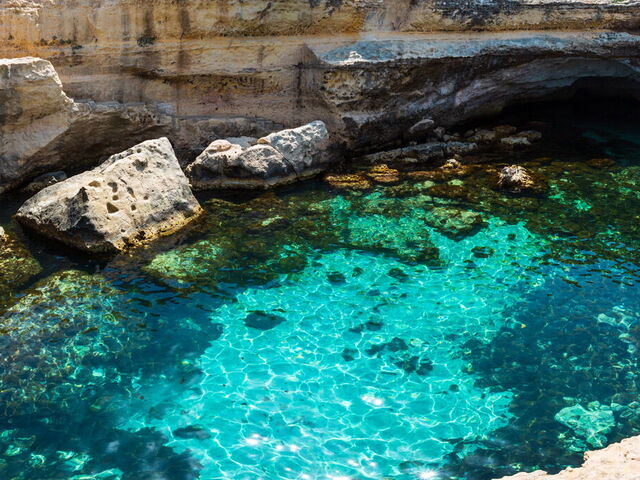
Salento: place of historical and cultural heritages, of centenary culinary traditions and above all of natural beauties, among which marvellous beaches and crystal clear water bays. In this area of the Heel of Italy, you get lost in breathtaking and scenic landscapes and in Roca Vecchia, between the coastal locations of San Foca and Torre dell'Orso, there is one of the most suggestive and visited attractions all over Apulia. The so-called "Salento Pearl" is the renowned Poetry Cave: a natural pool at 30 metres from the seaside.
Its popularity is due to popular legends and historical testimonials which animate it. As its name suggests, this natural pool was previously a cave: it was therefore covered by rock that has been eroded over time and collapsed by rain, sea and karst phenomena. The term posìa, deriving from Greek, names a place where you can find fresh water to drink, a source now extinct. However, the beauty of the Cave, with its emerald water and its white rocks, is also linked to a special legend: it is told that a charming princess used to swim in its water and that poets and singers, enchanted by the girl, would write poems and songs in her honor. It is obviously an invented history to justify the name of the cave, but the human presence in this historical site is proved by testimonials left here, such as Messapian inscriptions (but also Greeks and Latins) discovered on the walls in God Taotor honor. A few metres from here you could also admire remains of city walls, ruins of a sixteenth-century watchtower and of a manor overlooking the sea and the sanctuary of the Madonna di Roca, dating back to the seventeenth century.
It should be remembered and underlined that since last year there is a bathing ban in force, as the cliffs surrounding the Poetry Cave are increasingly fragile, but access to the archaeological area of Roca Vecchia is in any case possible from 9 to 19 by paying a ticket that allows you to visit the area and participate in events and workshops.
There is certainly no shortage of beautiful beaches in the surroundings where you can bathe and swim in equally beautiful waters, like Torre dell'Orso.
The Potery Cave can be easily reached from our villas in Puglia , like Trullo Pascarosa and Lamia Santo Arcangelo
Read More