
Our Blog: Travel Tips
Planning a trip to Italy? Browse and read our useful and informative articles about the endless range of attractions and experiences in this lovely country.
Travel through the beauties of Italy with us. Visit our blog!

January 30, 2020
Sant'Antimo Abbey, a Magical Place to Visit in Montalcino
As well as stunning landscapes and natural wonders, the surroundings of Montalcino present one of the best examples of Romanesque architecture in Italy. The Abbey of Sant’Antimo is a wonderful church immersed in the beauty of the Tuscan countryside, not far from some of its best-known villages. The building is located on top of a hill in Val d'Orcia and it's surrounded by vineyards, olive trees, groups of cypresses, scattered farmhouses and other countless wonders that always amaze first-time visitors.
Want to know more about this tourist attraction? Discover more about Montalcino and the amazing Abbey of Sant'Antimo to plan your perfect tour in Tuscany!
As we already said, the abbey of Sant'Antimo is located a stone's throw from the center of Montalcino. This town standing on a green hill is surrounded by numerous Sangiovese vineyards, which are used to produce excellent red wines such as Brunello, Rosso and Sant’Antimo.
Entering this church is like taking a journey through time and returning to the Middle Ages. It was built during the Carolingian period in the IX century. According to a legend, Charlemagne stopped in this valley on his return from Rome, because his army had been hit by the plague. An angel appeared to the king in a dream, telling him to make soldiers drink an infusion made with a local herb. Thanks to this brew, all the soldiers recovered and Charlemagne decided to build a chapel as a sign of thanks. The so-called Carolingian Chapel stood in place of the current abbey: today, thanks to recent restoration works, you can still see the splendor of the original construction.
The abbey is built with a spectacular material that gives it a unique shine, which is travertine with alabaster veins. The bell tower is in Lombard Romanesque style, while the interior of the abbey has beautiful pillars with decorated capitals. There is also a 9th century portal called "Portale dei Battezzanti", a painting of Madonna and Child Enthroned dating back to 1260 and a polychrome wooden crucifix from the second half of the 12th century. Well, as you can see, this abbey is a treasure trove of beauties to discover!
Don't forget to go to the Monastic pharmacy in the Treasure Hall , where you can find traditional herbal products such as honey, jams, herbal teas and many other products! You can also buy Amaro di Sant’Antimo , a typical liqueur made with the essence of a local variety of grass called "Carlina". Another thing worth seeing is the vegetable garden of Santa Ildegarda, a mystical place with a thousand colors and a profound sacred meaning.
Surely, one of the best ways to experience the abbey is to get involved by its magical atmosphere. Concerts, Gregorian singing courses, medieval miniature courses and various workshops are organized in the abbey and you can easily take part to them. The special environment will make these experiences unforgettable!
Are you ready to go? Book one of our rental properties in Montalcino, like Villa Montalcino and start planning your visit!
© Alice Pilastri
Read More

A visit to the island of Corfu needs to start from its most beautiful city! As well as having stunning beaches, crystal clear waters and a unique nature, this Greek island also hides a treasure of architectural and artistic wonders. Among these, Corfu Town is certainly one of the top places to visit if you like to discover the beauty found between the lovely streets of a typical Greek center!
Want to know more about it? Keep reading and check out the best things to see and do in Corfu Town to plan your perfect tour!
This ancient city was declared a World Heritage Site by UNESCO in 2007. It really deserves to be included in the list of the paradises on earth: Corfu Town still shows traces of Byzantine and Venetian art in many of its buildings and it's something special to see. Actually, this is the only island in Greece that didn't go under the Ottoman influence, so it still presents the heritage of a long Venetian domination.
The most interesting neighborhood is Campiello and it looks like a labyrinth of alleys (called "kantounia") surrounded by tall buildings. You can continue your tour crossing Via Filelinnon, a road located between the districts of Campiello and Spilia that presents a 15th century building and a romantic balcony looking like that of Romeo and Juliet. Then, walk until you reach "Spianada Square", whose name refers to the total lack of buildings overlooking it, because in the past it was needed to fire with the Fortress cannons. The square presents many monuments recalling illustrious Corfiot characters, as well as beautiful palaces dating back to various past dominations. One of these is called Liston Palace and it has been built during the French domination: its design was inspired by the buildings of Rue de Rivoli, it presents a long portico full of restaurants and cafes and it has also become the center of Corfiot social life. Another nice palace is the British Palace of Saints Michael and George, also called the Royal Palace. Today, it hosts the civic Art Gallery and the Asian Art Museum, which includes some important Chinese, Japanese and Central Asian works. If you'd like to visit another good art collection, don't miss Antivouniotissa Museum, as it houses important icons coming from various historical eras.
Religion is an important part of Greek tradition: in fact, the historical center hosts twenty churches! The most famous religious monument on the island is Church of Saint Spiridone, a building built in 1590 presenting a stunning golden ceiling and the tallest bell tower of the city. According to a story, this Saint has made four miracles to save the Corfiot population, so every year the inhabitants celebrate him with some suggestive processions.
After a walk in the city alleys, don't miss a visit to the ancient Fortress! This is the first thing you see when you arrive by sea and the panoramic view from its terraces is unique. The ancient and the new Fortress are the two fortified citadels that dominate the city and they had functions of sighting and defense. The entrance to the ancient castle is located right in front of the Liston, while the new one rises above the old port.
At the end of your cultural tour, have some shopping in Corfu town! Don't forget to buy the typical Kumquat liqueur, as well as some typical olive wood objects, gold jewelry or local textiles. These are perfect gifts for your friends and family!
Every period of the year is right to visit the oldest town of Corfu! In summer's coolest days, you can enjoy getting lost in the narrow streets trying to spot century-old monuments and churches between the countless shops. However, in winter you can visit it with fewer tourists, admiring the unique alternations of cultures and appreciating its enormous attractive power.
Ready to book your holiday in Corfu? Check out our selection of properties on the island, like Beach Villa Blue and book your favorite one!
© Alice Pilastri
Read More
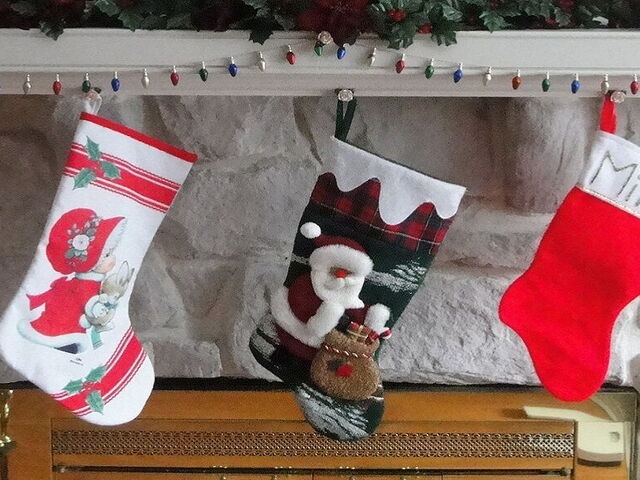
The word Epiphany literally means "revelation" and refers to the appearance of Christ to men through the Three Kings. So why do Italian children wait for the Befana to bring them chocolate and sweets on January 6th? What does an old lady who rides a broom mean?
Discover more about the history of Befana and all the unmissable events taking place around Italy to celebrate Epiphany!
According to a legend, the Three Wise Men on their way to Jesus's birthplace asked for information to an old woman, because they could not find the right path. To thank her for her help, they insisted to make her join their road, but she declined their invitation. However, the old woman soon repented bitterly of her decision and she quickly prepared a basket of sweets to bring to the newborn child. She went out to look for the three Men, but it was too late and she couldn't find them. So, she started knocking on the door of every house she found in search of Jesus, leaving sweets to every child she met hoping that he was Baby Jesus in person. And after more than two thousand years, that's what she's still doing!
On January 6th of each year, children sing a famous refrain waiting to receive sweets and other delights. The translation is: "The Befana comes at night with her shoes all broken, with the patches on her skirt: viva, viva the Befana!". This is how this old woman is represented by all kids. On the night between 5 and 6 January, she descends from the fireplace to fill the empty hanging socks left by children. The good ones will receive gifts and sweets, while the naughty will find some awful coal!
Each Italian region celebrates the Befana in a special way, organizing markets, traditional festivals and some typical auspicious stakes, as it represents that the past year is "burned" to make room to the new one.
In Tuscany, in the province of Grosseto, there is a group of boys called "befani", who accompany the old woman through the streets of the city singing some songs. In Florence, the so-called "Cavalcade of the Three Kings" is organized every year: this is a procession consisting of about 700 figures leaving from Piazza Pitti, crossing the entire historic center and arriving at the Baptistery, simulating the journey of the Wise Men to Bethlehem. Moving to Lucca and its surroundings, we suggest taking part to the Befana celebration in Barga, where Epiphany is deeply felt: the children disguised as a Befana move from house to house singing songs and finally gather around a bonfire forming a large circle. In the locality of Pegnana, there is also a small Befana house that can be visited at any time of the year.
In Liguria the Befana comes from the sea making every child very joyful, while the most famous Epiphany market in Lazio is located in Rome in Piazza Navona, where a Befana in person comes to greet the children among stalls full of sweets. The streets of Naples, on the other hand, are full of markets where you can buy sweets for stockings, especially in Piazza Mercato.
What do you eat on this special occasion? Tuscan tradition includes Cavallucci of Siena, which are soft biscuits made with water, sugar, honey, candied fruit, anise, nuts and yeast, as well as "Befanini", which are cookies coming from the Lucca area made with rhum and citrus fruits.
In Liguria, people prepare the "anicini" biscuits, usually eaten with a glass of sweet wine, and the donut of the Three Wise Men , a dessert covered with raisins, candied fruit and sugar. In the south of Italy, precisely in Campania, people prepare the first pastiera of the year and some delicious struffoli, which are small balls of sweet fried dough, dipped in honey and decorated with candied fruit and sugared almonds.
© Alice Pilastri
Read More
January 3, 2020
Gubbio, the City with the Largest Christmas Tree in the World
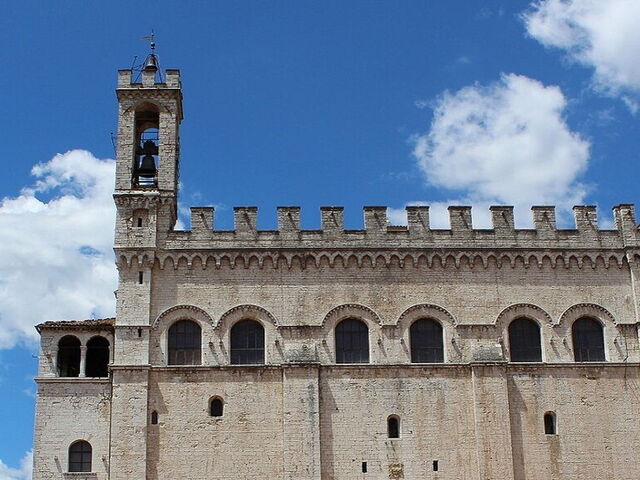
Christmas time trasforms some places into a small paradise on Earth. Thanks to the countless initiatives organized in these centres and to the beautiful decorations, some Italian towns adquire a special aspect that make them even more beautiful. One of the cities that turns into a small Santa Claus village is Gubbio, one of Umbria's best cities to visit.
Would you like to discover why? Keep reading!
What has made Gubbio an excellent winter destination is the incredible Christmas tree decorated on the slopes of Mount Ingino at the beginning of December. On the side of the mountain, the shape of a magnificent tree appears in a fewdays, thanks to the effort and involvement of all Gubbio's inhabitants. The tree is 650 meters long, it has a base of 350 meters, it is illuminated by hundreds of multicolored lights and by a lovely comet star with a surface of 1000 square meters put on its top. Its whole area covers the distance between the city walls and the basilica of the patron Saint of Gubbio, called Sant’Ubaldo, which is located right on top of the mountain.
The making of this tree is a tradition taking place every year since 1991. This unique work of art has entered the Guinness Book of Records, because it is actually the largest Christmas tree in the world! Usually, it lights up from sunset until late at night, during the period from early December to Epiphany. However, the most romantic ones can also adopt one of the lights and dedicate it to someone they love! This will keep the light on 24 hours a day, for the entire Christmas period.
However, there is much more to see in Gubbio! In Piazza 40 Martiri you can find the Tyrolean-style Christmas market , a charming place attracting the young and old with its large variety of handicrafts and typical gastronomic specialties. If you wish to visit the city in an original way, you can also use the majestic Santa's sleigh or the Gubbio Express Christmas train with your family, as they will surely guarantee fun to all your children! Finally, do not miss the large Ferris wheel of the North Pole, a tourist attraction that makes you admire the whole village and its imposing Christmas tree from above. Another way to see it is by climbing the "Colle Eletto" funicular, which connects the city center with the basilica located on the top of the mountain.
The whole city center is decorated with splendid decorations In San Martino district there is a life-size nativity scene with more than one hundred statues, while in San Pietro district people organize a living nativity scene, staging ancient crafts and the everyday activites of Medieval life. Also, Christmas lights give a unique atmosphere to places like San Pietro and San Giovanni squares, which always light up with suggestive colored lights.
What are you waiting for? Start organizing your trip to Gubbio and plan your visit! Take a look at our selection of villas for rent in Umbria, like Villa Gubbio or Villa Contessaand book your favorite one!
© Alice Pilastri
Read More
December 19, 2019
What to See in Pisa in a Day: 5 Unmissable Places for Your Tour
The name of Pisa has always been linked to the famous Leaning Tower, but the architectural beauty does not end there.
Discover the best attractions of the city and the things to see at all costs during a short and magnificent tour!
1. Piazza dei Miracoli
Your tour should absolutely start from Piazza dei Miracoli, a wonderful sqaure that owes its name to a novel by Gabriele D'Annunzio where the square is called "Prato dei Miracoli". Its surface is partly paved, while the rest is covered by a green lawn that also surrounds some of the greatest architectural masterpieces of all time.
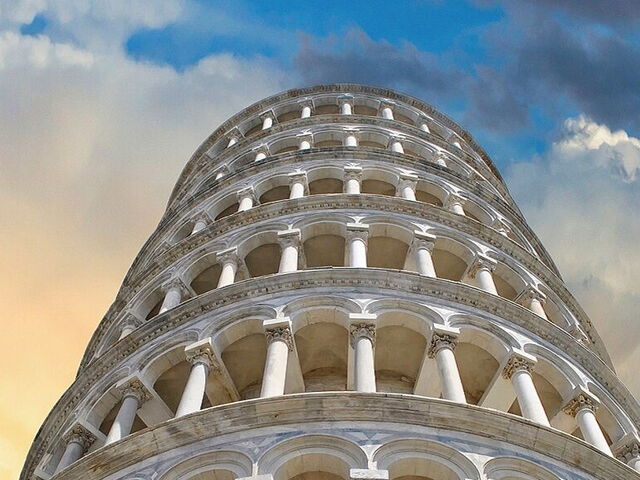
The most important monument is the Leaning Tower, the symbol of the city of Pisa in the world. It was built in 1163 on a sandy bottom that did not hold the weight of the structure, so it immediately began to tilt. Likely, its designer was Diotisalvi, who also built another building in the Piazza. This is the gigantic Baptistery, which contains some splendid statues and an invaluable pulpit made by Nicola Pisano. Even this building had a difficult history: due to lack of money, the dome was made with different materials than the rest of the complex! The other great monument of Piazza dei Miracoli is the Cathedral of Santa Maria Maggiore, a Pisan Romanesque church dating back to the end of the 11th century. The facade has four orders of loggias, while the interior is divided into five naves. Among the most beautiful works located inside, it is necessary to mention the mosaic by Cimabue, the pulpit by Giovanni Pisano and the reproduction of the chandelier that inspired Galileo Galilei's theory of isochronism. Finally, you have to visit the last wonder of the square, called Camposanto Monumentale. In this sacred place, the Crusaders brought the land of Golgotha in ancient times. Nowadays, it hosts the burials of some illustrious Pisan personnalities and important works of art dating back to the Etruscan, Medieval or Roman periods.
If you have little time available and you can't get into all these buildings, don't worry: a simple walk around the Piazza is enough to admire its beauty and to take some amazing photos in front of the Tower!
2. Piazza dei Cavalieri
The name of this elegant square is given by the headquarters of the Knights of Santo Stefano located inside it. All the palaces overlooking the square conserve a unique charm, and these are the Rectory, the "Palazzo del Consiglio dei Dodici", the Church of Santo Stefano (built by Vasari) and that of San Rocco. The most famous palaces are certainly Palazzo Carovana, a splendid Renaissance building housing the exclusive "Scuola Normale Superiore", and Torre della Fame inside Palazzo dell'Orologio, which is the place where Count Ugolino della Gherardesca and his children died in 1289 according to Dante's story in the "Divine Comedy". The beauty of the square is enhanced by one last detail, namely the statue of Cosimo I de 'Medici in the role of Grand Master of the order of the Knights.
By day, Piazza dei Cavalieri is certainly the perfect place to take some photos and appreciate the beauty of the buildings, but at night it becomes one of the main places of Pisa's nightlife: don't miss it!
3. The historic center
The old town centre is not very large, so a few hours will be enough to see everything! Borgo Stretto is the best-known street, distinguished by the lovely arcades and Renaissance palaces. It also features Casino dei Nobili, a place where 18th century nobles went to have fun organizing parties, conversations and gambling. Instead, passing through Via delle Colonne you can reach Piazza delle Vettovaglie, an ancient food market that transforms into a lively location on Friday and Saturday nights. Admire the beauty of the center, taste some Pisan specialties in one of the restaurants and enjoy some shopping in the countless shops: you'll surely enjoy the best of this wonderful town!
4. Lungarno
One of the most beautiful areas of the city is definitely the Lungarno, the perfect place to take a walk or admire the view from a bridge. The so-called "Lungarno Mediceo" houses some important palaces such as Palazzo Toscanelli, Palazzo dei Medici or the Church of San Matteo in Soarta, while "Lungarno Gambacorti" presents the beautiful Church of Santa Maria della Spina, an architectural jewel of Gothic art that owes its name to the relic of a thorn from the crown of Christ.
5. Museum of Ancient Ships / Murals "Tuttomondo"
Do you love art and want to visit a nice museum? If you are interested in archeology, you cannot miss the "Museum of Ancient Ships" inside Medici Arsenals! These beautiful ancient ships were discovered in 1998 during some railway works, which brought to light about thirty Roman ships, their commercial loads and a series of priceless testimonies. If you prefer modern art, instead, don't forget to go to the Convent of the Servant Friars of Mary inside the Church of Sant'Antonio: you will be fascinated by the "Tuttomondo" mural created by Keith Haring!
Are you ready to start your amazing tour of Pisa?
Discover our selection of villas in Pisa and surroundings and start organizing your dream vacation !
© Alice Pilastri
Read More

Choosing Tuscany as your New Year's Eve destination is an excellent idea! Whether you are a group of friends, a young couple or a family with children, spending the last day of the year in this region guarantees fun and unforgettable moments to all.
There are hundreds of different ways to celebrate New Year's Eve in Tuscany: what's your favorite one? Find the one that best satisfies you and make your wishes come true!
All the most beautiful arts towns in Tuscany offer the opportunity to celebrate 2020 taking part to special open-air events. The main squares of cities like Lucca, Siena or Pisa organize concerts and festivals, surrounding visitors by frames of unique beauty . Along the streets of Florence, shows, entertainment and concerts offering various music genres are held all night long to entertain people. In addition to walking among the illuminated monuments, don't miss a visit to Piazzale Michelangelo, Piazza della Signoria or the Oltrarno, which all offer some wonderful atmospheres!
The city of Siena also offers some great events in the heart of the city, called Piazza del Campo. Open air performances, small concerts and an unmissable "silent party" are some of the fantastic events organized every year, as the city of Palio always manages to amaze its visitors!
Moving along the coast, Versilia is the location of incredible celebrations in its famous discoclubs and on its "Lungomare" promenade. In fact, Viareggio is not just a famous seaside resort, but also an exclusive winter destination with an enviable nightlife. While the youngest are attracted by its liveliness, families can enjoy other beautiful attractions such as the seafront promenade with cafes, fashion store and excellent restaurants. If you'd like to spend a day having shopping, you can also go to Forte dei Marmi, that offers countless luxury places to spend the most spectacular night of the year!
And how about going to the mountains instead? The beautiful snowy peaks of Abetone, Monte Amiata or Lunigiana are perfect if you'd like to enjoy some downhill skiing or a rich dinner in a high mountain refuge!
Instead, lovers of tranquility can spend a wonderful New Year's Eve in a lovely countryside village. Their countless facilities and delicious local restaurants will allow you to celebrate it in the best way! In addition to the famous region of Chianti, the areas of Val d'Orcia and Maremma also have nice towns where couples can organize a short romantic getaway, surrounded by landscapes of rare beauty.
And finally, don't forget to consider a New Year's Eve in a SPA! For a relaxing December 31 away from the chaos, we suggest you go to wel--known destinations like Montecatini Terme , in Rapolano, Chianciano or Saturnia. It's definitely a great idea to start the year putting well-being in the first place!
So whether you travel alone or in company, whether you prefer to have fun or rest, Tuscany is certainly the ideal destination to spend your New Year's Eve.
Have you booked a holiday home for December 31st? Discover our selection of villas for rent in Tuscany and choose the one that suits you best to spend an unforgettable New Year!
© Alice Pilastri
Read More
If you are visiting Sicily and the area of Trapani, you cannot miss going to the medieval village of Erice! This quaint town is perched on a mountain 750 meters high and dominates a truly breathtaking panorama. Together, the Gulf of Trapani, the famous salt pans, Egadi islands and the typical Valderice countryside create a wonderful landscape that leaves every visitor speechless.
There are many things that deserve to be seen in the center of Erice... are you sure you know them all? Discover the best attractions and places to visit during a wonderful tour and start organizing your trip!
The history of the village sinks into an ancient and controversial legend. In fact, it sometimes associates the founding of the city with Enea, then with Eraclea or Erice, and scholars are still trying to reconstruct its past. However, what is certain is that Erice was known because of a famous temple where the Phoenicians worshiped Astarte, the equivalent of the Greek goddess Aphrodite and the Roman goddess named Venus.
The best way to visit Erice is certainly walking through its narrow, paved streets. Passing among the small houses, the courtyards and the balconies of the historic center you will dip into a unique atmosphere that will stun you with its fantastic colors and scents!
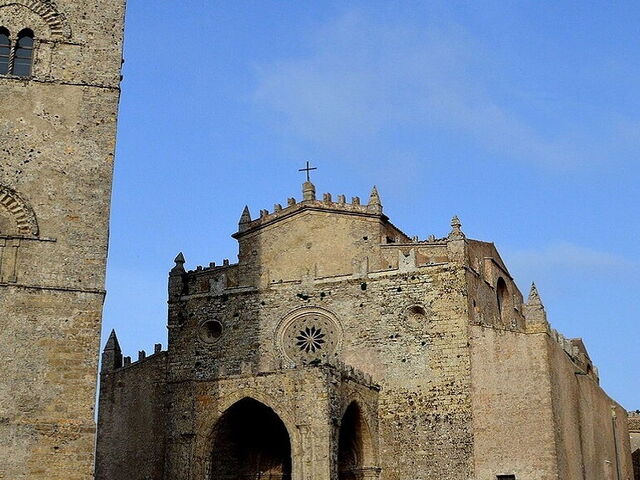
The imposing City Walls that surround the old town date back to the 8th-6th century BC and are made with large limestone blocks. The best preserved section is the one located between Porta Carmine and Porta Spada. However, to enter the town we recommend crossing Porta Trapani: this door puts you in front of the marvellous Duomo and the effect is simply amazing! The city's cathedral is a fortress-church dating back to the 14th century with a tall bell tower. Although the beauty of this building is unique, the most famous palace in Erice is Castello di Venere, a fortress of Norman origin built on the remains of the temple dedicated to the goddess Venus. It is from this high cliff that you can admire a breathtaking view over the entire gulf, especially at sunset! Moreover, if you are lucky and the air is quite clear, you will even be able to see Pantelleria Island and the distant coasts of Tunisia. Not far from the castle, you will also find Villa Comunale Balio, a famous villa with splendid gardens, and other Norman watch towers that were restored by Count Pepoli. Among these, there is the wonderful Torretta Pepoli, a corner of study and meditation immersed in vegetation.
On another spur of rock located between the churches of Sant'Orsola and Sant'Antonio, you will find instead the unique Spanish Quarter, an imposing 18th century building that housed a garrison of Spanish soldiers but which has never been completed. It also offers an incredible view!
After walking around the center and climbing Mount Erice, you cannot miss a sample of some local delicacies! Don't miss to try the well-known Erices' patisserie, which offers sweets in almond paste and exquisite artisanal "cassate". Of course, a sweet shop you should visit is that of "Maria Grammatico", a city's symbol that offers all kinds of desserts! On the other hand, if you love shopping we advise you to go into some pottery or carpet shops. In Erice, carpets are called "trappite" and they are made by weaving the threads with recycled fabrics.
Do you still need to book your stay in Erice? Have a look at Villa Erice, Villa Bellini or Villa Salinella and start planning your amazing trip!
© Alice Pilastri
Read More
November 9, 2019
7 Stunning Churches to See and Visit in Florence
Is there a city as beautiful as Florence? The "birthplace of Renaissance" is a treasure trove of beauties and things to see are
endless. Among these, there are certainly many churches and cathedrals that deserve to be visited at least once in your lifetime. But how can you see them all in a few days? How can you choose the best ones to visit during your short stay?
We have selected the 7 most beautiful churches in the city to help you organize your next tour: discover them all and get ready to discover all the beauties of the center of Florence!
1- The Dome
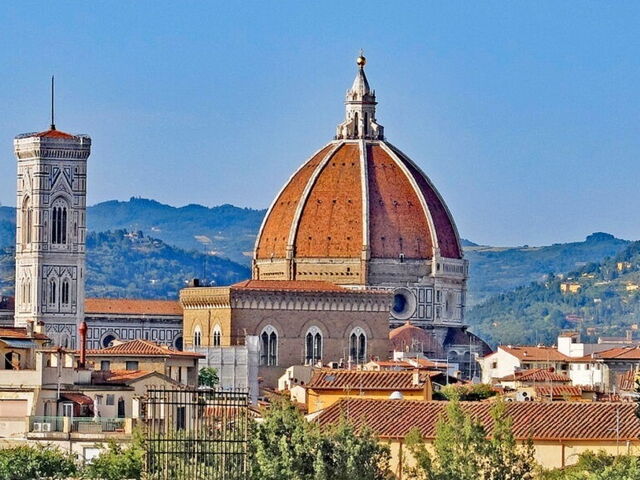
The Cathedral of Santa Maria del Fiore was started by Arnolfo di Cambio in the 13th century, while the
Brunelleschi's dome was finished in the fifteenth century. The façade in white, pink and green marble is richly decorated and is a masterpiece of Italian Gothic style. Inside, the left nave hosts three 15th century frescoes made by Domenico da Michelino, Paolo
Uccello and Andrea del Castagno. The dome was frescoed by Vasari with scenes from the Last Judgment: there is nothing better than climbing the stairs inside the dome to admire them from a closer distance! Also, at the end of the numerous stairs you will be rewarded by a splendid panoramic view of the
whole city! Don't forget to visit the Baptistery of San Giovanni and the Campanile of
Giotto, which are two unmissable monuments right next to the Dome.
2- La Chiesa di Santa Maria Novella
This church is one of the most important Gothic churches in Tuscany. The façade is a beautiful work by Fra Jacopo Talenti and Leon Battista Alberti. Inside, you will see a magnificent Giotto crucifix, some frescoes
by Ghirlandaio and the famous "Trinità" by Masaccio. If you love Renaissance art, you can't skip this stage!
3- The Church of Santa Croce
The Church of Santa Croce is the burial place of many art, music,
literature and science personalities. Walking along the imposing white marble tombs, you will be overwhelmed reading important names like Machiavelli, Michelangelo, Galileo Galilei, Leon
Battista Alberti and Alfieri. The building was started at the end of the thirteenth century by Arnolfo di Cambio, but the facade remained unfinished
until the nineteenth century, when it was completed using polychrome marble and reproducing the typical Florentine Gothic style. In addition to the famous tombs, the interior of the church houses some frescoes by Giotto and Gaddi, as well as a beautiful crucifix by Donatello. The visit does not end here: you can also visit the cloisters built by Arnolfo di Cambio and Brunelleschi, along with the wonderful Cappella de 'Pazzi decorated by Luca della Robbia and Giuliano
from Maiano. Finally, you will be able to see works such as the Cimabue crucifix inside the Museo dell'Opera. It's a fantastic stop of your tour!
4- The Church of Orsanmichele
The name of this church derives from the union between the names of "San Michele Arcangelo" oratory and the garden from which it was surrounded. In ancient times, there was a building called "Loggia del Grano" (wheat's market) located at the church's place. Actually, you can still spot the drawings of the ancient units of measure and the corridors that connected the warehouses to the market! What immediately catches one's eye in Orsanmichele arecertainly the tabernacles on the façade, decorated by the "Florentine arts" and depicting the patron saint of each guild. They were made by splendid artists such as Donatello, Ghiberti and Brunelleschi!
5- The Church of Santo Spirito
This church is hidden among the houses on the other side of the Arno river and it presents a very simple look. The original building dates back to the Renaissance, but the interior part was made in the Baroque age. Here, you can find some important works, such as the "Pala Nerli" by Filippino Lippi or a wooden crucifix carved by Michelangelo. The square in front of the church is always lively and crowded, as this is one of Florentine nightlife's main locations!
6- The Church of San Miniato al Monte
The charm of Piazzale Michelangelo is unique and its splendid church makes this place even more splendid! The Cathedral of San Miniato is located in the upper part of the city and is a perfect example of Italian Romanesque style. It presents
a splendid entrance stairway and a magnificent mosaic with a golden background, depicting Christ in
throne. It is one of the most romantic places in the city, where you can enjoy a unique view of the entire center! Don't forget to visit the crypt frescoed by Taddeo Gaddi and the Monumental Cemetery, which is a panoramic location containing tombs of illustrious characters such as Montale, Villari or Stibbert.
7- The Church of San Lorenzo
San Lorenzo is perhaps the oldest church of Florence... however, its facade is still unfinished! Its three naves
contain magnificent works by Bronzino, Rosso Fiorentino and Donatello, while the Old and the New Sacristy are two splendid chapels that will leave you breathless. Built by Brunelleschi, they house some tombs of the Medici family and Michelangelo's sculptural decorations. Don't miss them!
Looking for a vacation rental in Florence? Discover about Villa Le Fonti and Villa Ancora, some wonderful properties in the city's surroundings!
© Alice Pilastri
Read More
November 5, 2019
Siena: 7 Beautiful Things to See During a Perfect City Tour
A visit to Siena is like a beautiful journey through time: walking among historic buildings, churches and ancient buildings, you will feel like taking a dip in the Middle Ages! This beautiful center is one of UNESCO World Heritage Sites and it can be consederd as one of the most beautiful in Italy, as well as in the whole world.
Have you planned a trip to Siena? Get ready to see its top attractions during your tour! Discover 7 wonderful things to see in this city to organize a perfect tour!
1- Piazza del Campo
The first stop on a trip to Siena is certainly Piazza del Campo, a world-famous square, known for the Palio (discover more about this event!) that is run twice a year, on July 2nd and August 16th. The square presents a shell-shape divided into nine segments, as it refers to the "Government of the Nine" that administered the city in the fourteenth century. It also includes a fountain called Fonte Gaia, one of the most important monumental fountains of the city. Piazza del Campo is located in a neutral territory and it is considered part of a common heritage of all the city "contradas". Actually, the Palio is particularly felt in Siena and it ignites great rivalries between its districts!
2- Palazzo Pubblico
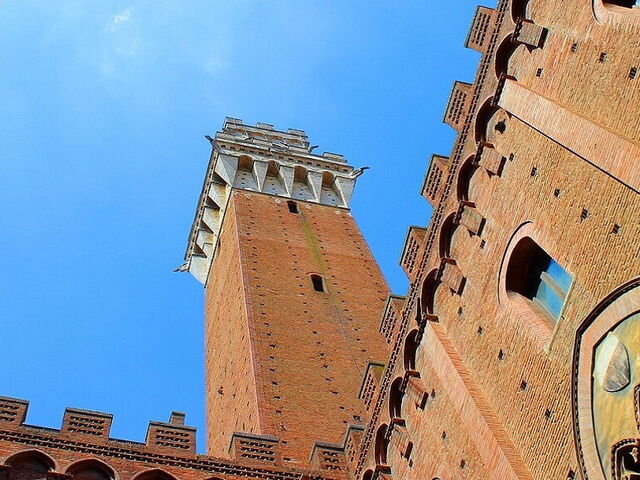
Overlooking Piazza del Campo, the wonderful Palazzo Pubblico housed the Government centuries ago. It is a Gothic-style palace with mullioned windows, three-light windows, arches and richly decorated facades. Its interiors host the Civic Museum, which is an exhibition space containg the famous fresco by Lorenzetti, called the "Allegory of Good and Bad Government". Yo can also climb the beautiful "Torre del Mangia", a bell tower built in 1338 that is also one of the highest towers in Italy!
3- The Dome and its Monumental Complex
The Cathedral dedicated to Maria Assunta is an architectural masterpiece. Its façade is made in white marble and it's decorated with inserts in green and red marbles. It houses some works by Donatello and Michelangelo, as well as a majestic pulpit by Nicola Pisano. However, the floor is the part that always surprises the most: the fifty-six scenes inlaid in marble have been made by important artists of the fourteenth century and they leave every visitor speechless! However, the Cathedral complex does not only include the Dome: in addition to the Piccolomini Library frescoed by Pinturicchio, there is a magnificent crypt, the Museum of the Opera del Duomo and the Baptistery of San Giovanni. This last presents a charming marble baptismal font made by Jacopo della Quercia, which shows some splendid bronze panels made by Ghiberti and Donatello.
4- The Museum Complex of Santa Maria della Scala
Right next to the Cathedral stairway, you'll find a magnificent complex with works of art covering a period of a thousand years. Now it is an important museum, but in the medieval period this building was a hospital for pilgrims from the Via Francigena ! Precisely for this reason, one of its most beautiful rooms is called "Sala del Pellegrinaio": it has some beautiful frescoes reconstructing the history of the place and its welcoming function!
5- Palazzo Buonsignori and Pinacoteca Nazionale
You list must surely include one of the most beautiful buildings in Siena! Today, Palazzo Buonsignori houses a museum called "Pinacoteca Nazionale", exhibiting works by Sienese school artists dating back to the 13th-18th centuries. Some of these are Duccio di Buoninsegna, Simone Martini, Pietro and Ambrogio Lorenzetti.
6- San Domenico Basilica
Go outside the fourteenth century city walls and find one of the most beautiful Gothic churches in the city! This Church presents a chapel in the middle of the nave and it houses the relic of Saint Catherine, who is also the patron saint of Siena. As well as being a stunning building, it contains some magnificent frescoes.
7- The Contradas
The best thing to do to discover Siena is to venture through its narrow streets looking for beautiful views. However, you won't really know the city if you don't live its districts! We advise you to visit the buildings of some contradas, where you can admire the "Drappelloni" won in the past Palios, which are exhibited as trophies. In fact, the period of Palio is also the best time to visit Siena! In summer, the town center comes alive with songs, shouts, flag-waving parades and traditional dinners organized by each district, as everybody is waiting for the day of the race. Taking part in one of these parties or attending a Palio is definitely something to do at least once in your life!
There are many more palaces and places you should visit in this city! All you have to do is start organizing your trip to Siena to see all its most important monuments: to bookan accommodation i Siena have a look at the villas below.
© Alice Pilastri
Read More
Those who visit Campania for the first time are always stunned by its architectural and natural beauties. However, it's also thanks to the flavors of its excellent cuisine that this region makes everybody fall in love with it! In fact, Neapolitan cuisine is an explosion of genuine flavors that has its roots in ancient traditions, which arw still handed down from generation to generation. It is a collection of simple dishes made with few natural ingredients, which are still incredibily tasty. As well as its good first courses, main courses and appetizers, there are some excellent drinks you should try, such as Limoncello liquor or Falanghina and Aglianico red wines.
Unfortunately, Napolitan dishes are so many that it's impossible to try them all during a short holiday in Southern Italy. Here's why we made a list of the best Neapolitan specialties to try at all costs during your trip: let these fantastic flavours surprise you and enjoy your authenitc Italian experience!
1. The pizza
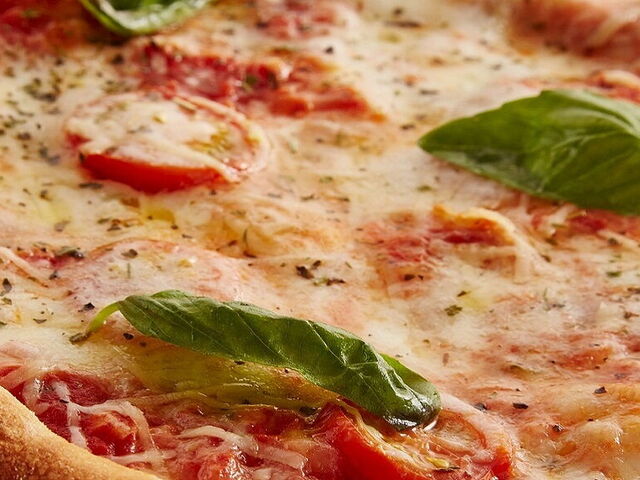
Neapolitan pizza needs no introduction! This world-famous recipe is based on a few simple ingredients, which are tomato, mozzarella -often with buffalo milk- and basil. The pizza boasts innumerable imitations in the world, but none can reach the perfection of the Neapolitan recipe! Cooked in a wood oven, it has a prominent soft crust and a thin center. Don't forget to try it at one of the best pizzerias in Naples, like those of Gino Sorbillo or Da Michele!
Another type of pizza is that with "scarole", which is stuffed with endive, olives from Gaeta, capers, pine nuts, raisins and anchovies. You can taste it both hot and cold and it is typically prepared between Christmas and New Year.
2. The Neapolitan "ragù"
The Neapolitan meat sauce is very different from the Bolognese one. This type of ragù is the result of a very long preparation and a slow cooking procedure, as the pieces of meat need to combine with the tomato sauce. According to tradition, the ragù is prepared on Sunday mornings and is served at the traditional family lunch.
3. The anchovy sauce
Spaghetti with anchovy sauce is the typical dish of Cetara, a fishing village in the heart of the Amalfi Coast. The dressing of this dish is obtained by pressing salted anchovies, from which an oil with a strong and decisive taste is obtained.
4. The casatiello
The casatiello is a traditional dish prepared in the Easter period. This cake can be both sweet and savory, if it contains ingredients such as cold cuts, boiled eggs and cheese.
5. The "married soup"
The "minestra maritata" is broth made with meat and mixed vegetables, such as cabbage, broccoli, chicory, endive and aromatic herbs. To add some flavor, many people use ingredients such as lard, caciocavallo cheese or ham, to make the dish even more delicious. The name "maritata" derives from the union of different and explosive flavors: it's a perfect marriage between meat and vegetables!
6. The "impepata di cozze"
Mussels are another great classic,which is usually cooked during the Easter period. They are cooked in a large saucepan and once they open they are seasoned with oil, pepper and parsley. The best way to taste them is with some slices of toasted bread or by the typical "friselle"!
7. The friarelli
Very similar to turnip tops, friarielli are a kind of vegetable that only grows in Campania, specifically near Naples and the Vesuvius. They are usually fried in oil, garlic and chilli and they are often accompanied by sausages. The union of these flavors is sensational!
8. The babà
The babà is the Neapolitan dessert par excellence. This baking leavened cake is made with the traditional rum bath. Its soft consistency requires a long processing, but the result is guaranteed! There are several versions of this dessert, some simple, others more complex, which include a pastry cream filling or a limoncello wrap instead of rum. However it is cooked, this sweet always satisfies all tastes!
9. The sfogliatella
The sfogliatella is a small Neapolitan sweet with a delicious taste. It can be curly if prepared with puff pastry, or shortcrust if prepared with shortcrust pastry. Inside, it is made of semolina, ricotta and candied fruit.
10. The pastiera
Pastiera is a delicious Easter cake on a short pastry base made with wheat, ricotta, eggs, lard, sugar, candied fruit. Each family passionately preserves its own secret recipe, as this is one of the best-loved dishes of Campania cuisine.
Are you ready to start your tour between the best flavours of the Neapolitan cuisine? Book one of our properties on the Amalfi Coast!
© Alice Pilastri
Read More


