Our Blog: Travel Tips
Planning a trip to Italy? Browse and read our useful and informative articles about the endless range of attractions and experiences in this lovely country.
Travel through the beauties of Italy with us. Visit our blog!
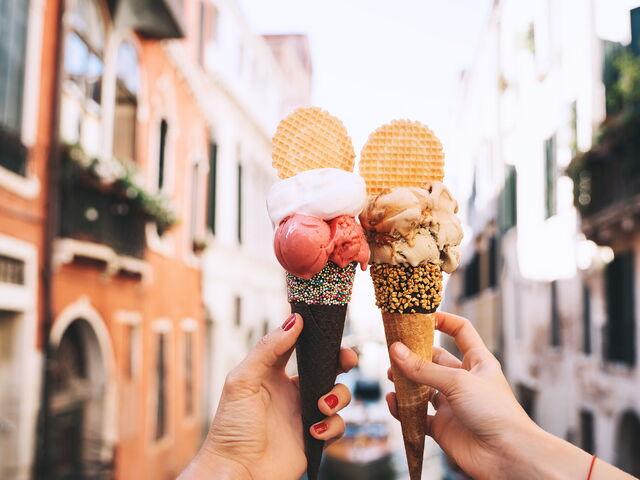
The ski slopes in central Italy have just finished whitening, the temperatures have reached close to zero and the days are still short.Now you may be wondering what ice cream has to do with the cold season, you may be wondering why we are talking to you about ice cream in January.Oggi abbiamo deciso di scrivere un articolo sul gelato per due motivi: - To help you choose the best artisan gelato in Italy- Because it is never the wrong season for good ice cream
ARTISAN ICE CREAM: THE ORIGINS Artisanal ice cream is undoubtedly a dessert known all over the world, and numerous tales, verging between fantasy and legend, have been passed down over time around its origins. Tracing the origin of ice cream is not easy, as there are many historical testimonies and references to the ancient custom of preserving milk and food by freezing them. There are also several disputes that have arisen over the centuries to claim the frieze of the inventor of ice cream.Not going into details, we can say that the inventor of ice cream goes by the name of Bernardo Buontalenti, a Florentine architect with a passion for cooking. He invented a very creamy dessert made of milk, sugar, eggs, honey and wine in the 17th century.
Buontalenti's dessert is considered to be at the origin of ice cream, so much so that even today, this recipe - which took the name 'Crema Fiorentina' or 'Gelato Buontalenti' - is used as the basis for more modern ice creams.
HOW TO CHOOSE A GOOD ARTISANAL GELATO WITHOUT FALLING INTO TOURIST TRAPS? Here is a vademecum to keep in mind when entering an ice-cream parlour:- Avoid ice cream parlours that have mountains of ice cream on display, quantity does not correspond to quality very often.- The table of ingredients must always be present. Whether it is a clearly visible sign or a book, it must be available and consultable by the customer. It is synonymous with seriousness, respect for the law and transparency towards the customer.- The ingredients of the ice cream must be few and well understood, if you read strange names it means that the ice cream is rich in elements that make it ultra-processed.- Be wary of colours that are too bright (although nowadays you can find bad ice-creams with absolutely perfect colours), masses that are too shiny or too opaque (in which case it could be a product that is too full of fat or too old).- The consistency of the ice cream should only be assessed when tasting and not when serving. An ice cream that you notice is too hard and firm at the time of serving may turn out to be silky and melting when you taste it.
THE BEST ICE-CREAM SHOPS Now that you know what to look at to evaluate your ice-cream, here are some of the best Italian ice-cream parlours:Toscana
Gelateria della Passera | FIRENZE
Chiccheria | GROSSETO
De’ Coltelli | PISA
Dondoli | SAN GIMIGNANO [SI]
Sicilia
Cappadonia Gelati | PALERMO
Puglia
G&co | TRICASE [LE]
Are you ready to come and taste real homemade ice cream?
Book one of our villas, you won't regret it.
© Rebecca Taizzani
Read More

It's December, the Wham! song resounds through the streets (sabotaging your Whamageddon winnings), the shops are decorated, the squares lit up and you are looking for some presents.December is a month that exudes warmth (despite the cold weather), familiarity and conviviality. December in Italy means dinners with relatives, mulled wine while window shopping (be careful exaggerating, you might see double), afternoons in front of the fireplace, but above all: PANETTONE.Panettone is one of the typical Christmas sweets, but few people know its true history. In fact, the origins of this delicacy are lost in time and the birth of panettone is linked to numerous legends.
THE BIRTH OF PANETTONE ACCORDING TO LEGEND The most famous legend claims that panettone was born at the court of Ludovico il Moro, Lord of Milan, back in the 15th century. It was Christmas Eve when, during a banquet, the official cook of the Sforza family inadvertently burnt a cake. To make up for it, Toni, the scullery boy who worked in the kitchen, decided to use a loaf of yeast that he had kept aside for Christmas. He processed it by adding flour, eggs, sultanas, candied fruit and sugar, obtaining a particularly leavened and soft dough. The cake was appreciated so much that the Sforza family decided to call it 'pan di Toni'.However, this is not the only legend linked to this Christmas cake, because according to other stories it was invented by Sister Ughetta or Ughetto degli Atellani. The only certainty is that panettone originated in the Middle Ages and is linked to the tradition, which was in force at the time, of preparing very rich loaves of bread at Christmas, which were served by the head of the family to diners.
THE BIRTH OF PANETTONE ACCORDING TO HISTORICAL SOURCES1470: the first evidence of panettone. In a historical document, the 'rite of the log' is described: at Christmas, a large wooden log was put on the fire in every house and all the diners ate slices of wheat bread distributed by the head of the family, who kept one for the following year, as a good omen. That bread had, especially for the poor, a special value. In fact, bakers, except those who baked for the nobility, were forbidden to use wheat flour during the year as it was the prerogative of the rich.1549: Cristoforo di Messisbugo, a cook from Ferrara, lists the ingredients of a Milanese cake - flour, butter, sugar, eggs, milk and rose water - adding that it must rise well and be round in shape.1599: in the notes of a register of the Collegio Borromeo in Pavia concerning the expenses of the Christmas meal, there is mention of three pounds of butter, two pounds of sultanas and two ounces of spices that would be used to prepare '13 large loaves'.
1606: the first official definition of 'panaton', in the Milanese-Italian dictionary, is a large loaf prepared at Christmas.
1853: yeast is mentioned for the first time in the recipe for panettone, until then the cake had more the appearance of a focaccia.
1854: candied fruit is mentioned in the recipe for panettone and it begins to spread throughout northern Italy.
HOW TO CHOOSE THE RIGHT PANETTONE
The Classic Panettone has a few simple ingredients:Water Flour 0Salt
Fresh eggs and/or pasteurised yolks
Milk
Butter
Sugar
Candied fruit (especially orange and citron)
Sultanas
Vanilla
Natural yeast
"De gustibus non est disputandum" so feel free to choose a chocolate or pistachio panettone instead of one with candied fruit (my personal favourite is an artisanal Rhum and Chocolate panettone).
If you book one of our villas we can deliver the best panettone cakes in the area!What are you waiting for, there's still time!© Rebecca Taizzani
Read More
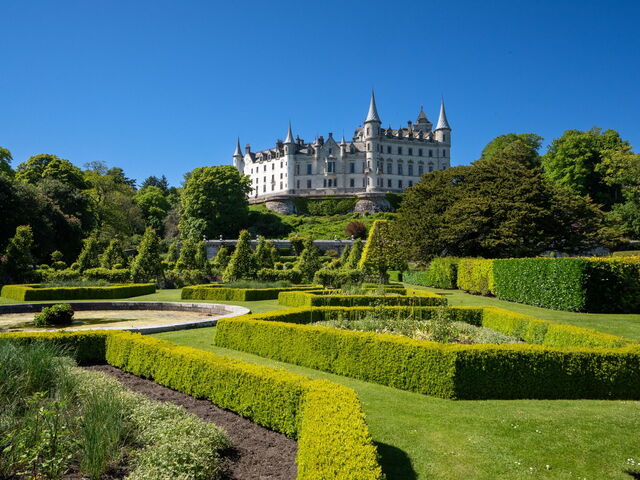
Do you feel unfit for this era? Have you always dreamed of living in the 1800s? Do you feel like a Dandy and are you always the most elegant when you go out? Or do you love petticoats, coiffed hair, crinoline and snow-white fabrics?If Bridgerton was your favourite TV series and you would like to experience a stay in a castle for yourself, this article is for you!In our programme we have different types of properties to ensure that the uniqueness of our clients is enhanced and respected.
Here are the 3 best castles where you can stay to feel like a real 19th century nobleman.
1. CASTELLO DI MONTEGUFONICastello di Montegufoni is a magnificent property located in the Chianti hills that consists of 39 flats plus a large common room and a garden with swimming pool. The splendid castle dates back to the year 1100 and was renovated in the 1600s by the noble Acciaioli family. Worthy of note is the magnificent tower built on the architectural model of that of Palazzo Vecchio in Florence.The Castle can be rented exclusively (ideal if you are celebrating an event) or you can choose one of the various flats available. Staying in a flat you will have the opportunity to use the swimming pool, the outdoor spaces and enjoy the delicious dishes of the 'Ristorantino'.
See how beautiful this living room is? Ideal for your 5 p.m. tea party.
2. VILLA PANERETTA Villa Paneretta is a wonderful villa for rent with private pool in Tuscany in the heart of the Chianti Classico region.The Villa is immersed in a 309-hectare property (woods, vineyards and olive groves) and is part of a magnificent historical structure dating back to the 13th century.Villa Paneretta is located adjacent to the ancient Castello della Paneretta and its cellars: as you enter the gate you will find yourself immersed in history, tradition and in close contact with one of the most famous and dynamic wineries in Chianti Classico.
Don't you find it magnificent? 3. CASTELLO LEOPOLDO Castello Leopoldo is a marvellous castle for rent in Tuscany, perfectly suited as a castle for weddings and receptions or as an ultra-luxury holiday home with swimming pool. It is the ideal choice to offer its guests a stay filled with history.This splendid castle dates back to the 16th century, the style is romantic and the location is breathtaking: we are in fact in the hills of Campiglia marittima. The structure, which has retained its old-world charm, enjoys a beautiful view of the valley below and, on a clear day, of the island of Elba. The furnishings and decorations are in noble Tuscan style from the late 16th century. With its 10 bedrooms, Castello Leopoldo can accommodate up to 20 people.The castle is surrounded by a large, well-kept garden with a private swimming pool.
Imagine the view from this terrace!© Rebecca Taizzani
Read More

If you are tired of renting the usual stunning but impersonal holiday villa, if you are looking for a distinctive solution that evokes the tradition of the place and encloses centuries of history within its walls, this article is for you.For your next holiday in Apulia book a Trullo.
A Trullo is a type of conical dry-stone construction traditional to central-southern Apulia.Trulli can be composed of a simple room (unitary module), or by the combination of several rooms (modules), which are usually added by twinning around the central room.The modular construction unit of the trullo has a circular plan, on the perimeter of which the very thick dry-stone masonry is set.The great thickness of the masonry, combined with the very small number and size of the openings, ensures a very high thermal inertia, which guarantees a good conservation of heat inside during the winter and the coldest days, just as it mitigates the peaks in the outside temperature during the summer.The Trullo was originally a typical peasant building in which those who worked the fields could find rest. They were simple, bare rooms.The trulli we are proposing today, however, are slightly different, traditional yes but without sacrificing comfort: from the trullo with a private swimming pool, to the one with a Jacuzzi.
Discover our selection of holiday trulli.
TRULLO SANTO STEFANO Trullo Santo Stefano is a beautiful and traditional property with a beautifully restored trullo, near the village of San Michele Salentino. The trullo is nicely furnished in the style of the Puglia region and will guarantee a peaceful environment.
The outdoor area is green and lush: you will find shrubs and plants typical of the Mediterranean vegetation.Here you will be able to enjoy complete privacy and the surroundings outside the property consist of one hectare of olive trees!
TRULLO OAK Trullo Oak is a stunning holiday home in Puglia in the countryside near the town of Martina Franca.The interior is sober and well-maintained, with minimal furnishings that emphasise the magnificent vaulted ceiling with exposed stones.Outside, the Trullo has a large covered veranda next to the pool and various relaxation areas with stone seats.
From Trullo Oak it is easy to reach the main towns in the area such as Martina Franca, Ostuni and Locorotondo, as well as beautiful beaches on the Ionian and Adriatic coasts.© Rebecca Taizzani
Read More
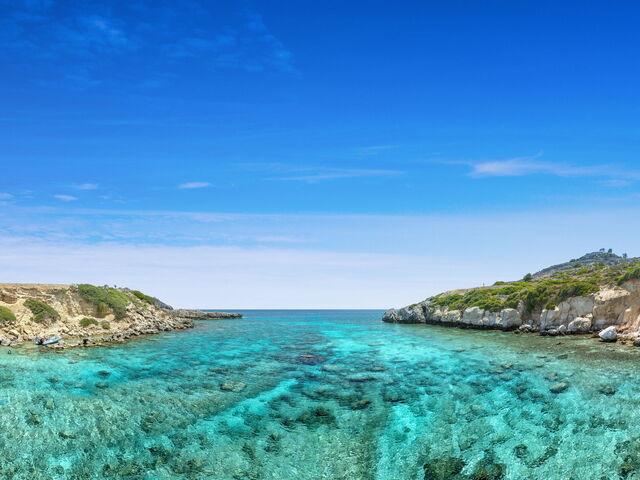
Whether you are staying in a masseria where Apulian oil was produced in ancient times, enjoying the sea view in your top-floor Jacuzzi or playing with your friends in the green meadows of a masseria in the open countryside, this article is for you. Today we take you to Puglia: home of taralli, rice tielle eaten on strips of fine sand or on crescents of pebbles. We want you to discover beaches nestled between cliffs or immersed in the Mediterranean maquis.
1. MASSERIA VILLA IL FRANTOIO, OSTUNI: TORRE GUACETO Masseria Villa il Frantoio is a magnificent villa for rent with a private swimming pool, nestled in a setting of thousand-year-old olive trees, just a stone's throw from Ostuni, Puglia: one of the most beautiful medieval villages in Italy.This beautiful property owes its name to the ancient underground oil mill located in the basement. This majestic piece of architecture can be reached from the outside via a spiral staircase. This particular ambience, with its very original charm, lends itself very well to events, dinners and wine and oil tastings. From Villa il Frantoio we recommend a visit to what many consider to be heaven on earth: Torre Guaceto. The Torre Guaceto beach is located within a protected marine area and a nature reserve. Its special feature? Apart from the crystal-clear colours of the water, the beach is entirely made of shells. Not many people are aware of this spectacle of biodiversity and peace.
2. VILLA COTRIERO, GALLIPOLI: MARINA DI MANCAVERSACharming villa in the heart of Parco di Lido Pizzo a short distance from Gallipoli and the most beautiful beaches of Baia Verde. Thanks to its location, just 50m from the beach, it is an ideal place to spend a holiday immersed in the tranquility of the park while at the same time being able to reach the sea by foot.The property also has a swimming pool immersed in a garden measuring 700m², which is shared between the 2 units.
3. VILLA NIRACLO, CAROVIGNOVilla Niraclo is a fantastic vacation villa rental in Apulia. It’s very close to the sea, and to the cities of Carovigno and Ostuni.
If you are looking for an Apulian-style villa with exposed stone and painted in neutral tones, Villa Niraclo is perfect for your vacation by the sea.With 6 double bedrooms total in the main villa and the annex, the property can comfortably accommodate 12 people. It offers the unforgettable chance to sleep in beds set into the stone. Each bedroom has its own private, complete bathroom.
4. MASSERIA LENTISCO, OTRANTO: TORRE DELL’ORSO Masseria Lentisco is a wonderful historic masseria surrounded by greenery and with a large enclosed garden. From the villa you can reach a beautiful bay: Torre dell'Orso. The bay of Torre dell'Orso is one of the most photographed locations in Salento. With the beauty of its silver-coloured beaches and the deep blue sea that contrasts with the landscape, Torre Dell'Orso remains a popular destination for tourists from Italy and the rest of the world. Torre dell'Orso is one of the marinas that have been awarded Blue Flags and Five Sails by Legambiente for their focus on environmental sustainability combined with the healthiness of the sea water and climate.
Hurry up and book© Rebecca Taizzani
Read More
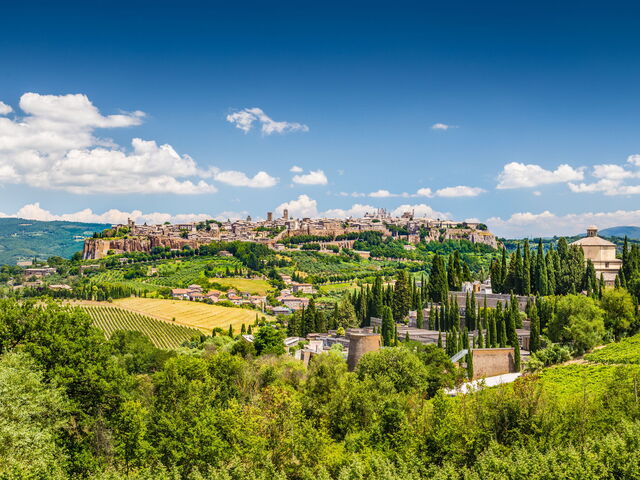
Umbria is a small but precious green heart of Italy. This region has protected its traditions with all its strength, preventing the contaminations of the modern world. When visiting Umbria, you will find an authentic atmosphere: Etruscans, ceramics, monasteries, national parks. Its historical, religious and natural importance is second to none other region, and the same goes for its rich and substantial menu of typical dishes.
WHAT TO EXPECT FROM UMBRIAN CUISINE? Protein first and foremost, from diametrically opposed sources. On the one hand, the absolute preponderance of meat in main courses and as a dressing for pasta; on the other, a rich biodiversity of pulses including lentils, black chickpeas, roveja, fagiolina, cicerchia and many others. Then fresh pasta without eggs, spelt and other ancient cereals, cheeses and sheep's milk ricotta, and home-made desserts to dunk in wine.
WHICH DISHES SHOULD YOU ABSOLUTELY TRY? 1. Arvortolo: a golden fried pizza that is arvortolata ( flipped) several times during cooking to make it homogenous. They can be eaten on their own or filled with capocollo, porchetta or pecorino cheese.
2. Mazzafegato: a sausage made from pork liver, rind and other secondary butchery parts. All seasoned with fennel seeds, lemon and/or orange peel.
3. Cicotto: a special pork roast prepared with all the parts of the pig (ears, tripe, nose, feet, shin, tongue) washed and cooked in the oven for at least 12 hours.
4. Umbricelli: these are the typical pasta format of Umbria. Prepared only with water and flour, they are only meant to be served with a tomato sauce.
5. Strangozzi: these are very thick fettuccine, which do not have eggs inside their dough. They are usually seasoned with tomato and parsley.
6. Crescionda: a luxurious cocoa and amaretti cake consisting of three layers. The first is made of macaroons and flour, the second creamy made of eggs and milk, and the third with bitter cocoa. Mistrà (aniseed liqueur), rum, lemon peel, vanilla and cinnamon complete the ingredients.
7. Brustengo: this is a kind of sweet corn bread enriched with thin slices of apple and dried fruit at will. The good thing about brustengo is not only the taste, but also the nutritional table. It is traditionally gluten-free and sugar-free.
WITH WHAT TO ACCOMPANY THE DISHES LISTED ABOVE? In Umbria, one not only eats well but also drinks deliciously and variously. There are several grape varieties typical of the area, which are increasingly appreciated internationally. Among the most famous are the Torgiano Rosso Riserva DOCG and the Montefalco Sagrantino DOCG, but wines such as Grechetto or Ciliegiolo are becoming increasingly popular.
There are also special productions of wines with very interesting characteristics such as Orvieto abboccato, which is perfect for dessert, rather than Solleone, which is more fortified and has a strong personality.
Umbria, therefore, also in this wine and food itinerary, has turned out to be a region with many hidden sides that have yet to be fully revealed.
Why not choose Umbria as your next destination? Take a look here, don't let this opportunity pass you by.© Rebecca Taizzani
Read More
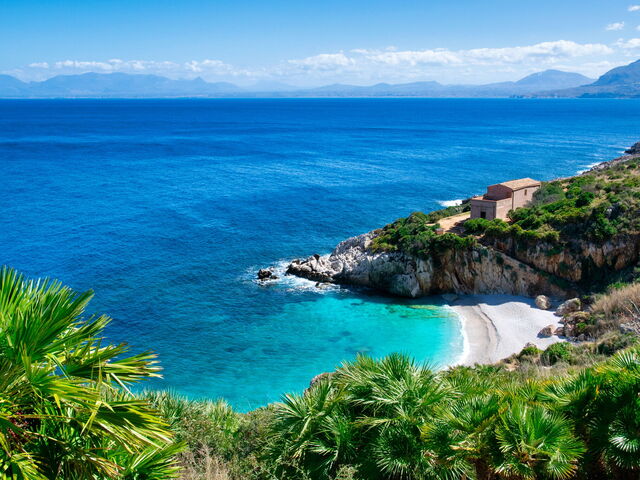
Breathtaking sets, luxurious locations, five-star resorts, characters with dizzying outfits, hidden stories, secrets and murders. But what are we talking about? The US series created and scripted by Mike White (you will certainly have heard of him with Dawson's Creek) with the aim of dismantling the myth of white Trumpian America with sarcasm.
The White Lotus, is the title of the series that presents itself as a dramatic and satirical comedy that takes us for a week inside luxury resorts in Hawaii and Sicily.
The series portrays the lives of staff members who have to satisfy the demands of wealthy clients every day, in parallel with that of a group of guests who have arrived to spend a week's holiday.
The relaxation, the dreamlike landscapes, the luxury and the endless possibilities of entertainment, slowly bring to light more hidden sides of the different characters. Each episode focuses on the story of one of the characters: the first guest to come into focus is Shane Patton.
Thanks to a flashback, we also meet other guests such as Rachel, Shane's wife. Together with them also Jennifer Coolidge who has arrived to scatter her mother's ashes and the Mossbacher family with their daughter's friend in tow. It is they who will animate the six episodes of the series.
The plot is very intricate, gripping and exciting: it will keep you glued to the screen.
We won't spoil the finale of the first season, but we do anticipate that in the second we move from the paradisiacal Hawaii to the breathtaking beauty of Sicily. But why are we telling you about it? For three main reasons:1. To let you discover the beauty of Sicily. In fact, we believe that the frames of the second series are a beautiful advertisement for a region that has so much to offer: from culture to culinary art, not to mention the splendid villas for rent where you can spend your holidays (we are obviously talking about ours).2. For the exceptional performances. Each actor is in full and fluid command of their role, everyone seems to enjoy the flow of White's writing, the way he delicately plucks the strings to change the tenor and vibration of his characters' social dynamics. They seem to be having fun, even when pain and anxiety creep in at the edges of a scene.3. For the message that the series wants to convey: a contemporary realistic fairy tale, in which different ages, different personalities meet and collide amid disappointments and disillusionments, in the continuous merry-go-round that is life in which apparently no one seems to want to take responsibility for what happens. The strength of The White Lotus lies in its desire to show human frailties, to mock wealth but without giving the contours of sanctity to those who are not rich.
© Rebecca Taizzani
Read More
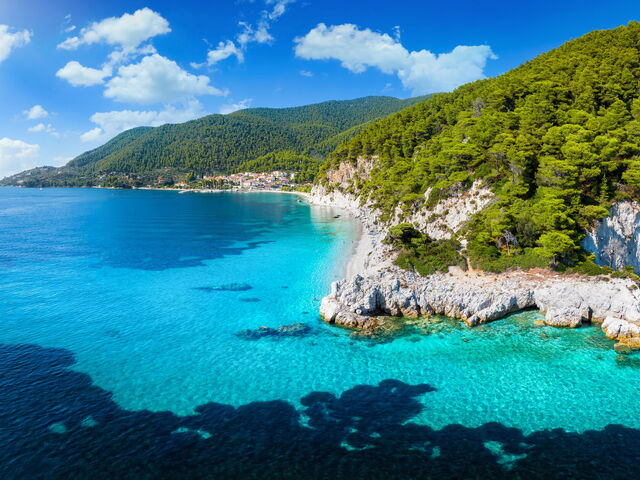
Today we want to tell you about the greenest and most populous island in the Northern Sporades. Characterised by dense, evergreen vegetation, this island has approximately six thousand inhabitants. The mysterious island we are talking about is the island of Skopelos.Surely you have already heard of it and had the opportunity to see it (perhaps even without realising it). In fact, the island was the set of one of the most famous musicals of our time: 'Mamma Mia', a show that tells an unlikely love story with a happy ending beaten to the rhythms of Abba songs.
In this romantic film, the island is called Kalokairi, which translated means summer.But what to do on this picturesque island? How to get there? But above all, where to sleep?
HOW TO GET THERE? There are certainly Greek islands easier to get to than this one (e.g. Corfu and Crete), but don't worry.The nearest airport to Skopelos is Skiathos. If this flight is not available or leaves from a city too far from yours, the alternative could be via Thessaloniki or Athens.
WHAT TO SEE: THE BEACHES Skopelos boasts numerous picturesque beaches, washed by crystal-clear sea and framed by green pine trees. The north coast of the island is wilder, with high headlands exposed to the winds, while the beaches in the south, mostly pebbles or a mixture of sand and pebbles, are more sheltered.
Here is a list of the best beaches on Skopelos:Glysteri: the 'town' beach of Skopelos, perhaps not the most attractive but certainly pretty. It is reached by following a road north of town lined with olive trees.Limnonari: along the coastal road from Agnontas is the only sandy beach on the island, a long sandy shore bordered by a rocky promontory and a pine forest.Stafylos: a picturesque beach of mythological fame, where, according to legend, the tomb of the son of Ariadne and Dionysus is located. A rocky ridge divides it from Velanio, one of the most famous naturist beaches on the island.Kastani and Panormos: the busiest beaches on the island, equipped with facilities and entertainment venues.Perivoliou and Katakoluos: quiet beaches, recommended for those who do not like crowds.WHAT TO SEE: TOURIST ATTRACTIONSThe town of Skopelos: Skopelos is a quaint town in the northern part of the island that resembles an amphitheatre. Life here flows quietly, with strolls along the waterfront, dinners in typical taverns, young people on scooters and old people playing backgammon. Tourism is the main activity but without being intrusive; the nightlife is cheerful but not rowdy. In the town of Skopelos you will find all the essential tourist services including bars and restaurants, car rental agencies and a couple of souvenir shops. If you have some time, check out the original Bakratsa Museum, housed in an elegant 18th century mansion that once belonged to a doctor. You will find a bizarre collection of medical equipment and clothing for married and unmarried men and women.Glossa: Glossa, a traditional village in the northern part of the island that has not opened up to mass tourism, thus preserving an atmosphere of authenticity that is now very rare to find. It is home to the famous little church where some of the highlights of Mamma Mia were filmed.The monasteries: The ancient monasteries are the biggest tourist attraction on Skopelos: there are about a dozen of them scattered all over the island, with a greater concentration on Mount Palouki; four are still inhabited. Almost always located in a panoramic, isolated and romantic position, they can be reached by car, but it is much more suggestive to arrive on foot, following paths and old mule tracks. Here are the ones to visit: Evangelismos, built in the 18th century, is the only monastery on the island visible from the town of Skopelos; the oldest Sotiris, dating back to the 16th century, is run by a single monk who has the reputation of being perpetually frowning; Varvaras houses a museum and a small shop selling local products.WHERE TO SLEEP? In one of our magnificent villas with a private pool: Villa Orion, Villa Lyra and Villa Phoenix are the best choice for your stay.The maximum number of people the villas can accommodate varies from 4 to 6, but if you are a large group, you might consider renting both Villa Orion and Villa Lyra as the two villas are located practically next to each other.
© Rebecca Taizzani
Read More
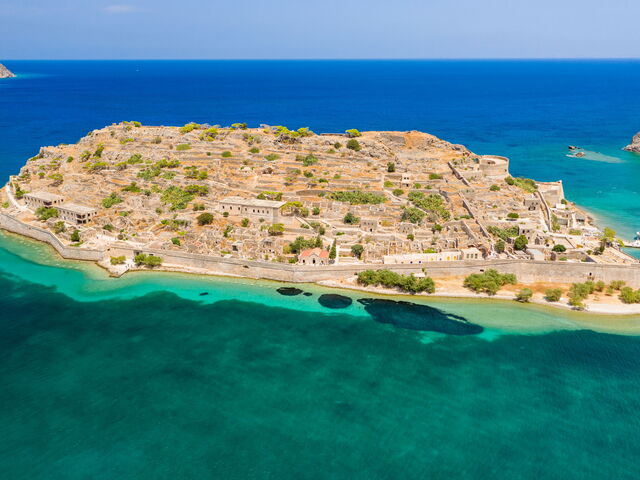
If you follow us on Instagram you will already have had the chance to admire the island of Spinalonga, if you missed it take a look here or read on to find out why we are telling you about Spinalonga.Before we virtually ferry you to Crete, we think it is fair to give you some historical background on this island with a turbulent history: first a stronghold during the Hellenistic period, then a Venetian fortress, then a refuge for rebels and a place of exile for lepers.Today, the island of Spinalonga, located in eastern Crete, is considered one of the most important strongholds in the Mediterranean and is a popular tourist spot.The island can be reached by ferry (in summer it is very easy, there are many daily runs) departing from Agios Nikolaos and Elounda.But why are we presenting this island to you?1. For its history, which makes it one of the most visited Byzantine and post-Byzantine sites in Greece2. For the crystal-clear coves, beautiful but not easily accessible3. For its proximity to our Villa MarinaSOME HISTORICAL BACKGROUND
The island of Spinalonga was founded in 1579 on the ruins of an ancient acropolis. Originally, it was not a real city, but only a series of fortifications built by the Venetians to control sea traffic without the risk of landfall.
Around 1700, Venetian rule ended and the island passed into Ottoman hands until the 20th century. From then on, the island was used as a refuge for lepers until 1957.
Today, the island is uninhabited but remains one of the main tourist sites in the region.
WHY VISIT IT?What can you find of interest on this island that has been featured in books and short films? (see the short film by German director Werner Herzog or the novel 'The island' by writer Victoria Hislop)A stop in Spinalonga is mandatory for :- the narrow streets surrounded by walls and towers overlooking the sea, you can admire the remains of a mosque or an Orthodox church, what remains of old stone houses, shops, stairways and the hospital where they treated leprosy patients.- the clear waters of Mirabello Bay.
WHERE TO STAY: VILLA MARINA
Villa Marina is a beautiful luxury villa for rent with a private pool for holidays in Elounda, a town on the north coast of the island of Crete, Greece.
This wonderful villa for rent is located on a hilltop near Mavrikiano, offering fantastic panoramic views of the hills, the sea and the island of Spinalonga.
Villa Marina is ideal for all those who enjoy spending their holidays in an enchanting location with their family or a group of friends. At Villa Marina you can get away from the daily routine and enjoy moments of complete relaxation in one of the most exclusive areas on the island of Crete.
Come and discover the wonders of Crete with us, we will be happy to accommodate you.© Rebecca Taizzani
Read More
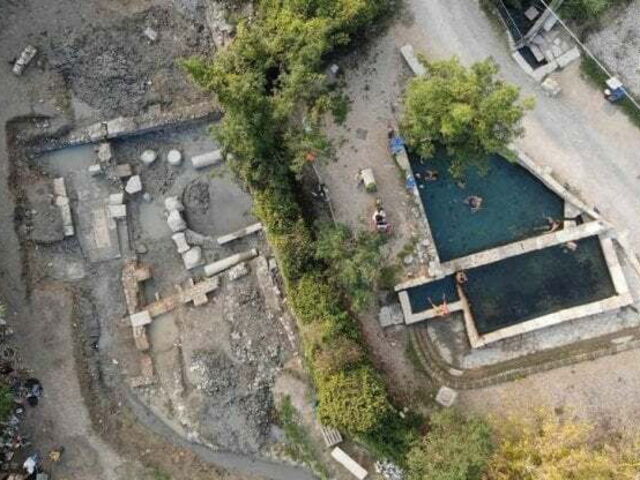
San Casciano dei Bagni is a small jewel of the Senese countryside: castles, villages such as Celle sul Rigo and Palazzone, gastronomic tradition (pici are born right here), gullies, no less than forty-two thermal springs at a temperature of 40 degrees . But all this did not seem to be enough for the beautiful Tuscan village. On 8 November, one of the most important discoveries after the Riace Bronzes was made among the stones of Bagno Grande: the discovery of 24 statuettes and thousands of coins. Gods, matrons, children and emperors are just some of the subjects of the statuettes that have been sleeping peacefully for 2300 years in the boiling water of the sacred baths of San Casciano dei bagni.
WHERE?
Photo Credit to Ministero della Cultura The statues were found in the Vasca Sacra or Santuario Ritrovato of the Bagno Grande at San Casciano dei Bagni. The sanctuary, conceived in the early imperial period, consists of a porch, a basin, a spring on different levels and a central arch. The site has been a point of archaeological interest for several years (it is mentioned in studies dating back to 1800). The archaeological excavations that led to the recent discovery began in the summer of 2020 and have seen several campaigns.
Photo Credit to Ministero della CulturaWHAT ? During the 6th excavation campaign, 24 toreutic masterpieces dating between the 2nd and 1st centuries BC and five thousand gold, silver and bronze coins were found from the bottom of the pool. The statues were made from life or according to the canons of the so-called mensura honorata, i.e. three Roman feet high (the equivalent of about one metre), and depict the deities worshipped in the sacred place together with the ancient dedicators. The statues, dedicated to the divinity of the spring and in perfect condition, are not only a treasure of inestimable value, but also a testimony (thanks to the engravings in Latin and Etruscan) to the coexistence of the Etruscan and Roman civilisations at the time: a coexistence that outside the sanctuary was known as conflict. The findings are therefore a testimony to a unique multicultural and multilingual context of peace, surrounded by political instability and war. The statues were presumably placed on the outer rim of the large sacred pool and anchored on the elegant travertine blocks. On several occasions later, the statues were detached from the edge of the pool and deposited at the bottom. It can therefore be deduced that this was not a dumping of sacred material into the hot water, but a ritual deposition, mediated with the deity. The votive acts continued until the 4th century AD with the deposition of almost six thousand coins (in silver, bronze and gold). Only at the beginning of the 5th century AD was the sanctuary dismantled and closed.
Photo Credit to Ministero della CulturaWHO? The excavation was co-ordinated by Prof. Jacopo Tabolli of the University for Foreigners of Siena and directed in the field by Dr. Emanuele Mariotti on behalf of the Municipality of San Casciano dei Bagni; the protection was directed by Dr. Ada Salvi of the Superintendence of Siena Grosseto and Arezzo. The excavation campaign was entirely financed by the Municipality of San Casciano dei Bagni and was supported by contributions from international companies and foundations (Ergon, Heureka Ambiente, Vaseppi Trust, Friends of Florence Foundation, Max Ulfane). Conservation and restoration are conducted by Dr. Wilma Basilissi of the Central Institute for Restoration in collaboration with Dr. Pozzi of the Soprintendenza Archeologia, Belle Arti e Paesaggio for the provinces of Siena, Grosseto and Arezzo. The Nucleo Carabinieri Tutela del Patrimonio Culturale (Carabinieri Department for the Protection of the Cultural Heritage) in Florence also assisted the scientific direction of the excavation in the security operations of the excavation site and the finds.
Photo credit to Ministero della Cultura WHY ? We told you about this surprising discovery because a museum will soon be opened where the archaeological finds can be viewed, an unmissable opportunity .The good news? We have several villas just a few kilometres from San Casciano dei Bagni where you can relax after a day of discovery and culture. If you want to stay almost in the centre of San Casciano, we recommend our Villa Gualchiere and Villa Danilo, which are only two kilometres away. If, on the other hand, a greater distance is not a problem for you (we are talking about 4 km) we recommend Villa Lucarella.
© Rebecca Taizzani
Read More